| Home | COTSWOLD MODEL RAILWAY SHOW 2 & 3 NOVEMBER 2013 |
|
| |
||
| INTRODUCTION | ||
| |
||
|
|
||
|
|
||
|
|
||
|
|
||
|
|
||
|
|
||
|
|
||
|
|
||
|
|
||
|
|
||
|
|
||
|
|
||
| |
This was the seventh annual Cotswold Model Railway Show, organised by Phoenix Model Railway Club, Gloucester Model Railway Club and Eastcombe Scout and Guide Group and held at Thomas Keble School, Eastcombe, Gloucestershire, GL6 7DY. | |
|
|
||
|
|
||
|
|
||
|
It was also the fourth show to feature
The Exhibitor's Cup, in memory of Bert Hawkins, the Gloucester Club
President who sadly passed away late in 2009. Bert was an active
member of the Gloucester Club, joining in the mid 1960s. His
larger than life charisma rubbed off on the entire membership from day
one. He was the fulcrum of the GMRC, holding every committee
position over the years. When the GMRC President, the Reverend
Wilbert Awdry, passed way, Bert was made President, a position he valued
and held with great honour and distinction. An excellent modeller, his layout - Kingsgate - was popular on the exhibition circuit and appeared at the 2009 Cotswold Show. With the full support of Bert's son Nigel, The Exhibition Committee introduced The Exhibitor's Cup, to be voted for solely by the exhibitors, and awarded to the layout that they consider the best in show. The first winner of The Exhibitor's Cup was Cheltenham South and Leckhampton and the second was Chris Hopper's Pixash Lane. Both are pictured above. In 2012 the third winner of The Exhibitor's Cup was also the first foreign image layout and the first in N gauge - A Glimpse of the Algarve by John Cannons - while in 2013 this honour went to Rich Papper's Oxford Road - both pictured above. |
||
|
|
||
|
|
||
|
|
||
| In 2012 Richard Hewins' Rowington for Shrewley - pictured above
- became the fourth annual recipient of the
Pat Arnold Cup. Pat Arnold was a long standing stalwart of Gloucester MRC and the Cotswold Show and the winning layout is voted for by the visiting public to celebrate the very best of design, operation and presentation with particular attention to layouts which display the enthusiasm in modelling that Pat promoted for many years. In 2013 the Pat Arnold Cup was awarded to Barnhill MRC's Kingsfield, seen below. |
||
|
|
||
|
|
||
|
|
||
| LAYOUT AND ATTRACTION REVIEW |
||
|
|
||
|
GRUMBLING
GOODS
by
Malcolm Smith GMRC G Gauge (45mm) |
||
|
|
||
|
|
||
|
|
||
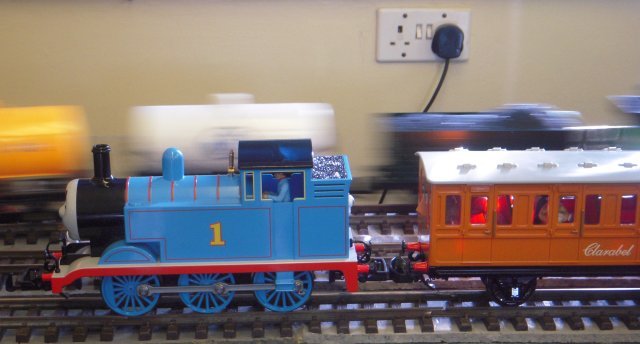
| The children were queuing up to play with this little slice of the Island of Sodor, presented here in the G Gauge format pioneered by LGB in 1968. The simple track plan included a tunnel, station, level crossing, locomotive and goods facilities. | ||
|
|
||
|
|
||
| |
||
|
SOMERSET LANE
by
Sodbury Vale MRC 0 Gauge 7mm Scale | ||
|
|
||
|
Produced to see what operations could be performed on a small 0
gauge layout to entertain both exhibition visitors and operators,
Somerset Lane was a play on Devons Road (Bow), British Railway's
first all-diesel motive power depot. Set in the late 1950s / early
1960s, the Cockney shed was a team effort by five individuals each
specialising in track building, electrics, low relief and other
buildings and lineside structures.
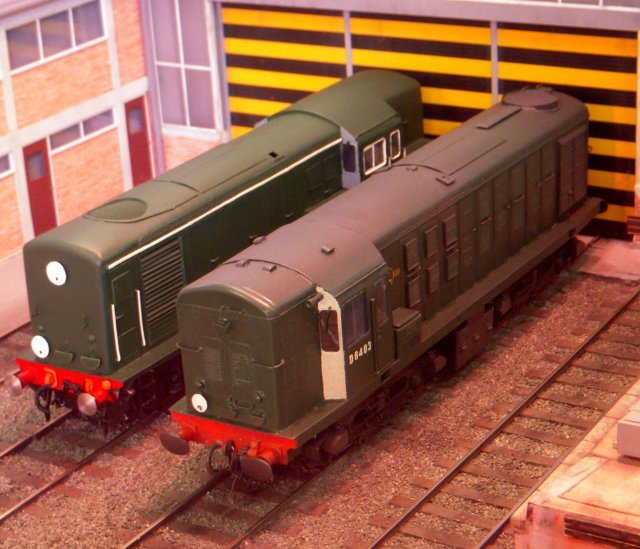
Somerset Lane's rolling stock was a mixture of kit built and modified ready to run items, including British Thomson-Houston Class 15 D8207 and - sporting more grilles than a chain of Little Chefs - the even less successful North British Locomotive Class 16, in this case D8403. The two discs on the Rugby built 800 bhp machine indicated an ordinary passenger or mixed train while the single disc code on its Caledonian cousin was for a branch freight or train stopping between signal boxes. |
||
|
| ||
|
|
||
|
TENNESSEE EXTRACTION COMPANY RAILROAD On30 Gauge 7mm Scale |
||
|
|
| |
|
|
||
|
| ||
|
This fictitious railroad in the Blue Ridge
Mountains showed the process of making hemlock tree bark into
powdered tannin for the manufacture of leather. In 1900 hemlock
tannin accounted for 72% of all used in the USA although this
figure dropped to 18% by the 1930s as the hemlock forests became
exhausted and oaks and chestnuts in the southern States were
barked instead. Today synthetic chemicals are used by
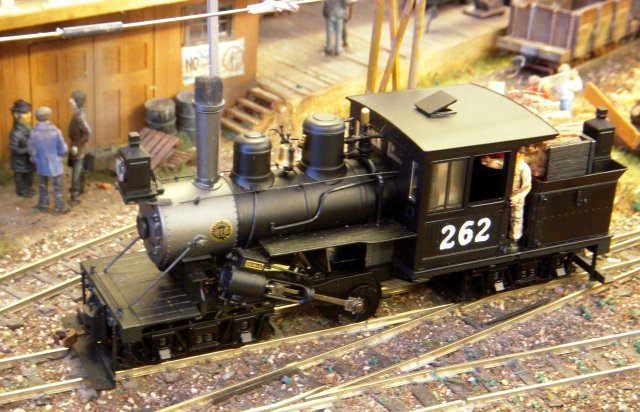
tanners. A working conveyor belt took crushed bark into the works while a sawmill cut the remaining wood, often for use in making coffins. The Digitrax DCC operated railway also transported coal to waiting ships at the docks and the builders were members of the Slim Gauge Circle, a UK based organisation for those modelling American narrow gauge lines. |
||
|
| ||
|
|
||
| BUTTERMERE
09 Gauge 7mm Scale |
||
|
|
||
 |
||
|
|
||
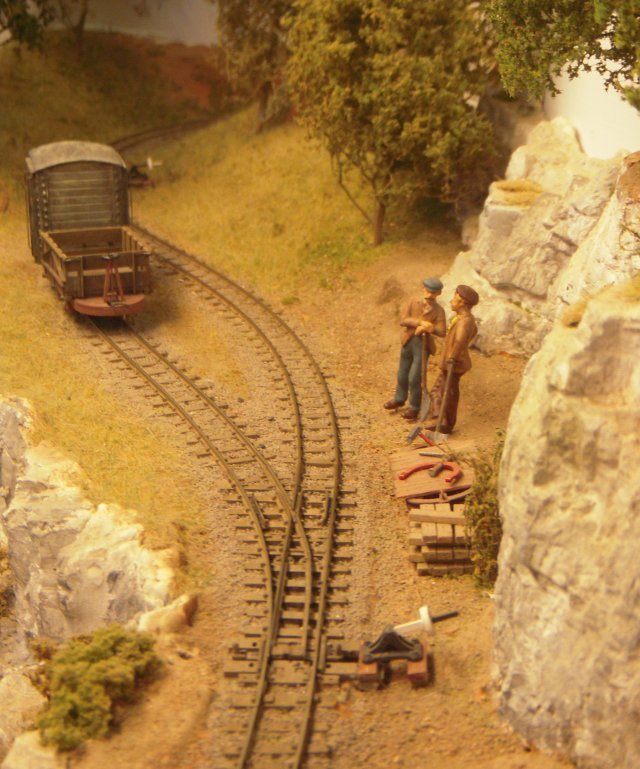
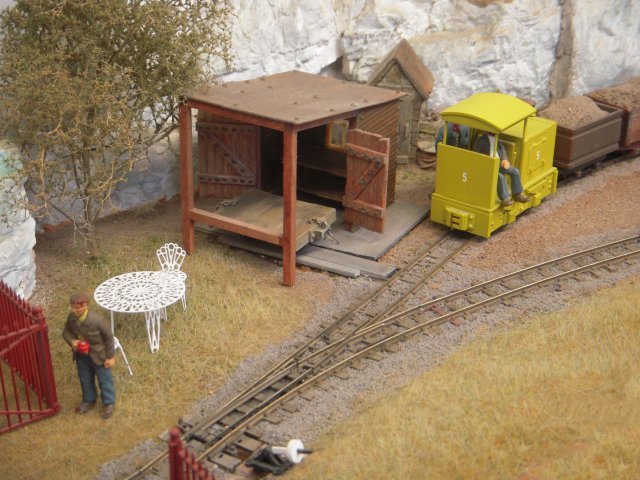
| The Lake District is rich in minerals and the area around Buttermere had iron and copper mines. The Buttermere Mining Company extracted copper bearing ores from three mines on a 15" gauge line built in 1895 to Cockermouth, 10 miles away. This was originally worked by steam locomotives - some of which have now been restored for tourists - with diesel taking over freight trains from the 1930s. In this model railway format, the track gauge is 9mm but the scale is 7mm to the foot. | ||
| |
||
|
|
||
|
|
||
|
BURNTWOOD LANE
EM Gauge 4mm Scale | ||
|
| ||
|
|
||
|
| ||
|
Burntwood Lane was set in the late 1950s / early
1960s on a branch of British Rail's Southern Region between the main
London to Brighton line at Purley and the terminus at Caterham.
The real Burntwood Lane crosses this branch south of Whyteleaf South
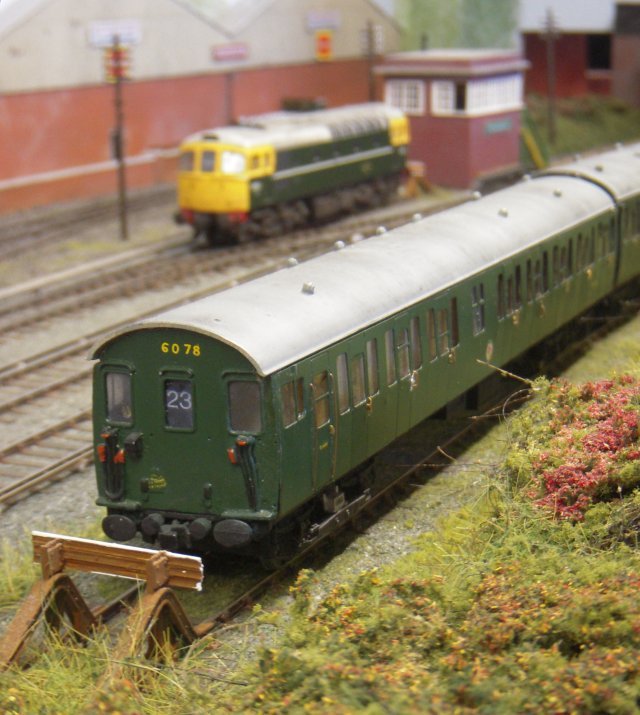
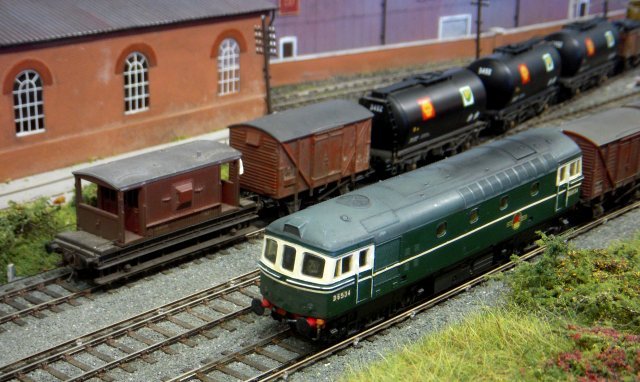
and north of Caterham. The track and points were hand built using C&L Finescale components while the buildings and bridges were scratchbuilt based on a set of photographs taken in 2011. In the picture above 1957 designed 2-HAP ( Later Class 414) unit 6078 comprising Motor Brake Second S61245 and Driving Trailer Composite S75707 stands on a siding ready to run to Caterham and displays the route code 23 for London Bridge via Forest Hill, West Croydon, Epsom and Guildford while below Birmingham RCW built Type 3 D6554 heads toward Purley with vans at the head of a mixed goods train. |
||
|
| ||
|
|
||
|
| ||
|
ELDERDYKE
by Eddie Whitlock 00 Gauge 4mm Scale |
||
|
| ||
|
|
||
|
| ||
|
The Hull, Beverley and Scarborough
Railway (HB&SR) was proposed to form a direct route across the flat
land between Driffield and Seamer Junction without having to use the
coastal route via Bridlington and Filey or the inland route via
Malton.
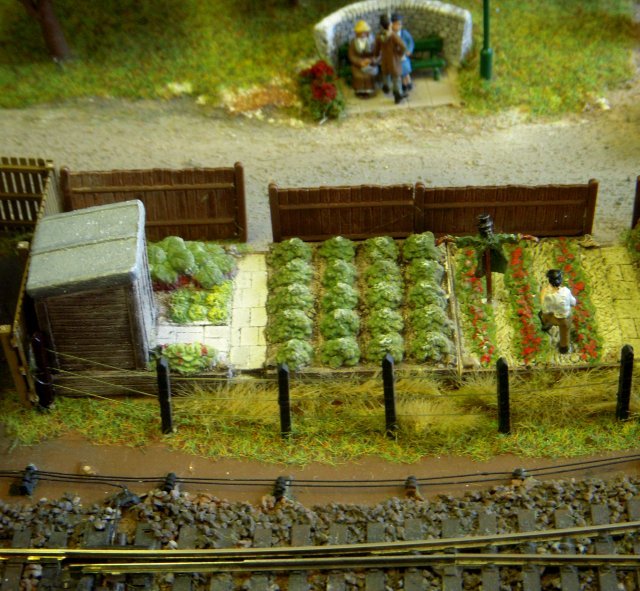
The line from Driffield to Seamer was single track and completed in 1846 with intermediate stations at Kilham, Langtoft, Elderdyke and Foxholes before the HB&SR was absorbed into the York and North Midland Railway. The York and North Midland controlled lines in the Hull, Whitby and Scarborough areas until 1854 when it amalgamated with the York, Newcastle and Berwick Railway and the Leeds Northern Railway to form the North Eastern Railway. The North Eastern Railway controlled most of the lines in the north east of England between the Humber and the Tweed and became part of the LNER at Grouping in 1923. At Elderdyke there was a short branch to Clogger to capture the vegetable traffic. Elderdyke was not the largest village on this section of the route, so was not blessed with a passing loop, but it was the most convenient location for the Clogger branch to join the route. There was a siding connecting the works of Moore's printers, who had acquired the Second World War contract to print ration books for the government, and like the vegetable traffic, this generated many van movements. Coal and general goods also arrived at Elderdyke by rail although passenger services were not well patronised outside the weekly Clogger market. HB&SR passenger trains were in any case never more than four carriages long. The 8' x 5' layout was set in 1945 when the LNER embarked on its renumbering scheme so some locomotives carried old and some new numbers. Similarly, both a Sentinel steam railcar and its replacement C16 4-4-2T and push-pull carriages appeared, trains being changed via a cassette system in the non-scenic rear area. One man and his scarecrow were still digging for victory, below, while having survived their national service remarkably intact, above, were three private owner coal wagons. Ynys Amman 32 was part of two batches of seven plank wagons ordered from The Gloucester Railway Carriage and Wagon Company Limited in 1909 and the Brynamman based colliery itself shut in 1936. |
||
|
| ||
|
|
||
| KINGSFIELD
by Barnhill MRC 00 Gauge 4mm Scale |
||
| |
||
|
|
||
| |
||
|
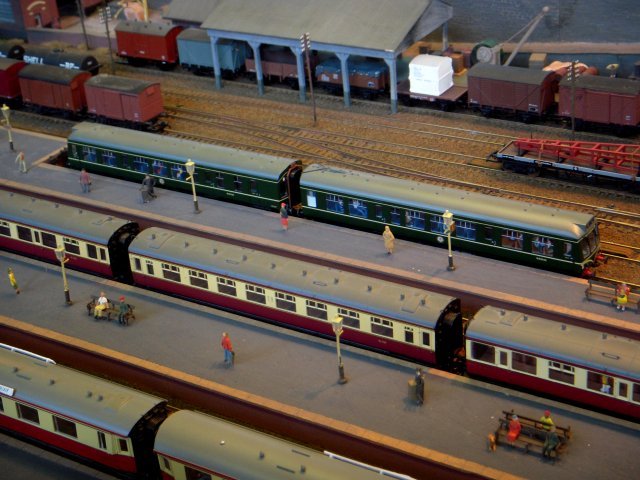
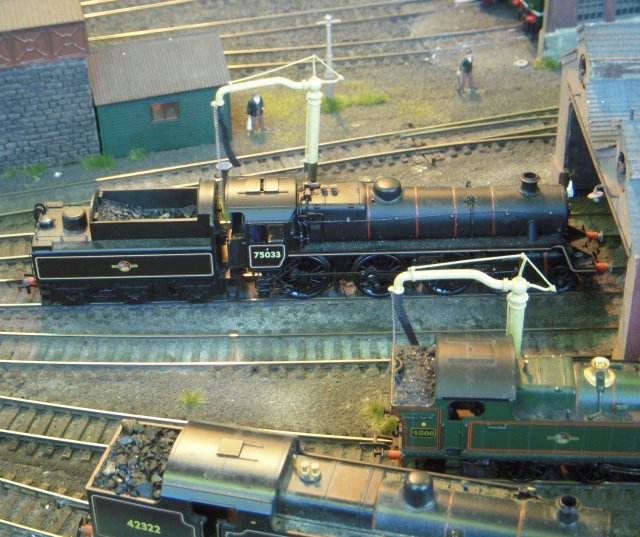
Kingsfield was a fictitious town nestling in Oxfordshire 15 miles west of Oxford. The population of the town was approximately the same as Oxford and had grown in a similar manner over the years. The local commerce comprised of metal fabricators, breweries, timber merchants, and other similar small to medium industries. Some of these were served in earlier years by the canal, which runs through to link with both Gloucester Docks and the River Thames. There was a strong farming community surrounding the area, and also a nearby racecourse. The Great Western Railway served the town, with a terminus station built in the late 1800s. This connected Kingsfield with Swindon and the Great Western main line to Paddington, South Wales, and the West Country, and a local branch line also served the nearby village of Fairford. It wasn’t long before the Midland railway that was extending its routes south, intersected the Great Western at Kingsfield with their own main line. This provided a direct link between Birmingham and Bournemouth, causing the station to be redeveloped with through platforms, and a junction being added. As years passed the traffic steadily increased, with both through and terminating services of both passenger and freight to serve an ever- growing community. With the increase in traffic, the yard and engine shed grew with an additional building being added to the sheds to accommodate the ever increasing ‘diesel locomotive’. The period modelled was from 1948 to 1965, so steam and green diesels prevailed. The model railway was built using items that can be purchased readily from any model railway outlet. The track was Peco 100, ballasted and painted with track colour, ‘SEEP’ motors were used to operate points, with power to the track being fed through Gaugemaster hand held controllers. All the buildings were built from kits & nearly all the rolling stock was straight out of the box, but may were weathered or detailed slightly in some way. In the picture above a green liveried1958 vintage Derby built Class 108 diesel multiple unit contrasts with two trains of carmine and cream locomotive hauled carriages while below the steam shed hosts Standard Class 4 4-6-0 75033 along with ex GWR Small Prairie 4566 and 42322, one of the original parallel-boilered Fowler Class 4 2-6-4Ts of 1927. |
||
| |
||
|
|
||
|
OXFORD ROAD
by Rich Papper 00 Gauge 4mm Scale |
||
|
|
||
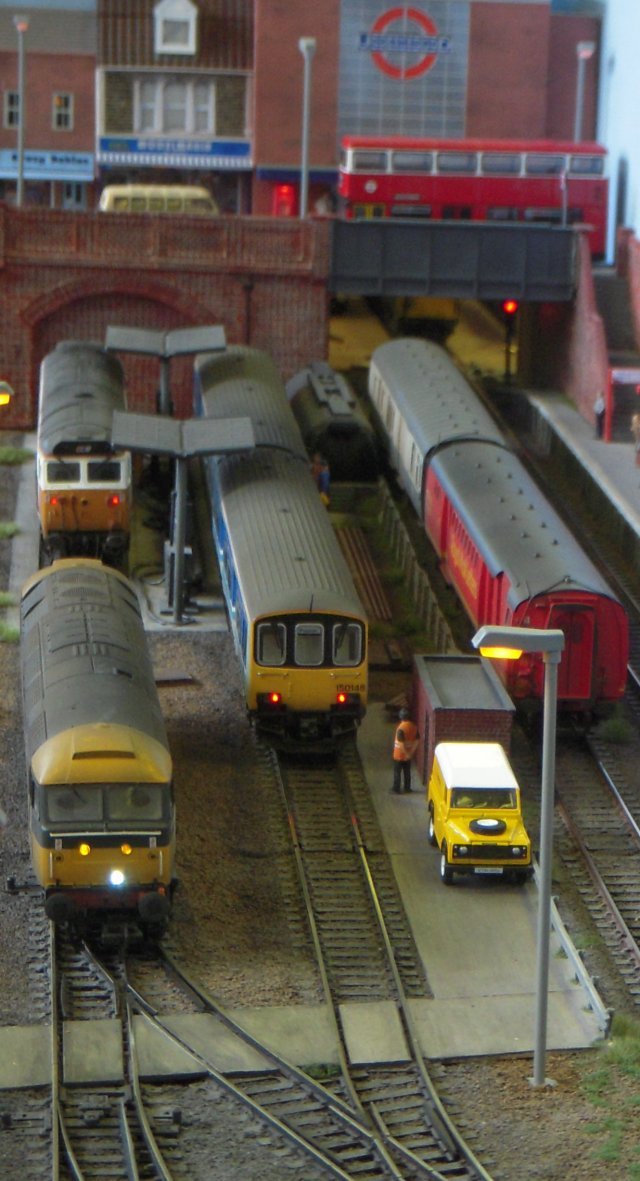
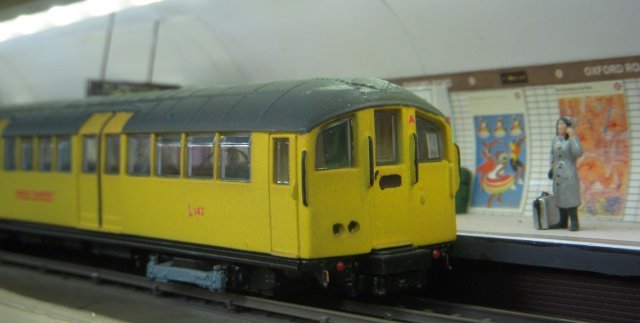
| Oxford Road was a fictitious setting somewhere in West London in the mid 1980s to early 1990s. The layout - DCC equipped using an NCE Powercab system and built with Peco Code 100 track - contained a small depot, fuelling point, engineers siding and small platform which saw a sporadic service of garishly painted first generation Network South East dmus. The Bakerloo Line ran on a lower level beneath it and had its own separate station. Structures were a mixture of card and plastic kits and scratchbuilt and rolling stock detailed ready to run vehicles from Bachmann, Hornby, Lima and Heljan. Providing a contrast in multiple unit trains was Regional Railways liveried diesel hydraulic 150 148 above and Bakerloo Line L142 seen below. | ||
| |
||
|
|
||
|
YATE ROCKS TRAMWAY
by 009 Gauge 4mm Scale |
||
| |
||
|
|
||
| |
||
|
This 1300 x 950mm layout was based on a small - probably horse drawn -
late 19th Century 3' gauge tramway that connected limestone quarries
just north of the east end of Tan House Lane near Wickwar with limekilns
near Rangeworthy and alongside the Midland Railway main line north of
Bristol - just south of where Limekiln Lane crosses the railway.
Although this tramway was marked on Ordnance Survey maps of 1890 it had been dismantled by 1900 although the route is still easily discernable due to a tree line in the 21st Century landscape. There was also another unconnected tramway along the quarry on the south side of Tan House Farm. This quarry flooded when quarrymen hit a spring and is now a well known carp fishing lake. Yate Rocks Tramway was set around 1950 and featured both buildings recognisable in the local area as well as steam and diesel Paul Windle locomotives running on 2' 3" gauge and making a vertical connection with a spur from the Midland Railway. |
||
|
|
||
|
| ||
|
CHOATES LANE
by Stuart Conlon N Gauge 2mm Scale |
||
|
|
||
|
Choates Lane was inspired both by a competition run
by the Modern Image Group of the N Gauge Society and by the fact that
both Stuart and Tim owned two Kato Eurostar sets - plus extra vehicles -
allowing them to run scale length Eurostar trains of 18 passenger cars
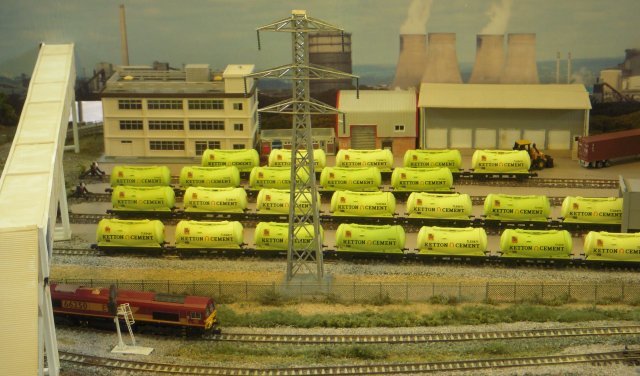
plus two streamlined locomotives. However, as Choates Lane is set from 2010 into the future, TGVs, THALYS and Deutsche Bahn ICE sets also appeared on High Speed One. Similarly, although there is a real cement terminal at Rainham and and distribution depot at Dagenham, the installations on the higher level were not direct copies of these installations. The spectators were in effect standing on Dagenham Dock station looking south towards the Thames with St Pancras, Stratford and Dagenham to the right and the Ford Motor Company, Dartford and the Channel Tunnel to the left. The Eurostar set pictured above is moving towards the Channel Tunnel while 66 250, below, is facing central London. |
||
|
|
||
|
WHITTALL
by Gloucester MRC N Gauge 2mm Scale |
||
|
|
||
|
| ||
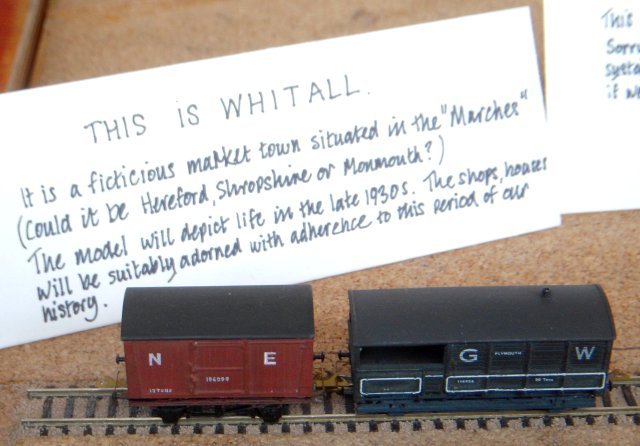
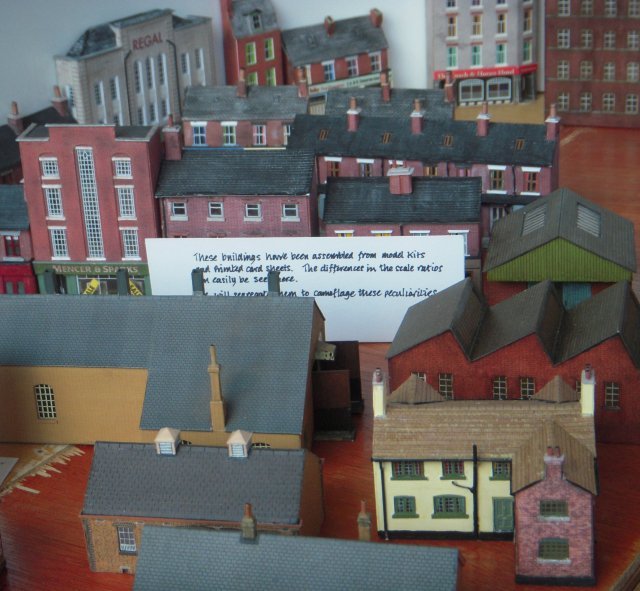
| This year's in-build layout at Eastcombe was Whittall by Gloucester Model Railway Club, designed and built from 2012 onwards by a team led by Harvey Whitmore and John Boxhall. It will ultimately represent a fictional market town in the Welsh Marches in the 1930s. | ||
|
| ||
|
|
||
|
|
||
|
PICK 'N' MIX SHUNTING PUZZLE
by Philip Bird GMRC 00 Gauge 4mm Scale | ||
|
| ||
|
| ||
|
| ||
|
Pick 'n' Mix was a small layout designed to test
visitor's ability to perform some shunting operations. The layout
consisted of three sidings and a head shunt. Two of the sidings
could hold three wagons, the third could hold five wagons and the head
shunt could hold three wagons and a locomotive. The Pick 'n' Mix layout was populated by eight wagons in addition to the locomotive. Five wagons are selected at random and the puzzle is to assemble these wagons in a train, in the order selected, on the five wagon siding. It sounds simple and it can be, but a lot depends on the selection and the existing location of the wagons. | ||
|
| ||
|
| ||
|
| ||
|
GLOUCESTER ROAD TRANSPORT
by Paul and David Mellor 4mm Scale |
||
|
|
||
|
|
||
|
| ||
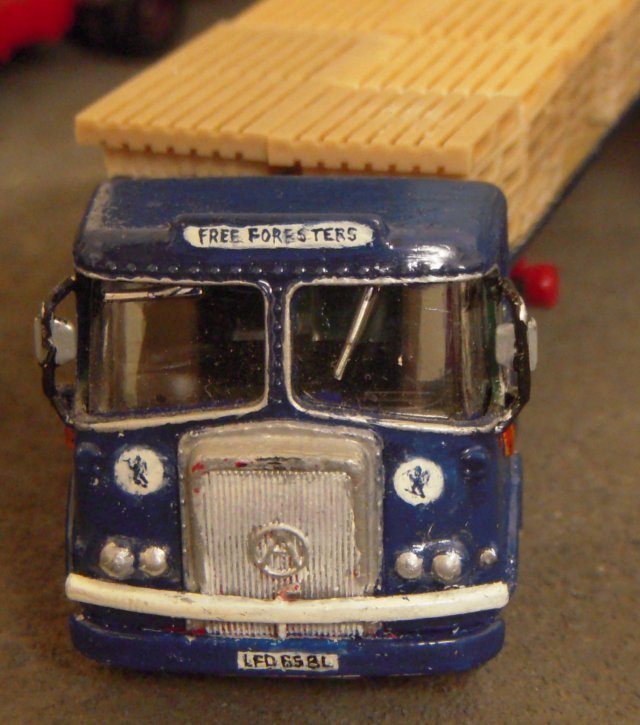
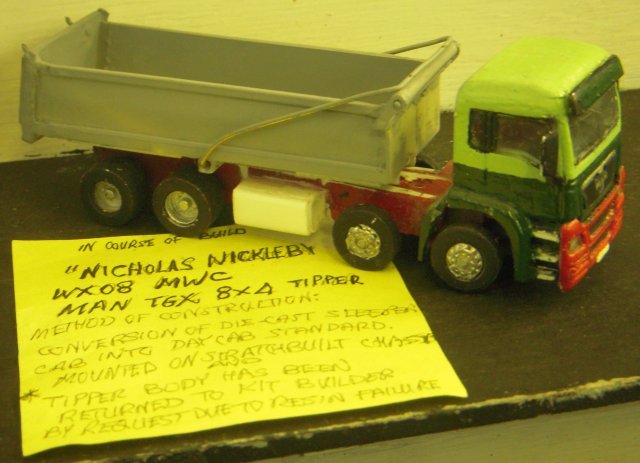
| Among David and Paul Mellor's offerings at Eastcombe was an Atkinson Borderer - above - in the markings of Free Foresters, a collective of 30 drivers and lorries that were based in Mitcheldean in the 1970s. In course of build meanwhile, below, was "Nicholas Nickleby" the name given by Moreton Cullimores to their MAN TGX 8x4 tipper WX08 MWC. This has so far involved turning a die cast night sleeper cab into a day cab and fitting it to a scratchbuilt chassis. | ||
|
| ||
|
|
||
| | ||
| ARTS AND CRAFTS by Eastcombe Women's Institute | ||
|
|
||
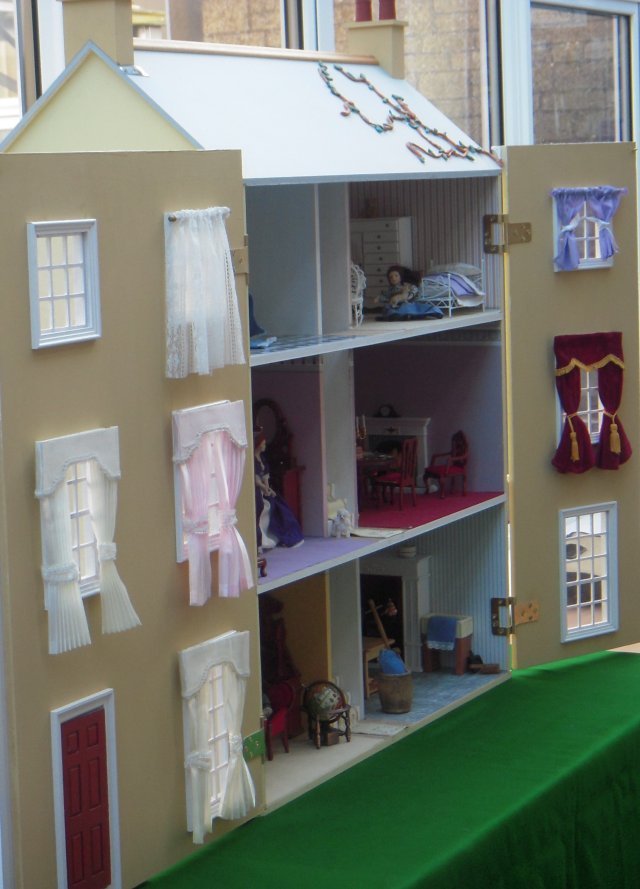
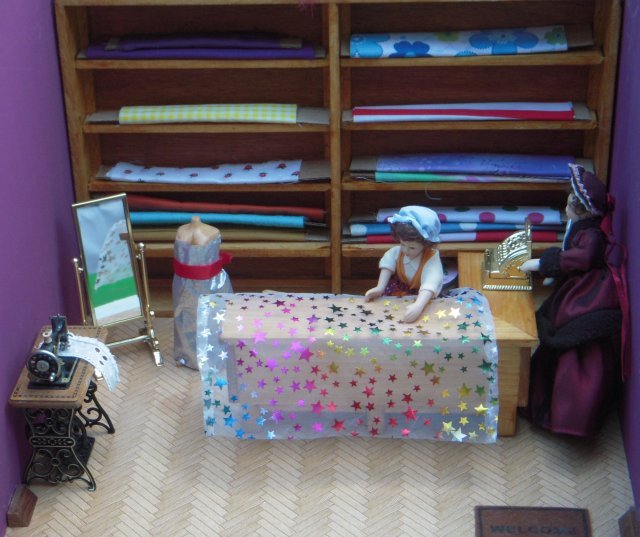
| Arts and Crafts have always been an important part of the Women's Institute movement and this was represented by both a full scale doll's house and a room setting of a draper's shop. | ||
|
| ||
|
|
||
|
GMRC DEMONSTRATION
by Ken Haines 00 Gauge 4mm Scale |
||
| |
||
|
|
||
|
|
||
| New for 2013 was this Great Western Railway "Cordon" gas wagon, deployed to larger stations to keep the tanks of gas-lit carriages topped up. Cordons either adhered to Diagram DD4 with nine transverse cylindrical tanks, as seen here, or Diagram DD5 with two cylindrical tanks running the length of the wagons. Also recently scratchbuilt by Philip Bird was this splendid ex South Eastern and Chatham Railway 1909 vintage Class P 0-6-0T. Designed by H.S. Wainwright - and slightly larger than an LBSCR Stroudley Terrier - the P Class was introduced for push-pull working but survived into the 1950s as a shunting locomotive. | ||
| |
||
|
|
||
|
DIESEL AND ELECTRIC MODELLERS UNITED
DISPLAY | ||
|
|
||
| Diesel and Electric Modellers United (DEMU) was formed in 1994 as an independent society catering for all modellers of the railways of Britain and Ireland in the diesel and electric era, regardless of scale or modelling ability. DEMU are also working with various ready-to-run and component manufacturers to supplement their prototype information and provide market research on proposed new products. DEMU have an active website for members and guests and can be found at www.demu.org.uk where it includes a members only web forum. | ||
| RAILWAY ARTIST Barry Walding | ||
|
|
||
|
|
||
|
|
||
| Barry Walding brought a selection of railway, aviation and wildlife art and was also busy with his latest canvas although he has now finished a superb panting of some traction engines that I last saw at Eastcombe in 2012. Framed nearby was a work entitled "Crosshead Detail" while in specimen format were a pair of big firm Bristols - the ill fated piston engined Brabazon and the more successful turboprop Britannia. Barry is pleased to consider commissions, can be contacted on 01453 844551. | ||
|
|
||
|
|
||
|
|
||
| |
Also in attendance were displays by the Festiniog Railway, Elite Baseboards and the Cotswold Canal Trust. Modelmania of Bristol (BTozer8649@aol.com), Brian's Trains (01932 568925)and Keith Price purveyed model rolling stock and accessories while Stewart Blencowe offered books, photographs and transport ephemera. | |
| |
||
| |
||