| Home |
CHELTENHAM GWR MODELLERS GROUP MODEL RAILWAY EXHIBITION
|
||
| |
|||
| SPONSORED BY | |||
|
|
|||
 |
|||
|
|
|||
|
Click here for Introduction and future exhibition information |
|||
|
|
|||
|
THE NEXT EXHIBITION WILL BE HELD ON SATURDAY 25 AND SUNDAY 26 OCTOBER 2014 |
|||
| |
|||
|
|
|||
| |
|||
| |
|||
|
|
|||
| |
|||
| |
|||
|
|
|||
| |
|||
|
|
|||
| |
|||
 |
|||
| |
|||
|
|
|||
| |
|||
| |
|||
|
|
|||
| |
|||
|
|
|||
|
|
|||
|
|
|||
| |
|||
|
|
|||
| |
|||
| |
|||
|
|
|||
| Click on picture for review of October 2009 | |||
|
|
|||
| Click on picture for review of April 2010 | |||
|
|
|||
|
|
|||
|
|
|||
|
|
|||
|
|
|||
|
|
|||
|
|
|||
|
|
|||
|
|
|||
|
|
|||
|
|
|||
|
|
|||
|
|
|||
|
|
|||
|
|
|||
|
|
|||
|
|
|||
|
|
|||
|
|
|||
|
LAYOUT AND ATTRACTION REVIEW |
|||
| |
|||
| SYREFORD by Roger
Brown 0-16.5 Gauge 7mm Scale |
|||
| |
|||
|
|
|||
| |
|||
| The Cheltenham & Cotswold Hills
Railway Company was proposed in 1811 to carry the products of the
Stone Pipe Company from Lower Guiting to a junction with the
Leckhampton branch of the Gloucester and Cheltenham Tramway and via
there to Gloucester Docks. The Act of Parliament for the 3' 6" gauge
plateway failed at its third reading in May 1812 and the Stone Pipe
Company also failed soon after when installed systems in London and
Manchester would - literally - not hold water!
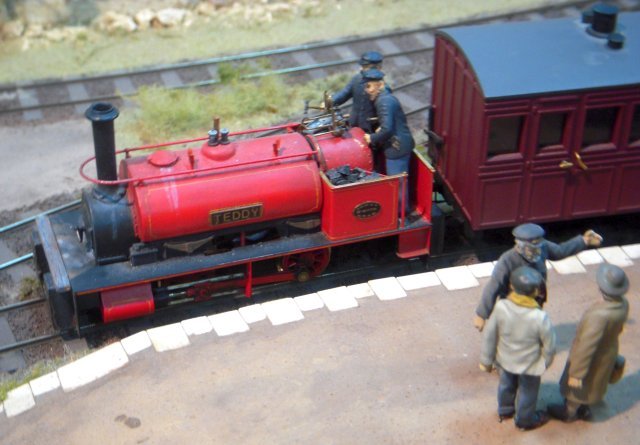
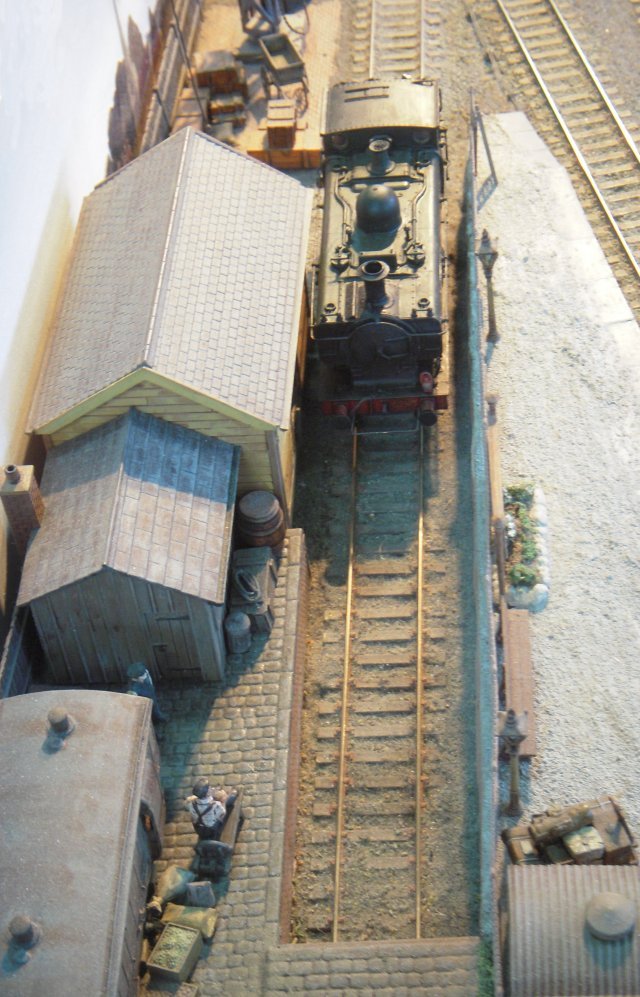
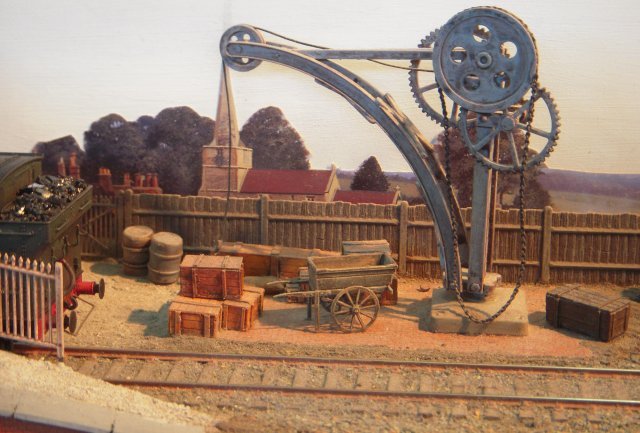
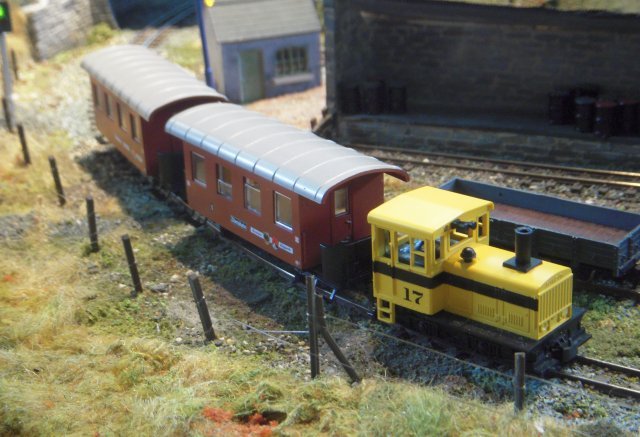
Syreford Station represented the upper terminus of the viable part of the line, had it been built and survived the Stone Pipe Company's failure. The line was by now a 2' 4" gauge edge railway and was depicted in the early 1950s when tourism became a significant portion of remunerative traffic. Track was hand built and buildings are scribed styrene sheet or textured DAS PRONTO on ply shells. Scenery was carved from polystyrene foam coated with Artex and covered with commercial scatter materials. The trees were twisted wire frames with Woodland Scenics foliage and the back scene was a view of Sandhurst Hill as seen from Sandhurst village, near Gloucester. Locomotives and rolling stock were a mixture of scratch and kit built vehicles, some with modified proprietary components. Pictured above for example, is a model of the Kerr Stuart diesel mechanical locomotive which ran on the Welsh Highland Railway and was photographed at Dinas in 1928 by L.T.C. Rolt, who was then one of Kerr Stuart's Premium Apprentices following in the footsteps of Supermarine Spitfire aircraft designer Reginald Mitchell. Founded in Glasgow in 1881, James Kerr and Company became Kerr, Stuart and Company in 1883 when John Stuart was taken on as a partner. The business began as an agency ordering locomotives from established manufacturers such as Falcon of Loughborough, John Fowler of Leeds and Hartley, Arnoux and Fanning of Stoke on Trent. In 1892 Kerr, Stuart and Company bought Hartley, Arnoux and Fanning and moved into Stoke on Trent's California Works to begin building their own locomotives. The railway and tramway plant division of Hartley, Arnoux and Fanning was then sold to Dick, Kerr and Company in Preston. As well as an illustrious output of steam locomotives and railcars for home and export use, Kerr Stuart introduced a range of roller chain driven diesel mechanical locomotives in the late 1920s. Available in a range of track gauges, their McLaren Benz prime movers were also supplied in 2 cylinder (30 bhp) 4 cylinder (60 bhp) and 6 cylinder (90bhp) formats. However, Kerr, Stuart and Company entered receivership in 1930 with goodwill (design and spare parts) going to Hunslet of Leeds although many staff - including the Chief Draughtsman - joined Stafford based W.G.Bagnall who continued to manufacture Kerr Stuart steam locomotive designs. |
|||
|
|
|||
|
|
|||
|
|
|||
| COMBE ABBOT by
Alan Postlethwaite 00 Gauge 4mm Scale |
|||
|
|
|||
|
|
|||
|
|
|||
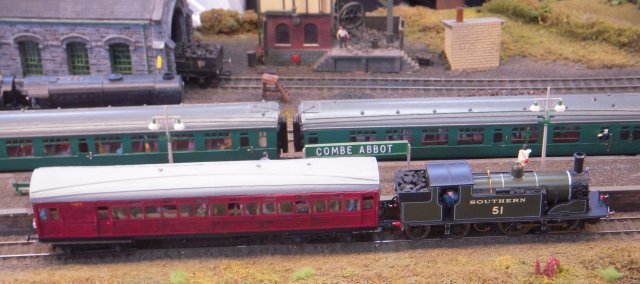
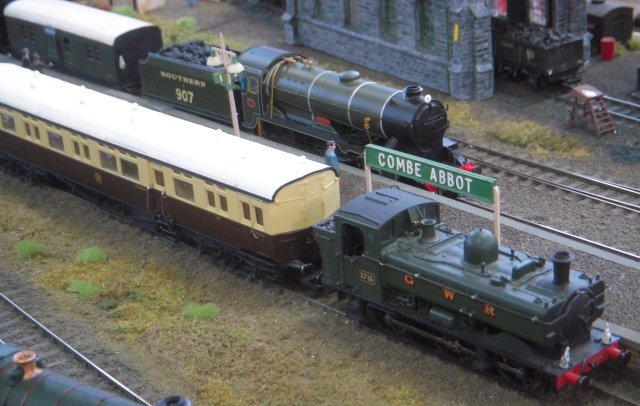
| This branch terminus was joint GWR/ LSWR and became part of the SR at the 1923 Grouping. Set in Wiltshire around 1950, liveries were a mix of GWR, SR and early BR. Trains ran to Westbury (BR-W) and to Salisbury (BR-S). The latter included 3-coach sets which attach to Exeter-Waterloo services. There were also push-pull trains - as hauled by long wheelbase M7 0-4-4T 51, above, and an equivalent GWR 0-6-0PT, seen with Schools 4-4-0 907 "Dulwich", below - local goods, a weed-killing train and Army tank traffic to a sub-branch on Salisbury Plain. Built originally by Keith Blake from Bromsgrove, Combe Abbot was refurbished during 2010-12 and features a fiddle yard with eight train cassettes. Track on the 17' x 3' layout was SMP with wire-in-tube point operation and there were two Gaugemaster Combi controllers - on e for the trains and one for the turntable surrounded by foxes! The ARP signalbox was also scratchbuilt and the four baseboard sections were G-clamped together on five new trestles. | |||
|
|
|||
|
|
|||
|
|
|||
| CONDICOTE
by Bob Vaughan 00 Gauge 4mm Scale |
|||
|
|
|||
|
|
|||
|
|
|||
| As exhibited, Condicote - named
after the location in John Masefield's novel "The Hawbucks" -
represented a branch line terminal somewhere in the Worcestershire
area either in the late 1930's under Great Western Control, or in
the 1950s under the auspices of British Railways Midland or
even Southern Region. The kit built or ready to run rolling stock was fitted with Sprat and Winkle couplings (available from Andrew Hartshorne at Wizard Models), thereby freeing Condicote from the "hand of God" effect and maximising viewer attention on the work-stained appearance of the 6'4" x 11" layout, weathering having been created with acrylic paint, brown ink and matt varnish. |
|||
|
|
|||
|
|
|||
|
|
|||
| EARL'S COURT
by Terence Tew 00 Gauge 4mm Scale |
|||
|
|
|||
|
|
|||
|
|
|||
|
Until 3 October 1940, the LNWR and
then the LMS had run an electric passenger service from Willesden
Junction to Earl's Court. Many other railway companies had
also, at various times, operated services over the West London Line,
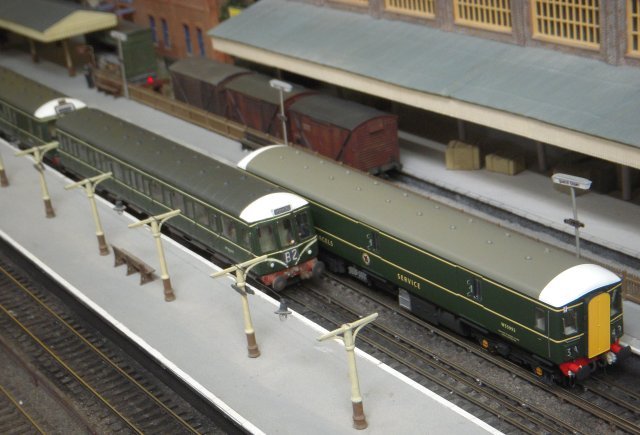
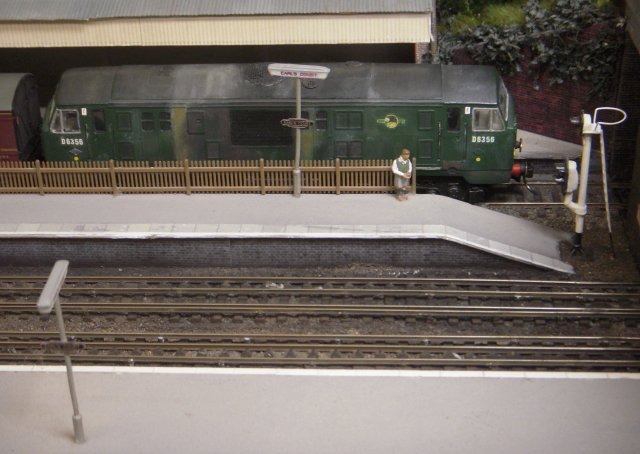
some of which continued to Earl's Court. This layout - set in the early 1960s - assumed that the LMS and GWR had built their own joint station at Earl's Court, enabling them to divert some of their commuter and local passenger trains away from Euston and Paddington. Also at the joint station was a small parcels depot and sidings for a nearby dairy - seen below being used by a train headed by Class 22 diesel hydraulic B-B D6356 At St Margaret's Hall, Terence Tew and I were able to co-operate with my Heljan Class 128 Diesel Parcels Unit W55992 appearing as guest motive power on one of the analogue tracks running into Earl's Court and then being photographed as part of the Gloucester RCW diesel railcar line up above. |
|||
|
|
|||
|
|
|||
|
|
|||
|
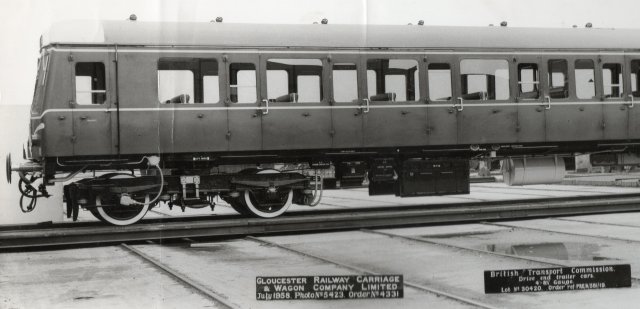
Carrying the B2 headcode nearest the camera was W56297, one of nine Driving Trailer Seconds built in July 1958 by the Gloucester Railway Carriage and Wagon Company for use with its Class 122 "Bubblecars" - such as W55016 seen behind it - and the Pressed Steel Class 121s on high density outer London commuter work. Despite its cab being styled to match Gloucester's Class 122 railcars and Class 119 Diesel Multiple Units however, the 29 ton W56297 - and W56298 seen in GRCW official photo 5423 above - featured 95 seats in a non gangwayed saloon only accessible via side doors. Terence's model of W56297 - which later bacame part of Class 150 under TOPS - was built by heavily modifying a Lima Class 121. |
|||
|
|
|||
|
|
|||
|
|
|||
|
EASTGATE TMD
by Les Williams 00 Gauge 4mm Scale |
|||
|
|
|||
|
|
|||
|
|
|||
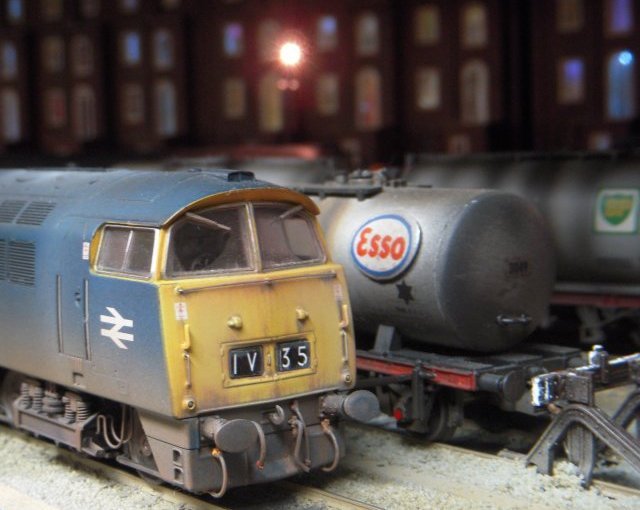
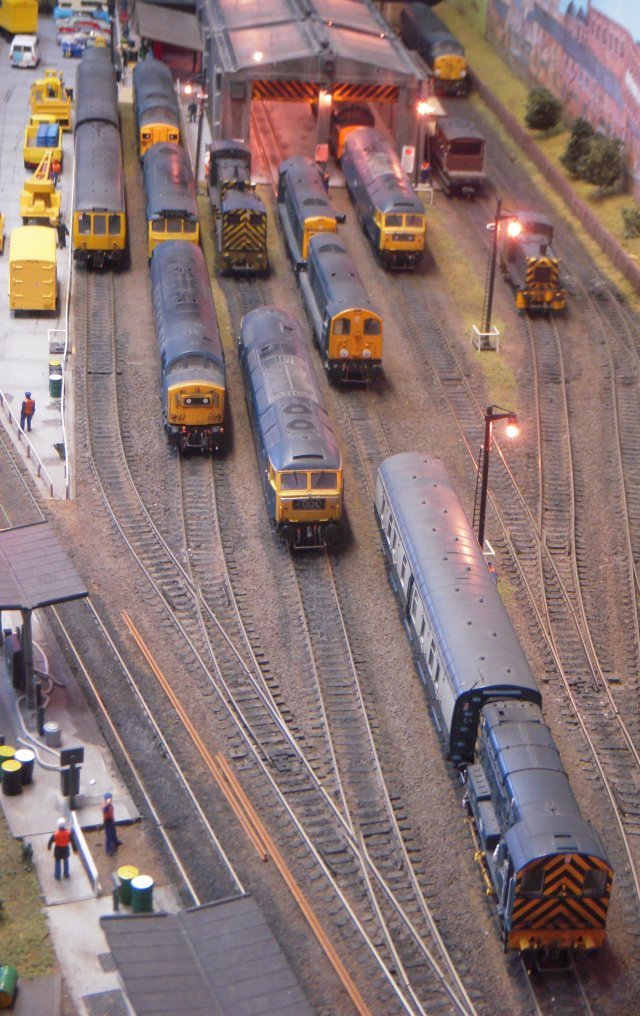
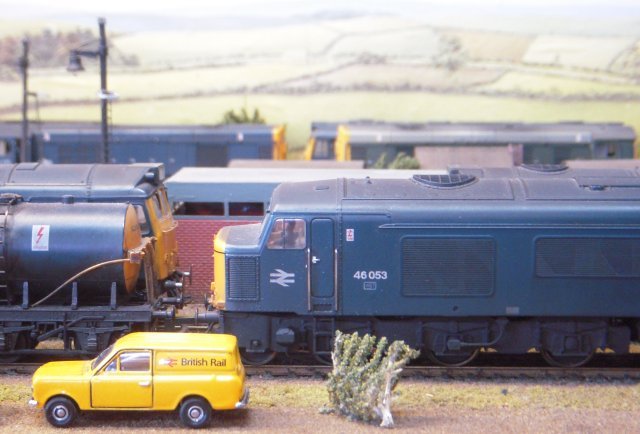
| Eastgate was a typical 1970s London Midland Region motive power depot servicing locomotives from nearby marshalling yards - and even the odd visiting Deltic! The layout was built around Peco Code 100 Streamline track, a fully lit Peco motive power shed, Dapol figures and Knightwing fuelling point. Of particular interest were the yellow British Rail van and lubricating oil tank wagon - seen next to 46 053 below - and 08 402 propelling NDV M84281 toward the pair of Class 20s in the picture above. Notice that both the English Electric 350 bhp 0-6-0 and the 1957 vintage Pressed Steel Gangwayed Brake Van have doors opened inward! | |||
|
|
|||
|
|
|||
|
|
|||
|
LONDON ROAD LOCOMOTIVE SIDINGS
by Adrian Full 00 Gauge 4mm Scale |
|||
|
|
|||
|
|
|||
|
|
|||
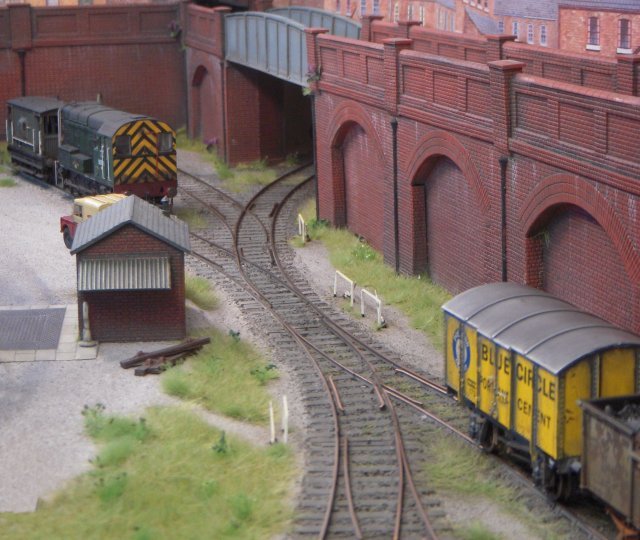
| London Road Locomotive Sidings
lay at the northern end of Westonmouth Central station, and provided
a location for locomotives to stable between trips on passenger
trains to and from all points on the Western Region. Diesel
hydraulic types mingled with their diesel electric brothers
providing constant interest and movement for the local spotters. Inspired by photographs of the cramped sidings at London Liverpool Street, the ready supply of information available on the internet produced plenty of data to design and build the 6' x 1' layout which sits on some low book cases at home. |
|||
|
|
|||
|
|
|||
|
|
|||
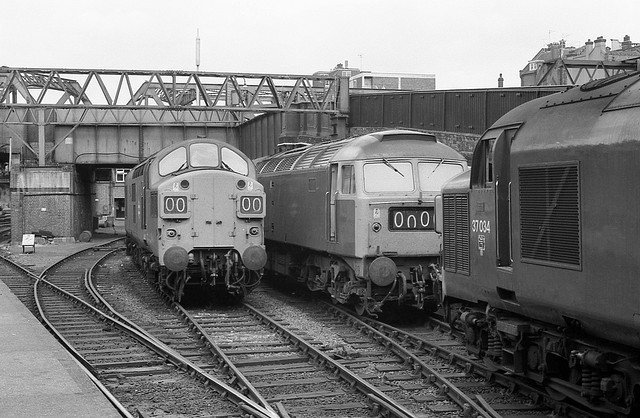
| In fact the 25 July 1976 picture above shows 37 034 in the company of 37 026 and 47 038 at the country end of Liverpool Street with the shunter's cabin and first floor crew messroom visible under the girder bridge carrying Pindar Street EC2A. The sidings, girder bridge and taxi ramp to the right have all since disappeared during redevelopment of the station, now served by electric multiple units rather than locomotive hauled trains. | |||
|
|
|||
|
|
|||
|
|
|||
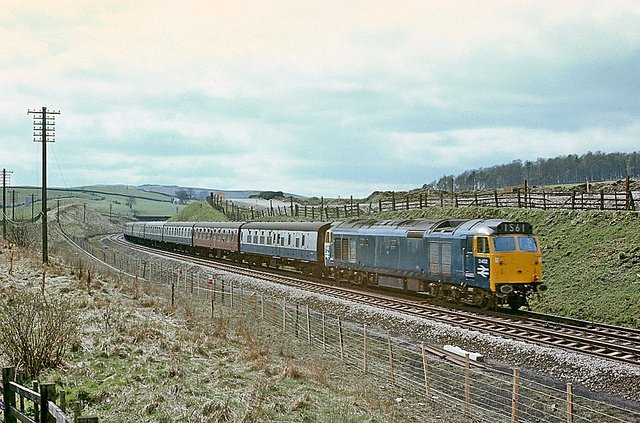
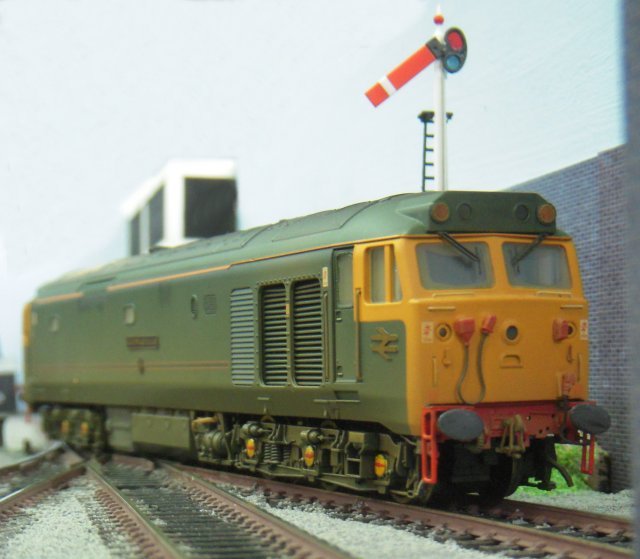
| In the earlier and cleaner times
of April 1968, English Electric locomotive D402 - modelled
above as 402 - was photographed approaching Shap Summit with a
Euston-Glasgow express. As recounted on
other pages
on this website, the fifty Class 50 Co-Cos were first leased to
British Rail to cover the 1966-1974 electrification gap between
Crewe and Glasgow before moving to Western Region to replace the
Class 52 "Western" diesel hydraulics. After the
introduction of InterCity 125 trains to Brunel's billiard table, the
Newton-le-Willows built Type 4s moved again to the former London and
South Western Railway line to Exeter and finally on to engineering
trains before withdrawal.
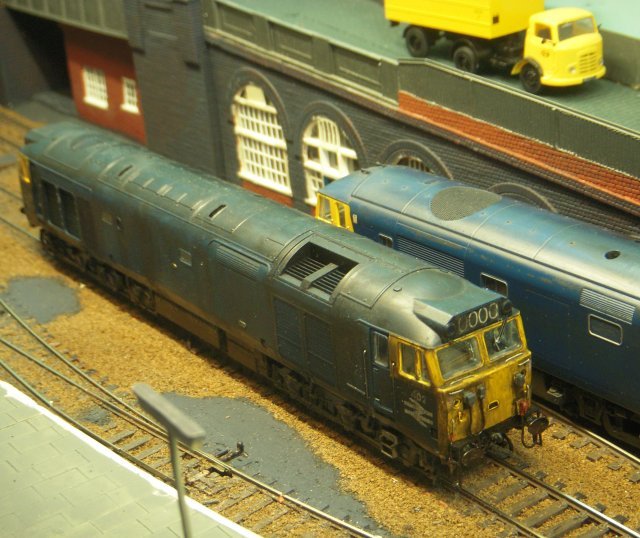
D402 was given the Vulcan Works number 3771/D1142 before introduction in December 1967 - a year ahead of D449 - and so was only five months old when pictured at the head of 1S61 passing the building site that would eventually become the M6 motorway. It was also the first of the class not to be fitted from new with multiple unit jumper cables, although as can be seen from the model these had been retrofitted to the cab ends by 1975, when four digit train descriptions ceased to be displayed on the front of locomotives. D402 was renumbered 50 002 in April 1974, named "Superb" in March 1978 and is now preserved on the South Devon Railway. |
|||
|
|
|||
|
PHITWELL END
by Abingdon and District Model Railway Club 00 Gauge 4mm Scale |
|||
|
|
|||
|
|
|||
|
|
|||
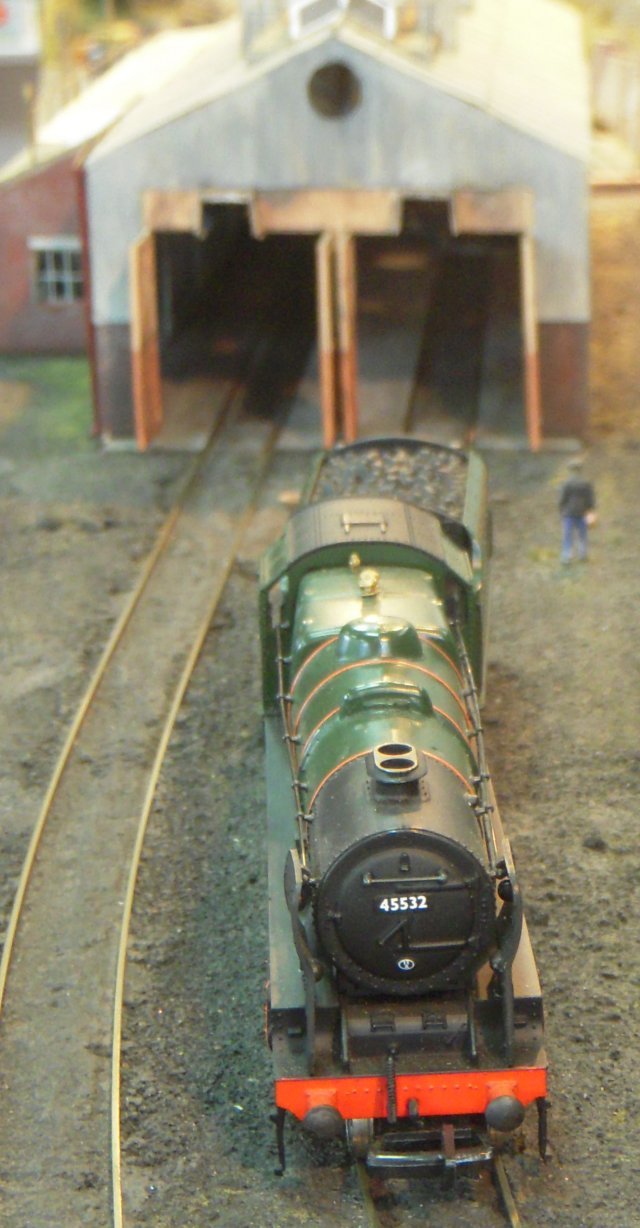
| Phitwell End represented a small
yet busy secondary terminus in a large town with the main station in
the town centre. Space restrictions in the centre allowed only
basic servicing facilities so the motive power depot was built near
this suburban station and on a higher level. Consequently, in between passenger and parcels services, larger locomotives from the main station arrived at and departed from the shed along with locomotive coal for the MPD. 18' 6" x 1' 6" Phitwell End, which was operated on a sequence card system, could have represented any era from Grouping to the 1970s and was traditionally built with plywood running surfaces and end panels on softwood frames. The PECO trackwork was loose ballasted and fixed with white glue and buildings were either scratchbuilt or modified from kits while greenery was constructed from carved polystyrene blocks, covered with nappy liner and finished off with Woodland Scenics scatter and foliage material. Trees were made from wire skeletons, covered in modelling clay and foliated by Woodland Scenics. In contrast to former LMS 45532 "Illustrious", pictured above and a member of a sub class of Fowler's "Patriots" upgraded by Ivatt in 1946 with larger taper boilers, new cylinders and double chimneys, D5512 was one of the 20 pilot scheme Brush Type 2s from 1957 originally fitted with 1 250 bhp Mirrlees JVS12T engines and Red Circle electro-magnetic multiple unit control. Due to crank case and bedplate fractures, these powerplants were replaced by English Electric 12SVT units and the rest of the 225 strong class continued to be built with more widely used Blue Star electro-pneumatic control gear. |
|||
|
|
|||
|
|
|||
|
|
|||
|
SNUG END
by Graham Gatehouse
00 Gauge 4mm Scale |
|||
| |
|||
|
|
|||
| |
|||
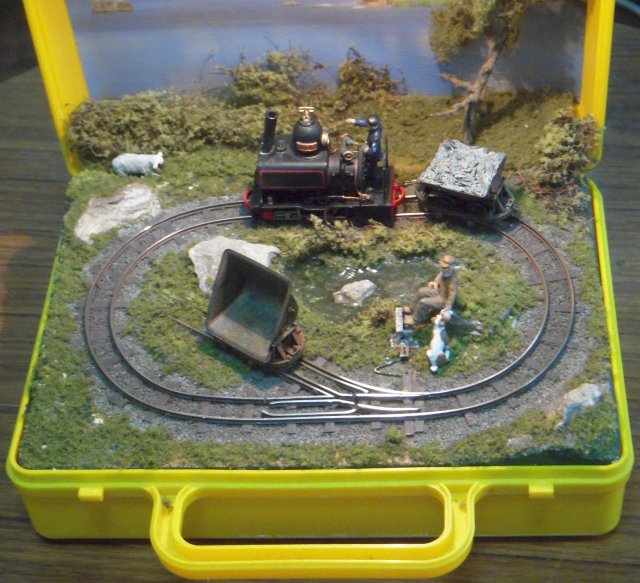
| Micro Layout Snug End -
which made its debut at Cheltenham - was inspired by a competition
in the Hornby Magazine to build a diorama in 3 square feet (432
square inches) The baseboard was 45.4" x 9.5" but the upper
railbus level can be extended at both ends and a third main line
extension allowed trains to be changed. The design - controlled by DCC or analog systems - was based on an Inglenook Shunting Puzzle and carefully design to allow the use of a Class 20 or Class 25 diesel. The track was hand built using SMP parts with wye points of differing radii mounted on timber offcuts which only cost £ 9.00. Two sets of mostly Bachmann rolling stock were used, one with modified hands-free couplings and the other with 3mm finescale Sprat and Winkle couplings. |
|||
|
|
|||
|
|
|||
| |
|||
| THOMAS by Cheltenham GWR Modellers 00 Gauge 4mm Scale | |||
|
|
|||
|
TOUCAN PARK
by Alan Drewett and Roger and Robert Webb 00 Gauge 4mm Scale |
|||
|
|
|||
|
|
|||
|
|
|||
| The Park Royal Guinness Brewery
opened in 1937 and
Toucan Park - named after the famous Guinness
advertisement - supposes that the rail connection to the Brewery was
continued to meet the West Coast Main Line at Wembley as a
Depression era job creation scheme, a diversionary route against
future aerial bombardment ( Nazi Germany's Luftwaffe having been
officially announced in 1935 in defiance of the 1919 Versailles
Treaty ) and as a possible first section of a London Orbital Railway
A locomotive depot was added in 1938 to supplement nearby Old Oak Common and Willesden and this stayed open as usual throughout the Blitz until taking a direct hit from a V2 rocket in 1944, after which it was more open than usual. Following the introduction of Freightliner traffic in the mid 1960s, a two road diesel depot was built on the ruins of the old roundhouse with washing and refuelling plant at the rear of the workshops. I am indebted to Roger Webb and his son Robert not only for looking after Toucan Park on the Saturday of the show and for solving some electrical issues during the layout's second ever exhibition appearance but also for the loan of their splendid locomotive collections. Saturday saw Robert's 1980s diesels - including the now-preserved 50 007 "Sir Edward Elgar", pictured below - taking over while on Sunday Class 22 D6320 - among other diesel hydraulics - ran along side my own British Thomson-Houston D8233, which last appeared on Universal Works in Nearly Feltham. Roger's other North British Type 2 - D6313 - made an appearance last year alongside my Steam Superpower display and - before and after working to Earl's Court - DPU W55992 also made an appearance, as did the Regent tank wagon last seen in the window of Cheltenham Model Centre. |
|||
|
|
|||
|
|
|||
| |
|||
|
YARD SHUNTER
by Ray Norwood 00 Gauge 4mm Scale |
|||
| |
|||
|
|
|||
|
|
|||
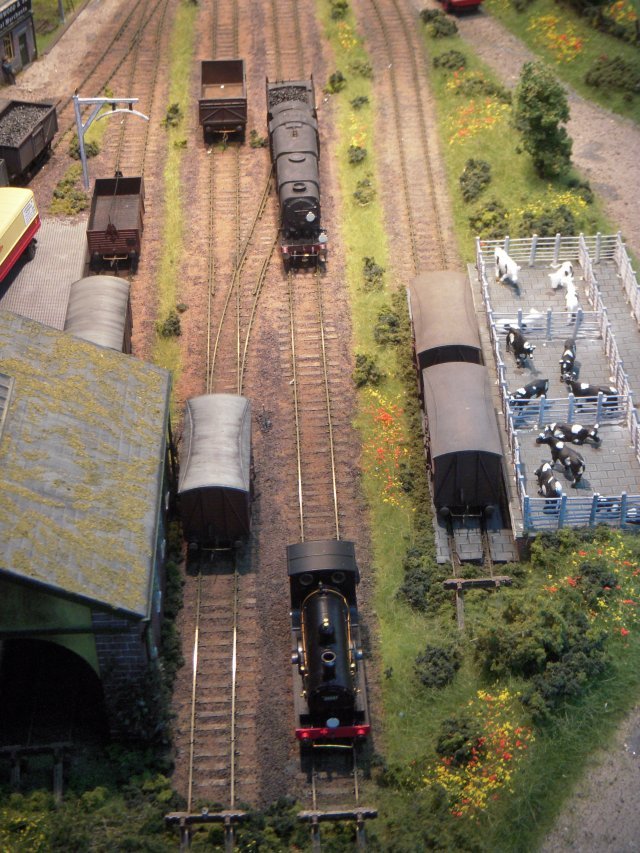
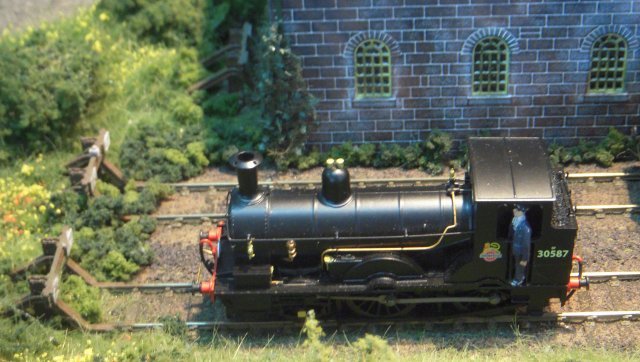
| Set in Devon between 1948 and early 1960s and separated from a fictional station - really a fiddle yard - by a bridge, 8' x 2' Yard Shunter saw train engines being released by the eponymous fixed wheelbase locomotives - ranging from a sound fitted BR 08 to a Beattie Well Tank 30587 - and the wagons destined for a private timber merchant, goods shed, coal merchants and cattle pen being re-arranged. Points on the C&L hand built wooden sleeper track were worked by under-board servo point operation controlled ultimately via MERG servo 4 and accessory decoder. Meanwhile NCE PowerCab DCC also controlled ex Southern Railway N and Q1 Class locomotives as well as a Standard 4MT 2-6-4T. | |||
|
|
|||
|
|
|||
|
|
|||
| HILLSIDE WORKS
by Dave Griffin
009 Gauge 4mm Scale |
|||
|
|
|||
|
|
|||
|
|
|||
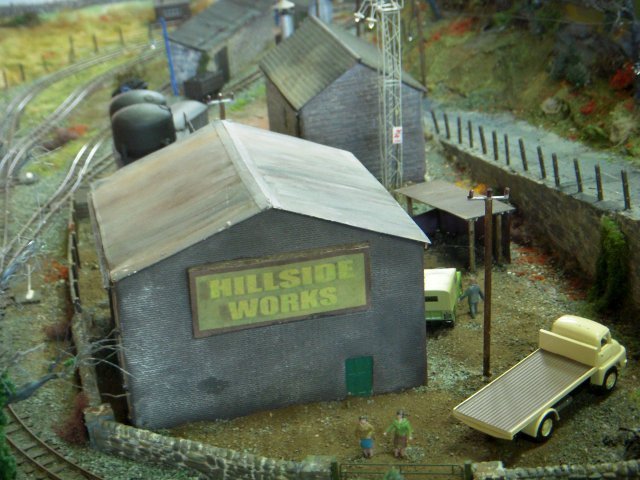
| Constructed using Peco 009
proprietary track and a large amount of modeller's licence, the
portable yet entertaining layout depicting fictional Hillside Works
was set on the Welsh Borders during autumn in the late 1960s and
early 1970s. However, long term plans are to bring it up to date as
a preserved railway - Hillside Works Heritage Centre - complete with
working vintage machinery, and tourist cafe.
For now though, rolling stock was a mixture of kit built and converted ready to run items mainly from RICO and Parkside Dundas with buildings both kit and scratch built using Ratio and Wills materials. Scatters were from Woodland Scenics and Greenscene with bare deciduous trees made from soldered wire frame covered in plaster mix. Locomotives were operated by handheld DC cab controllers with AC derived from an electrically isolated 15v transformer. Another hand built transformer supplied the capacitor discharge unit while the point motors were a mixture of older SEEP and more modern PECO types. Custom built working lamp posts and coloured light signals were also featured. |
|||
|
|
|||
|
|
|||
|
|
|||
| HOBBS ROW HALT
by Bob Vaughan 009 Gauge 4mm Scale |
|||
|
|
|||
|
|
|||
|
|
|||
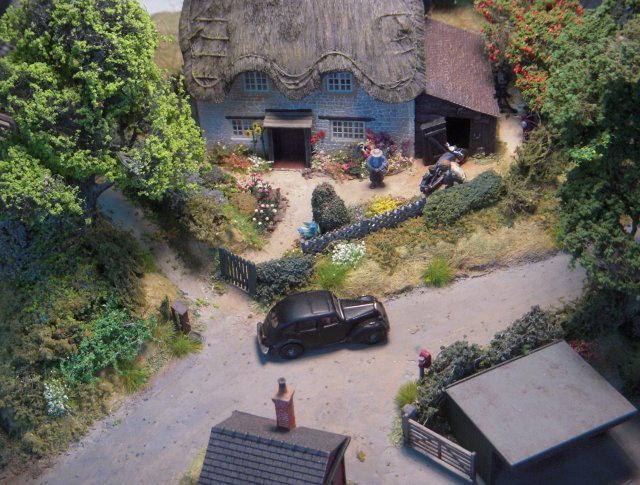
| Hobbs Row Halt was a classic English country micro-layout, complete with thatched cottage and "chocolate box" garden. It started out as a simple circular piece of track on an MDF wobble board, obtained from a local charity shop, used for running in new locomotives before some surplus buildings from Bob's Tansey Bank layout were added to check on coach clearances. The cottage was from the Bachmann Pendon Little Chapel Cottage resin model while the trees were from the Realistic Modelling Materials range of ready to plant foliage. Hobbs Row Halt, complete with tram engine "Lawrence" below, featured in the August 2013 edition of Hornby Magazine. | |||
|
|
|||
|
|
|||
|
|
|||
| As such, Hobbs Row Halt made an interesting comparison with the quarry inspired "lunchbox" layout accompanying Snug End, seen below. | |||
|
|
|||
|
|
|||
|
|
|||
| ST FRAZAL DE
VOLAVENT by Simon Newitt Nm Gauge 2mm Scale |
|||
|
|
|||
|
|
|||
|
|
|||
|
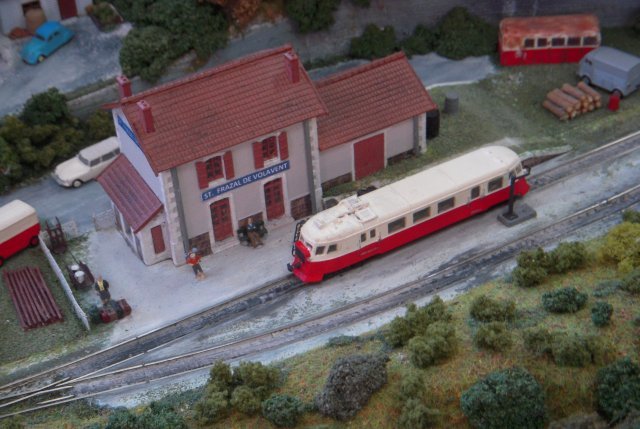
France once had over 12 500 km of
metre gauge lines and St Frazalet De Volavent - measuring 6' x 2' -
represented the 30 mile long Cfd Lozere narrow gauge system in the
heavily forested Massif Central during the 1956-1967 era - using
6.5mm Z gauge track to represent the metre gauge in French N (1:160)
scale. Waiting behind the station was a beige example of the iconic
Citroen DS, whose ability to run on flat tyres once saved the life of President Charles De
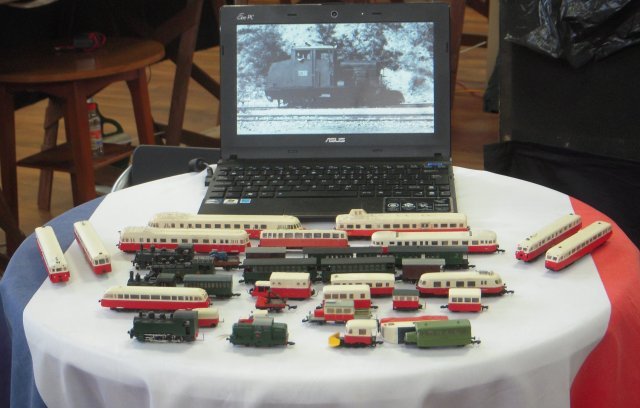
Gaulle. Also on display was an impressive selection of rolling stock and a slideshow of French metre gauge railways as they once were. |
|||
|
|
|||
|
|
|||
|
|
|||
| NATIONAL
ASSOCIATION OF ROAD TRANSPORT MODELLERS
represented by David and Paul Mellor 4mm Scale |
|||
| |
|||
|
|
|||
| |
|||
|
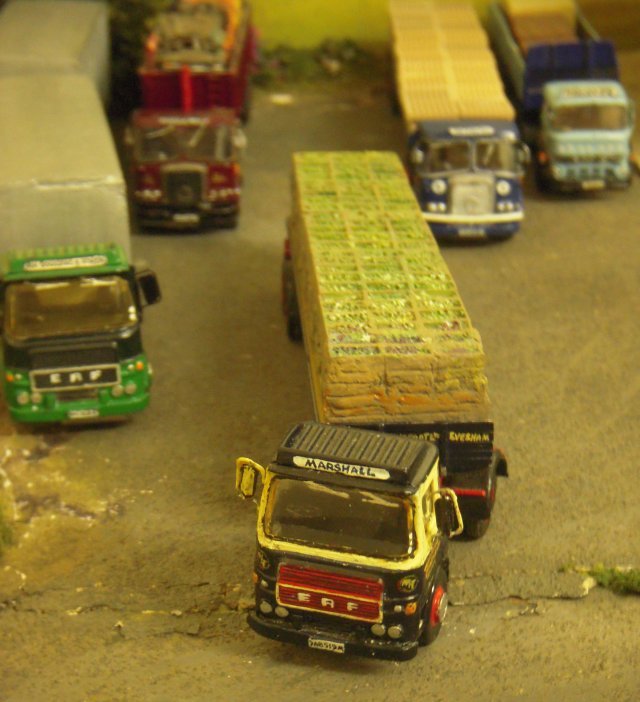
The Mellor Brother's well loved and ever
changing display of
road transport on this occasion included an ERF A Series 4x2 cab
unit along with a matching flatbed trailer in the markings of
Marshalls of Evesham. The load of crated vegetables was
moulded in resin by Frank Waller and painted by Paul and David to
represent enough of both Brussel sprouts and purple sprouting
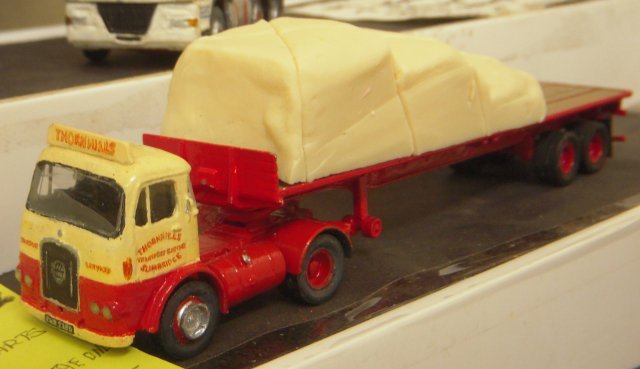
broccoli to fulfil anyone's five portions a day! Another resin load on a flatbed trailer, this time an unfinished one of sheeted goods, was meanwhile applied to another vintage 4x2 cab - this time a Seddon Mark V Pennine in the carmine and cream of Thornhills of Slimbridge circa 1964. The model was based on a Road Transport Images resin kit with added detail. More pictures of and discussions about Paul and David's models can be found on Trucknet |
|||
| |
|||
|
|
|||
| |
|||
| TRAVEL 2000 LTD by Andy Peckham 4mm Scale ( Sunday only ) | |||
| |
|||
|
|
|||
| |
|||
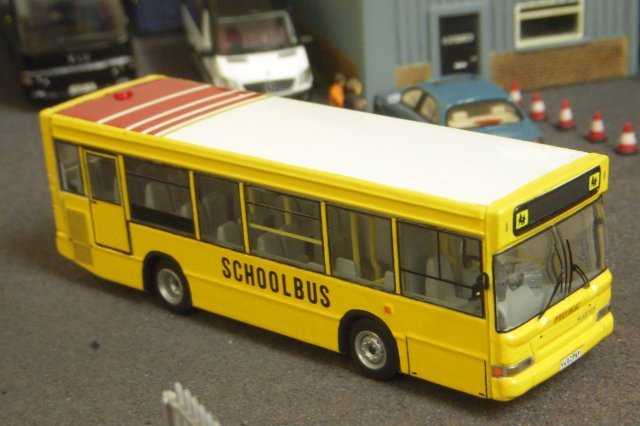
| Meanwhile, school was back in for
VU 02 PKY, an ex Dublin Bus Eirrean Dennis Dart with Plaxton Mini
Pointer bodywork, still bearing the red roof stripes of its former
owner. Such markings are often retained by secondary and
tertiary owners as modern Health and Safety protocols make bus roof
painting expensive and difficult. Also ready to accept 70 seated scholars was R4 MHL, another example of a Guildford built Dennis chassis - this time a Javelin - but with a UVG body. |
|||
|
|
|||
|
|
|||
|
|
|||
| ROBERT WYNN AND
SONS 4mm Scale |
|||
|
|
|||
|
|
|||
|
|
|||
|
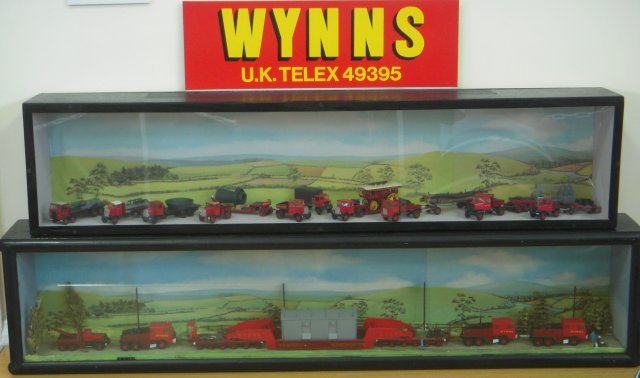
A bonus feature for this
exhibition was a display of heavy haulage vehicles
in the colours of Robert Wynn and Sons Ltd.
Robert Wynn, from whom the company takes its name, was only fifteen when he inherited the already successful haulage business his father, Thomas, had founded in 1863, the year of Robert's birth. Thomas had been a carriage cleaner, who had recognised that the traditional transport of heavy loads by canal was being replaced by the developing railway system.
Robert was one of ten children
and it was said of him that he was too small to
harness the teams of several dozen shire horses that
regularly transported flour from the mills in
Newport, Wales and had to be aided by his elder
sister Emma.
But he expanded the business rapidly, buying his late father-in-law's timber haulage business and intensifying his own operation to meet demand from the increasing number of steel mills in the area. Robert invested heavily, in 1890 building the first boiler wagon capable of carrying 40 tons and in 1902 moving his entire operation, including over two hundred horses, to premises in Shaftsbury Street, Newport. It was from here in 1923 that he incorporated the firm as Robert Wynn and Sons Ltd. Robert Wynn died in the November of that year but he left behind five sons who ran an increasingly strong family business that continued into the 1980s, when successive amalgamations saw the name gradually disappear
In those sixty years, Robert Wynn
and Sons made a reputation for finding new and
innovative solutions to the specific problems posed
by the transport of difficult and indivisible loads.
Not only did they have a permanent place in the
Guinness Book of Records, but they pioneered huge
developments in the field of heavy transport and
achieved many 'firsts'. Wynns Limited, founded by
Robert's great-great grandson Peter Wynn, has
continued this pioneering transport tradition.
150 years ago Thomas Wynn's first vision and mission was to compete with the railways and the canals. Now, following the restoration of Robert Wynn and Sons in 2000 as a subsidiary company responsible for the delivery and - where none previously exists - the creation of specialist equipment to make best use of the nation's waterway network, the wheel has come full circle. |
|||
|
|
|||
|
SECOND WORLD WAR DIORAMAS by Mike Bradley, IPMS Avon Branch. 4mm scale |
|||
| |
|||
|
|
|||
| |
|||
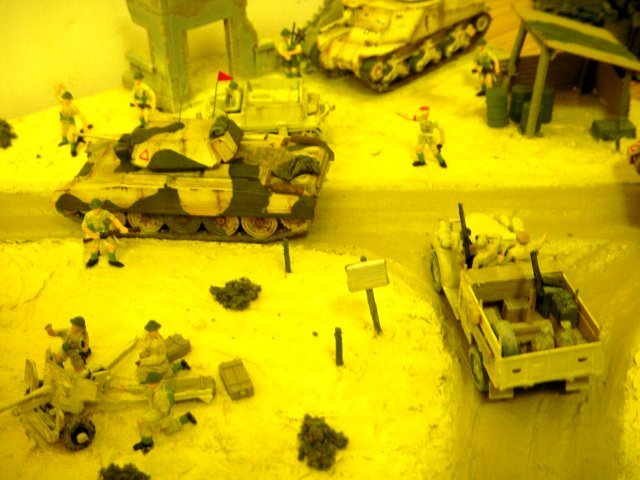
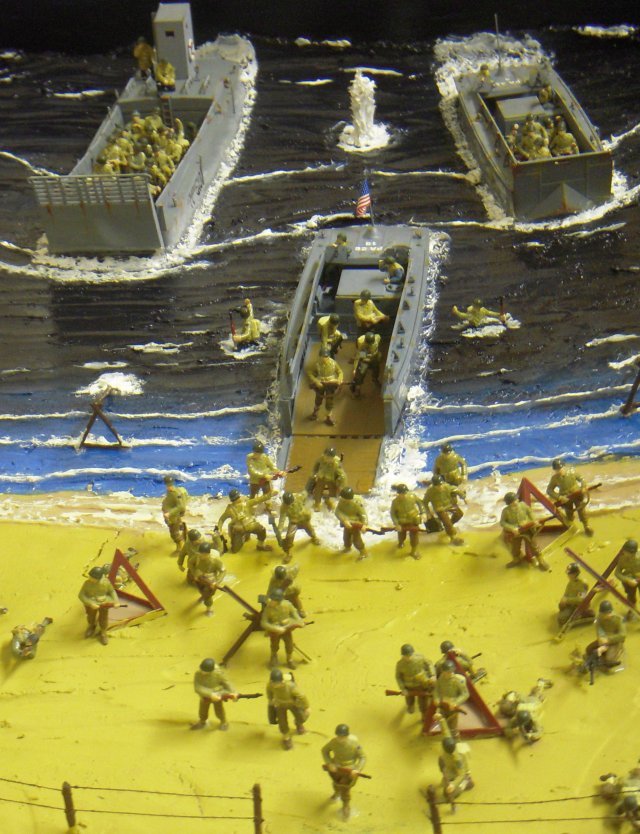
| Among Mike's splendid dioramas newly presented at St Margaret's Hall were scenes of movement in the deserts of North Africa and the opposed amphibious assault on the Normandy beaches in 1944. I particularly liked the waterspouts thrown up by German shells among the American landing craft, while still pushing back Rommel's Afrika Korps were an A15 Crusader tank leading one of the Chevrolet trucks of the Long Range Desert Patrol Group around a 25 pounder gun under the watchful gaze of a Lend-Leased Grant with a hull-mounted 75mm gun. | |||
|
|
|||
|
|
|||
|
|
|||
|
MODELLING DISPLAYS
by Trevor Hale, Steve Harrod, Andi Dell and Mark Begley |
|||
|
|
|||
|
|
|||
|
|
|||
|
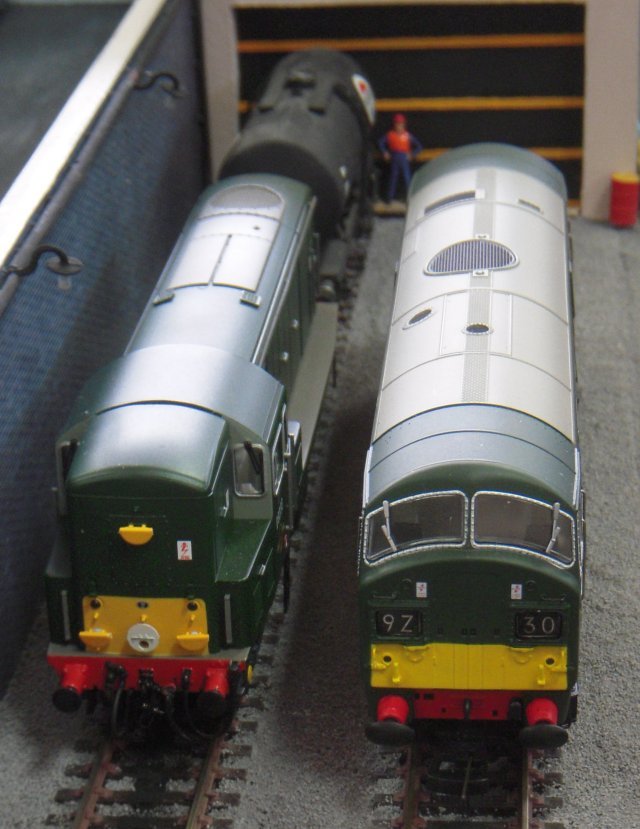
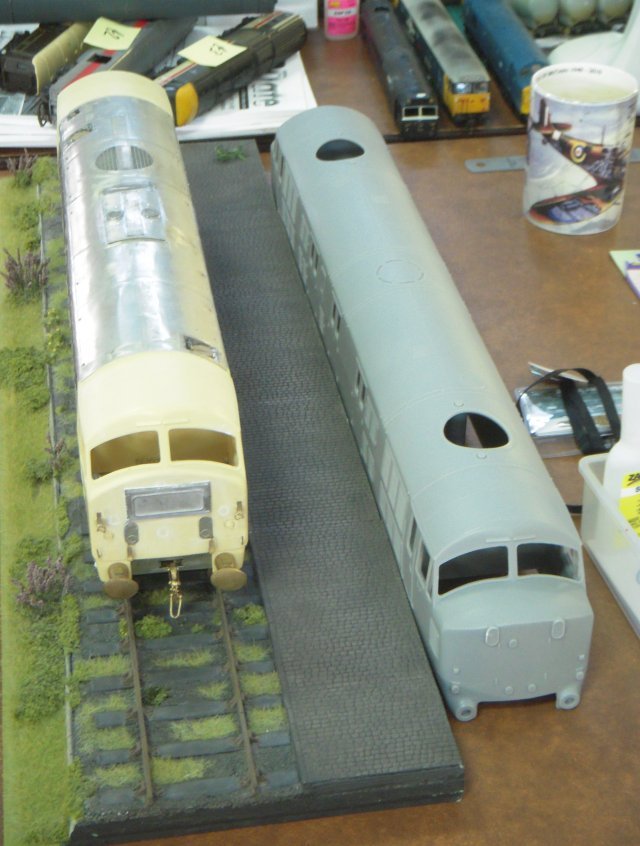
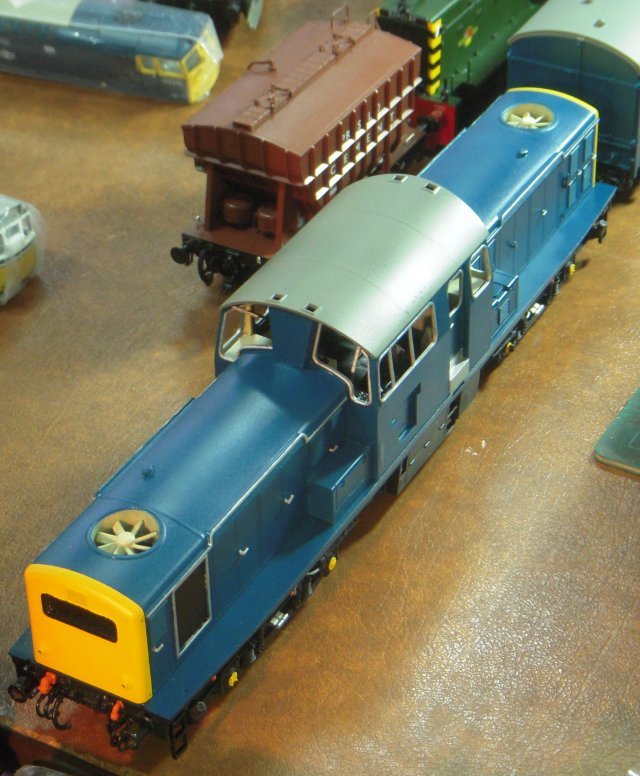
With the ready to run Dapol 00 Class 22 B-B finding homes on a number of layouts at St Margaret's Hall it was interesting to see a much larger scale version as part of the traditional modelling demonstration alongside its antecedent, the D600 series "Warship". While both North British Locomotive diesel hydraulics will require more work to be layout ready though, Presflo cement wagon B888581 was ready to roll and a "Clayton" Class 17 was not far behind. 117 68-ton Bo-Bo Claytons were introduced from September 1962 as a prospective Type 1 standard. Unlike BTH and NBLs 800 horsepower Classes 15 and 16 and their 1 000 bhp English Electric counterparts, excellent all round vision was pivotal to the Class 17 design. This was achieved by housing two 450 horsepower Paxman engines - originally developed for railcar use - under low bonnets at either end of a central cab. Either one of the six cylindered 6ZHXL diesels could move the locomotive on its own, making each of the GEC traction motored units a thrifty proposition when running light engine between jobs. The BR Design Panel and Allen Barnes Bowden Ltd also gave the new freight machines a pleasant yet functional appearance. Exhausts were grouped between the windscreens which themselves extended at the outside bottom corners so that the driver could see the buffer beams while shunting, The cabs were also a distinctive feature of the class; running almost a third of the superstructure length and feeling more like the bridge of a ship than the cockpit-style footplate of a Hymek. A T-shaped recess was also provided under the sliding cabside windows to house tablet exchange apparatus indicating that the class were meant for single lines in rural areas. Like the medium sized trains and local goods yards that the Class 17s were also scheduled to work with, these were under threat from Dr Beeching's Axe in the mid 1960s. Just as the Class 14 centre cab diesel hydraulic 0-6-0s were made obsolete almost as soon as they had been outshopped from Swindon Works, so the D85xx series found themselves in danger on Scottish Region - but not before they had been in a few scrapes of their own making! D8500 to D8585 were built by the Clayton Equipment Company of Hatton, Derby, up to February 1964 while the 13 months between March 1964 and April 1965 saw D8588 to D8616 constructed by Beyer Peacock with Crompton Parkinson electrical equipment. D8586 to D8587 meanwhile left Derby in December 1964 and February 1965 respectively powered by twin 8 cylinder Rolls Royce Type D prime movers of 450 bhp apiece. However, these alternative diesels fared little better in service than the standard Paxman engines. The Class 17s were soon so beset by oil leaks, camshaft failures and fractured crankcases that availability plummeted to 50%. When coupled in mulitple (using either Red Diamond wiring, or Blue Star in the case of the Gorton-built locomotives) the Claytons could haul heavier trains but in doing so lost the advantage of their central cabs and were outpowered by pairs of Class 20s. Withdrawals began in 1968 and the whole class had disappeared from capital stock by 1971 despite the repainting of some members in blue livery. It was only thanks to the Ribble Cement Company purchase of D8568 and its subsequent restoration by the Diesel Traction Group that one example survives today. |
|||
| |
|||
|
|
|||
| |
|||
| Also in attendance were
Cheltenham
Model Centre (Saturday)
,Martyn Parry
Pre-Owned Model Railways,
Castle Trains (Sunday)
Stewart Blencowe
railway books, timetables and photographs, Iron Horse Videos and
DVDs (Sunday)
Penduke Models and
Robbie's Rolling
Stock (Saturday). DVDs of the Cheltenham GWR Modellers Exhibitions from 2006 onward are now available from Richard Pretious of Iron Horse Video Productions based at 77 Tilney Close, Alton, Hampshire, GU34 2BG. |
|||