| Home |
CHELTENHAM GWR MODELLERS GROUP
MODEL RAILWAY EXHIBITION
|
||
| |
|||
| SPONSORED BY | |||
|
|
|||
 |
|||
|
|
|||
|
Click here for Introduction and future exhibition information |
|||
|
THE NEXT EXHIBITION WILL BE HELD ON SATURDAY 25 AND SUNDAY 26 OCTOBER 2014 |
|||
| |
|||
|
|
|||
| |
|||
| |
|||
|
|
|||
| |
|||
| |
|||
|
|
|||
| |
|||
|
|
|||
| |
|||
 |
|||
| |
|||
|
|
|||
| |
|||
| |
|||
|
|
|||
| |
|||
|
|
|||
|
|
|||
|
|
|||
| |
|||
|
|
|||
| |
|||
| |
|||
|
|
|||
| Click on picture for review of October 2009 | |||
|
|
|||
| Click on picture for review of April 2010 | |||
|
|
|||
|
|
|||
|
|
|||
|
|
|||
|
|
|||
|
|
|||
|
|
|||
|
|
|||
|
|
|||
|
|
|||
|
|
|||
|
|
|||
|
|
|||
|
|
|||
|
|
|||
|
|
|||
|
LAYOUT AND ATTRACTION REVIEW |
|||
| |
|||
| MOTLEY SUB SHED
by Rob Newman 0 Gauge 7mm Scale |
|||
| |
|||
|
|
|||
| |
|||
| Motley Sub Shed, a minimum space
10' x 2' layout showcasing a "motley" collection of Rob's
locomotives, assumed that the seaside town of Motley had a
year-round passenger traffic - including holiday trains from
all over Britain in the summer - and freight trains to and from the
harbour, which had its own private railway system worked by
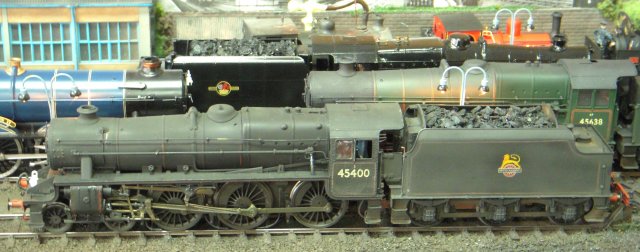
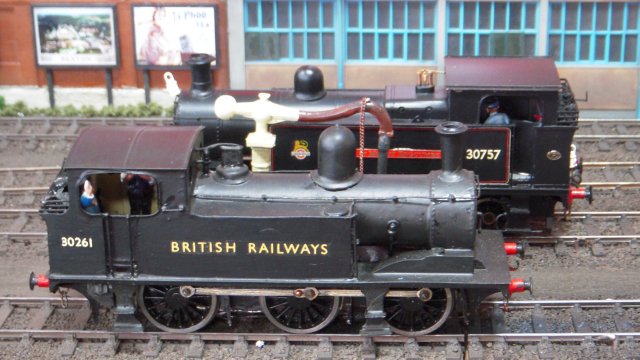
industrial locomotives. Although not a large motive power depot, Motley Sub Shed provided somewhere for the laid-over main line locomotives to rest before their return workings, replenish their tenders and have clinker cleaned from their firebars alongside a similar facility for industrial engines. Upwards of a dozen locomotives from British Railways Scottish, London Midland, Western and Southern Regions could be seen "on shed" at any one time, having been built from kits by Keith Blake, Aiden Houlders and Peter Whyborn and operated by Rob Newman and Andy Wilkie. Pictured above are LMS designed "Black Five" and "Jubilee" 4-6-0s 45400 and 45638 "Zanzibar" as well as blue liveried GWR 4-6-0 "King Charles II" while below are six coupled Southern Railway tank engines 30261 and 30757. 30261 was one of the first batch of Class G6 0-6-0Ts designed for yard shunting on the London & South Western Railway by William Adams in 1893. G6 was the only 0-6-0 Class designed by Adams and used the same boiler as his Class O2 0-4-4Ts of 1889. Six batches of G6s were built at Nine Elms Works, London, the final 20 tank engines differing from the first 14 in having boilers from Beattie Well Tanks and other withdrawn locomotives. Many class members were also retrofitted with vacuum brakes and Drummond lipped chimneys in place of the original Adams stovepipes. Although rarely seen away from former LSWR metals - even after they were replaced as banking engines between Exeter Central and Exeter St Davids in 1933 - two G6 engines were lent to the Great Western Railway during the Second World War for shunting duties at Reading while after Nationalisation two more became Departmental locomotives at Meldon Quarry. 32 members of Class G6 survived to 1948 but only ten remained in service in BR unlined black after 1951, the last going for scrap in 1962. As well as being one of a select group of "foreign" locomotives to share a name with a Great Western Railway "Castle" 4-6-0 ( preserved 5043 in this case ) 30757 "Earl of Mount Edgcumbe" was one of two 0-6-2Ts built by Hawthorn Leslie in 1907 for the Plymouth, Devonport and South Western Junction Railway and one of only three ex PDSWJR locomotives absorbed by the Southern Railway. Originally numbered 4, then 757 under the Southern system, 30757 ended its life as Eastleigh Works shunter until withdrawal in December 1957. |
|||
|
|
|||
|
|
|||
|
|
|||
| STOW CREEK by
Andrew Eastabrook 0n30 Gauge 7mm Scale |
|||
|
|
|||
|
|
|||
|
|
|||
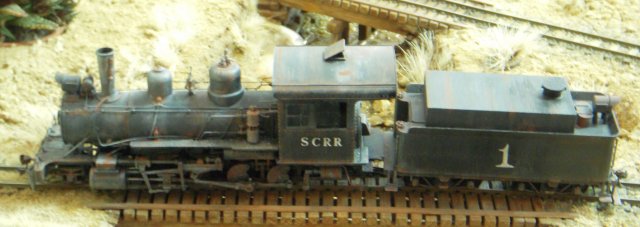
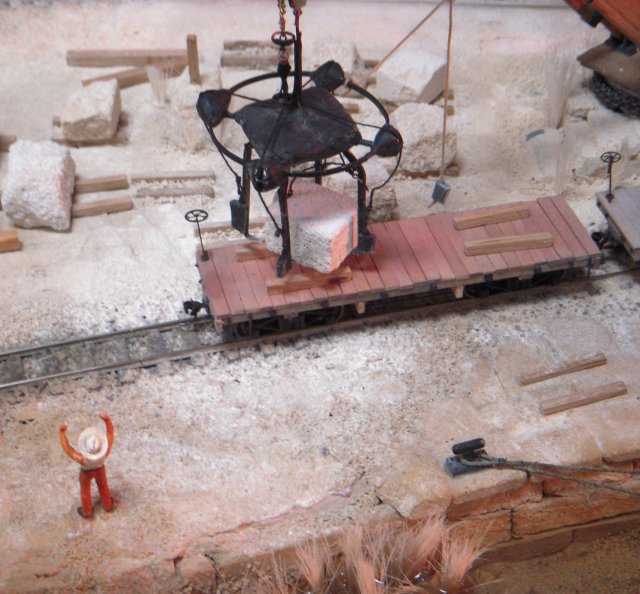
| Set somewhere in the south west of Texas soon after the turn of the 20th Century the railway existed to haul block stone from the distant quarry to the rail head for transhipment on to barges for passage downstream when the creek is running wet. This wasn’t very often and the loading derrick was a bit temperamental, needing nerves of steel and a manual dexterity lacking in most to operate. Activity was therefore erratic at best, but Stow Creek designed to unite with other compatible layouts and featured an impressive arched lighting gantry. | |||
|
|
|||
|
|
|||
|
|
|||
| FRYUPDALE
by Nigel Hawkins EM Gauge 4mm Scale |
|||
|
|
|||
|
|
|||
|
|
|||
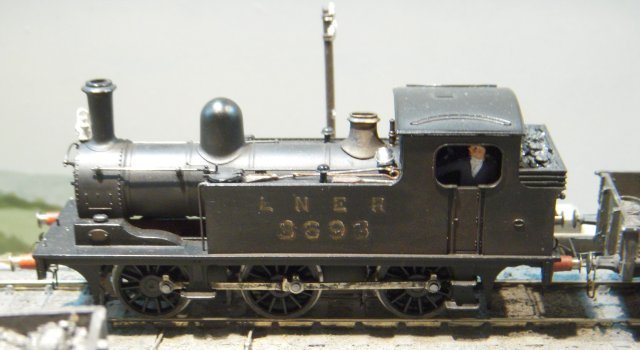
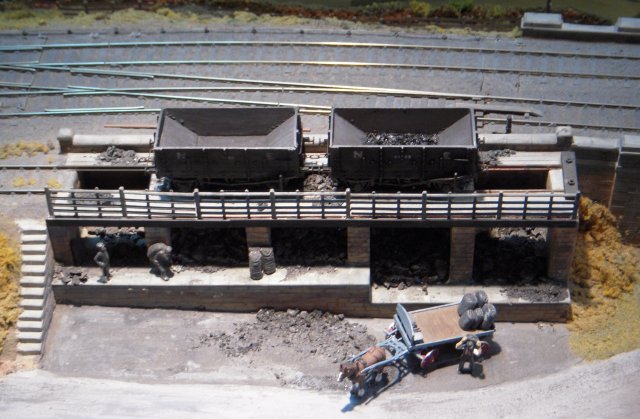
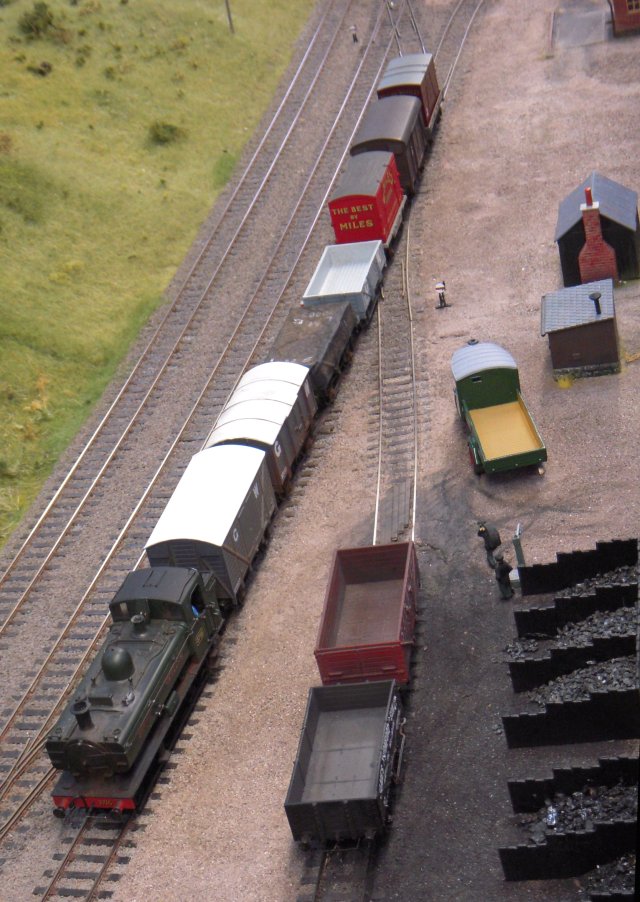
| Fryupdale actually exists in North Yorkshire but never had a railway despite being near Danby on the Grosmont to Middlesborough line. On this 15' x 15' North Eastern branch line however the structures and buildings were based on real prototypes. I particularly liked the coal merchant loading his horse drawn cart from the wagon staithes, below while 0-6-0T 8693 belonged to J72, a Class uniquely built in five batches over 54 years by the North Eastern, London North Eastern and British Railways under four different Chief Mechanical Engineers. Designed by William Worsdell in 1898 – and based on the existing J71 Class - further batches were built for Sir Vincent Raven in 1914 and 1920, for Sir Nigel Gresley in 1925 and Arthur Peppercorn from 1949 to 1951. Of the final batch 69023 has been preserved in NER green livery as “Joem”. Doncaster and Darlington Works as well as Armstrong-Whitworth of Newcastle undertook construction. | |||
|
|
|||
|
|
|||
|
|
|||
| HORNSEY
BROADWAY
by Kier Hardy EM Gauge 4mm Scale |
|||
|
|
|||
|
|
|||
|
|
|||
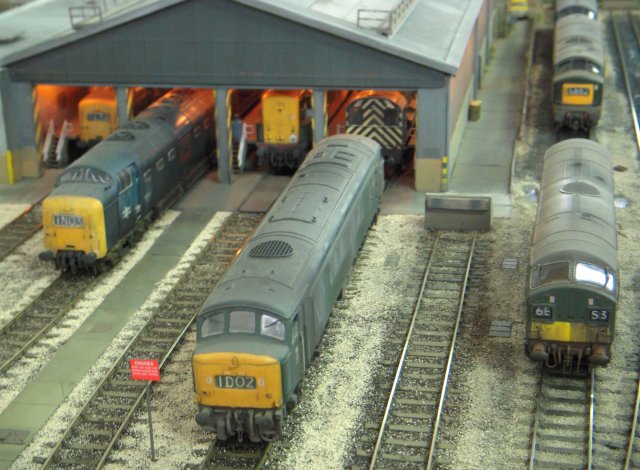
| Hornsey Broadway was based on North London circa 1970 and - when fully assembled - would have featured a section of main line with adjacent locomotive depot within its 24' x 3' scenic section, which would also have presented the differing track levels and flyover typical of the route north from King's Cross which allowed slower trains to cross the main lines without interruption. C&L track and copper clad pointwork were used on the open frame plywood baseboards which could also form a continuous circuit, and even just the locomotive depot module as seen at St Margaret's Hall immediately evoked the "Get Carter" era of blue and green diesels built at Derby, Rugby, Newton-le-Willows and Glasgow. The red signs instructed drivers not to pass them unless the shed doors were open, or as Michael Caine might have put it, "You're a big locomotive but you're out of condition. With me it's a full time job, now behave yourself!" | |||
|
|
|||
|
|
|||
|
|
|||
|
CHELTENHAM SOUTH & LECKHAMPTON
by Gloucester MRC 00 Gauge 4mm Scale |
|||
|
|
|||
|
|
|||
|
|
|||
| Leckhampton station
was opened in 1881 as part of the Banbury and Cheltenham Direct
Railway with a single track and was the last stop before
the Great Western worked
B&CDR joined the Midland Railway's Birmingham to Bristol line at
Hatherley Curve Junction just south of Cheltenham. In 1891 the Midland and South Western Junction Railway obtained running rights from Andoversford to Cheltenham while the Banbury and Cheltenham Direct Railway was absorbed by the Great Western Railway on 1 July 1897. The track through Leckhampton was doubled in 1900 and in 1906 the platforms were extended and the name was changed to Cheltenham South and Leckhampton. The reason for these developments was the introduction of a Cardiff-Newcastle express which did not stop at any other Cheltenham stations It is in this period of pre and post Grouping GWR and post 1948 BR ownership that the Gloucester Model Railway Club finescale layout was set, capturing the essence of the station with only a small amount of compression to fit available space. The Club also ran more than the five trains a day which called at the real Cheltenham South and Leckhampton station. The name of the station contracted to Cheltenham Leckhampton in 1952 although the buildings changed little before closure on 15 October 1962 as the Midland & South Western Junction Railway route had closed a year before. The site of the station is now occupied by Leckhampton Place, a residential development, and Liddington Park Industrial Estate; both accessed via Old Station Drive although the bridges at each end still exist. The Midland and South Western Junction Railway was absorbed by the Great Western in 1923 and its locomotives were renumbered into GWR stock. A delightful Crimson Lake interloper into the mainly Brunswick Green scene was Midland Railway Compound 1000. The use of compound locomotives in Britain was never as widespread as it was in France and other European countries but in 1902 Samuel Waite Johnson introduced this 4-4-0 as the first of a class of Smith System compounds that would be built in successive batches for the next 30 years, 45 for the Midland Railway itself and 195 by the London Midland & Scottish Railway Railway after 1923. 1000 was rebuilt in 1914 and operated in normal traffic until 1951, being restored to its 1907 livery for working special trains in 1959. It has since been displayed at Clapham and York and is currently preserved in Scotland. |
|||
|
|
|||
|
|
|||
|
|
|||
| CROMER
2008
by Mike Kelly 00 Gauge 4mm Scale |
|||
|
|
|||
|
|
|||
|
|
|||
| This layout was inspired by a visit to Cromer in 2005 - and a further mission to measure and take photographs in August 2008 - and included Morrisons' supermarket, part of the original station building which is now a pub, a very stylistic house opposite the signalbox and and the redundant signalbox itself: the last one to be built from concrete blocks cast at the Midland & Great Northern Joint Railway works at Melton Constable and now preserved as a museum of signalling. The platform length and width were reduced a little and although the cutting length was accurate as far as the crossovers, it was very much foreshortened to the bridge in order to keep the layout to a reasonable length. The track was Peco 100 with minimum radius points (rather than large radius due to space constraints) and the plain track had sleeper spacing increased to improve appearance. | |||
|
|
|||
|
|
|||
|
|
|||
|
LLANGENYDD
by Ken Jones 00 Gauge 4mm Scale |
|||
| |
|||
|
|
|||
| |
|||
| Llangenydd was a small fictional
village on the Lleyn Peninsula in North Wales, now the terminus of a
truncated ex GWR branch line which ran to the coast. There was
an ex LMS branch joining nearby, trains from Caernarfon were also
seen, and a new BR road transport had been established to forward
goods to their final destination. The main traffic consisted
of materials for a hydro-electric power station under construction
inside a nearby mountain, supplies and personnel for the nearby
joint-services training camp. Local traffic was still heavy as
the roads in the area were still not good and Llangenydd enjoyed an
Indian summer in the late 1950s/ early 1960s before final closure in
the Beeching cuts.
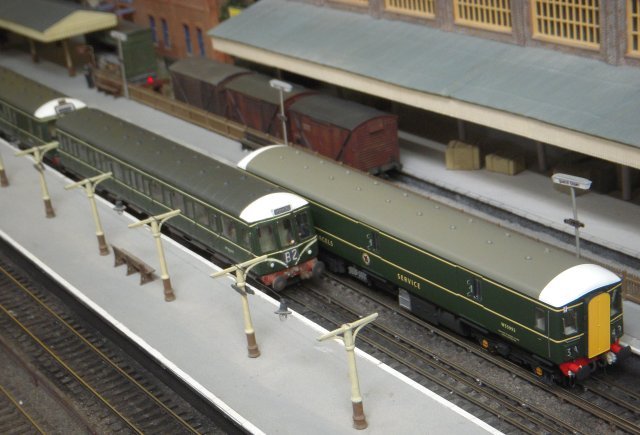
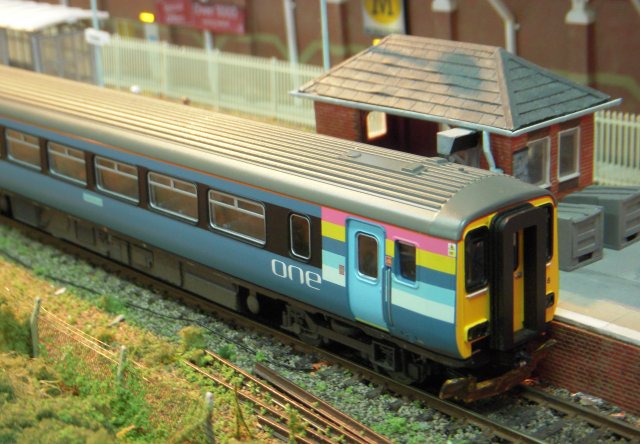
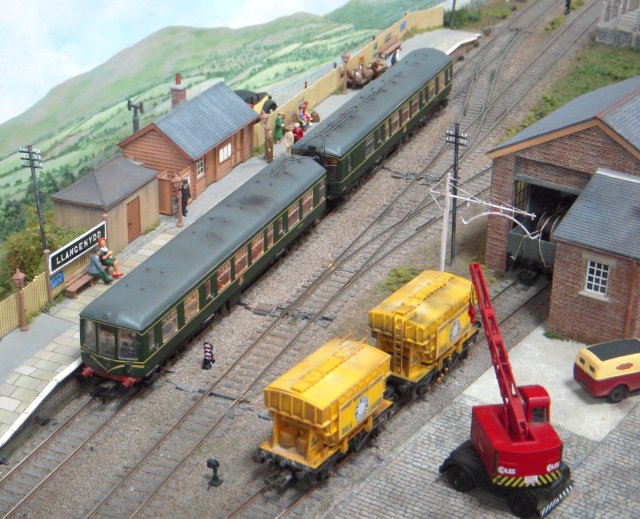
DCC operated locomotives and stock - including the Derby Lightweight DMU evolved from the GWR B Set hauled by Midland Compound 1000 through Cheltenham South & Leckhampton - were mainly detailed and weathered proprietary items with some kit building, such as the Airfix / Dapol Presflos near the red Coles crane. Llangenydd appeared in Hornby magazine in July 2010. |
|||
|
|
|||
|
|
|||
| |
|||
|
PENRHOS
by Dave Spencer
00 Gauge 4mm Scale |
|||
| |
|||
|
|
|||
| |
|||
| Penrhos was a fictional rural
community set somewhere in a relatively remote part of rural Wales
served by a BR (WR) branch line. The exact location was kept deliberately vague
so that motive power and rolling stock that would have been seen
right across the former GWR system in the 1950s and 60s could have
been run on the layout, which particularly focussed on the human
imprint on the natural landscape and a railway engineered through
undulating terrain. Branch traffic included light engine movements to the locomotive depot, civil engineering trains with four wheeled coaches and vans, pick-up goods handling wagonloads of coal, oil and general merchandise, stopping passenger services formed by loco-hauled carriages, push-pull units and DMUs and stone wagons running empty to the quarry loader and then full away. |
|||
|
|
|||
|
|
|||
|
|
|||
|
SMALLCOMBE
by Ted Olney 00 Gauge 4mm Scale |
|||
|
|
|||
|
|
|||
|
|
|||
| Smallcombe was the busy terminus at the end of the line from Bishopsmead -Ted's other layout - located "somewhere" on the Western / Central Division of the LMS in the 1930s. The area was presumed to have a significant demand for frequent passenger services and a considerable requirement for all kinds of goods traffic to a warehouse, gasworks and dairy / creamery. The rolling stock and buildings were a mixture of modified proprietory, kit, modified kit and scratchbuilt items. | |||
|
|
|||
|
|
|||
| |
|||
| THOMAS by Cheltenham GWR Modellers 00 Gauge 4mm Scale | |||
|
|
|||
|
|
|||
|
|
|||
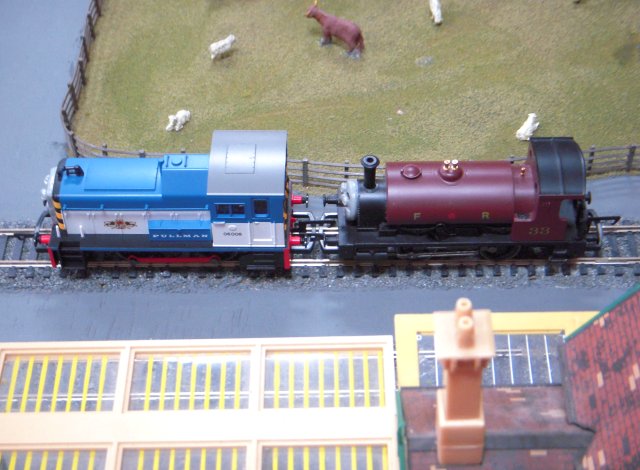
| The 0-4-0 Andrew Barclay of
Kilmarnock built Class 06 0-4-0 diesel mechanical locomotives - as
seen here in Pullman markings next to a Furness Railway liveried
0-4-0ST - were very much associated with their native Scotland.
Initial allocations were Inverness, Keith with outstabling at Elgin,
Kittybrewster with outstabling at Inverurie Works, Greenock (Ladyburn),
Motherwell, Hamilton, Ayr and Corkerhill. Subsequent transfers saw
them also allocated to Perth, Dundee, Dunfermline Upper, Leith
Central with outstabling at South Leith Yard, Aberdeen Ferryhill,
Eastfield, Grangemouth, Polmadie with outstabling at Gourock,
Haymarket, Thornton with out stabling at Burntisland, Kirkcaldy,
Markinch and Ladyburn, Stranraer and Hurlford.
Although several succumbed to the cull of shunting locomotives in the late 1960's, twenty of the thirty five built remained in service in 1970. Over the following eleven years their numbers slowly dwindled, the last being taken out of regular use in 1981. There survival into the 1970's was due to the continued requirement for locomotives suited to the constraints of various branch lines, particularly docks lines along the East Coast of Scotland. Depots with allocations in the 1970's were Aberdeen Ferryhill, Dundee, Dunfermline Townhill, Eastfield/Polmadie and Leith Central. Those at Aberdeen Ferryhill, Dundee and Leith Central generally found use on local dock and associated duties. Dunfermline Townhill locomotives were similarly deployed at Burntisland and Kirkcaldy and were also stabled at Markinch for use on the Auchmuty branch. Eastfield/Polmadie locomotives where used for various duties which included outstabling at Gourock and Whifflet Junction Sidings for the Souterhouse branch. Locomotives were also allocated to Grangemouth early in the decade and also at Hamilton and Motherwell for short periods. |
|||
| |
|||
| STEAM SUPERPOWER
by Alan Drewett and John White
00 Gauge 4mm Scale |
|||
| |
|||
|
|
|||
|
|
|||
|
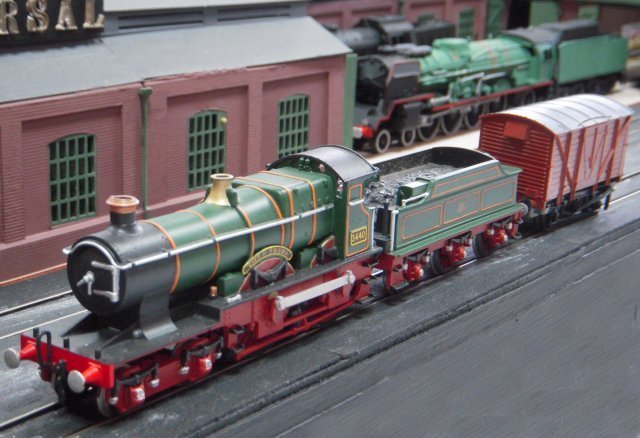
One of the joys of scale modelling is being able to compare locomotives designed for similar reasons but which would never have met in real life. Add to this the scattergun approach to subject selection of Northamptonshire manufacturer Rosebud Kitmaster between 1957 and 1962 and you have a chance to appreciate the steam superpower of two continents and four nations. Also on display was John White's model of Rosebud Kitmaster's Lancashire & Yorkshire Pug ( above) and Rosebud Kitmaster motorised closed van used to power Alan Drewett's Airfix-derived 3440 "City of Truro", seen below passing Deutsche Bundesbahn Baureihe 23 locomotive 23 014 and SNCF 241P 4-8-2 Mountain on Universal Works. |
|||
|
|
|||
|
|
|||
|
|
|||
| NATIONAL
ASSOCIATION OF ROAD TRANSPORT MODELLERS
represented by David and Paul Mellor 4mm Scale |
|||
| |
|||
|
|
|||
| |
|||
|
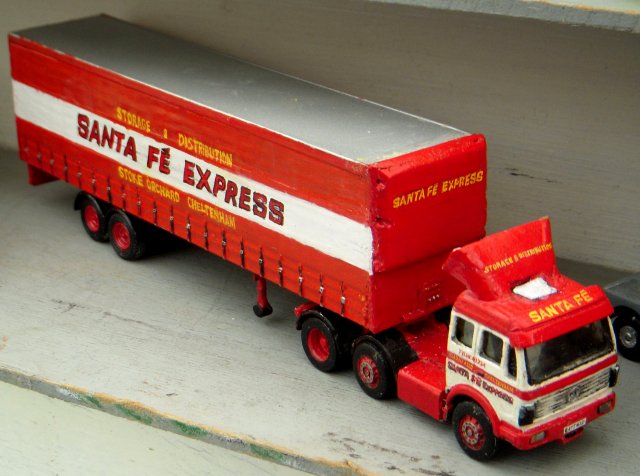
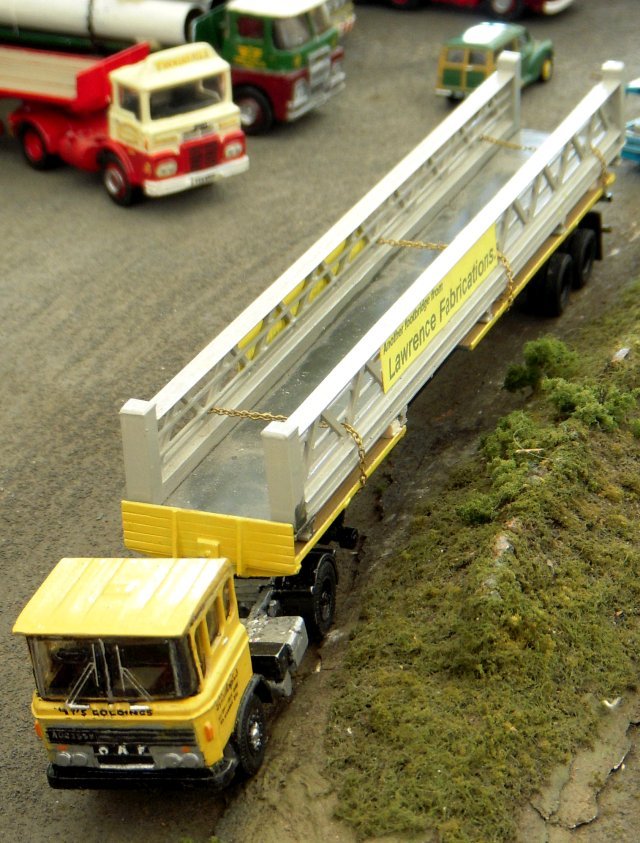
The Mellor Brother's well loved and ever changing display of road transport included a matching Atkinson 6x2 cab unit and curtainside trailer in the eye-catching red and white of Stoke Orchard, Chelternham, based storage and distribution experts Santa Fe Express. Meanwhile a footbridge girder load from Lawrence Fabrications hauled by a two axle DAF in the highly visible markings of Wootton-Under-Edge based W.G. Goulding & Sons was leaving the River View Transport Cafe, of which Paul and David wrote: "As you arrive at the transport cafe inside the oil-stained, noisy cab of your truck or in a modern car you select a parking space and step into the open air. The parking area is almost full and a blue haze lingers from running diesel engines and a Gardner fires up, filling the car park with a white out. This engine would continue into the future and destined to be preserved in vintage trucks by enthusiasts. Looking at the building it shows signs of constant use like the road surface, but the windows are running from the fried and roasted meals being cooked inside drift out hungry smells, making this a popular food stop for Gloucestershire fleet haulage drivers and outsiders. The sight of British built lorries or trucks owned by local fleets in the many individual liveries and hand painted sign writing dominate the parking area, while further checks reveal other operators are changing to European manufacturers. Each vehicle has various loads, all neatly roped and sheeted, securing their freight in transit many miles, some in Europe. Overhead the Red Arrows Gnat squadron are in formation returning to Kemble air base, below the landscape includes a church used for weddings and funerals and the appropriate cars are often seen passing by the cafe site. Turning left down a congested lane due to a flock of shep covering the road with quarry trucks using this route to and from a distant quarry. In and around the parking area can be found vintage Fords that are part of the cafe owner's preservation hobby, with a derelict blue van abandoned in the trees showing some past work." |
|||
| |
|||
|
|
|||
| |
|||
| TRAVEL 2000 LTD by Andy Peckham 4mm Scale ( Sunday only ) | |||
| |
|||
|
|
|||
| |
|||
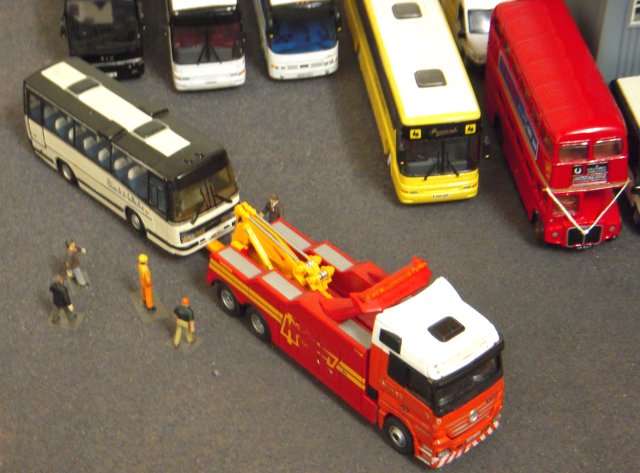
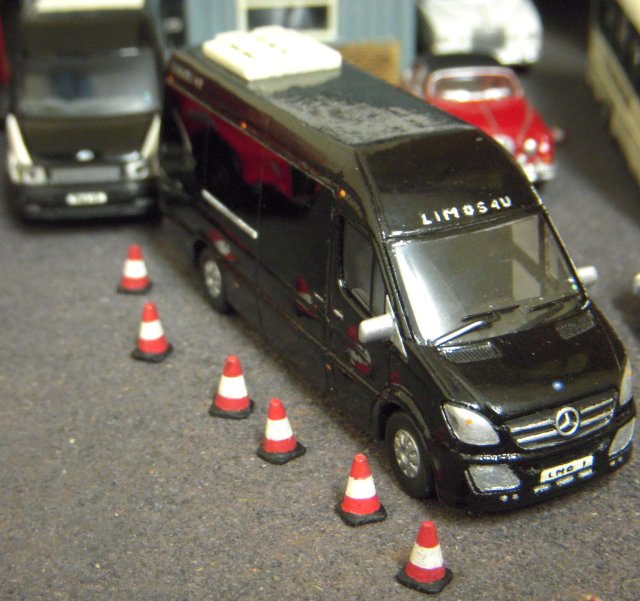
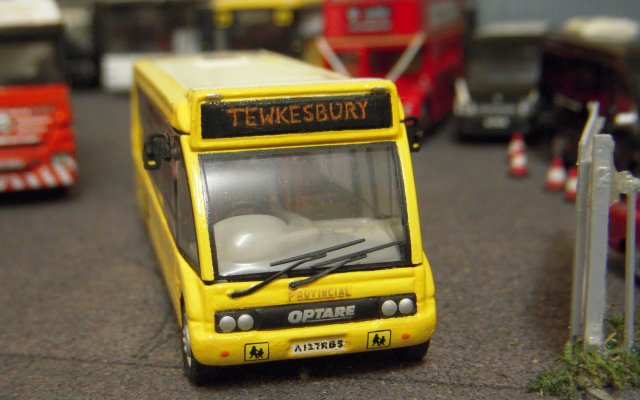
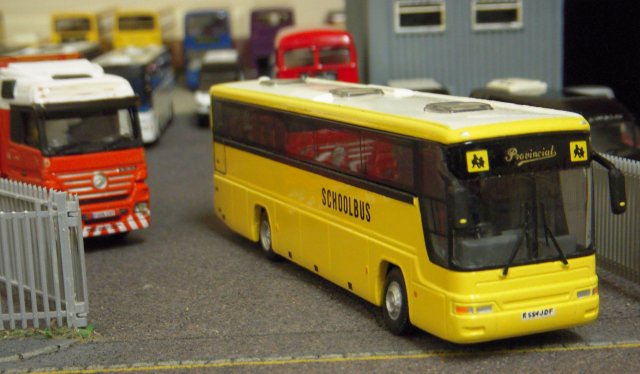
| October 2012 meant Travel 2000 saying goodbye to its 1985 vintage Plaxton Paramount bodied Dennis Lancet as it was towed away by enthusiasts for restoration, although new additions to the yard were a Mercedes Sprinter limousine conversion by Starfleet, a 2008 Optare Solo M850 dedicated as a school bus and a Plaxton Premier bodied Volvo B10M now fitted with 70 seats in 3+2 format, also for school bus work. | |||
|
|
|||
|
|
|||
|
|
|||
|
|
|||
|
|
|||
|
|
|||
| |
|||
|
SOUTH DOWNS BUS RALLY & VINTAGE SHOW
by Vincent Tweed
4mm scale |
|||
| |
|||
|
|
|||
| |
|||
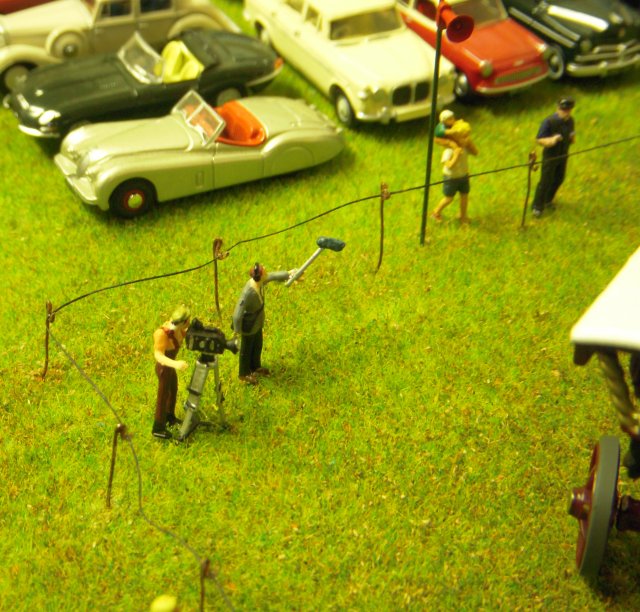
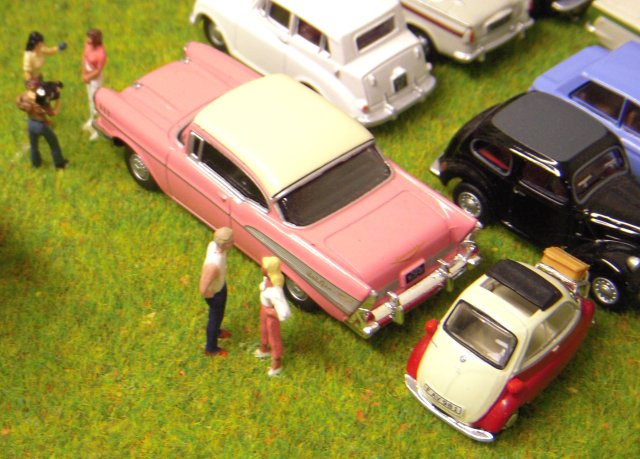
| A full description of this exciting diorama can be found on the Herefordshire section of this website, but over the October weekend at St Margaret's Hall Vincent added members of the Noch camera team filming the vintage traction engines in the show arena as well as interviewing the Pink Ladies and their matching Chevrolet Bel Air. | |||
|
|
|||
|
|
|||
|
|
|||
|
MODELLING DISPLAYS
by Harvey Faulkner-Aston, Steve Harrod, Andi Dell, Mark Bagley, Trevor Hale and Steve Harrod |
|||
|
|
|||
|
|
|||
|
|
|||
|
|
|||
| |
|||
|
|
|||
| |
|||
|
|
|||
|
|
|||
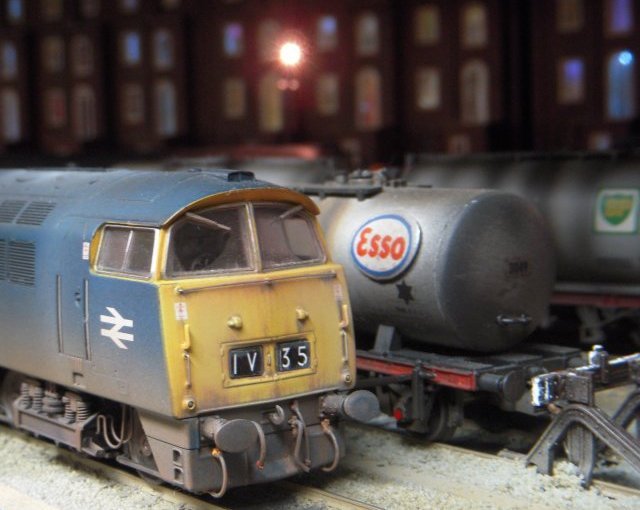
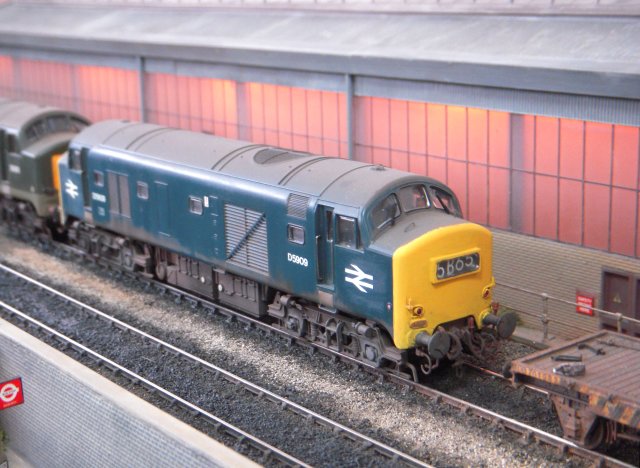
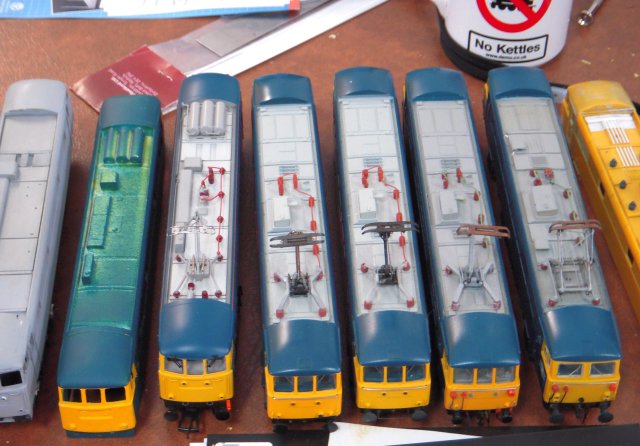
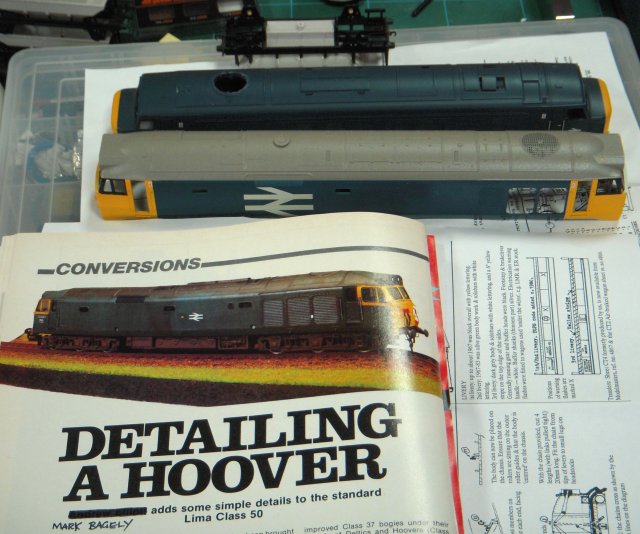
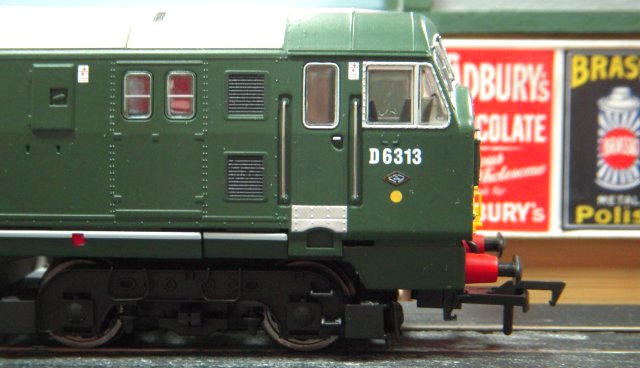
| Classic British diesel locomotives - and an impressive line up of London Midland AC electrics - detailed to an extremely high standard dominated the now-traditional modelling displays at St Margaret's Hall although, as Roger Webb was keen to demonstrate on the test track outside Universal Works, ready-to-run manufacturers such as Heljan are rapidly improving the specification of such products as the North British Type 2 D6313. It is hoped that these diverse and short-lived B-Bs will return along with a range of other Western Region diesel hydraulics to a future display for the Cheltenham GWR Modeller's Group Exhibitions. | |||
|
|
|||
|
|
|||
| |
|||
| Also in attendance were
Cheltenham
Model Centre (Saturday)
,Clive
Reid (RCSW Models),
Castle Trains (Sunday)
Stewart Blencowe
railway books, timetables and photographs, Iron Horse Videos and
DVDs (Sunday)
Penduke Models and
Robbie's Rolling
Stock (Saturday). DVDs of the Cheltenham GWR Modellers Exhibitions from 2006 onward are now available from Richard Pretious of Iron Horse Video Productions based at 77 Tilney Close, Alton, Hampshire, GU34 2BG. |
|||