
My starting point for this talk is a quotation from the 1960 Lyons tea card album Wings of Speed which was summing up 50 years of air speed records since Louis Bleriot flew over Rhiems at a death defying 46 mph.
“Already the North American X-15 is preparing for an assault on the silent ocean of space”
But what exactly is space and what exactly is an ocean?
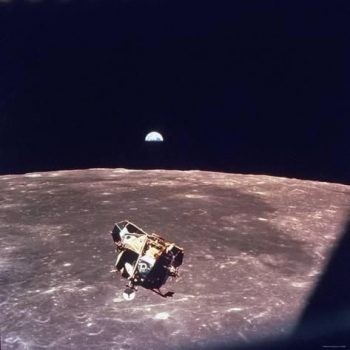
Put simply, space contains everything. This picture for example contains the Moon, the Earth and all of humanity except Apollo 11 Command Module pilot Michael Collins who was behind the camera.
And beyond is the infinite dark vacuum that contains planets, stars and other galaxies. In the understanding of modern science there is nothing beyond space. It has no edge or boundary. And all the available evidence suggests that it was created billions of years ago with a Big Bang.
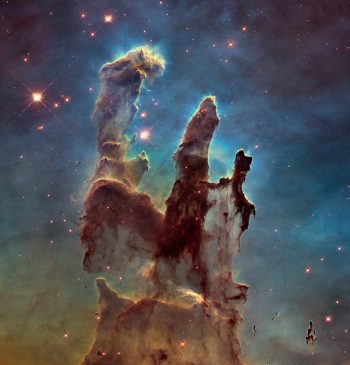
As the universe cooled and expanded after the Big Bang, sub atomic particles of matter coalesced to form atoms of hydrogen and helium. Gravity then began turning clouds of hydrogen into stars which then gave rise to heavier elements such as carbon, oxygen and iron. When stars exploded at the end of their lives, these elements were flung across space, often in the form of comets and other celestial bodies.
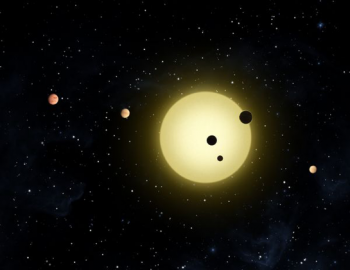
By this time, planets were being formed around stars. During the last twenty years, astronomers have discovered planets orbiting stars outside our own solar system but only by observing the way that these exo planets dim the light of their parent stars. As such, only analysis of the light arriving from them yields clues as to what they are like. Some may be mainly composed of liquids and gas like the outer planets of our own solar systems but the most interesting are the potentially Earth like bodies, especially if they are a similar distance from their parent star.
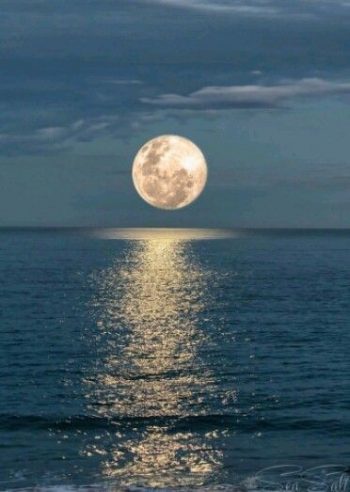
In our own family of planets, Earth is unique in having open bodies of water. Scientists still debate exactly how water accumulated on Earth. It could possibly have arrived on comets and asteroids crashing in to the young planet. Alternatively, it may have been the result of steam from the Earth’s molten interior cooling and then falling as rain. Among the low points that the water would have filled would have been what became the Pacific Ocean, which some scientists believe was created when a collision between the young Earth and another celestial body brought the Moon into existence. And indeed that mysterious body could have brought water to the Earth as well.
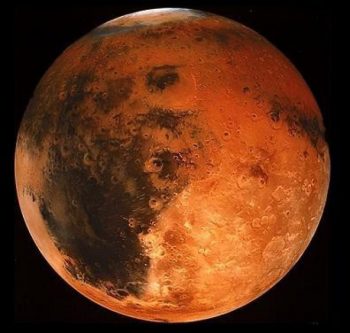
In fact at this point it is worth quickly examining the other inner planets of the Solar system. Closest to the Sun, Mercury is too hot to sustain bodies of water and has no moon. Next out, Venus is also too hot for liquid water but has a sulphurous atmosphere with a runaway greenhouse effect. It also has no moon. Beyond Earth but inside the gas and ice giant planets of Jupiter, Saturn, Uranus and Neptune, Mars may well have boasted running water and even oceans to rival Earth. However, Mars (pictured above) has only one third of the gravity of our planet and – currently – only a weak magnetic field. As a result. streams of charged particles from the Sun have stripped away most of its atmosphere and also allowed most of the water to evaporate. Mars does however have two moons but neither Phobos nor Deimos are as large as our moon relative to the Earth.
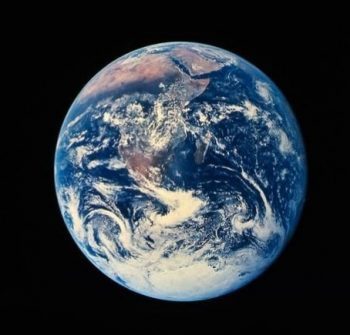
So to recap, Earth is unique in being far enough from the Sun to allow liquid water. It also has a liquid iron core which generates a magnetic field to keep the Solar Wind at bay which in turn allows Earth to retain an atmosphere thick enough to sustain liquid water and a rain cycle. The heat of the Sun evaporates surface water into clouds which then release their moisture as rain. The rain falls on high ground and runs down to the oceans in streams and rivers, taking salt, silt and other minerals with it.
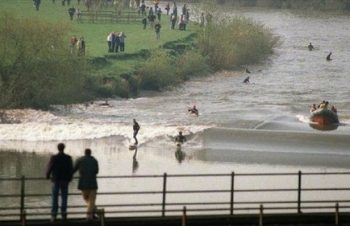
The sea – made of one third oxygen – is thus more buoyant to floating objects than a body of distilled water. Thanks to the gravity of the Moon, the seas also have tides in addition to the light and darkness of the days and nights caused by the rotation of the Earth and the seasons caused by the Earth wobbling on its axis. The still molten core of the Earth also powers volcanoes, thermal vents on the ocean floor and plate tectonics. As a result, over millions of years, oceans have defined land masses just as drifting continents have defined them.
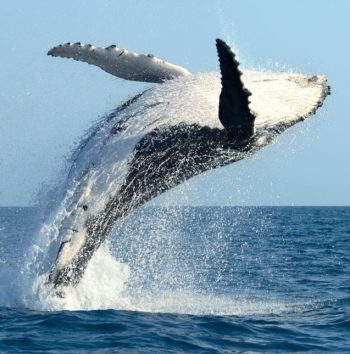
And somehow, Earth spawned life. Perhaps by simple organisms arriving on comets, perhaps by other means. But plants, first in the oceans and then on land, turned carbon dioxide into oxygen and allowed animals to breathe and breed. Some air breathing land animals even returned to living in the oceans and some of the primates with opposable thumbs came down from the trees and became our ancestors.
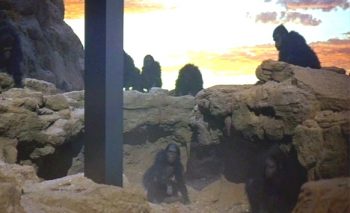
Nobody knows exactly how this happened, not even Arthur C. Clarke and Stanley Kubrick, but in the last few million years humans have evolved language, invented tools, discovered fire and spread out from Africa across the globe. As they did so, they either moved round the edge of lakes and rivers, waded through shallows or paddled themselves on floating logs which eventually became dugout canoes.

In the same way, human society moved on from clans of hunter gatherers into kingdoms of farmers, ever more aware of the geographical limits of their environment. The land they lived in supported domestic animals and crops, but was defined by the lands of other people or bodies of water. Sunshine and rain came from the sky, which at night became the velvety playground of the Moon and stars.
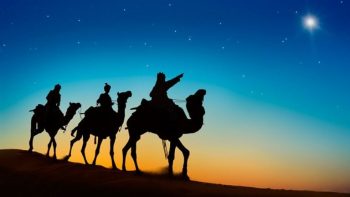
Some ancient people looked at the sky and saw gods and heroes. Others studied the celestial firmament and saw patterns of fixed stars with other points of lights wandering between them. From them they interpreted portents of change, such as the Magi of the New Testament following a star to greet the new born King of the Jews.

But even the desert has some oases , just as every land mass has its coast. The Mediaeval Portuguese explorers Henry the Navigator and Bartholmew Diaz slowly worked their way down West Africa before rounding the Cape of Good Hope.
A greater leap of faith though would be setting out into unknown oceans far beyond the sight of land. Not least as in the ancient view of the cosmos there was the implied danger of hitting the edge of a sky dome or even falling off the edge of the World.
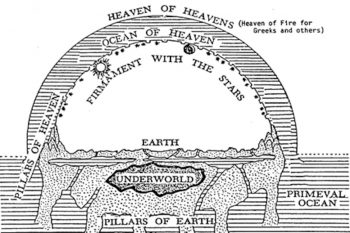
However, the fact that different stars are visible from different locations on the Earth was noticed in ancient times. Aristotle, the Greek philosopher who lived three centuries before Christ, wrote that some stars were visible from Egypt which were not visible from Europe. This would not be possible if the Earth was flat.
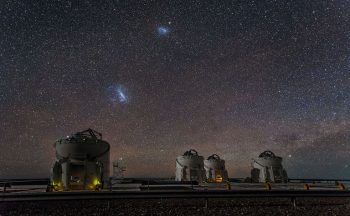
Proof that the World was a sphere finally came in the years from 1519 when another Portuguese explorer, Ferdinand Magellan, led an expedition that sailed completely round it. His fleet first travelled west round Cape Horn and then across the Pacific to the Philippines where Magellan himself was killed. However, his shipmates made it home via South Africa and Magellan is also remembered in the name of the Magellanic Clouds. These seemed to be vapour between the stars but are in fact dwarf galaxies beyond our own galaxy, the Milky Way.

A ship beyond the sight of land on a clear, calm night is a perfect platform for studying the stars. Both for their own sake and as an aid to navigation. The ancient Minoans, who lived on the Mediterranean island of Crete from 3000 to 1100 BC, for instance, left records of using the stars to navigate and the crew of aircraft such as the Avro Vulcan also used them to steer by.
However, a celestial navigator will require a knowledge of the constellations of the relevant hemisphere and also know what should be visible at any given time and season. For maximum accuracy too, a celestial navigator will use a tool such as a sextant to measure the angle between the Sun or chosen star and the horizon.
In conjunction with a compass – seeking North courtesy of the Earth’s magnetic field – a celestial navigator can find the position of his craft in terms of latitude. This is always somewhere between one of the poles and the Equator. But the next challenge at sea was establishing longitude.
How far was local time – such as noon with the Sun directly overhead – either ahead of or behind a fixed meridian? The comparison would require a very accurate and reliable clock, which was finally perfected by Englishman John Harrison in the 1730s. In the 1880s, too, Greenwich became internationally recognised as the Prime Meridian for determining longitude.

Since the time of Magellan too, Western science had moved on from the idea of the Earth being at the centre of the Universe to the concept of it orbiting the Sun along with other planets. Galileo had used a telescope to discover the moons of Jupiter while in 1769 Captain James Cook ‘s exploration of Australia and New Zealand included an observation of the transit of Venus across the face of the Sun.
In the early years of the Twentieth Century, ships would soon be joined by aircraft in their ability to navigate across water by the Sun and stars. And just as ships had for more than a century had coastal lighthouses to guide them, navigators of both sea and sky would be able to use radio technology. Positions could be determined by measuring the time it took to receive radio signals from the beacons of known locations. Similarly, from the 1940s, Radar became available to measure the time it took to bounce electromagnetic waves off an object and back to a receiver. The waves that reflected back to the receiver indicated the object’s distance.

Then, in 1945, Arthur C. Clarke wrote an article for Wireless World magazine entitled “Extra – Terrestrial Relays”. This envisioned a network of three manned space stations that could pick up, boost and re-transmit radio signals all around the World.

Indeed, 28 January 1960 saw the US Navy’s Moon Relay system send a picture of the Essex Class aircraft carrier USS HANCOCK (CVA-19, 27 100 tons displacement) by radio from Hawaii via the Moon to Washington DC. Taken from the air, it showed the Essex Class carrier’s crew on the forward flight deck spelling out the words “Moon Relay”. However, unlike using a Clarke style geostationary satellite, the US Navy’s Moon Relay could operate only when the Moon was above the horizon for both transmitting and receiving stations.

Eventually bouncing electromagnetic signals around the globe was done by unmanned satellites such as Telstar but in a 1958 essay, Arthur C. Clarke envisioned
” a personal transceiver so small and compact that that every man carries one…The time will come when we will be able to call a person anywhere on Earth merely by dialling a number.”

Such a device, Clarke thought, would also include a global positioning system so that “no one need ever again be lost”. Or as we say in the 21st Century – a mobile phone! Today’s Global Positioning System is funded and controlled by the US Department of Defense but is available to anyone with the right equipment. The earliest GPS system was launched between 1978 and 1985 with 11 satellites but now includes about 24 satellites that orbit the Earth and send radio signals from space.
But how did the satellites get into space and what else links spaceships the sea?

One early answer was pride in Britain’s maritime dominance, which made Oliver Cromwell’s brother in law John Wilkins keen to trade with the inhabitants of the Moon. Wilkins, who experimented with flying machines in the gardens of Wadham College, Oxford around 1654, was convinced the Moon was inhabited by a race known as the Selenites and planned to reach them in a wooden chariot powered by springs, gunpowder and feathered wings – just as Drake and Raleigh had set out across uncharted oceans a century before. Sadly for the inventor of the airgun, mileage recorder and prototype pneumatic tyre, the next 30 years saw the discovery of vacuum and other phenomenon which would make such a journey impossible.
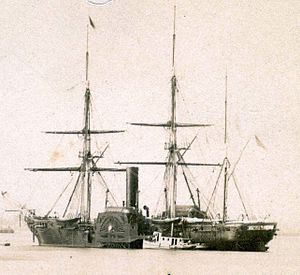
More than 200 years later though, French science fiction writer Jules Verne came surprisingly close to the reality of a space mission in the stories “From The Earth to The Moon” and “Around the Moon”. In 1865 he described a giant gun called Columbiad based in Stone’s Hill, Florida, firing a manned shell which took five days to reach the Moon before returning to land in the Pacific close to a the paddle steamer frigate USS SUSQUEHANNA (2 489 tonnes displacement) which was in commission from 1850 to 1868 .
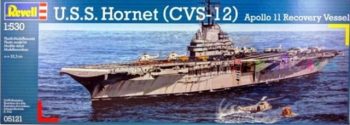
In 1969, the Command Module of Apollo 11 had the radio call sign Columbia, blasted off from Cape Canaveral in Florida, took just over three days to reach the Moon and splashed down in the Pacific close to the USS HORNET. This short hulled 27 500 tonne displacement Essex Class aircraft carrier had been commissioned in 1943 and was retired in 1970 after its anti-submarine helicopters had picked up the crews of Apollos 11 and 12. As well as being immortalised in a plastic kit produced by Revell, the USS HORNET is now preserved as a museum ship at Alameda, California.

As much as science fiction writers and film makers dreamed of spaceflight in the early 20th Century, the first man made object to reach outer space was the Nazi V2 missile of World War 2. Powered by a liquid fuelled rocket engine, this could be fired vertically from a mobile launch platform in Europe and reach London within minutes, making it even more of a threat than the sub sonic V1 cruise missile which needed a large ramp for take off.
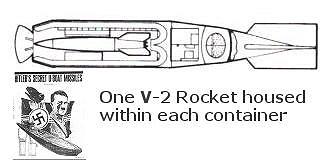
Although inter service rivalry between the Luftwaffe and Kriegsmarine prevented a V1 from being launched from a U boat, consideration was given to launching a V2 at sea, particularly as the ballistic missile was more capable of hitting targets in the United States. As the V2 was too large to be mounted on any U-boat then in service, a 500-ton submersible vessel for transport and launching was designed. Un-manned and unpowered, this was intended to be towed by a conventional U-boat to within range of its target, then set up vertically. Three of these vessels were ordered in late 1944, but only one was built, and no trials of the practicality of the system were carried out.

Today of course, the capital ships of the Great Powers are ballistic missile submarines powered by nuclear energy and capable of delivering megaton warheads. But in the 1950s The Union of Soviet Socialist Republics, lacking both fast, long range bombers such as the RAF’s Blue-Steel armed Victor and Vulcan and an ability to miniaturise a nuclear warhead, took the technology of captured Nazi V2s and developed the first intercontinental ballistic missile, from which in turn sprang the giant R-7 space launch rocket.
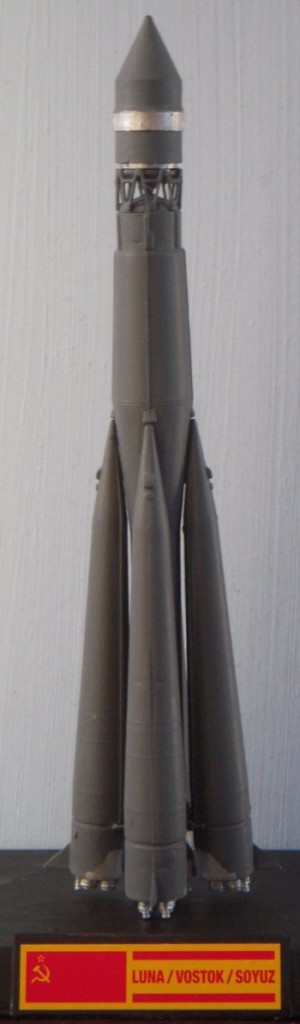
Unlike the later – and even larger – American Saturn V, in which a first stage launched two other stages one after another, the engines in the R-7s tapering core and those in four strap-on boosters all fired at once on the ground to maximise power at lift-off. On 4 October 1957 an R7 launched the first Earth satellite, Sputnik 1, while in 1959 Luna 2 became the first man made object to impact the Moon.

World reaction to Sputnik – the Russian word for Traveller – was a mixture of admiration and fear. If the Russians could put an 84 lb satellite into orbit, could they do the same to an atomic bomb? As it happens, ground based ballistic missiles had an almost global reach even then so this strategy was not needed. But the bleep of Sputnik’s radio transmitter had an unexpected quality.

The night after launch, scientists at the Massachusetts Institute of Technology set out to chart the satellite’s precise orbit in the sky by tuning into its radio signal. As the satellite approach overhead, the frequency of the signal increased, and as it got further away, the frequency decreased. Or put another way, the signal seemed to become stronger as satellite got closer and then weaker as the spacecraft receded in the distance- a phenomenon known as the Doppler Effect.

It was readily apparent to the scientists that satellite signals could be used for a sophisticated space-based navigational and guidance system. Just as you could use the Doppler Effect to pinpoint the location of a satellite flying overhead, you could also employ satellite signals to find your location on the ground. With such beacons in the sky, ships – especially nuclear submarines – would always know their precise position at sea. The first United States navigation satellite – Transit – was launched on 13 April 1960.
So, if Arthur C. Clarke gave us world wide telecommunications through his extra terrestrial relays that move with the turning Earth and the sons of Sputnik can always find where we are, what else links the sea and space?
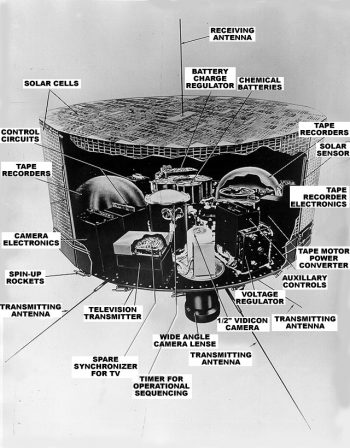
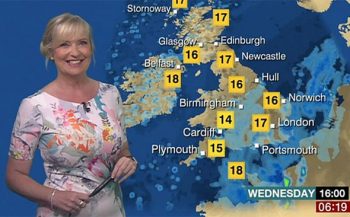
Moving on from seaweed and lore such as “Red Sky at Night” was TIROS. Standing for Television and Infra Red Observation Satellite, the first of these was launched on 1 April 1960, setting the template for all the moving weather maps we see on television. Even in its earlier version, TIROS was able to detect hurricanes and allow affected territories to evacuate or prepare. More recently though, satellites have measured wave height and measured the state of glaciers and polar ice caps.
By the early 1960s then, orbiting satellites could tell ships where they were, what weather to expect and allow them to communicate with other ships and shore installations over long distances. But these satellites themselves needed to be tracked and monitored to ensure that they were working correctly.
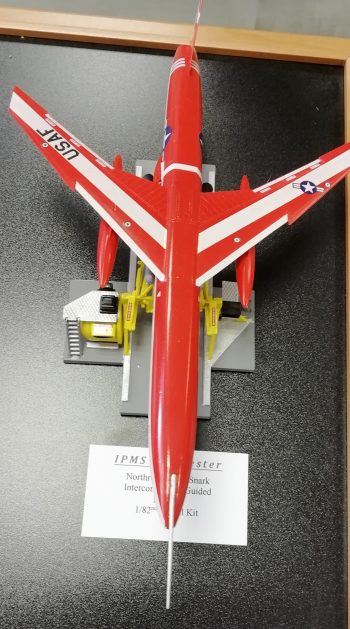
As this was also the era of rocket propelled guided weapons, the United States already had a number of missile range instrumentation ships available with the antennae and electronics to supervise launches over the sea. These could extend the range of shore based equipment, not least as the US Army missile program had outgrown its original desert ranges. The first of these range vessels had been converted from Liberty or Victory ship hulls but new instrumentation ships were built after 1964 when the missile range task was taken over by the US Navy.
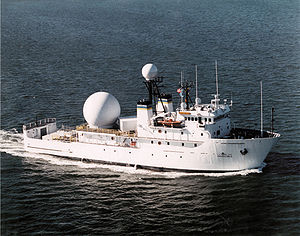
Currently there are only two missile range instrumentation ships in the US Navy inventory, USNS INVINCIBLE (T-AGM-24 IMO 8833879 1493 grt, seen above) and USNS HOWARD O. LORENZEN (T-AGM-25 IMO 9416680 17 698 grt) while France replaced the ex Italian oil tanker HENRI POINCARE with the purpose built MONGE in 1992.
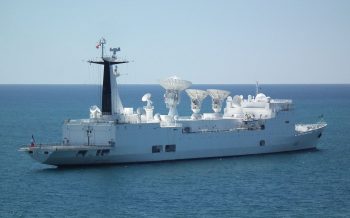
Both ships were named after French mathematicians, with the 24 000 tonne HENRI POINCARE undergoing a lot of reconstruction in the Brest area before entering service in 1964. The 18 040 tonne MONGE (seen above) also calibrates and controls the test launches of ballistic missiles from French nuclear submarines but has in addition tracked the launches of Ariane rockets from Kourou in French Guiana.
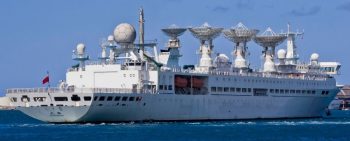
In the same way, the missile range instrumentation ships of China’s Peoples Liberation Army Navy have evolved from monitoring individual rocket tests in the era of Mao Zedong to spreading round the World to track manned orbital space stations. 2008 vintage YUAN WANG 6 (IMO 9439527 22 686 grt, pictured above) for example is one of the third generation of Chinese range ships with fibre optic cabling and a Sulzer diesel engine.
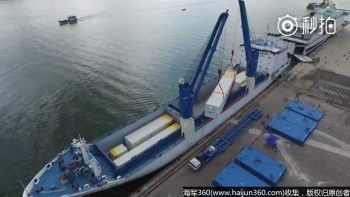
None of the Yuan Wang class are identical and YUAN WANG 21 and 22 – fitted with blue cranes – are believed to be cargo carriers for Long March 5 rocket boosters, equivalent to the European Ariane 5 or American Delta Heavy.

Back in the 1950s, Soviet space tracking ships were converted from existing cargo vessels before a purpose built fleets of both these and dedicated missile range instrumentation ships were introduced.
The global tracking ships were named after cosmonauts and academicians and similarly extended the range of ground stations. This was particularly important as, apart from Cuba, the USSR had no allies in the Western Hemisphere. In contrast, NASA had partner tracking stations in Spain, Japan, Australia and assistance from other affluent nations.
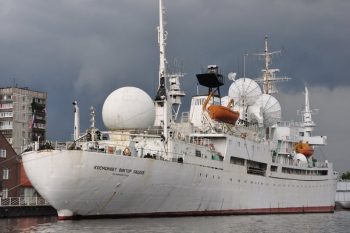
Perhaps the most remarkable is COSMONAUT VIKTOR PATSAEV, today the only space communication museum vessel in the world. It is part of the Museum of the World Ocean in Kaliningrad and is named after the Hero of the Soviet Union who died along with his Soyuz 11 crewmates when their descent vehicle depressurized after leaving the space station Salyut 1 on 30 June 1971.

The collapse of the Soviet Union did however give the cruising industry Regent’s SEVEN SEAS NAVIGATOR. The keel of what was to have been the tracking vessel AKADEMIK NICOLAY PILYUGIN was laid down in Leningrad in 1990 before the hull was towed to Mariotti Yards, Italy, for completion as an 28 880 grt cruise ship with the IMO 9064126. Nassau based SEVEN SEAS NAVIGATOR also featured in the 2004 film After The Sunset starring Pierce Brosnan and Salma Hayek.

While the Soviet Union relied – and still relies – on its trusty R7 booster, taking three astronauts to the Moon required a much bigger rocket. The first stage – or S1C – of the Saturn V launch vehicle was 33 feet in diameter, far too big for road or rail transport.
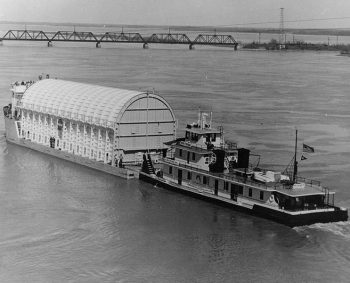
A giant amphibious vehicle was at one point considered so that the stages could be transported whole without transport damage to delicate components and welds. But in the end wheeled trailers rolled on to covered barges – modified from the US Navy’s YFNB Class – pushed by tugs were used to take the S-ICs from their assembly sites at either the Marshall Space Flight Centre in Huntsville Alabama of the Boeing factory at Michoud, near New Orleans to NASA’s testing facilities at Hancock County, Mississippi – or at Marshall Space Flight Centre itself.
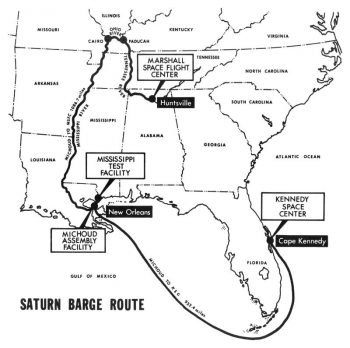
Their onward movement to the Vehicle Assembly Building at Kennedy Space Centre, Cape Canaveral, Florida was plotted to take them no more than 80 kilometres from safe havens along the Florida panhandle.
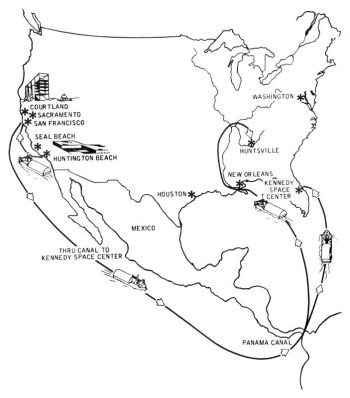
The diagram above meanwhile represents the barge routes for the Saturn V stages manufactured in California: The second S-II stage was manufactured by North American Rockwell in Seal Beach while and the final S-IVB stage was manufactured by Douglas Aircraft Company at Huntington Beach. The S-IVs were the only major Saturn V components small enough to be moved by large aircraft although a number of these were also shipped through the Panama Canal .
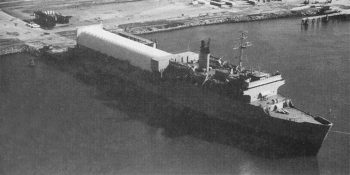
The main ship responsible for moving the Californian built stages was the unique cargo ship dock USNS POINT BARROW (IMO 8835580 4 147 grt) which had been commissioned in 1958 to a similar specification to the Royal Navy’s FEARLESS and INTREPID but with strengthened hull and bows and special insulation for work in Arctic waters. After modification in 1965, T-AKD-1 carried Saturn stages until 1973 before conversion to a deep submergence support ship and renaming as POINT LOMA. She was finally scrapped in 2006.
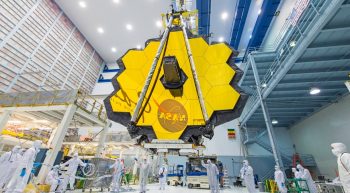
In addition to ships and barges carrying actual rocket components, barges also arrived at Kennedy Space Centre loaded with liquid oxygen and other supplies while the James Webb Space Telescope had to transit the Panama Canal en route to Kourou, French Guiana, where it is was launched aboard an Ariane V rocket on 25 December 2021.
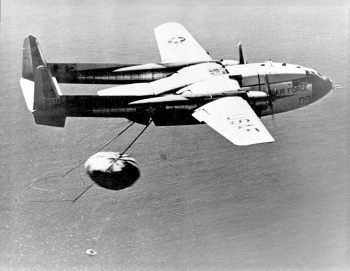
Even before the first man went into space though, parts of unmanned vehicles had returned to Earth. The first of these was the film pod of spy satellite Discoverer 13 which was snatched in mid air by land based aircraft on 11 August 1960. A week later, the Soviet Union recovered two dogs alive from an early version of their Vostock spaceship re entry vehicle. However NASA’s subsequent manned missions would require more complex recovery.

In the late 1950s the US Air Force had been investigating a vehicle known as the Dyna Soar which would have been launched vertically on top of a rocket but landed horizontally like an aeroplane. This idea would return in the 1970s as the Space Shuttle but after the success of Sputnik and the manned Soviet Vostock flights America began to develop its own single-use re-entry vehicles.
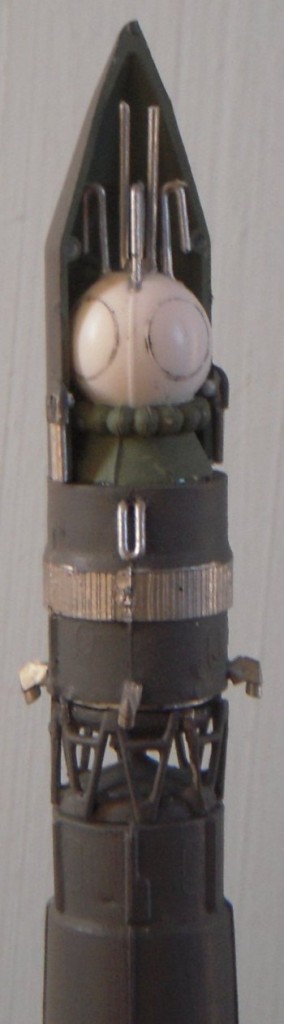
As might be expected, the USSR was keen to recover its spaceships on its own soil. This aim was helped by the Soviet Union being the largest country in the World at the time but Vostock, the spaceship in which Yuri Gagarin circled the globe on 12 April 1961, was not designed for a manned landing. Instead, once the ball shaped re-entry vehicle had been slowed by a parachute, the cosmonaut was supposed to eject and make his own way down. To claim his flight as record breaking, the Soviets for many years insisted that Gagarin stayed with his vehicle to the end but in fact he ejected along with the other successive Vostock occupants.
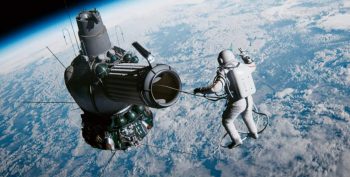
The next generation of Soviet manned spacecraft, Voskhod, introduced retro rockets to cushion touchdown on land although this added to the launch weight of the spacecraft. The two Voskhod missions, in 1964 and 1965 were remarkable as, respectively, the first multi-cosmonaut mission and the first to involve a spacewalk. In fact landing rockets had to be introduced to Voskhod 1 as the there was no room for the three cosmonauts to have their own ejection seats, or indeed spacesuits. Similarly, Voskhod 2 had an inflatable airlock as the electrical systems would have overheated if the cabin had been totally depressurised and cosmonaut Alexei Leonov nearly got stuck trying to re enter the vehicle.

In contrast, the global reach of the US Navy, its plentiful supply of helicopter carrying ships and the fact that American spacecraft launched over water made a splashdown recovery more appealing. It also meant that the spacecraft could be lighter and less complex although there was the inconvenience of recovering astronauts and spacecraft from the sea and the risk of loss and sinking.
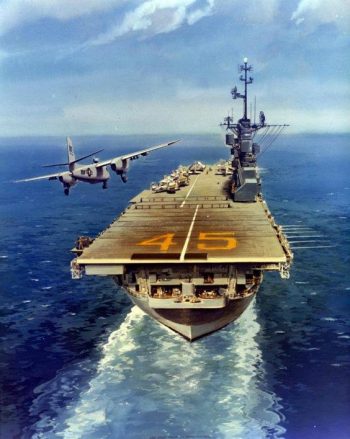
As it happens, Alan Shephard could have been the first man in space had it not been for the time taken to adjust both his Mercury spacecraft, Freedom 7, and the Redstone booster rocket prior to his eventual 15 minute flight on 5 May 1961. Mercury Redstone 1A had also flown for 15 minutes, but unmanned on 19 December 1960, to a point in the Atlantic 500 km from Cape Canaveral where green dye markers and a radio beacon identified it to helicopters from the Essex Class carrier VALLEY FORGE (CVS-45).

The flight of Mercury Redstone 2, on 31 January 1961, took just over 16 minutes but 27 minutes rather than 15 to be recovered by helicopter once the spacecraft had been spotted by a search aircraft some 60 miles away from the anticipated splashdown area. Although the aeroplane had reported the Mercury capsule floating upright, the rescue helicopters from the 7 930 ton USS DONNER (LSD-20) found it on its side having taken on 350 kg of sea water. However, the sinking vehicle was hooked up and flown to the deck of the landing dock ship where Ham the chimpanzee was released unharmed and keen to eat an apple and half an orange.
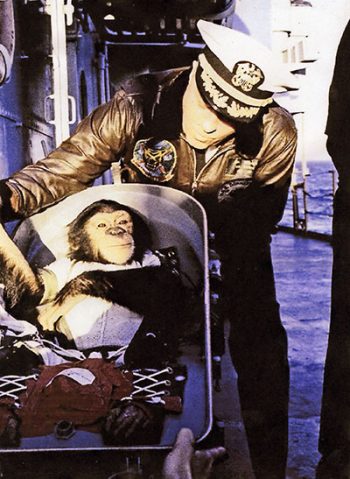
The problem stemmed from the spacecraft being sent on a higher trajectory than planned and at a higher speed, during which time unexpected vibration opened an air inlet snorkel valve which first depressurized the cockpit and then allowed the ingress of brine. Luckily Ham was safe inside his spacesuit but the harder than expected splashdown saw the Mercury heat shield detach from the capsule and puncture the titanium pressure hull.
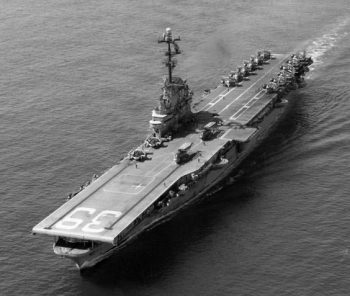
A number of other short range test firings of Mercury, Redstone and related boosters eventually paved the way for Alan Shephard to splash down safely near the Bahamas and be recovered, still inside Freedom 7, as a load slung under a helicopter from the anti submarine carrier USS LAKE CHAMPLAIN (CVS-39). This was the only Essex Class ship to be modernised but not fitted with an angled flight deck. It was decommissioned in 1966.
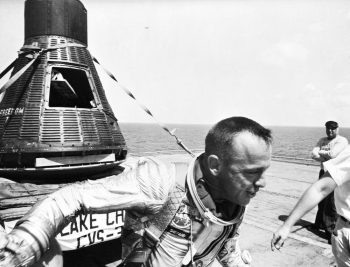
In fact Alan Shephard had little option but to stay inside Freedom 7 as the hatch that he had entered by was then secured with 70 bolts which could only be removed from outside. The only emergency escape would have been to remove a small pressure bulkhead at the top of the capsule and jettison the antenna compartment – a slow and difficult process.
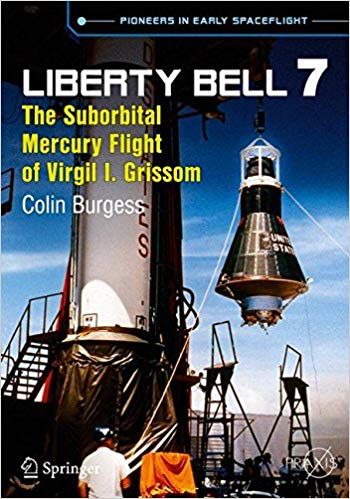
Ham’s Mercury capsule had been fitted with a latch, but as this mechanism made the spacecraft too heavy to achieve orbit, the next American manned space mission would have a new design of hatch held in place with explosive bolts. The hatch could be triggered either internally by pulling out a pin and depressing a plunger or externally by a lanyard held in place by one screw.
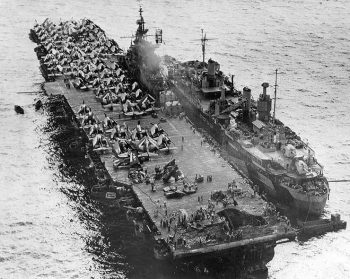
Liberty Bell 7, piloted by Virgil Ivan ‘Gus’ Grissom, was launched by another Redstone rocket on 21 July 1961. After a 15 minute flight, the spacecraft splashed down in the North Atlantic very close to the Essex Class anti submarine carrier USS RANDOLPH (CVS-15), whose helicopters moved quickly to hook the metal loop on top of the capsule.
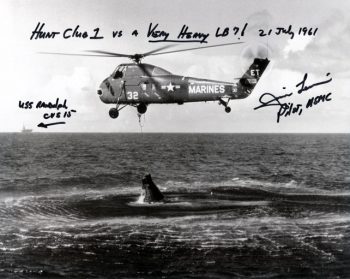
Suddenly, the hatch then blew off, letting water from the swelling sea flood Liberty Bell 7 and in turn forcing Grissom to abandon his craft so rapidly that he forgot to close an inlet valve on his spacesuit. Luckily he was thrown a lifeline by one of the rescue crews and winched aboard a helicopter but the weight of his craft was too much for the Sikorsky attached to it. The crew had no option but to cut it loose and let it sink into more than five kilometres of water.

As well as being the first manned spaceship to be lost, Liberty Bell 7 was also the first to be found – finally recovered in 1999 and now on museum display.

More importantly from the point of view of 1961 however, Liberty Bell 7 was the last sub orbital Mercury mission to be launched by a Redstone rocket. On 6 August 1961, cosmonaut Gherman Titov orbited the Earth 17 times in Vostock 2 – setting the pace for an American orbital mission with the problematic Atlas booster.
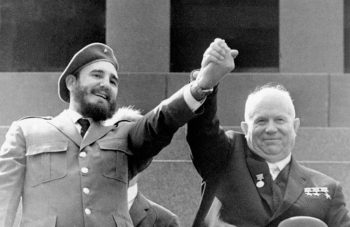
Soviet Premier Nikita Khrushchev boasted “We have launched Gagarin and Titov into space, and we can deliver a nuclear weapon to any point on the planet!” but tracking an object in orbit as opposed to just travelling a long way down a missile range posed the challenge of widely spaced Earth stations working together. Similarly, the recovery zone of a returning spacecraft became much more difficult to anticipate with Naval and air assets often being in the wrong place. However, considering that more than 70% of the Earth’s surface is covered by water, a splashdown was a more likely outcome of a spaceflight than a landing on terra firma.
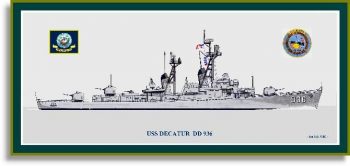
One practical illustration of this was the unmanned Mercury Atlas 4 mission of 13 September 1961, which orbited the Earth once with a Crewman Simulator instrument package. This proved that the Convair built Atlas rocket could indeed put a McDonnell Mercury capsule into orbit, which then splashed down 176 miles east of Bermuda – 34 miles from the USS DECATUR which took 1 hour 22 minutes to retrieve the capsule. DD-936 was a 4 050 ton Forrest Sherman Class destroyer which on 6 May 1964 suffered a heavily damaged superstructure in a collision with
USS LAKE CHAMPLAIN, the aircraft carrier which had recovered Alan Shephard. It’s a small planet!
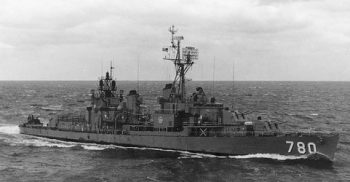
Mercury Atlas 5, launched on 29 November 1961, was designed to test the same later variant of Mercury spacecraft as Liberty Bell 7 against the higher stresses and heat of an orbital re-entry and carried another chimpanzee, named Enos. Once again, the Atlas rocket worked well and the capsule splashed down in the Atlantic 30 miles from the US Navy ships STORMES (DD-780, 2 200 tons) and fellow Allen M. Sumner Class destroyer COMPTON (DD-705). The re entry vehicle was hauled aboard STORMES where Enos was freed unharmed by externally blowing the hatch.

These flights paved the way for astronaut John Glenn to blast off aboard Friendship 7 on 20 February 1962, staying aloft for 3 orbits until a faulty sensor suggested that his flotation landing bag – under the heat shield – might have deployed in space. Glenn had also used more fuel than anticipated maneuvering in orbit and as a result of this and his retro rocket pack not being jettisoned he splashed down 40 miles short of his aiming point. However, he was soon picked up by the 3 460 ton Gearing Class destroyer USS NOA (DD-841) and having blown his own explosive hatch on deck was transferred to the USS RANDOLPH.
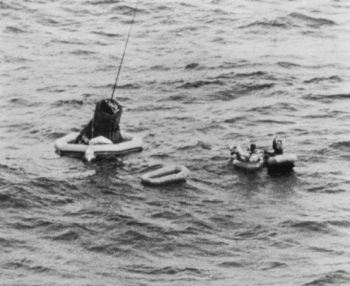
Similarly, on 24 May 1962, Scott Carpenter inadvertently used excessive fuel by operating both manual and automatic guidance systems at once and then fired his retro rockets three seconds late, bringing Aurora 7 down 250 miles off target north east of Puerto Rico. He was eventually found by helicopters from the Essex Class carrier USS INTREPID (CV-11), nowadays better known as a museum ship in New York City, having climbed out of the top of his spacecraft and waiting in a raft.
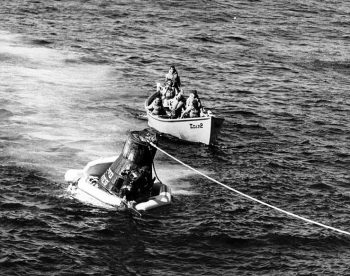
Much more precise was the return of Sigma 7 on 3 October 1962 with astronaut Walter Schirra joking that his Mercury capsule would land on the Number 3 elevator of the USS KEARSAGE. In fact it splashed down half a mile away, only four and a half miles from the planned aiming point. Schirra, who would also be the only astronaut to span projects Mercury, Gemini and Apollo, also made Sigma 7 unique in declining the assistance of frogmen dropped by helicopter and asking for his spaceship to be towed. A whaleboat was duly despatched from the long hulled Essex Class aircraft carrier and forty minutes later Sigma 7 was hoisted aboard. Astronaut Schirra then blew the hatch open. After doing this, he was keen to point out that using the plunger inside the capsule had bruised his hand – an injury not sustained by Gus Grissom.
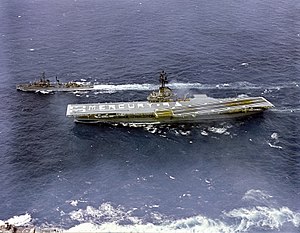
USS KEARSAGE also recovered Faith 7 from the Pacific on 16 May 1963 after which the sailors spelt out the word MERCURY on the flight deck. Astronaut Gordon Cooper in fact made the most accurate splashdown to date, only four miles from the aiming point, before trading his capsule for a Navy helicopter. Gordon Cooper was also the last American to go into space alone while Faith 7 was the first manned NASA mission to last more than one day.

The main objectives of the ten American Gemini missions spanning 20 months between 23 March 1965 and 15 November 1966 were to allow the astronauts involved to learn how to pilot their craft by means of control rockets and rendezvous with other space vehicles. Although a number of Vostock spacecraft had been launched in such a way that they came close to one another, Geminis VI and VII were able to fly in a controlled formation. Gemini IV also marked the first American space walk – by Edward H. White II – while other Gemini missions docked with an unmanned target vehicle launched beforehand.

Gemini spacecraft were boosted into orbit by Titan 2 rockets, originally designed as intercontinental ballistic missiles and used to launch unmanned spacecraft until 2005. Unlike the earlier liquid oxygen and hydrocarbon powered Redstone and Atlas launch vehicles, Titan 2 used hypergolic fuels – two chemicals which exploded on contact with each other. As this was seen as a more reliable arrangement which was also easier to store and prepare, the two man Gemini capsules were fitted with ejection seats instead of a launch escape tower.
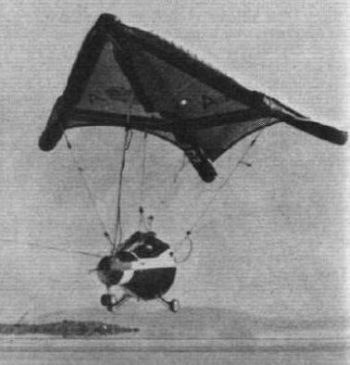
From a recovery viewpoint, the Gemini re-entry module was almost the first manned American spacecraft not to need the Navy. Early design studies proposed a steerable parachute, but this technology was not pursued. However, the triangular Rogallo wing was the basis for modern hang gliders and microlights. The capsule was, though, suspended at an angle closer to horizontal, so that a side of the heat shield contacted the water first. This eliminated the need for the landing bag cushion used in the Mercury capsule.
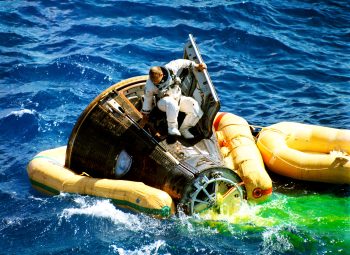
As well as being more agile in space than the earlier Mercury and Vostock craft, Gemini was the first manned spacecraft to have a solid state navigational computer on board. The first two unmanned launches did not require the spacecraft to be recovered while the first manned mission, Gemini 3, blasted off from Cape Canaveral on 23 March 1965.
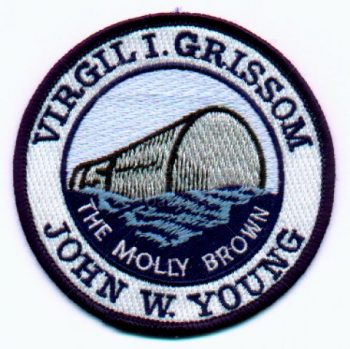
Gemini 3 was also the last mission to be directly controlled from Florida before the Manned Spacecraft Center in Houston was inaugurated and was crewed by Gus Grissom alongside new astronaut John Young. After the sinking of Liberty Bell 7, he called his Gemini spacecraft Molly Brown, recalling the woman who survived sinking the White Star liner TITANIC in 1912. This was the last Gemini spacecraft that NASA allowed its astronauts to name.
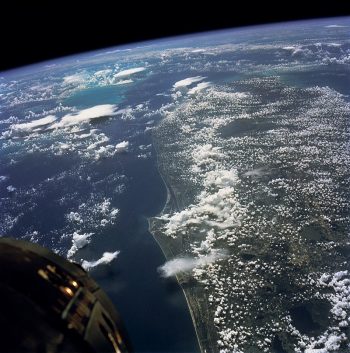
Gemini 3 was the first manned spacecraft to change its orbit – using onboard rocket engines – and also the first to evaluate the ability of the Gemini capsule to generate aerodynamic lift on re-entry. This turned out to be less than had been anticipated, and as a result Grissom and Young splashed down 45 miles away from the aiming point, north east of the Turks and Caicos Islands. Once the main parachutes were deployed, Molly Brown shifted from vertical to horizontal so rapidly that Gus Grissom cracked his faceplate on the control panel in front of him. In future missions, spacesuit faceplates would be made from polycarbonate rather than acrylic plastic.
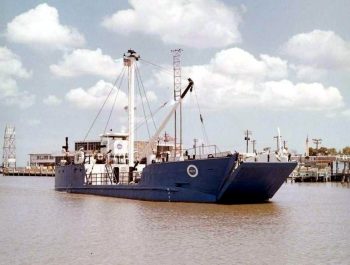
Recovery was once again performed by the USS INTREPID although the recovery operation as a whole involved 10,185 Department of Defense personnel, 126 aircraft and 27 ships. The mission also proved that although a good spaceship, the Gemini capsule did not make a good boat. Fortunately however, the Gemini – and later Apollo – astronauts had all practiced water egress from the MV RETRIEVER (133 tons). The former US Army landing craft numbered LCU-15301 had been acquired by NASA in 1963 and rebuilt with a cut down midsection, new bridge and a hoist before retirement in 1972.
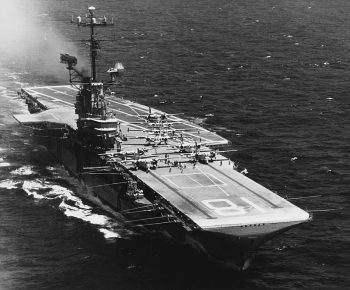
Gemini 4, launched on 3 June 1965, featured the first American spacewalk during its 66 orbit four-day mission and the first to have its launch televised to Europe via the Early Bird communications satellite. It was also the first mission on which the American flag was worn as a patch on the astronaut’s suits and the first to use a sextant with which to navigate by the stars. However, due to the onboard computer failing, the spacecraft was spun to stabilise re-entry and a malfunctioning thruster developed more spin than was anticipated. However, despite a heavy landing, both spacewalker Edward White and pilot James McDivett were unharmed when discovered 45 miles from the aiming point and taken to the USS WASP (CVS-18).
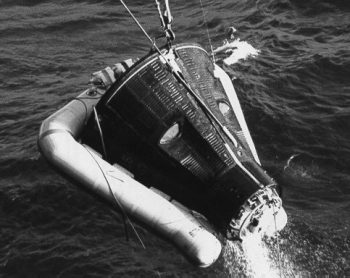
The Essex Class carrier would go on to recover Gemini missions 6, 7, 9 and 12, but in the meantime Gemini 5 was launched on 21 August 1965 and recovered on 29 August 1965 by USS LAKE CHAMPLAIN between Florida and Bermuda. Gemini 5 was the first to set an American record for spaceflight duration, simulating the length of a mission to the Moon and was the first to use fuel cells rather than batteries to provide power. Astronauts Gordon Cooper and Charles “Pete” Conrad managed to control lift and drag by rotating the capsule during re entry although the onboard IBM computer being programmed with incorrect data meant that splashdown was 80 miles off target.
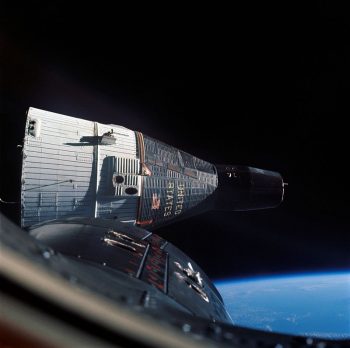
Gemini 6 was officially Gemini 6A, as the original mission to test docking techniques had to be abandoned after the Agena target vehicle blew up during launch. Instead, the mission that became known as Gemini 6 was flown in conjunction with Gemini 7. After some technical delays with the Titan booster, Gemini 6 was launched on 16 December 1965, eight days after Gemini 7. Within four hours, Gemini 6 was literally flying rings around Gemini 7 and approaching to within one foot of it. Recovery later the same day after 16 orbits was again north east of the Turks and Caicos Islands, a very credible 11 miles off target and televised for the first time courtesy of an ITT mobile satellite earth station being set up on the deck of the USS WASP.
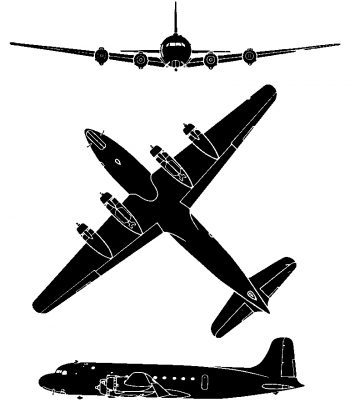
Gemini 7, having been launched on 4 December 1965, was recovered in the same area on 18 December after 206 orbits within 7 miles of their aiming point. Gemini 8 however, was not to go so closely to plan. Having made the first successful docking between two spacecraft, Neil Armstrong and David Scott were forced to rapidly undock from the Agena target vehicle sent ahead of them and stop their own capsule rolling due to a thruster being jammed on. Righting this dangerous fault used up 75% of the fuel allocated to the re-entry burn and immediate return to Earth was authorised. As a result, Gemini 8 re-entered the Earth’s atmosphere over China – beyond tracking coverage – aiming for a secondary splashdown area between Okinawa and Japan. Fortunately, Gemini 8 was spotted by a Douglas C-54 Skymaster aircraft sent to look for it, from which three Air Force pararescuers jumped to attach a flotation collar. Three hours later, with both astronauts and frogmen suffering from seasickness, all concerned were collected aboard the Gearing Class destroyer USS LEONARD F. MASON (DD-852)
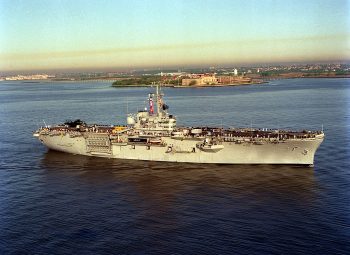
Following a frustrating but less dangerous mission from 3 to 6 June 1966, Gemini 9 made the most accurate splashdown, just 700 metres from USS WASP North East of the Bahamas. Splashdown for Gemini 10 was in a similar area, just 3 miles from the Iwo Jima Class helicopter landing ship USS GUADALCANAL (LPH-7 19 395 tons).
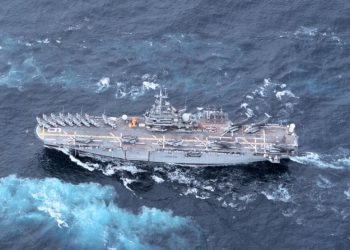
The sea north east of the Turks and Caicos Islands also saw sister ship USS GUAM (LPH-9) recover Gemini 11 after the first computer controlled automatic re entry of an American manned space vehicle, on 15 September 1966. Gemini 11, launched on 12 September 1966, was remarkable in making the first direct ascent from the launch pad to an orbiting Agena target vehicle. Having docked with the Agena, it then used its engines to change from a more circular to a highly elliptical orbit, the apogee of which was 853 miles. To put this in context, the furthest the Space Shuttle ever flew above the Earth was 380 miles.
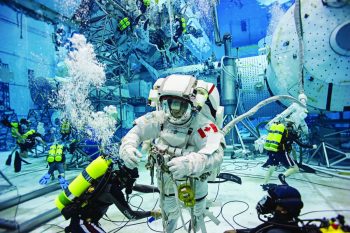
From a recovery point of view, astronauts were now venturing ever further into space and so increasing the range of potential operations. Gemini 11 alone required the participation of 9 054 personnel, 73 aircraft and 13 ships. The final American two-man flight, Gemini 12, was also the first to benefit from astronauts training for extra vehicular activity in a giant water tank, accompanied by safety divers wearing scuba equipment. This training paid off, with new astronaut Edwin “Buzz” Aldrin performing a number of prolonged spacewalks and proving that practical work was possible during these.

It had also been hoped that Gemini 12, flown between 11 and 15 November 1966, would fly alongside the first Apollo mission, giving recovery forces two re-entries to worry about, but in the end the manned Apollo programme would slip back into 1968. However, the first Apollo flight that required recovery was the just- sub orbital Apollo-Saturn 202, launched on 25 August 1966 with an early three man Apollo Command and Service Module aboard a Saturn 1B.

Saturn 1B was a smaller, less powerful cousin of the Saturn V which would eventually take Apollo spacecraft to the Moon but despite the vehicle not reaching orbit the service module engine fired four times and the command module performed a skip re-entry, using the Earth’s atmosphere as a brake to dissipate speed. Possibly because of this, AS 202 landed 205 miles from the aiming point, causing the USS HORNET an 8 hour 30 minute voyage across the North Pacific to pick it up.
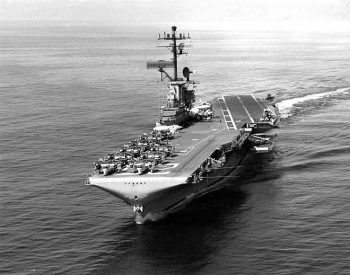
The first test of all three stages of the Saturn V meanwhile was dubbed Apollo 4 and conducted with an alarming amount of noise and vibration on the ground on 9 November 1967. Luckily, all the stages worked perfectly and after three orbits the command module was recovered by the USS BENNINGTON (CVS-20), another Essex Class anti-submarine carrier, 8.6 miles off target north west of Midway Island. In the same way, the similarly unmanned Apollo 6 was launched and recovered on 4 April 1968, Iwo Jima class USS OKINAWA (LPH-3) plucking the Command Module from the Pacific.

In addition, Apollos 4 and 6 carried cameras on the S-2 stage which were jettisoned after the separation of Stage S-1. These parachuted back to Earth from 200 000 feet with a locator beacon and required ocean surface recovery. Their images, often attributed to later Apollo missions, show the S-1 stage and its inter stage connector falling back to Earth. This equally well known image of an S-4 stage pulling away meanwhile came from the previously mentioned Apollo Saturn 202 of 1966.
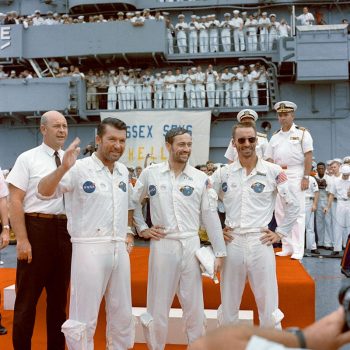
The first manned Apollo mission, Apollo 7, splashed down in the Atlantic on 22 October 1968 7 nautical miles from the USS ESSEX itself although it left Cape Canaveral with the wind blowing from the east. Had the launch escape tower been deployed, the Command Module could have descended by parachute on to land. Due to the design of both the vehicle and the astronaut couches, this could have caused injury or death. However, standards were improved for Apollo 8, which in December 1968 flew round the Moon.
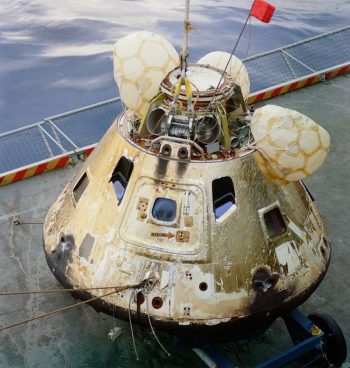
Apollo 8 was an historic mission in many respects, not least because for the first time man had left the gravity field of Earth and orbited another celestial body. Recovery, although beginning with an automated atmospheric skip by the Command Module, ended up with the main parachutes dragging the three man spaceship upside down. As it was buffeted by a 10 foot Pacific swell and waiting six minutes for three flotation balloons to inflate and turn the vehicle the right way up, Commander Frank Borman was unfortunately sick. However, the first frogmen from the USS YORKTOWN (CVS-10) arrived within 43 minutes and 45 minutes later the crew were safe aboard the Essex Class aircraft carrier.
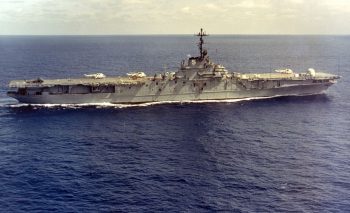
After the triumph of Apollo 8 in December 1968, 13 March 1969 saw Apollo 9 make the last splashdown in the Atlantic for 50 years when it landed 3 miles from USS GUADALCANAL (LPH -7) after testing the Lunar Module in Earth orbit. Apollo 10, having tested the Lunar Module in Lunar orbit, was recovered by USS PRINCETON (LPH-5) of the Essex Class 400 miles east of American Samoa.
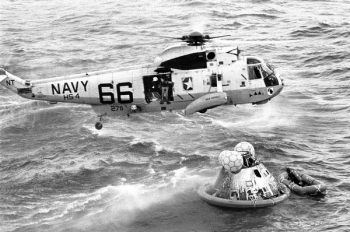
As mentioned earlier, the USS HORNET was selected as the prime recovery ship for Apollo 11, the first mission to land on the Moon. Based in Long Beach, California, the Essex Class carrier first sailed to Pearl Harbor to embark the Sikorsky SH-3D Sea King helicopters of Helicopter Anti Submarine Squadron 4, the unit which specialised in the recovery of Apollo spacecraft. Known from their insignia as the Black Knights, HSC-4 operated the famous Sea King 66 which was used to recover the astronauts of Apollos 8, 10, 11 12 and 13.
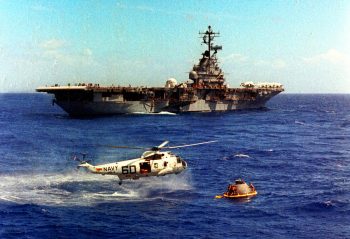
Also coming aboard were the 35 man NASA underwater diving team Detachment Apollo, a boilerplate command module used for training and about 120 media representatives.
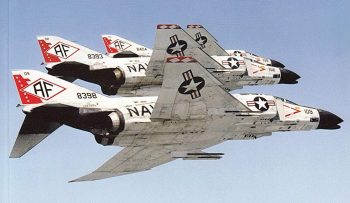
To make room, HORNET had left most of its normal air wing back at Long Beach. On 12 July, with Apollo 11 still on the launch pad, HORNET departed Pearl Harbor for the recovery area. However, this had to be moved by 215 miles when it was realised that the area was threatened by storms. In turn, the astronauts had to delete the atmospheric skip from their re-entry profile to land in the right place.
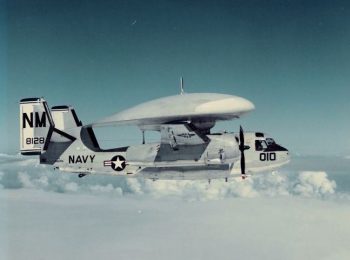
Once the correction to the new area had been made, and VIPs had arrived by Marine One and carrier onboard delivery aircraft, the watching and waiting could begin. Before dawn on 24 July 1969, HORNET launched four Sea King helicopters and three Grumman E-1 Tracers to co ordinate their recovery. Two of the Sea Kings carried divers and recovery equipment. The third carried photographic equipment, and the fourth carried the decontamination swimmer and the flight surgeon.

At 0544 local time, Columbia’s drogue parachute deployed, three larger parachutes followed and seven minutes later the command module hit the water and turned upside down. Within ten minutes the astronauts righted their craft with flotation bags before a diver from one of the helicopters attached a sea anchor to prevent drifting. More divers then attached stabilising flotation collars and positioned rafts for astronaut extraction.
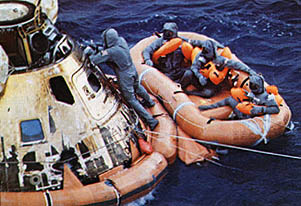
In a break from previous procedure, the divers assisting the astronauts into the rafts first passed them biological isolation garments. The possibility of bringing back any kind of disease from the lunar surface was remote but no chances were being taken. The astronauts themselves were rubbed down with a sodium hypochlorite solution and Columbia wiped with Betadine to remove any traces of lunar dust. The raft containing decontamination materials was then deliberately sunk.
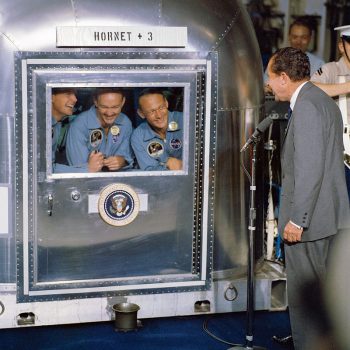
Once aboard HORNET, Helicopter 66 was then lowered to the hangar deck where the astronauts walked 30 feet to the winnebago like Mobile Quarantine Facility where they would stay, with a doctor and technician, for 21 days. The MQF was also used for Apollos 12 and 14 before the Moon was proven to be devoid of life.
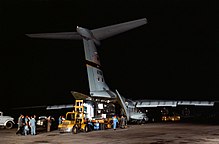
Shortly afterward, HORNET moved to pick up the command module Columbia, craned it on to a dolly and moved it next to the MQF. It was then attached to the mobile quarantine with a flexible tunnel, allowing the lunar samples, film, data tapes and other items to be removed. Back at Pearl Harbor, the MQF was flown to the Lunar Receiving Laboratory at Houston where it was later joined by Columbia.
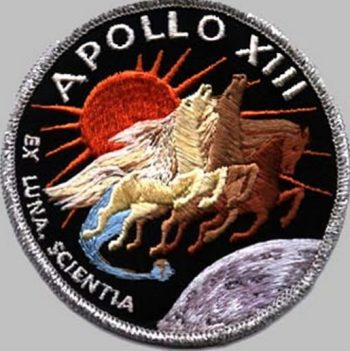
The flight that most tested its recovery forces though was Apollo 13. This was originally to have been recovered in the Indian Ocean but an explosion within the service module on the way to the Moon changed the entire mission into an epic of survival. An engine burn two hours after the closest approach to the Moon was designed to bring the stricken spacecraft back to Earth ten hours earlier than expected and see it splashdown in the Pacific.

There were also later corrections so that the command module – when it finally detached from first service module and then lunar module – would neither burn up due to an excessively steep re-entry or bounce off the Earth’s atmosphere and be lost in space. Also worrying for the recovery crews was the longer than normal radio blackout due to ionisation as the command module became surrounded by hot gas during its descent.
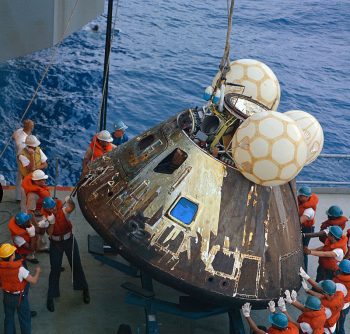
Luckily though, Apollo 13 was recovered by the USS IWO JIMA with only Lunar Module pilot Fred Haise suffering from a urinary tract infection. Drinking water had become scarce on the return journey and Mission Control had banned Apollo 13 from dumping waste into space in case it affected the trajectory.
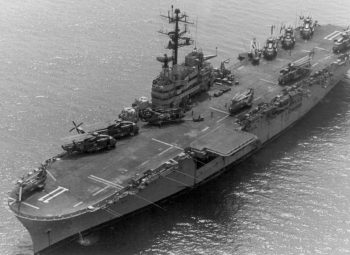
There would not be another Moon mission until Apollo 14 in January and February 1971, with the Iwo Jima Class USS NEW ORLEANS (LPH-11) waiting in the Pacific. Apollo 15 managed a safe Pacific splashdown, despite one of its three parachutes not working, and was recovered by the USS OKINAWA (LPH-3) on 7 August 1971. Waiting for Apollo 16 on 27 April 1972 in the South Pacific was the USS TICONDEROGA (CVS-14), the long hulled Essex Class carrier also doing the honours for Apollo 17 on 19 December 1972.

Despite the earliest astronomers having claimed to have seen oceans, seas and bays on the Moon, the Apollo missions proved beyond doubt that the lunar surface was in fact created by a mixture of lava flows and meteorite impacts.
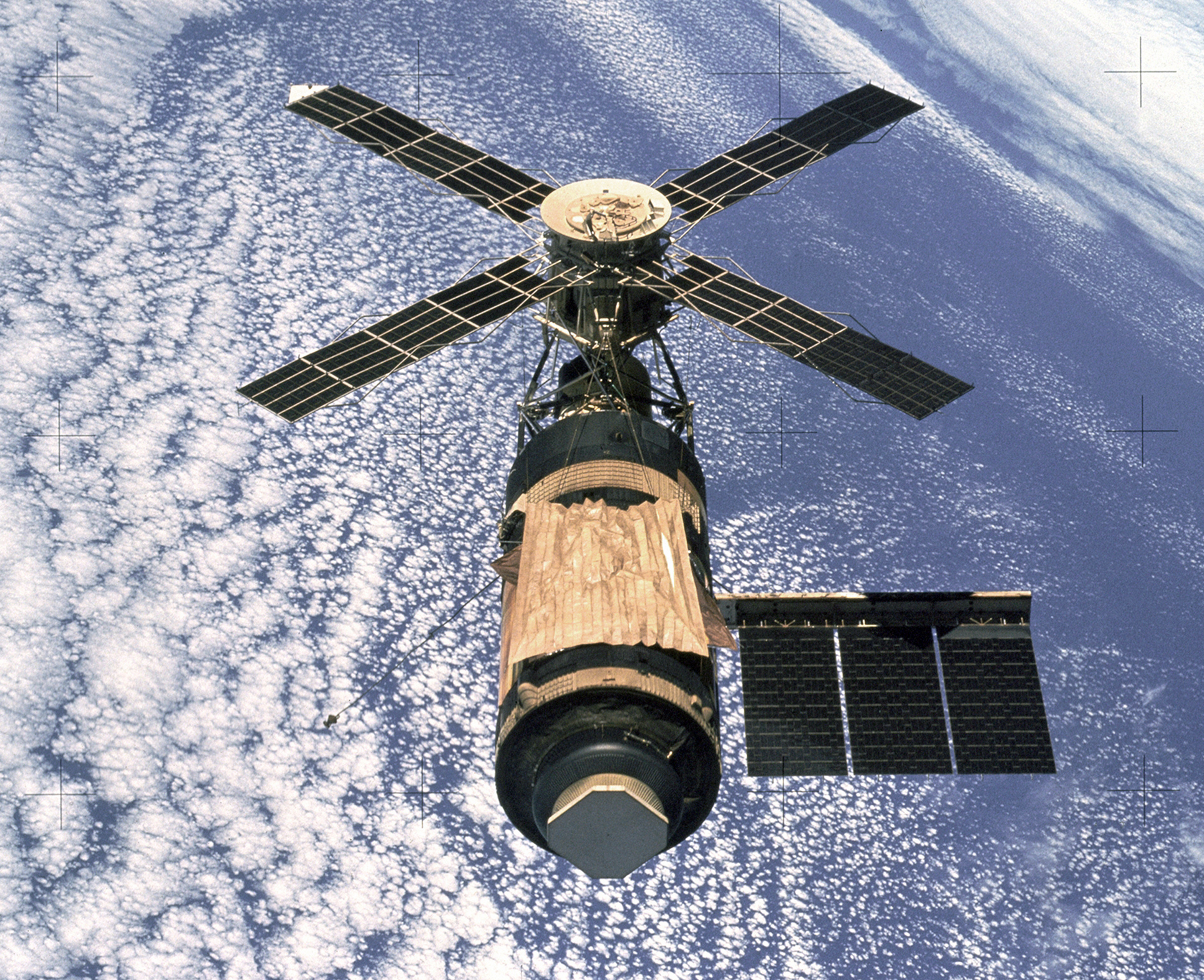
But from 1973, NASA turned its attention to relatively low Earth orbit missions, beginning with the only purely American space station Skylab, which marked the last ever launch of a Saturn V vehicle from Cape Canaveral. Skylab gave astronauts unprecedented individual space but also demanded longer mission durations, forcing NASA to design a suitably attractive environment.
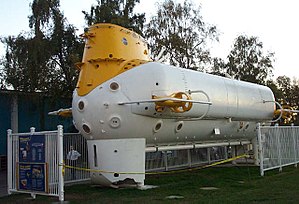
To prepare for this mission, NASA sent a scientist on Jacques Picard’s submarine BEN FRANKLIN in the Gulf Stream in July and August 1969 to learn how six people would live in an enclosed space for four weeks.
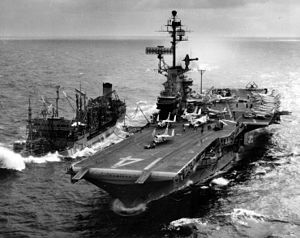
Skylab was in the end visited by three missions, each with three crew aboard an Apollo Command Module powered by a Saturn 1B rocket booster. The first of these was recovered by the USS TICONDEROGA and the last two by the USS NEW ORLEANS, which also closed the Apollo era on 24 July 1975.

This was marked by the recovery of the Apollo half of the Apollo-Soyuz test flight, in which a Saturn 1B rocket lofted both a command and service module combination and a docking adapter for a Soyuz spacecraft carrying two cosmonauts.
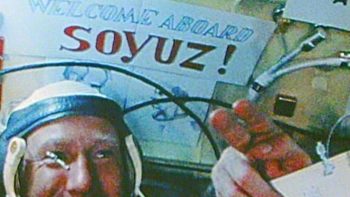
After successful orbital co-operation however, a misunderstanding among the Apollo crew over valve positions led to noxious hypergolic fuel being vented into the command module during re-entry. However, after a fortnight in hospital in Honolulu all three recovered. For the final four Apollo recoveries, the astronauts stayed in their command modules which were then winched aboard the ships to preserve medical data.

One final connection between Project Apollo and the sea came in 2013 when Amazon founder Jeff Bezos employed the offshore supply vessel SEABED WORKER (IMO 9533244, 3 923 grt) and its Norwegian crew to recover parts of the giant F-1 engines of the Saturn V first stage. According to the serial numbers on various parts, they are from Apollos 11 and 12.

Then, on 5 December 2014, came the first unmanned flight of the Lockheed Martin Orion spacecraft, designed to carry as many as six astronauts before splashing down in the manner of the Apollo command module. Designed for the as-yet unflown Space Launch System, this first Orion trial was boosted into a two orbit mission by a Delta IV heavy rocket and was recovered near to San Diego by the USS ANCHORAGE (LPD-23, 25 000 long tons displacement) A manned flight of an Orion spaceship is scheduled for 2023.
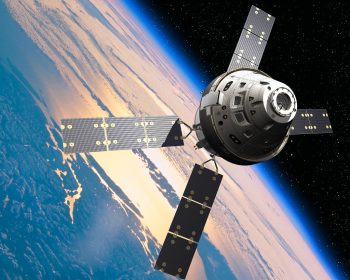
Orion had at one time been configured for land recovery but, as in the 1960s, it was realised that retro rockets and landing airbags would add unacceptably to the vehicle weight. The re-adoption of a booster rocket and capsule format for manned space exploration also marked a retreat from the winged Space Shuttle in use from 1981 to 2011 and other similar space plane concepts.

Like the cancelled Dyna-Soar before it, the Space Shuttle held the promise of a re-usable space vehicle that in theory would be cheaper to operate. However, while the Dyna-Soar was small enough to absorb and then re-radiate the heat generated by the friction of re-entry into the Earth’s atmosphere by being made of special alloys, the Space Shuttle orbiter featured a 15′ x 60′ cargo bay and a carrying capacity of up to 65 000 lb. This required it to be covered in heat absorbing ceramic tiles and to be flanked by both an external fuel tank and two solid rocket boosters.

Of these components, the fuel tank could only be used once, burning up on re-entry from sub orbital flight after separation, and both the orbiter and solid boosters required extensive refurbishment before being ready to fly again. The holy grail of a single stage to orbit spaceplane, ideally taking off and landing horizontally, still eludes aerospace engineers, but while the Space Shuttle orbiter landed on a conventional runway, its boosters required recovery at sea.
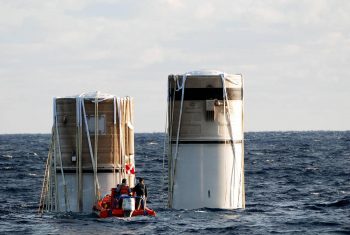
After separating from the Orbiter and fuel tank at 146 000 feet two minutes after launch, the two solid rocket boosters would continue to rise to 220 000 feet before falling back to Earth. Parachutes would then deploy to orientate the boosters with each nose top and rocket nozzle first to hit the ocean. Due to the solid rocket inside having burned off, the boosters were by then empty tubes which floated until one of two special NASA ships could reach them. Once located, each booster would be fitted with a plug to the rocket nozzle by a diver, allowing the water to be displaced by compressed air. This allowed the spent boosters to float on their sides and be more easily towed to a recovery dock.
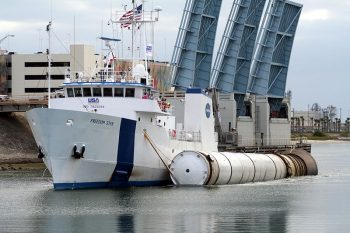
The two ships in question were the FREEDOM STAR and LIBERTY STAR. Both had gross registered tonnages of 743 and respective IMOs of 7925314 and 7925302. In 2012 LIBERTY STAR was renamed as the Training Ship KINGS POINTER.
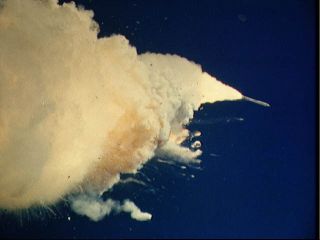
On 28 January 1986 however, NASA attempted to launch the Space Shuttle Challenger after an unseasonably cold night. As a result of being excessively chilled, a seal on the right hand solid rocket booster failed during lift off, throwing pressurised burning gas over the other components and destroying the entire vehicle. Although the search for any survivors began as soon as debris had stopped falling from the sky, it was not until 7 March 1986 that divers from the USS PRESERVER discovered the cockpit section of the orbiter on the sea floor. Unfortunately, during the recovery of this item, the body of Mission Specialist Gregory Jarvis was once more lost at sea but fellow astronaut Robert Crippen – who had flown the very first Shuttle mission – rented a fishing boat at his own expense to recover the remains of his comrade.

The USS PRESERVER (ARS-8) displaced 1441 tons and dated from 1944 and previous grim tasks included searching for the American nuclear submarine THRESHER (SSN-593 3 420 tons submerged) and averting an environmental disaster by pumping oil off the stricken tanker OCEAN EAGLE (12 065 grt) in 1968.
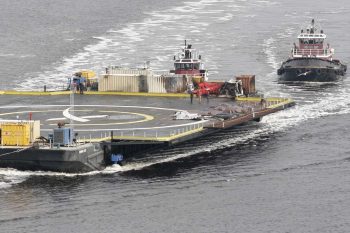
More up to date and more happily though, 8 April 2016 saw the lower stage of a SpaceX Falcon successfully land on the robot barge OF COURSE I STILL LOVE YOU after launching an unmanned resupply vehicle to the International Space Station.
This was fifth time lucky for space entrepreneur Elon Musk, but landing a booster on a barge downrange from launch was still an easier objective than returning it to the launch pad.
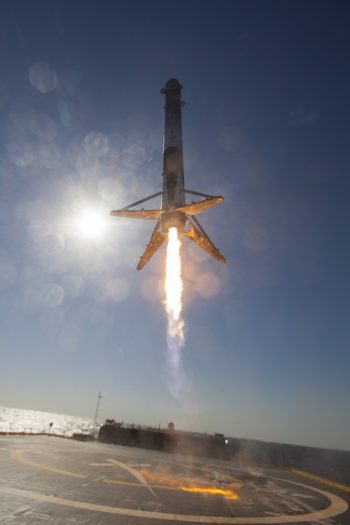
The autonomous spaceport drone ship, to use its official title, small target though it might be for a retrofiring Falcon booster, can also be moved into the best recovery position depending on how far into the mission the lower stage separates and how much fuel remains for a braked descent.
Similarly, if the booster should fall over and explode on a barge, the launch pad and surrounding area is unaffected.
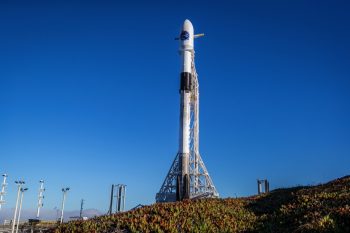
Hopefully though, SpaceX will recover as many rockets as possible to cut down on cost of creating new vehicles. The Falcon 9 costs $60 million to make and only $200,000 to fuel. As with the Space Shuttle however, the key to profitability is keeping costs down when refurbishing the booster for its next launch.
While OF COURSE I STILL LOVE YOU floats in wait off Cape Canaveral, SpaceX ‘s other operational ASDS, JUST READ THE INSTRUCTIONS is towed from Los Angeles to recover boosters launched from Vandenburg Air Force Base. A third diesel hydraulic vessel with four GPS controlled 300 horsepower azimuth directional thrusters, named A SHORTFALL OF GRAVITAS, is under currently construction.
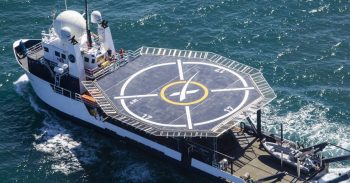
With cheaper launch costs, hopefully more ambitious space missions will be planned and attempted. As early as December 2010, SpaceX ‘s unmanned Dragon became the first commercially built and operated spacecraft to be recovered successfully from orbit: splashing down close to SpaceX’s recovery ship GO SEARCHER (IMO 9591648, 497 grt).
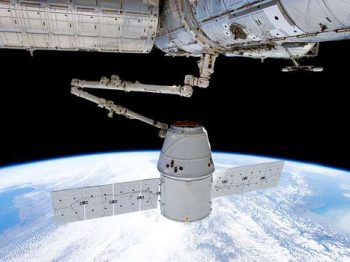
Since then, SpaceX has sent its Dragon vehicle with supplies to the International Space Station and used its re-entry capacity to return medical samples and other items for further investigation on Earth. In contrast, the earlier Soviet Progress and European ATV series of supply vessels can only take cargo to the ISS before being stuffed with rubbish to be burned up in the Earth’s atmosphere. Although the heat shields and other Dragon components compromised by contact with salt water are discarded, most of each vehicle can be refurbished or recycled for more than two flights.
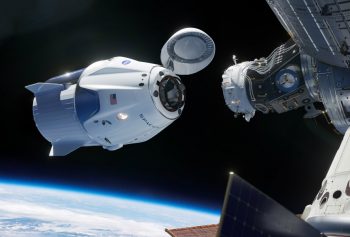
On 30 May 2020, SpaceX sent its improved Dragon 2 with astronauts to the ISS and in anticipation upgraded its 2010 vintage GO SEARCHER with air detection radar, a helicopter landing pad for medical evacuation and a crane for spacecraft recovery, thereby doing the jobs of whole fleets of earlier Soviet, American and other vessels. These new features were successfully put to use on 2 August 2020 when astronauts Doug Hurley and Bob Behnken safely returned to the Gulf of Mexico under four large parachutes.
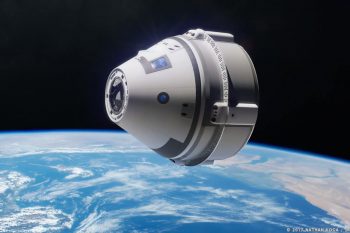
Similarly, Boeing is close to an unmanned launch of its CST-100 Starliner manned re-entry vehicle. although this is designed with airbags to cushion recovery on land. However, spacecraft already launched have made some remarkable discoveries far away from Earth.
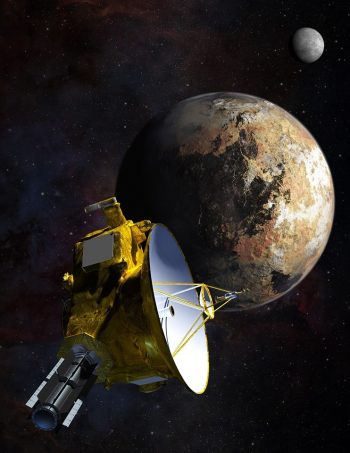
Instruments on board the New Horizons probe which flew past Pluto in 2015 detected large amounts of water under the crust of the celestial body, which is 40 times further away from the Sun than Earth. As the surface of Pluto is rarely warmer than minus 223 degrees centigrade, scientists are puzzled as how this can be. One theory is that there is an insulating layer of gas molecules and ice beneath the crust allowing Pluto’s hot core to keep the water fluid.
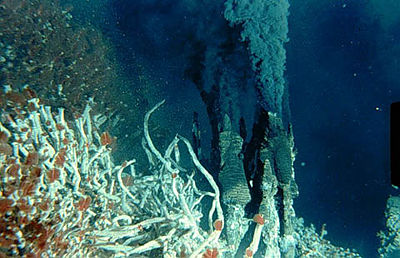
If this arrangement is found on other cold planets, life could be more abundant in the Universe than we expected. We know that on the dark, deep ocean floors of Earth, primitive animals flourish around the heat of sulphurous thermal vents. Could other celestial bodies be the same?
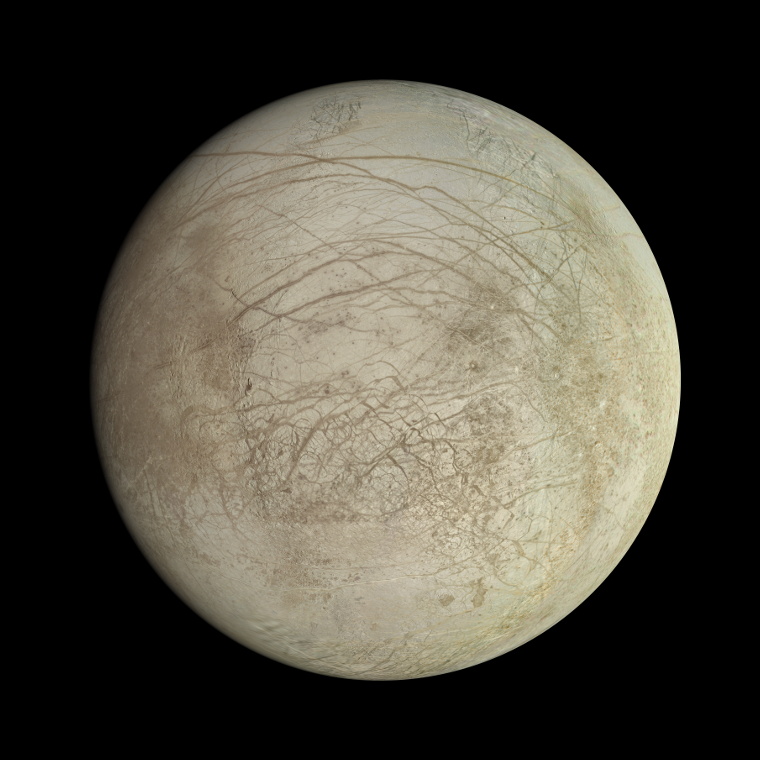
Closer to home, astronomically at least, is Europa, smallest of the moons of Jupiter discovered by Galileo. Slightly smaller than our own Moon, it has a water ice crust and ice volcanoes that suggest that there is a salt water ocean beneath the surface. This could be kept liquid by the way that Jupiter and its other moons pull Europa about in their gravity fields, just as a squash ball warms up when repeatedly hit. Both NASA and European spacecraft will make further investigations of Europa in the next decade.
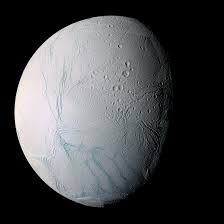
Similarly, ice volcanoes spurt forth salt water and possibly organic compounds from under the ice crust of Enceladus, the sixth largest moon of Saturn which is also tidally heated by its resonance with another moon, Dione. Once again, future sampling or even landing missions are being discussed, but much of this knowledge comes from the Cassini spacecraft which orbited Saturn from 2004 to 2017.
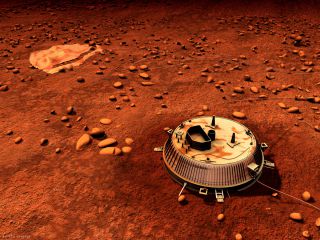
In 2005, Cassini also released the Huygens lander to parachute into the methane and ammonia rich atmosphere of Saturn’s moon Titan. As the second largest natural satellite in the solar system was known to have rivers and lakes of liquid methane, Huygens was designed with a hull that would float.
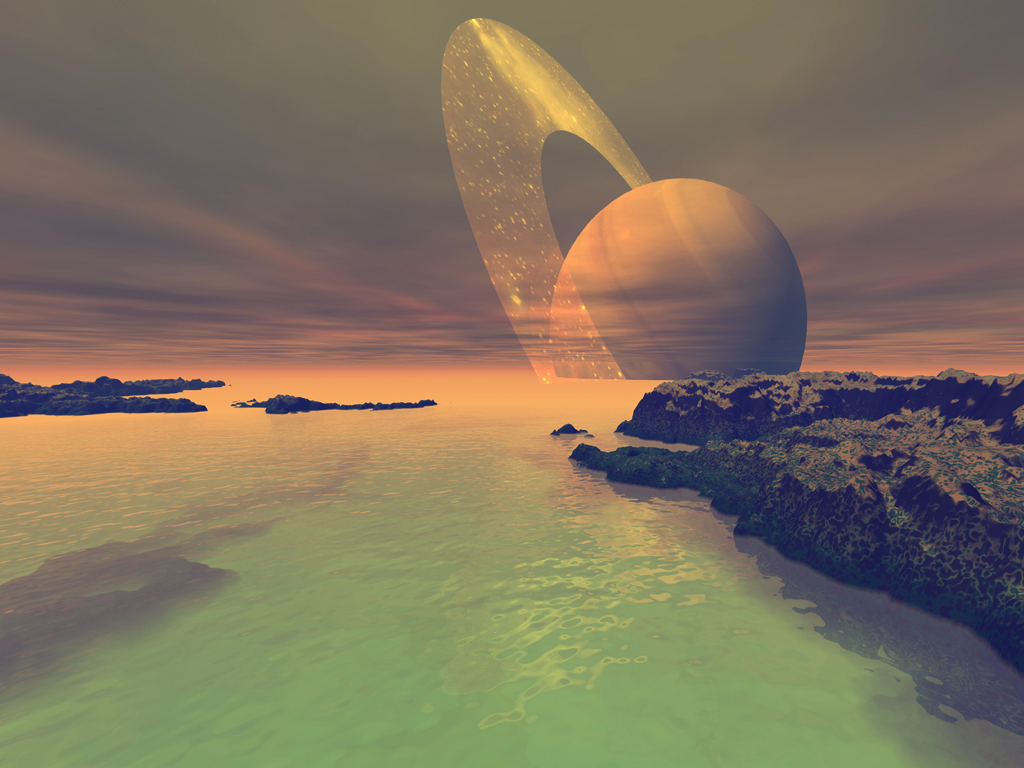
As it happens, the spacecraft descended on to land, but perhaps it will not be too long before craft from Earth truly set sail on the seas of space.
500 word version
The 1960 Lyons tea card album Wings of Speed declared “Already the North American X-15 is preparing for an assault on the silent ocean of space”. Space contains everything we know and open oceans of water are what define Earth and the life that – possibly uniquely – evolved on it. From the time it could look up at the velvety firmament, mankind has been fascinated by the stars and planets, seeing first gods, then guides to navigation and finally new realms to conquer.
The first man made objects to reach space were Nazi V2s which were the ancestors of today’s Trident ballistic missiles as well as the Soviet R7 which launched Sputnik and the American Saturn V Moon rocket. Sputnik’s Doppler Effect radio signals were the basis of Global Positioning System while later satellites monitored the weather and provided the extraterrestrial communication Relays anticipated by Arthur C. Clarke.
Geography then influenced the approaches of both the USSR and USA to manned spaceflight building, tracking and recovery. Soviet missions used enhanced versions of the R7, tracked by ships and recovered on land while Mercury, Gemini and Apollo spacecraft were tracked by ground based antennae and recovered at sea. This made the American re entry vehicles lighter and simpler thanks to the global reach of the ships and helicopters of the US Navy. More specifically, the lower stages of the the Saturn V rocket were too big to move by road or rail but could be transported to Cape Canaveral by river, sea or the Panama Canal. As manned missions became ever more ambitious, so increasing numbers of personnel, aircraft and other naval assets joined the prime recovery ships, mainly Essex Class aircraft carriers and Iwo Jima Class helicopter landing ships. This was particularly true of Apollo 13 which moved recovery area from the Indian to the Pacific Ocean.
The last two decades of the 20th century were dominated by the Space Shuttle, returning to a runway but using solid boosters recovered at sea. In more recent years however, focus has returned to conical re entry vehicles which will require a new generation of ships to recover them. Some rocket boosters are now being landed on barges after flight while unmanned spacecraft are discovering new oceans hidden under the surfaces of other celestial bodies that might possibly harbour life.