While writing up my diorama Britain’s Lost Seaplanes : A Chance To Get My Widgeon I was given the following article written by Bethany Abbit from The Westmorland Gazette of Friday 25 July 2008 :
A Kendal man plans to build an aviation museum in the Lake District to mark the centenary of England’s first seaplane flight, which was made by his great uncle from Windermere.
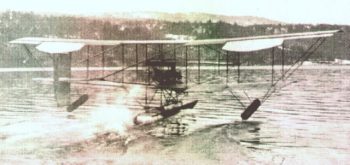
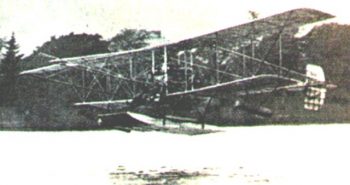
Richard Rainsford hopes to create a ‘living museum’ on the shores of Windermere, in Bowness, to be known as the Lakes Flying Museum. He also want to build a replica of the seaplane Waterbird, which was launched from Windermere in November 1911 by his great uncle Edward Wakefield.

The wealthy Kendal landowner was the first man in England to successfully launch a seaplane. A week earlier, Commander Oliver Schwann had attempted to fly an Avro D floatplane from Barrow dockyard, but crashed.
Wakefield had decided to build a hydro-aeroplane to counter the number of fatal aviation accidents during the early 1900s.
“He got it into his head that if he could build an aeroplane that would take off and land in water, he could cut down the number of deaths” said Mr Rainsford, who is chief executive of the Waterbird Project. “He was wealthy enough to indulge in any whim or fancy and on November 25 1911 he launched the first truly successful water flight in Britain.”
In 1912, recognising the importance of aviation and seaplanes, the Royal Naval Air Service contracted Wakefield as the primary developer of seaplanes. Wakefield hired Stanley Herbert Adams as a pilot, mechanic and principal authority to develop the seaplane engines. Over the next two years a team of engineers worked on more than 22 different seaplane designs in secret under the guise of the Lakes Flying Company at the Hill of Oakes aviation factory in Bowness.
“This was the first time a civilian had ever worked for the military in this way and he was one of the first signatories asked to sign the Official Secrets Acts.” said Mr Rainsford.
Despite the groundbreaking and important work that was going on in Windermere, two famous residents were unhappy about the noise and disruption from constant aeroplane testing.
“Beatrix Potter and Canon Rawnsley (founder of the National Trust) got upset with all this flying activity on Windermere and in 1912 put together a campaign,” said Mr Rainsford “There was a real chance that my uncle’s factory might be shut down. But Winston Churchill – who was Home Secretary at the time – said that the national interest was so important that there was no way my uncle would be cleared away from Windermere.”
Wakefield continued to experiment on Windermere until war broke out in 1914 and he was stationed as a soldier in Italy. The Royal Naval Air Service continued testing on the lake throughout both world wars.
The Waterbird Project committee has been set up as a charitable foundation and hopes to raise £ 5 million for the museum and £ 300 000 for the restoration of Waterbird.
Mr Rainsford said “Here in the Lake District we want a living museum which will house a number of seaplanes as well as Waterbird. We aim to fly her on 25 November 2011, 100 years after my uncle and once or twice a year here on Windermere as a gift to Lakelanders. I think we can meet the time constraints because there is a tremendous motivation to get this done for 2011. I’d say the one thing people really want to see is these vintage early flying machines flying in the area and the Waterbird was a Lakeland invention by a Lakeland man with its first flight here”
The committee is trying to solve the problem of a suitable site for the museum on the shores of the lake. However, a more problematic concern members will have to overcome is the 10 mph speed limit on the lake.

On Thursday 3 March 2011 Steven Bell wrote this update to the Waterbird story in The Westmorland Gazette:
A vision to bring a seaplane to Windermere to mark the maiden flight of an aircraft that made aviation history is beginning to gather pace.
Windermere Town Council wants to bring a seaplane to the town to mark the centenary of a plane called Waterbird being launched from the lake.
Waterbird is regarded as being Britain’s first successful seaplane and its development was overseen by wealthy Kendal landowner Edward Wakefield in November 1911.
Mayor of Windermere, Coun Bill Smith said: “The hope is to try and secure funding for a plane to come and land in recognition of the event which took place 100 years ago.
“There is a replica being built but it wouldn’t be in condition to fly this November.

“One of the aircraft we are looking at is a Catalina, an historic aircraft which can land on water, one of which has been to Windermere before.”
The Lakes Waterbird was one of a fleet of three offering pleasure flights from the lake and between November 1911 and January 1912. The plane completed 60 flights.
A storm destroyed the ground-breaking aircraft two months later when it ripped through the hangar in which it was stored.
Coun Smith said the 10mph speed limit on the lake could cause the plan to be grounded but he was confident the issue could be resolved.
“We will try to pursue discussions with the Lake District National Park Authority about the speed limit,” he said.
“It looks as though it could be OK but we need to sort out the detail.
“The fact is it could be done but we now have to see what we can to do get the go ahead.”
The cost of bringing the seaplane to Windermere is estimated to be £20,000.
“In the current economic climate, it would just be a case of getting out there to see people who are interested in seeing an aircraft land here,” he said.
On Thursday 1 December 2011 Daniel Orr further updated the Waterbird story in The Westmorland Gazette:
A revolution in aviation history took place 100 years ago on Windermere. Hundreds of people gathered in the Lakes this week to celebrate two anniversaries – the first flight of the ground-breaking seaplane Waterbird, and the opening of what became Windermere Airfield. We look at this historic occasion and what the future holds for air flight in Windermere.
Aviation enthusiasts gathered in South Lakeland to celebrate the centenary of a monumental event in global history.They met at Storrs Hall Hotel, Bowness, to mark 100 years to the day since the maiden flight of the world’s first seaplane, The Waterbird, which took off from the waters of Windermere.The event was also a chance for people to find out more about a project by the Lakes Flying Company (LFC) to build a £160,000 replica of the plane.It is currently being built by Gerry Cooper and it is hoped that, if extra funding can be found, it will once again take to the skies above England’s largest natural lake.
It is 80 per cent complete,” said Mr Cooper. “But we need a further input of funds to get the metalwork done. I have funded it myself until now, but I have gone as far as I can go.
“I think it is an important project because now children can jump on a plane and go on holiday and never even think about where the plane came from. This will help them understand the history of aviation.”
Mr Cooper also paid tribute to the skills of aircraft engineer Sir Alliott Verdon-Roe, founder of Manchester aviation firm Avro, whose original plans he is using to create the replica.
“They were very advanced for the time and he put a great deal of thought into it,” he said.
Funds are also being raised towards the creation of an Edward Wakefield Memorial Seaplane Centre at Windermere which would house the replica Waterbird and would be the only operational seaplane centre in the world flying pre-1914 aircraft.
A potential spanner in the works regarding the project comes in the form of the 10mph speed limit on the lake, as Adrian Legge, secretary of Windermere and Bowness Civic Society, explained.
The LFC is in discussion with the Lake District National Park Authority in an attempt to reach a compromise.
Richard Raynsford, a great, great nephew of Edward Wakefield – the man behind the original Waterbird – said: “Take off would be at 30mph but we would only be breaking the speed limit for a fraction of a second. We hope we can go ahead on this basis, but if not, perhaps it could take off and land at Windermere three to four times a year as a special occasion.
“We think it would create huge interest in these hard times and would be a wonderful new attraction for people to enjoy in the Lakes.”
Two eagerly-anticipated flying displays had to be cancelled due to stormy weather on Friday.

Guests at Storrs Hall Hotel, Windermere, were making their way to the shores of the lake to witness the fly past of a 1949 Hawker Sea Fury, when it was announced that it had been forced to turn back.
The second flight, organised by Windermere Town Council, would have been made by a seaplane from Loch Lomond Seaplanes, the star of the Visit Scotland TV adverts. It too fell foul of the strong winds and rain.
The Lakes Flying Company now has its own website at www.waterbird.org.uk

The original Waterbird, commissioned by Captain Edward William Wakefield was built by A. V Roe and Company in Manchester with initial testing at Brooklands. It was the fourth aeroplane constructed by the firm that would become famous for the Lancaster and Vulcan.
Waterbird, the first successful seaplane outside France with the USA, was an Avro Curtiss type powered by a Gnome Omega rotary engine turning a pusher propeller. Its floats were constructed by boat builders Borwick and Sons, since taken over by Windermere Aquatic Limited. The floats for the LFC replica – which is being built in Lincoln – are being made by RFH Pierce & Associates.