
As described in Part One of Aeroplanes Without Runways, the Saunders Roe SRA1 jet flying boat fulfilled the underlying concept of a guerrilla aircraft operating without runways.
However, it faced the issues of range away from suitable bodies of water, hull corrosion, submerged obstructions and the need for supply and maintenance facilities. Within ten years of the last SRA1 flight in 1951 however, a much more practical and flexible guerrilla aircraft was being developed.

In 1957, the Bristol Engine Company informed Sydney Camm of Hawker Siddeley of a project to combine their Olympus and Orpheus jet engines to produce a directable turbofan. The new Pegasus engine was based on an idea by Michel Wibault, a French aviation consultant, but reduced in size and weight.
Hawker Siddeley took the planned Pegasus engine as a basis for the P.1127, a candidate for the contemporary NATO specification for a Light Tactical Support Fighter. This was particularly important as Hawker’s proposed Hunter replacement – the P.1121 – had been cancelled due to the Duncan Sandys Defence White Paper and its policy shift away from manned aircraft and towards missiles.
Supported by the American Mutual Weapons Development Programme, the first bicycle-undercarriaged P1127 began tethered flights at Dunsfold in 1960 to prove the concept of using vectored thrust from the Pegasus turbofan engine.
XP836 (pictured above) was the second of three initial P1127 prototypes, first flown conventionally from Dunsfold on 7 July 1961. Unfortunately it crashed near Yeovilton on 14 December 1961 after the loss of the port front engine nozzle. Pilot Bill Bedford ejected safely from an altitude of 200 feet but the aircraft exploded on impact.
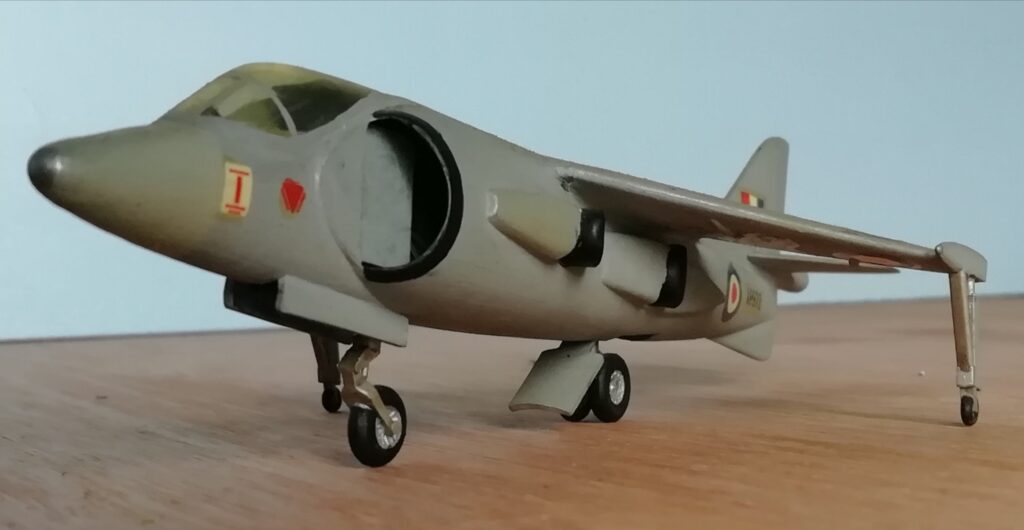
XP972 meanwhile was the third prototype Hawker P.1127. First flown on 5 April 1962, it crashed on 30 November 1962 after an engine bearing failure during a high G turn started a fire in the rear fuselage. Hawker Siddeley pilot Hugh Merewether made a successful un-powered belly landing at Tangmere, Sussex from an altitude of 3 000 feet. For saving the aircraft – rather than just himself by ejecting – Merewether was awarded a Queen’s Commendation for Valuable Services in the Air.
The Guild of Air Pilots and Navigators also awarded him the Derry and Richards Memorial Medal in 1963, the same year in which Airfix moulded its 1/72 kit of the P1127 – which came with decals for XP972. A reboxing of the kit in 2000 offered decals for the first prototype, XP831, and XP836 as mentioned above.
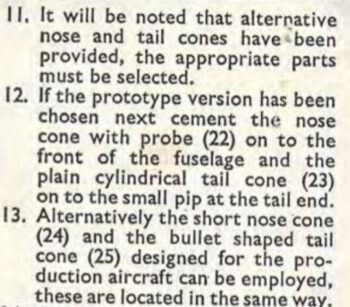
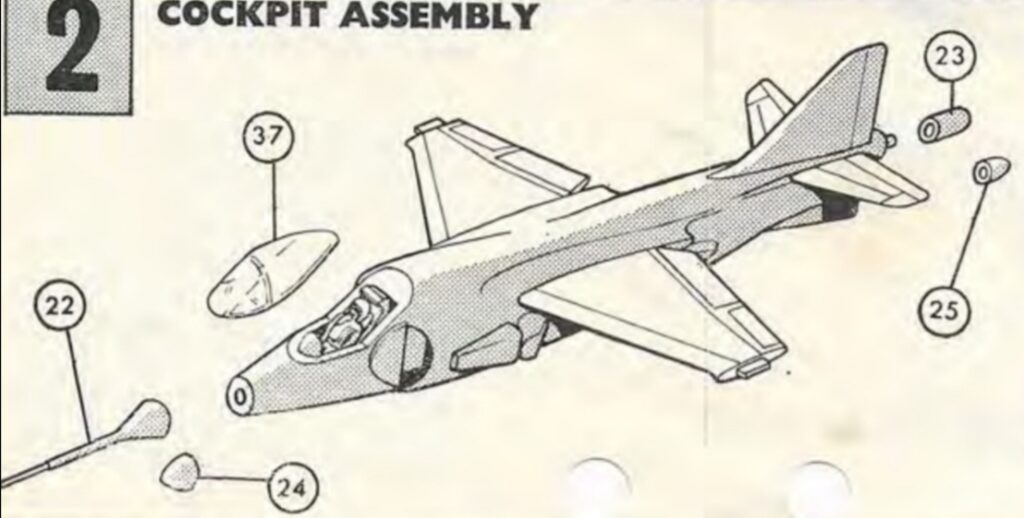
More importantly though, Airfix had an eye to a future production version of the P1127 and so supplied alternatives to the awkward and fragile nose probe and cylindrical tail. The model on display at Jet Age Museum combines the “production” nose with the prototype tail but nonetheless shows the way that the P1127 evolved into the Kestrel, an aircraft with swept wings and a taller tail that would in turn beget the Harrier.
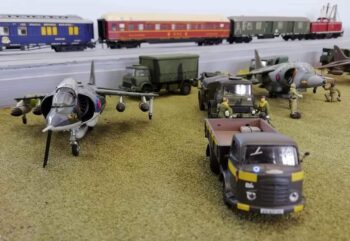
As relatively small strike aircraft, Harriers were able to hide individually under camouflage nets, trees or structures such as bridges rather than sit together on an airfield dispersal area in the manner of Hawker Hunters. As such an enemy would waste more time, energy and aircraft trying to locate and destroy them.
Once in the air too, the Harrier proved an agile and elusive target for opposing air superiority fighters because of its unique lift and propulsion system.

Unlike the earlier Short SC1 or later Yakovlev Yak-38 Forger – fitted with separate lift and thrust engines – the Harrier was built around a single example of Sir Stanley Hooker’s Bristol Siddeley ( later Rolls Royce ) Pegasus turbofan. This supplied cold compressed air to the front and hot exhaust efflux at the rear to two pairs of jet nozzles which could be swivelled – or vectored – by the pilot. When vectored downward, the Harrier rose vertically. When vectored aft, the Harrier moved forwards and when vectored slightly forwards the Harrier slowed to a halt and moved backwards. This last manoeuvre – known as Vectoring in Forward Flight or Viffing – could be used to allow enemy fighters chasing a Harrier to overshoot and themselves become vulnerable to gun or missile fire. However, once the Harrier had viffed, a large amount of energy was required to accelerate again.
Although existing airstrips or lengths of suitable straight road were ideal for short take off for Harrier operations, any small field or forest clearing just behind the battle front could also become a base. However, vertical take offs burned more fuel and therefore reduced either range or payload or both. Optimum short take offs required a 1 300′ runway and a traditional RAF preparatory test of a field suitable for Harrier use was to drive a Land Rover across it at 40 mph.
As a result of not having to fly a long distance into combat however, the Harrier could still deliver a full weapons load with much less fuel after a short take off. For this reason too, Harrier equipped 3, 4 and 20 Squadrons moved from RAF Wildenrath near the Dutch border to Gutersloh – just 75 miles from East Germany – in 1977.
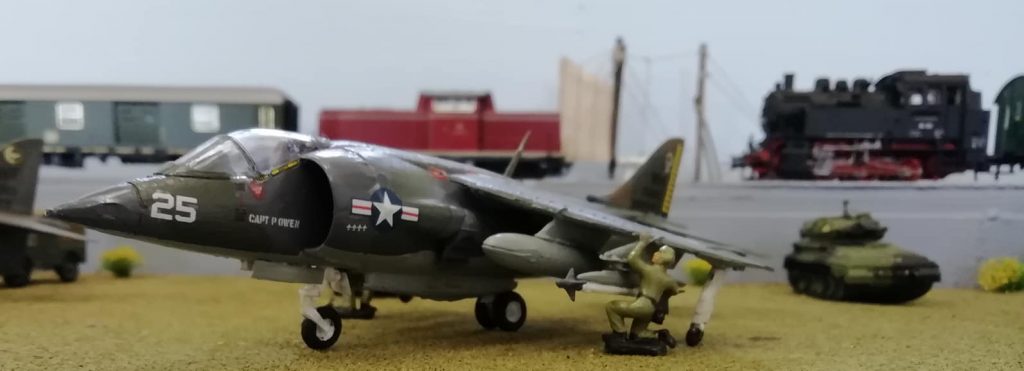
Like most contemporary strike aircraft too, weapons such as gun packs, air to air missiles, air to surface rockets, bombs and napalm – up to a maximum weight of 6 000 lb – were carried on external pylons for ease of loading by a small ground crew.
Central Europe was a natural habitat for the Harrier – known as the AV-8A in US Marine Corps service – with its extensive forests as well as built environment and the possibility of invasion by large numbers of tanks and other armoured vehicles.
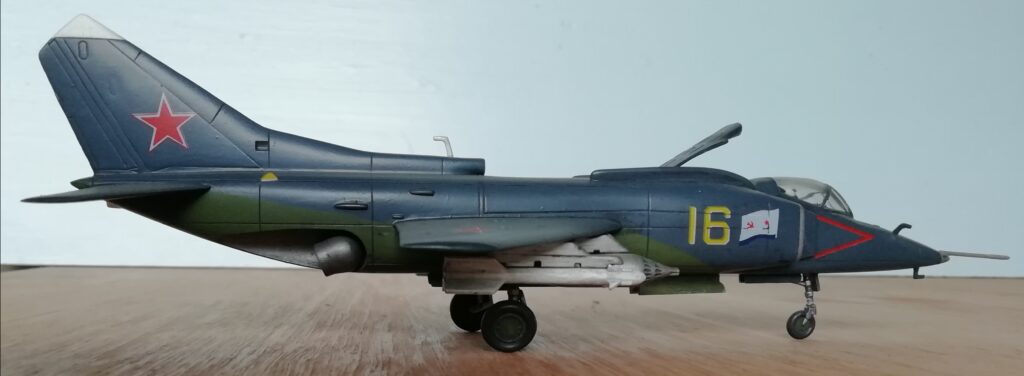
On the other side of the Iron Curtain however, the Soviet Union developed its own jump jets and fielded them on its first aircraft carriers. It even dispatched a few for combat flights in Afghanistan. Even stranger, the design DNA of the Russian jump jets ended up in the most expensive weapons program in history, the F-35 Joint Strike Fighter. The reasons why it abandoned the troublesome aircraft a quarter century ago point to the problems inherent to VTOL jet technology.
Just as Britain in the 1950s had the Rolls Royce Thrust Measuring Rig, so the USSR had its own “flying bedstead”. Fitted with just one downward facing RD-9BL turbojet engine, taken from a MiG-19, the four directional thrusters on the arms kept the Turbolet upright but could not impart horizontal thrust.
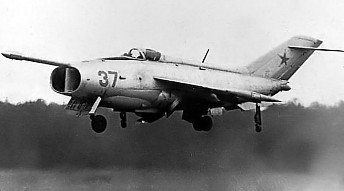
The Soviet equivalent of the Hawker Siddeley P1127 was the Yakovlev Yak-36. Powered by two R-27 turbojets with intakes squashed together in an open nose, the rear nozzles rotated to provide vectored thrust. Compressed air thrusters on the tail, on the tips of its undersized wings, and at the end of its nose boom provided directional maneuvering.
It took five years of testing to get the Yak-36 to the point where it could transition between vertical liftoff and horizontal flight. But lacking the range and carrying capacity to serve as a proper combat plane, the Yak-36 was instead a stepping stone to the carrier-borne Yak-38.
In 1965 the Soviet Navy introduced its Moskva class helicopter carriers – which featured a flat rear deck and cruiser style forecastle – while in 1975 the Kiev class featured a through angled deck, more analogous to the Illustrious class through deck cruiser.
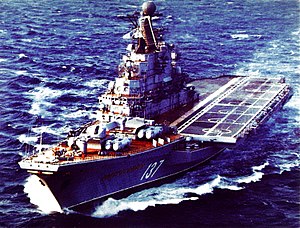
Not wishing to emulate the supercarrier fleet of the United States Navy, short take off and vertical landing (STOVL) aircraft seemed to be an alternative.
Specifically, the Soviet equivalent to the BAe Sea Harrier was the Yakovlev Yak-38. Known to NATO forces as the Forger, this featured three engines: a single RD-27 vector thrust engine at the rear and two dedicated lift engines just behind the cockpit. These were covered by a flap during forward flight, during which time they represented a dead weight. The Sea Harrier, introduced two years later in 1978, used a turbofan with a cold exhaust at the front and hot exhaust at the rear.
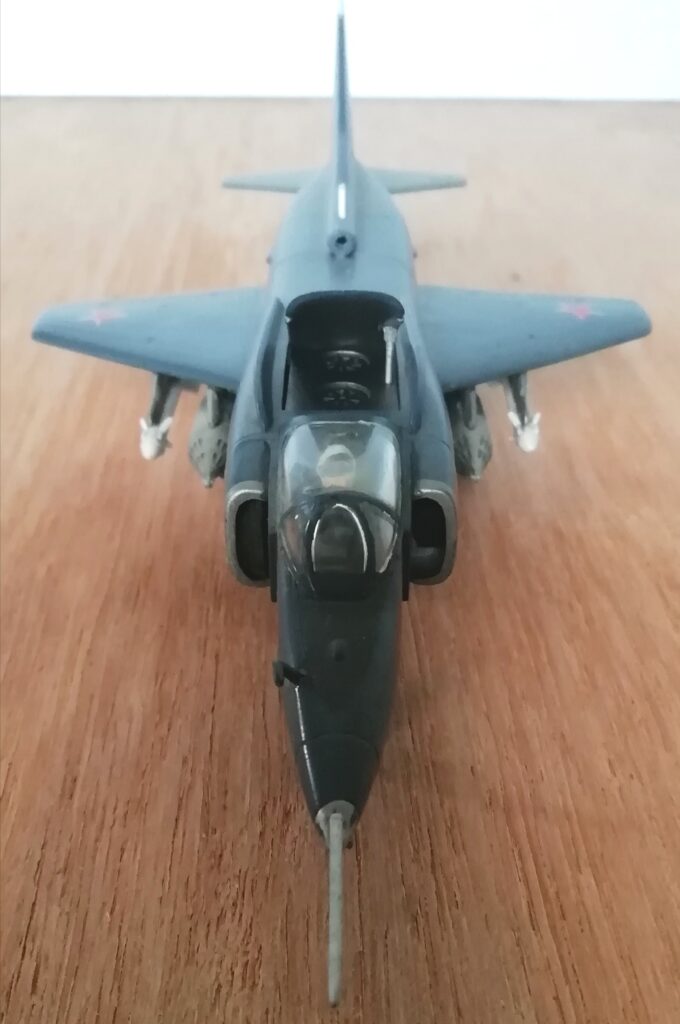
The twelve or so Yak-38s embarked aboard the Kiev and its sisters would unfold their stubby wings on deck and often used a runway angled on the port side to make short take of runs with added lift from vectored nozzles. This was preferred over a completely vertical liftoff because it consumed less fuel and permitted a heavier weapons load.
Like the Harrier , it could fly just short of the speed of sound, at around 680 miles per hour. Unlike the Harrier, it had higher fuel consumption, limiting range to around two hundred miles at best, and less if it performed a vertical takeoff. The Soviet Union produced 231 Yak-38s, including fifty-two upgraded Yak-38Ms in the 1980s with more powerful R-28 engines and more rugged landing gear.
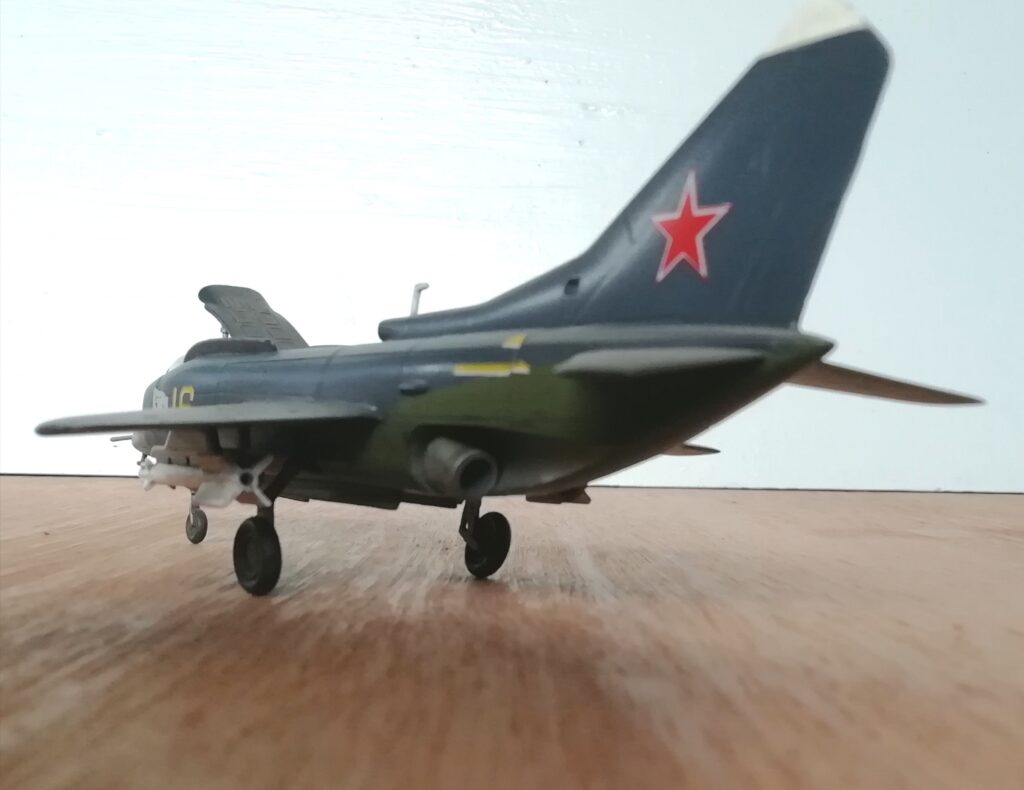
The most important differences between the Yak-38 and Sea Harrier aircraft lay in payload: the Yak-38 had no radar, limiting its potential as a fleet defence fighter. Its air-to-air armament was confined to small R-60 heat-seeking missiles with a maximum range of five miles, as well as optional twenty-three-millimeter cannon pods. For ground attack, the Yak-38 had just four underwing hardpoints for bombs or unguided rockets, and had a small maximum bomb load between one thousand and two thousand pounds—about one-quarter of what the Harrier could carry. The Forger could also launch Kh-23 antiship missiles with a range of a few kilometers, but the Forger’s pilot would have had a difficult time controlling the manually guided weapons without a back seater.
It did not help that jump jets are even more complicated, and more accident prone than regular fighters. By the end of Kiev’s first cruise with Yak-38s on board, only one of the six aircraft embarked was operational.
The temperamental Forger was unpopular with pilots, too. The Yak-38’s designers had observed that if one lift jet broke down, the other would spin the aircraft over on its side. To protect the pilot, an automatic ejection system was designed to detect sharp changes in pitch and immediately eject the pilot at an angle away from the carrier’s forecastle. Predictably, this well-intentioned safety measure was triggered unnecessarily on many occasions, causing a loss of the airplane and the pilot’s career prospects.
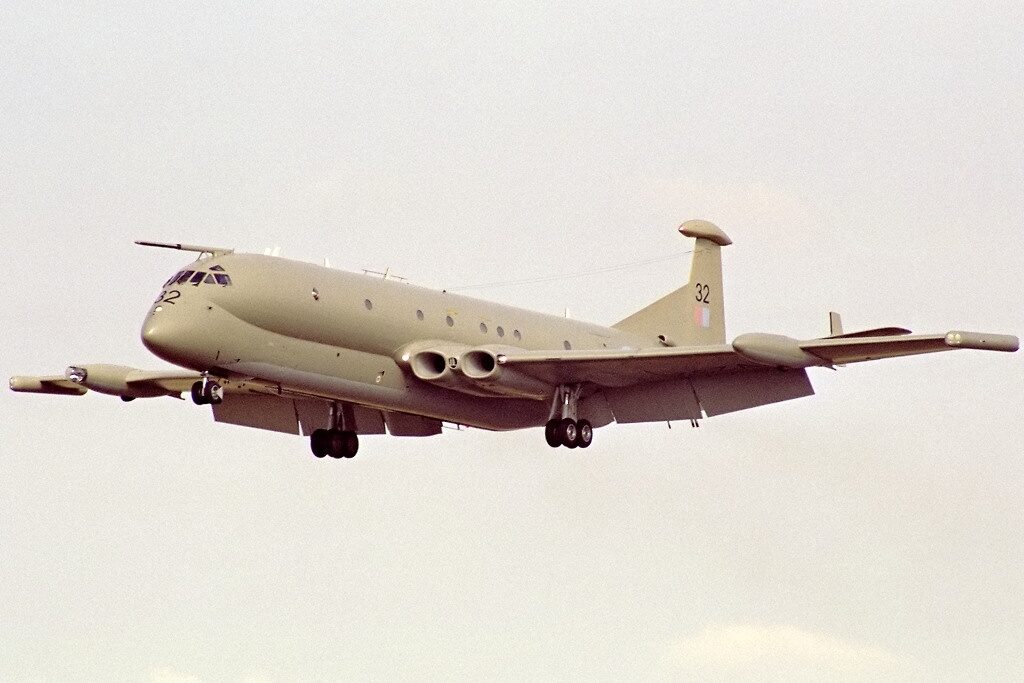
As a fighter, the Yak-38 could have posed a threat to British Nimrod or American P-3 Orion maritime patrol aircraft but put ashore like the USMC AV-8As its lift engines could throw up enough dust to clog their intakes and those of the forward propulsion turbojet. Certainly, only a quartet of Forgers were deployed in Afghanistan in the 1980s and the inability of their engines to cope with hot climates and high altitudes contrasted with the Rolls Royce Pegasus turbofans of the second generation Harriers used by the USA and Britain against the Taliban in the 21st Century.
In the end, the Yak-38 simply lacked the range and weapons load of alternative conventional take off aircraft such as the Su-25 Frogfoot or even the Hind attack helicopter.
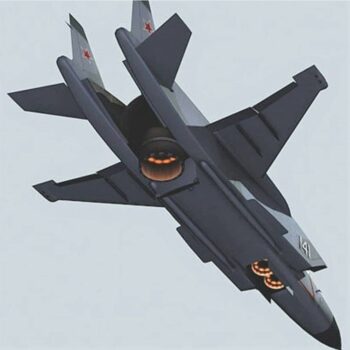
However, lessons learnt from operating the Yak-38 fed into the design of the supersonic Yak-141 fleet defence fighter, first flown in 1987.
Freestyle, as it was known to NATO, was distinguished by two tail booms trailing well beyond the fuselage, and a large afterburning R-79 vector-thrust turbojet fan nestled in between. Another two lift jets were located behind the pilot. The Yak-141 was capable of attaining Mach 1.4, had a range of 1,300 miles, and importantly mounted a radar and could carry both short- and long-range air-to-air missiles, making it vastly more capable than the Yak-38 and even the Harrier.
However, as the Soviet Navy became the Russian Navy in 1991, it lost interest in VTOL aircraft in favor of conventional fighters that could operate from the newer Kuznetsov-class carrier. Even more importantly, Russia was broke. The Yak-38s were all retired in 1991—a third of them had already been lost in accidents!
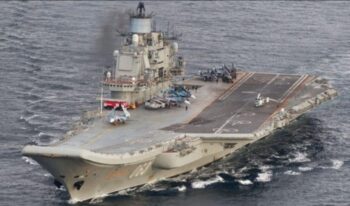
Today, Russia operates much more capable MiG-29M and Su-33 conventional strike aircraft from the ski ramp equipped carrier Admiral Kuznetsov.
But in the 1990s Lockheed Martin invested heavily in Yakovlev VTOL technology and the single jet engine with rear thrust vectoring became a major component of their X-35 Joint Strike Fighter design. However, in what became the Lockheed Martin F-35B Lightning II, the pair of lift engines behind the cockpit were replaced by a fan driven by a shaft from the engine at the rear.
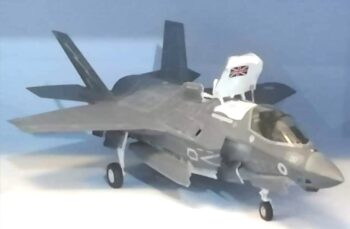
This has produced a very capable supersonic STOVL fighter bomber, although some have questioned adapting such a specific airframe for conventional runway and conventional aircraft carrier (CATOBAR) variants.
Despite their flexible deployment capabilities, STOVL fighter bombers are intrinsically more complicated to build, maintain and fly, and are consequently more accident-prone. Airframes built to accommodate VTOL capabilities are not a match for conventional fighters in terms of speed, range and weapons load. In engineering, no advantage is without cost.
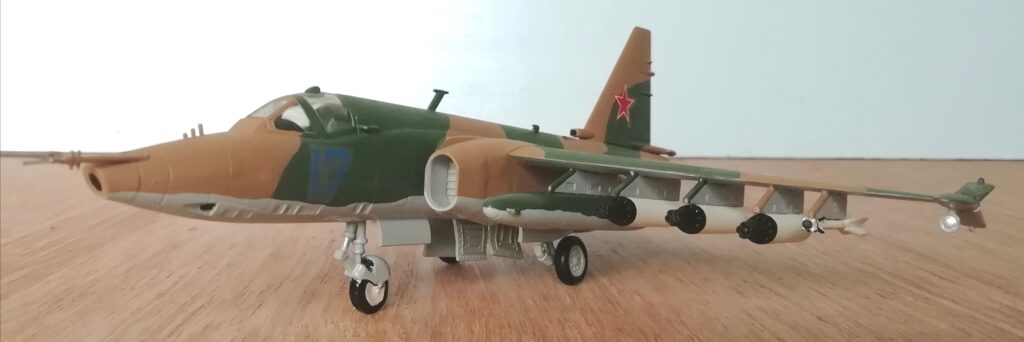
In early 1968, the Soviet Ministry of Defence decided to develop a specialised armoured assault aircraft in order to provide close air support for the Red Army. This specification was based on the experience of ground attack aviation as far back as the 1940s and the realisation that aircraft currently tasked with the job were both under armoured against ground fire and surface to air missiles and moved too fast to make visual contact with targets.
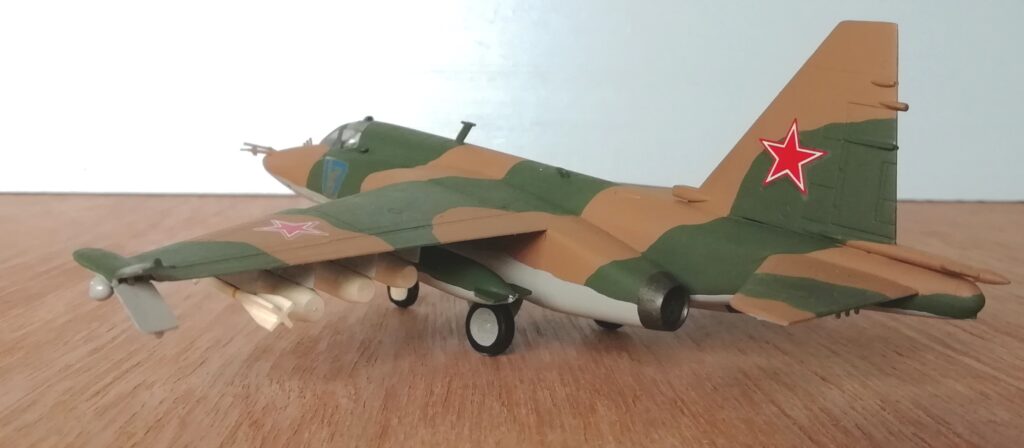
Competition between Soviet design bureaux began in March 1969 with Pavel Sukhoi’s offering first being flown on 22 February 1975 and subsequently being selected for production at Tbilisi in the Soviet Socialist Republic of Georgia. From 1978, variants on the single seat, short take off and landing design included a target tug, specialist anti tank bomber and a two seat trainer and the first operational units received their Su-25s in Afghanistan in 1981. Given the reporting code Frogfoot by NATO and widely exported by the USSR , Su-25s have since been in action in Syria, Dafur, Iraq, Eritrea and the Cote d’Ivoir as well as Chechniya and Ukraine.
At the same time that the Frogfoot was being conceived, similar research was being carried out in the USA – where an emphasis on delivering strategic and tactical nuclear weapons at high speed had left close air support platforms behind.
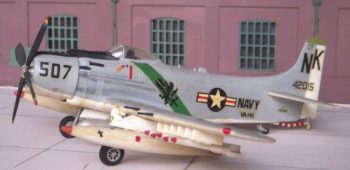
As a result, America entered the war in Vietnam with the Douglas Skyraider, a 1940s design which, although proven capable in Korea, was now too slow and vulnerable to ground fire with little capability for self defence. Despite this however, the piston engined “Spad” featured an impressive payload and loiter time over a target. The U.S. Air Force and Marine Corps lost 266 Skyraiders in action in Vietnam, largely from small arms fire.
As a result, on 7 June 1961, Secretary of Defense Robert S. McNamara ordered the USAF to develop two tactical aircraft, one for the long-range strike and interdictor role and the other focusing on the fighter bomber mission. The first of these became the General Dynamics F-111 while filling the second role was a version of the Navy’s McDonnell Douglas Phantom II. However, capable and indeed ubiquitous as the Phantom was, it lacked loiter time, was not designed to fly slowly and was expensive both to build and operate. Flying slowly also made the Phantom – designed to shoot down high flying Soviet bombers – vulnerable to more nimble MiG 21s of the North Vietnamese People’s Air Force.
The US Air Force found adapting further existing aircraft for close air support in a cost effective manner problematic. In addition, the Air Force noted that the US Army was developing the Bell UH-1 Iroquois transport helicopter into the AH-1 Cobra gunship equipped with BGM-71 TOW anti tank missiles.
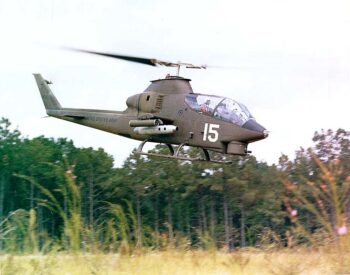
US military thinking in Europe then changed to consider using anti tank helicopters instead of tactical nuclear weapons to deter any armoured advance by Warsaw Pact forces.
With an even more capable battlefield helicopter from Lockheed on the horizon, a 1966 US Air Force study recommended the acquisition of a simple, inexpensive, dedicated close support aeroplane at least as capable as the Skyraider and tactics to make it as useful or more useful than an attack helicopter.
Further studies in 1969 – based on the experiences of Skyraider Pilots and an historical survey of the Henschel 129 and Ilyushin Il-2 Stormikov from World War 2 – identified the need for long loiter time, low-speed maneuverability, massive cannon firepower, and extreme survivability. By 1970, specifications put out to industry also included a unit cost of 1.4 million dollars, a 30mm rotary canon firing 4 000 rounds a minute, maximum speed of 460 mph, takeoff distance of 4 000 feet, external load of 16,000 pounds and 285 mile mission radius.
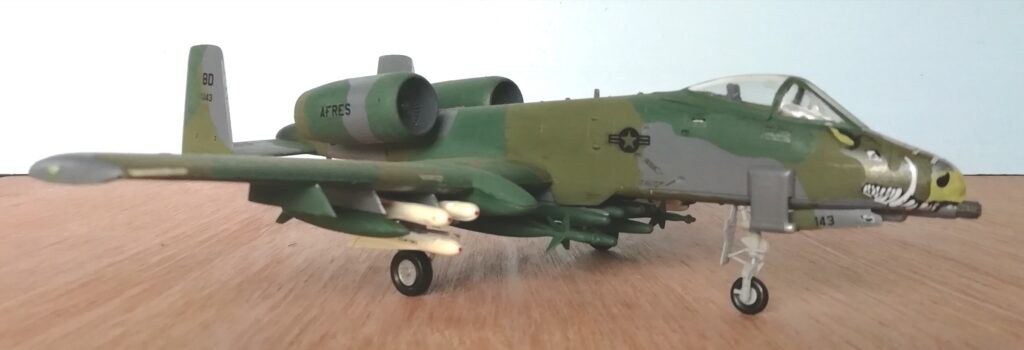
Northrop and Fairchild Republic became the two competing companies with Fairchild Republic’s A-10 Thunderbolt II (named after the Republic P-47 Thunderbolt of World War 2) first flying on 10 May 1972 and being selected on 18 January 1973. With General Electric building the GAU-8 canon, the first production A-10s were delivered in March 1976.
The wide chord high aspect ratio low cantilever wing of the 350 mph A-10 gave superior maneuverability at low speeds and altitude. In addition, the ailerons were located at the ends of the wings to maximise rolling moment and were unusually long, stretching half way along each wing. They could also split horizontally to act as air brakes. In contrast to these deceleron, the Su-25 had much smaller wingtip mounted slowing surfaces.
The high lift wings, combined with sturdy landing gear and low-pressure tyres allowed short takeoffs and landings from primitive forward airfields, damaged runways, taxiway or straight roads with a heavy war load.
Also key to this ability was the use of General Electric TF34-GE-100 turbofans, set high up on the fuselage to reduce the risk of foreign object ingestion. The position of the engines also allowed them to be kept running during refuelling and rearing, saving time on the ground. Ease of turn round was also boosted by the low set wing and weapon pylons which were easy to reach.
In flight, the 6:1 ratio bypass turbines produced a low infra red signature, further shielded from the ground by the tailplane.
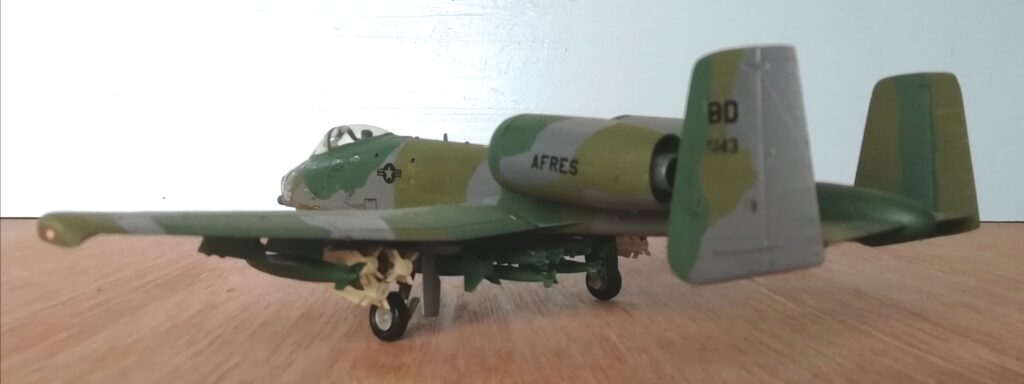
Many parts of the A-10 were built from honeycomb panels for strength and lightness and the skin was not load bearing, allowing easy repair in the field. In fact it was designed to be refueled, rearmed, and serviced with minimal equipment and facilities. Another unusual A-10 feature was that many of the aircraft’s parts were interchangeable between the left and right sides, including the engines, main landing gear, and vertical stabilizers.
The A-10’s front landing gear was offset to the aircraft’s right to allow placement of the 30 mm cannon with its firing barrel along the centreline of the aircraft. However, this meant that turning to the right on the ground took less distance than turning left – rather like the Hawker Siddeley Trident airliner.
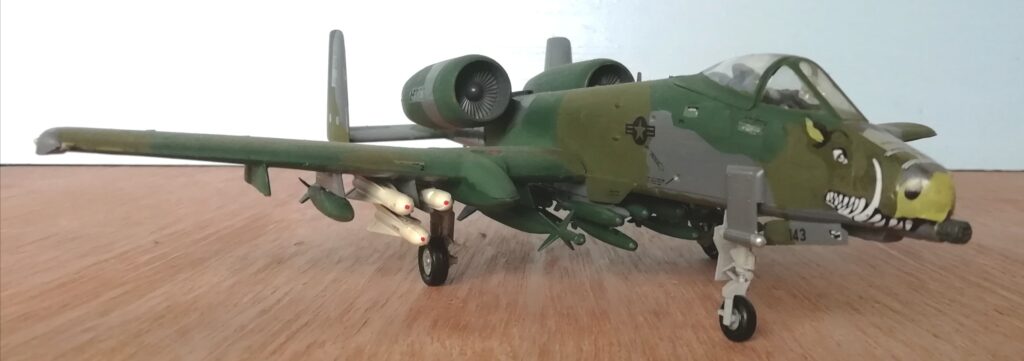
The wheels of the main landing gear partially protruded from their nacelles when retracted, making belly landings easier to control and less damaging. All landing gears retracted forward so that if hydraulic power was lost, a combination of gravity and aerodynamic drag could lower and lock the gear in place.
Having said that, the Thunderbolt was able to survive direct hits by high explosive and armour piercing shells of up to 23mm diameter and its double redundant flight systems allowed it to fly on one engine with one tail fin missing. The cockpit and some of the flight systems were encased in a titanium armoured “bathtub”: armour making up almost six percent of the aircraft’s empty weight. The Su-25 also featured an armoured cockpit and both aircraft were fitted with integral retractable pilot access ladders.
After distinguished service during the first Gulf War and in many other conflicts, the A-10 remains in USAF service and was once a common sight around Kemble (where they were refurbished at the RAF aerodrome) and Tewkesbury. However, they have never been exported to other friendly nations.