In 1926 the Gloucestershire Aircraft Company – founded in 1917 – changed its name to Gloster Aircraft Company to make it more pronouncable to foreign customers.
In 1934, during the Great Depression following the 1929 Wall Street Crash, Gloster was acquired by another British aircraft manufacturer, Hawker Aircraft Limited.
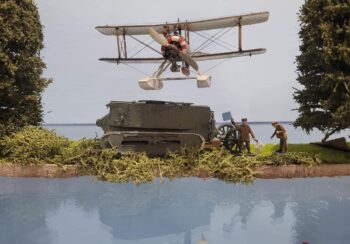
Hawker had its roots in the aftermath of the First World War which resulted in the bankruptcy of the Sopwith Aviation Company. Although this had produced such notable aircraft as the Camel, Pup and Baby (pictured above), attempts to enter the civilian motorcycle market had foundered.
Sopwith test pilot Harry Hawker and Thomas Sopwith himself, Fred Sigrist and Bill Eyre bought the assets of Sopwith and formed H.G. Hawker Engineering in 1920. In 1933, the company was renamed Hawker Aircraft Limited.

Regardless of this change in ownership, the Gloster Aircraft Company continued to produce aircraft under its own brand name. For example, Gloster produced one of its most famous aircraft, the Gladiator (pictured above) biplane, in the same year.
In 1935, Gloster further became a part of Hawker Siddeley Aircraft Limited with the merger of Hawker Aircraft and Armstrong Siddeley. Hawker Siddeley Aircraft Limited also took over A.V. Roe – who would go on to build the Avro Lancaster bomber – in 1935.
Both Armstrong Siddeley and its Armstrong Whitworth Aircraft subsidiary were moulded by the influence of John Davenport Siddeley, later Lord Kenilworth.
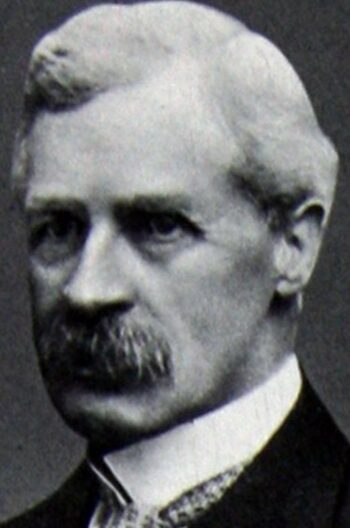
The eldest son of hosier William Siddeley and his wife Elizabeth Davenport, John Davenport Siddeley was born in Longsight Manchester in 1866. In 1892, the young bicycle racer and designer was hired as a draughtsman by the Humber Cycle Company. In 1900 as managing director of Dunlop’s subsidiary Clipper Tyre Company J.D. Siddeley gained prominence in the motor industry by driving a 6 hp Daimler car through England’s Thousand Miles Trial with marked success. This followed cycling from Land’s End to John O’ Groats to publicise the new pneumatic tyre.

J.D. Siddeley founded his Siddeley Autocar Company in 1902 to manufacture cars to Peugeot designs, including the 1904 6 hp model pictured above.
During 1905 Wolseley, which then dominated the UK car market, purchased the goodwill and patent rights of Siddeley Autocar Company and appointed J. D. Siddeley London sales manager of Herbert Austin’s Wolseley Tool and Motor Car Company Limited, owned by Vickers, Sons and Maxim. A few months later Herbert Austin left Wolseley to found his own Austin Motor Company and Siddeley was appointed manager of Wolseley in his place. Without authority, J.D. Siddeley then added his own surname to the badge on the Wolseley cars.
He resigned from Wolseley in 1909 to go into partnership with Henry Hugh Peter Deasy and manage the Deasey Motor Company of Coventry. The shareholders were so pleased with his success that on 7 November 1912 they unanimously agreed to change the company’s name to The Siddeley-Deasy Motor Car Company Limited. Siddeley’s name was then added to the product’s radiator.
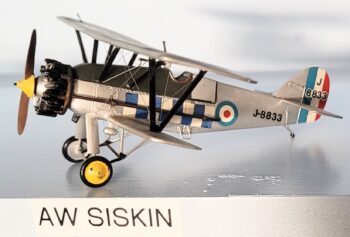
During the First World War, Siddeley-Deasey produced water cooled aero engines, licence-built RE8 biplanes and designed what became the Armstrong Whitworth Siskin, later built by Gloster Aircraft and pictured above.
In 1919 Siddeley suggested a merger with Sir W. G. Armstrong Whitworth & Company Limited’s Motor Car Department. Armstrong-Whitworth had been a supplier of Siddeley-Deasy engine castings and they had themselves made aircraft. By 1919 they had decided to abandon aircraft manufacture and shed the associated staff.
Armstrong Whitworth acquired a controlling interest in The Siddeley-Deasy Motor Car Company Limited and changed its name to The Armstrong Siddeley Company Limited.
Armstrong Siddeley produced radial aircraft engines throughout its life, together with turbojets after the war. These products included the Armstrong Siddeley Cheetah radial engines on the Avro Anson maritime patrol aircraft and the Armstrong Siddeley Sapphire turbojets on the Gloster Javelin.
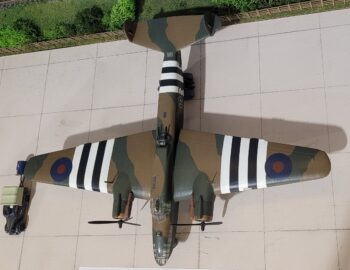
In 1920 Armstrong Siddeley produced its own subsidiary, The Sir W.G. Armstrong Whitworth Aircraft Company Limited, which went on to produce the Siskin biplane fighter as well as the Armstrong Whitworth Albemarle (pictured above) Armstrong Whitworth Sea Hawk naval jet fighter and Meteor Night fighters.
John Davenport Siddeley reported that since 1919 his company had each year produced more 6-cylinder car engines than any other European producer and by 1927 he had gained personal control of all three Siddeley businesses.
He remained their chairman until 1935 when, at the age of 70, he arranged his last takeover with Hawker to create the Hawker Siddeley group of companies.
As well as the Armstrong Whitworth designed Siskin, Gloster Aircraft built such Hawker designs as the Hart, Henley, Hurricane and Typhoon. While the Gloster factory at Hucclecote went on to build Meteor and Javelin fighters under their own brand name, Hawker produced the Tempest and Sea Fury piston engined fighters and the jet propelled Hunter, developed from the Armstrong Whitworth Sea Hawk.
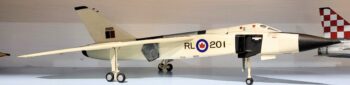
In 1945 Hawker Siddeley purchased Victory Aircraft of Malton, Ontario, Canada from the Canadian government, renaming the company, A.V. Roe Canada, commonly known as Avro Canada, a wholly owned subsidiary of Hawker Siddeley. During its operation, Avro Canada produced the Avro Jetliner, Avro CF-100 and CF-105 Arrow.
Hawker Siddeley Aviation Limited was the identity for the aircraft sector of the Hawker Siddeley Group between 1948 and 1959.

In 1957 Hawker Siddeley also purchased the Brush group of companies. This included Brush Electrical Machines and Brush Traction who manufactured electromotive equipment and railway locomotives and the engine builder Mirrlees Bickerton and Day.
This was an astute move on the part of Hawker Siddeley as British Railways was modernising and replacing steam with mainly diesel electric traction. One of the most enduring Brush diesel electric designs is the A1A-A1A arrangement Class 31 (pictured above) introduced in 1957 and still in service in 2022.
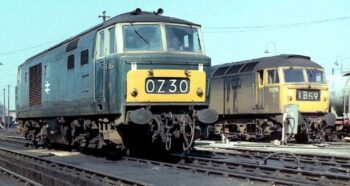
Following on from the Class 31 was the more powerful Class 47, like the contemporary Class 52 diesel hydraulic built with a stressed skin monocoque body shell. That Brush were able to build such an uncluttered shell for the Class 47 (above right) however owed much to Gloster Aircraft and in particular to Mr J.F. Cuss who looked at the strength calculations of the new Type 4 and suggested that the side metal sheeting formed part of a full depth beam. This allowed any buffer bending movement to be transferred to the top of the beam by a member visible at the rear of each cab – effectively turning the engine compartment between the two cabs into a torsion box.
However 1958 saw Hawker Siddeley also form a joint venture with Beyer Peacock and Company to manufacture diesel hydraulic locomotives; This was called Beyer Peacock (Hymek) Ltd and erected 101 examples of what became the Class 35 B-B (above left)

1959 meanwhile saw Hawker Siddeley’s aero engine business, Armstrong Siddeley, merge with that of Bristol Aero-Engines to form Bristol Siddeley Engines. This company would also absorb both de Havilland and Blackburn engines and licence built the Maybach engines used in the Class 52 Western diesel hydraulic locomotives.
Hawker Siddeley’s interest in diesel engines extended further in 1957 with the acquisition of Yeovil based Petter (the ancestor of Westland Aircraft) and, in 1965, with their rivals Listers Dursley. Hawker Siddeley combined the two businesses as Lister-Petter from 1986 to 1992. Similarly, in 1969 Hawker Siddeley united Mirrlees of Hazel Grove, Stockport, with Stamford, Lincolnshire, based Blackstone to create Mirrlees-Blackstone. Blackstone had become part of Lister in 1937.
Not content with railway locomotives, Hawker Siddeley bought the Chippenham based Westinghouse Brake and Signal company in 1979. This eventually became part of Siemens after 1992.
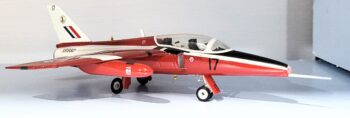
Shortly after acquiring Folland Aircraft (builder of the Gnat, pictured above) in 1959, there was huge government pressure on all the aviation concerns to rationalise an industry where ‘far too many companies were competing for a diminishing number of contracts’.
Out of this controversial policy came the decision to only offer new government contracts and development grants to organisations that had been formed through various mergers and take-overs.
This resulted in two major consortiums, British Aircraft Corporation and Hawker Siddeley Aviation.
Hawker Siddeley Aircraft had already merged with the de Havilland and Blackburn Aircraft Companies in 1960. Indeed, Blackburn already had an interesting merger history.
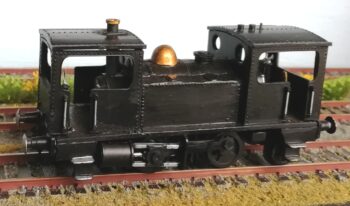
Thomas Green and Son, builders of twin cab tram locomotives for Ireland (pictured above) also made machine tools and munitions during both World Wars of the Twentieth Century. In the 1939-1945 conflict the Leeds based firm constructed components for Fairey Swordfish torpedo bombers being assembled by Blackburn Aircraft at Brough in East Yorkshire.
The works manager of Thomas Green during the Great War was George W. Blackburn whose son Robert founded the Blackburn Aeroplane Company and indeed some of Robert’s early efforts were constructed at Thomas Green’s Smithfield Foundry.
In 1951 Blackburn – soon to design its Buccaneer naval jet bomber – took over Greens, before they themselves became part of the Hawker Siddeley empire.
Not being a core business to Hawker Siddeley, Thomas Green and Son was sold to Atkinson’s of Clitheroe in 1975 and the Leeds premises closed in 1976.
Although the various parts of Hawker Siddeley continued to produce aircraft under their own branding, this was a very short-lived reprieve for these famous aviation names.
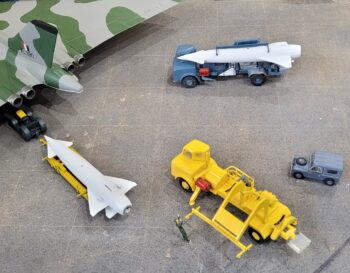
In 1963, and after a period of reorganisation, Hawker Siddeley Group was created leading to re-branding of the constituent company products as either Hawker Siddeley or ‘HS’ types. Unfortunately this was not to include Gloster Aircraft which closed in 1963, a victim of the over supply of companies competing for dwindling orders. However, one its last tasks was to assemble Avro Blue Steel missiles powered by Armstrong Siddeley Stentor rocket engines for Avro Vulcan bombers.
Gloster also benefitted from the 1959 announcement of joint venture between Hawker Siddeley and J. Lyons and Company called Primapax to make, hire and sell vending machines built in Hucclecote.

During the 1960s, the company developed one of their most famous aircraft, the Hawker Siddeley Harrier which went on to become the first fully operational VTOL (Vertical Take-Off and Landing) jet aircraft. Manufactured at Kingston on the banks of the River Thames, with assembly at Dunsfold, the Harrier led the way in the development of vectored thrust technology, much of which is still used in 21st century aircraft.
Other sectors of the Hawker Siddeley Group included a Dynamics Division (Guided Weapons) and Railway, Locomotive and Subway Rolling Stock businesses throughout Britain, the USA and Canada.
On 29 April 1977, the Aircraft and Shipbuilding Industries Act saw the nationalisation of Hawker Siddeley Aviation and Hawker Siddeley Dynamics Divisions which were merged with British Aircraft Corporation to create British Aerospace, later BAe Systems.
The non-aviation and foreign interests remained under a holding company known as Hawker Siddeley Group Plc which was eventually sold to BTR in 1992.
The Hawker Siddeley brand name and that of its founder Harry Hawker continued in aviation until 2012 with the Hawker Beechcraft Corporation and continues today in Hawker Siddeley Switchgear in both the UK and Australia.