This is an in depth look at the model presentation displayed at the Jet Age Museum, Staverton, GL2 9QL in the spring of 2021.

Russian-American aircraft designer Igor Sikorsky once said that ” the idea of a vehicle that could lift itself vertically from the ground and hover motionless in the air was probably born at the same time that man first dreamed of flying.”
A rotary winged toy appears in a 14th Century Flemish document now preserved in Copenhagen and helix winged flying vehicles were drawn by the Florentine artist Leonardo da Vinci, but it was not until 1907 that two French teams – one led by Paul Cornu and another jointly by Louis Bregut and Professor Richet – both proved that helicopters were – just about – a practical reality.

Cornu’s machine used two rotors belt-driven from a central 24 hp engine to rise one foot in the air for 20 seconds near Liseux on 13 November 1907.However, both these machines were heavy, underpowered, unreliable and unstable and when the Gloster Aircraft Company (GAC) tried to build a helicopter of their own in the late 1920s they did not fare much better.
In a 1955 edition of the GAC staff magazine “Pinion” works engineer Mr A. K. Laverton recalled the machine “as looking like a tin shed with horizontal paddle wheels on top.” The tin shed did actually heave itself into the air, but was grossly underpowered. A more powerful engine was then installed and then, according to an eye witness, the craft “Rose rather unsteadily, finally rolling over on one side when one of the rotors caught in an overhead roof girder; and the machine was left suspended from a tangle of rotor and shafting”.
Early helicopters faced the twin problems of the fuselage spinning in the opposite direction to a single rotor and of directing the craft up, down, forward and backward. Russian designer Boris Yuriev first proposed a small vertical rotor mounted on the tail to stop spinning in 1912 while Argentinian designer Raul Pateras de Pescara discovered rotor blade pitch variation and cyclic control.
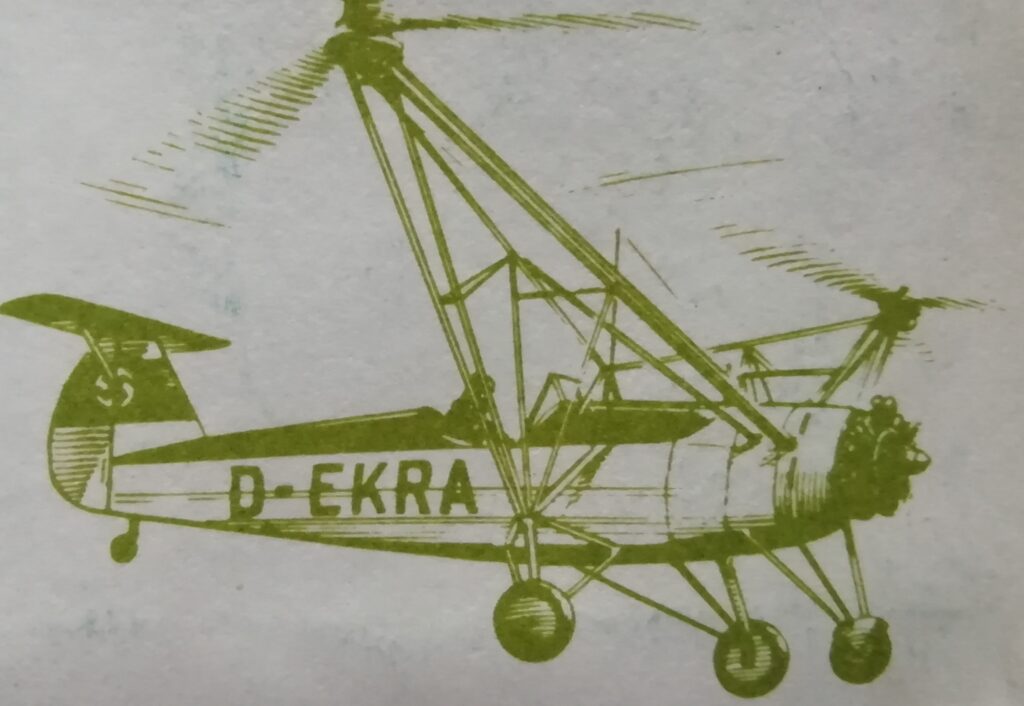
However, these two developments were only united in a recognisably modern single overhead rotor helicopter in 1939. After a first untethered flight on 13 May 1940, Igor Sikorsky’s VS-300 went on to beat the existing world helicopter endurance record on 6 May 1941. This had previously been held by the German Focke Wulf Fw 61, which featured twin rotors on either side of the fuselage.
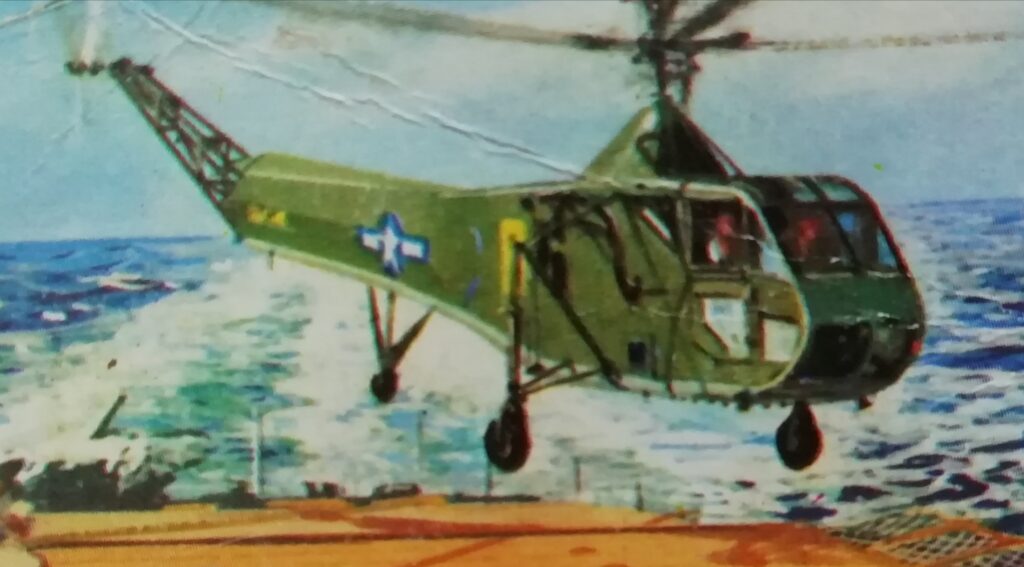
It was not until 1944 that the first Sikorsky R-4 went into production. The 130 examples built were powered by a 180bhp Warner Super Scarab piston engine. Although the R-4 was used to evacuate casualties during the closing stages of World War II, the first extensive military use of helicopters came during the Korean conflict of 1950-1953.
While the Gloucestershire Regiment were earning their United Nations Distinguished Unit Citation in the struggle against Communism, aircraft such as the Sikorsky S-51 were busy taking wounded soldiers to mobile army surgical hospitals, plucking downed airmen from the sea or making daring rescues behind enemy lines.
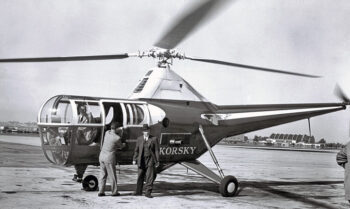
Against this background, a helicopter department was formed by the Bristol Aeroplane Company at Filton – then in Gloucestershire – late in 1944. With the addition of Austrian rotorcraft designer Raoul Hafner to the new outfit, Bristol were able to respond to Ministry of Supply Specification E20/45 which called for a small helicopter similar to the American Sikorsky S-51.
The S-51 first flew on 16 February 1946 and would be licence built by Westland of Yeovil as the Dragonfly from 1948.
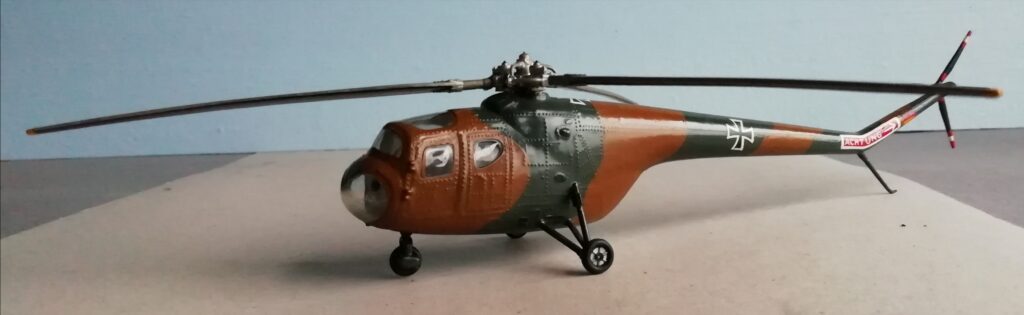
Bristol’s answer to this challenge was the Type 171 Sycamore, first flown on 27 July 1947 in Mark 1 form with a 450 hp Pratt & Witney Wasp Junior engine. The light alloy cabin was allied to a stressed skin tail boom and three wooden rotor blades.
From the Mark 2 version, a 550 hp Alvis Leonides power plant was fitted while the Mark 3 saw accommodation rise from three to five passengers. The main production variant Mark 4 had taller landing gear, four doors and the pilot’s seat moved from port to starboard.
Sycamores served with all three British armed forces, many overseas air arms, including those of West Germany and Belgium, and British European Airways. The Bristol Sycamore was also the first British designed and built helicopter and the first to receive a British Certificate of Airworthiness.
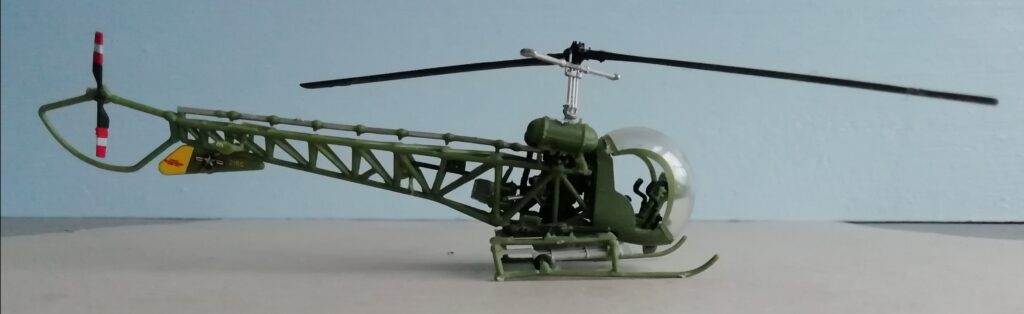
The Bell Model H13 Sioux, – developed from the earlier civilian Model 47 – was used by British armed forces but remains best known as flying ambulance in the Korean War as illustrated in the film and later TV show M*A*S*H. First flown in 1946, the three seat Sioux became one of the most popular light utility helicopters ever built, produced continuously from 1946 to 1973, and by Agusta, in Italy, through 1976. Available in 20 different configurations, with model numbers ranging from A to T, the Bell 47 was used in 40 countries
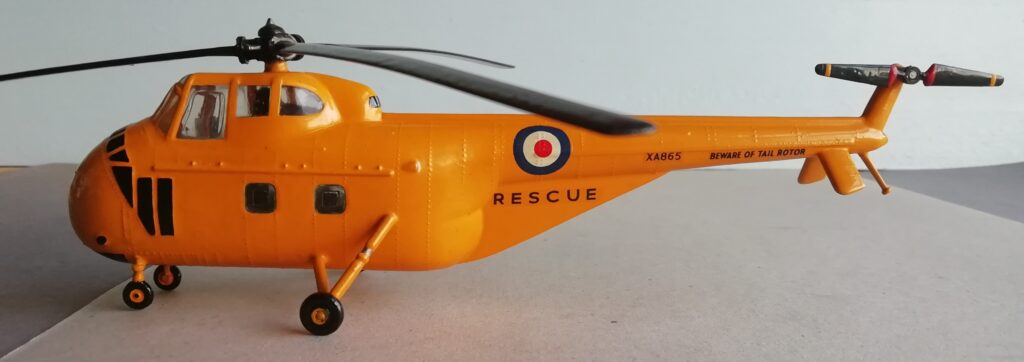
The Sikorsky S-55 helicopter, built in the UK as the Westland Whirlwind, was one of the most successful early helicopters with examples being used all over the world.
The first S-55s received by the Royal Navy in 1950 were built by Sikorsky, but Westland acquired a license in 1950 and the first British-made S-55 flew at Yeovil in November 1952. Like the American models, the first Whirlwinds had Pratt & Whitney engines and were delivered to No.705 Squadron based at Gosport.
The RAF also ordered this helicopter for transport and rescue missions: the Whirlwind HAR Mk.2 (the same as the naval version except for some differences in equipment) joined the Transport and Coastal Command Units from 1954. With Wright R.1300 engines, the Whirlwind Mk.3 went into production for the Royal Navy in 1953 and operated for many years from both ship and shore bases.
The subsequent RAF HAR Mk.4 version was modified for use in the tropics and fitted with a new variant of the Pratt & Whitney R-1340. This was used in Malaysia, while some ex military Whirlwinds joined British European Airways, include XA865, seen above.
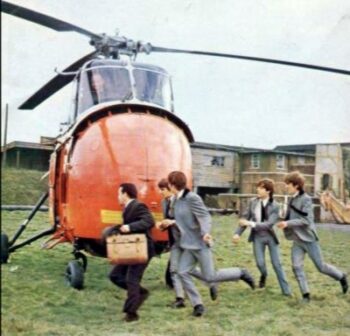
BEA also purchased Whirlwinds direct from Westland, including 1954 vintage G-ANFH which was not only the subject of an early version of the Airfix kit but, among other claims to fame, featured in the 1964 Beatles film “A Hard Day’s Night”.
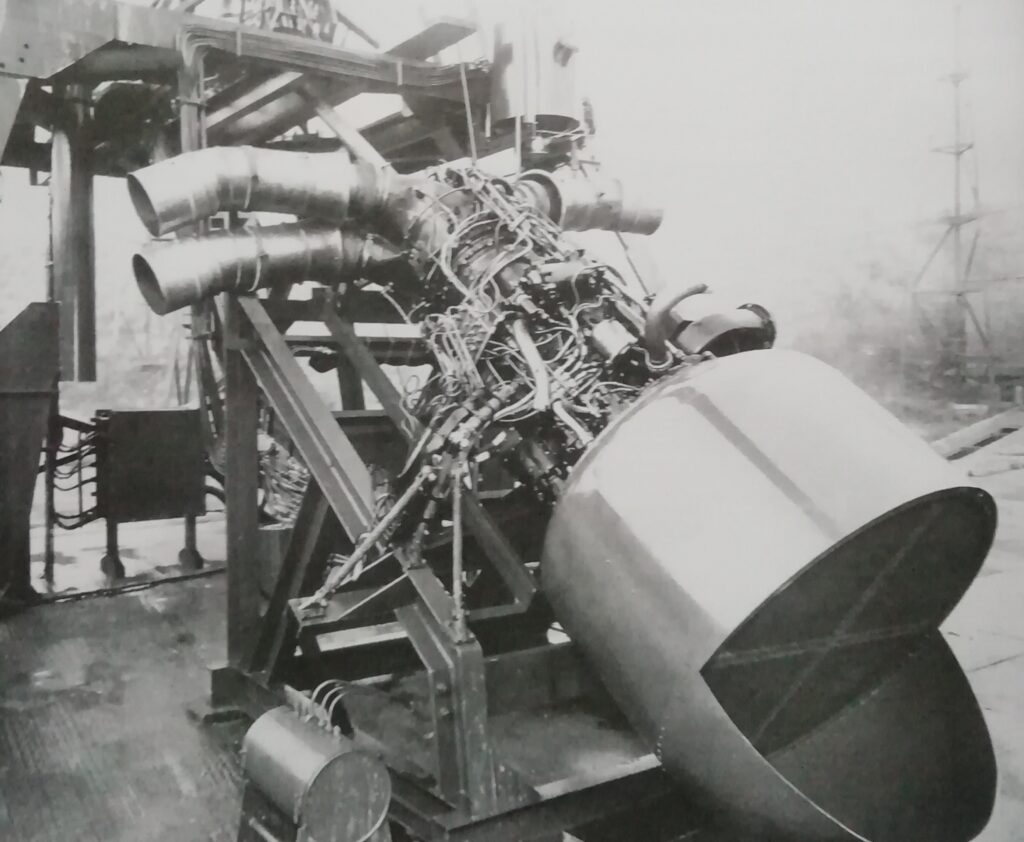
With the application of gas turbine engines in the mid 1950s, the helicopter truly came of age and the types that we see in the skies over Gloucestershire today evolved.
The first helicopter type that Westland built as gas turbine from the start was the Wessex. This was based on the piston engined Sikorsky S-58 and was equipped initially with a Napier Gazelle turboshaft powerplant. Later variants, from 1967, had two coupled Rolls Royce Gnomes, distinguishable by one large exhaust pipe rather than a pair of small ones on either side of the forward fuselage.
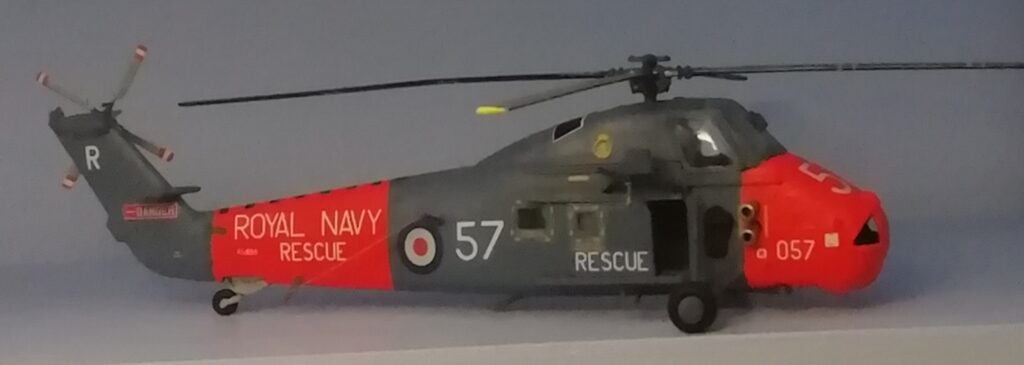
The Wessex was also the first Royal Navy helicopter designed from scratch as an anti submarine platform and entered service in 1961 for what turned out to be a career of over four decades.
Compared to the Westland Whirlwind that it replaced, the Wessex could lift greater loads, was quieter and vibrated less – a particular boon if casualties were being treated in flight. The Napier Gazelle could also be started more rapidly than the piston engine of the S-58 and an automatic pilot fitted to the Wessex improved its ability to fly in bad weather and at night.
As well as an anti submarine helicopter, the Wessex became well known for its search and rescue duties and as a commando carrier.
In the early 1960s the RAF required a powerful general-purpose helicopter capable of troop-carrying, air ambulance and ground attack roles. Westland responded with the Wessex HC2 which first entered RAF service with No.18 Squadron, based at RAF Odiham, Hampshire, in January 1964.
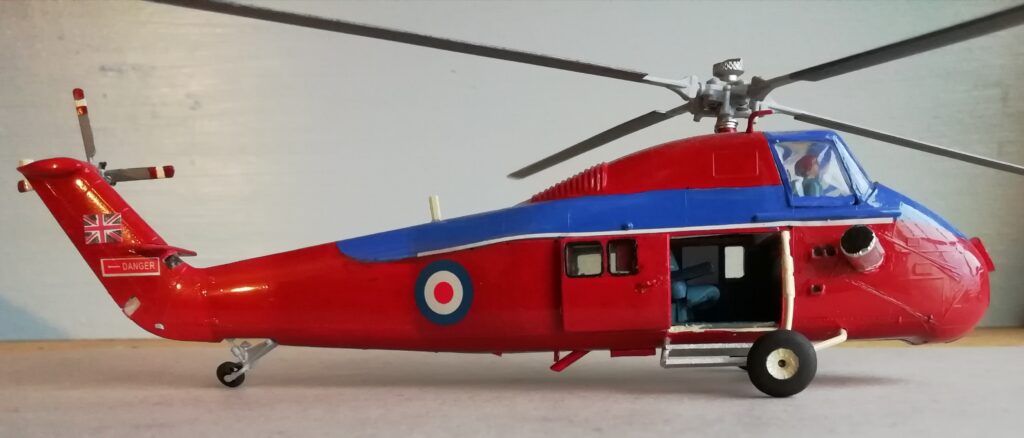
Four years later Westland Helicopters received an order for two Wessex aircraft to equip The Queen’s Flight. These were designated HCC4. The aircraft were built to HC2 standard but with the main cabin having a VIP interior finish, furnishings and sound proofing plus an external folding step below the cabin door. Additional Decca navigation equipment was installed on the flight deck. The first flight took place on 17 March 1969. The first official flight was on 1 July 1969 in support of the Investiture of the Prince of Wales at Caernarfon Castle, Wales. The helicopters in their distinctive red/dark blue paint scheme operated for many years from RAF Benson. From 31 March 1995 they moved to RAF Northolt and became part of No.32 (The Royal) Squadron.
The Wessex HCC4 was retired in 1998 and No.32 (The Royal) Squadron gave up the task of providing helicopters for the Royal Family. The Royal Household awarded a ten year contract to Sikorsky Aircraft Corporation and Hanson Helicopters to provide the Queen with an S76 and civilian crew. However, both the HCC4s were preserved, XV732 at RAF Hendon and XV733 at Weston Super Mare.
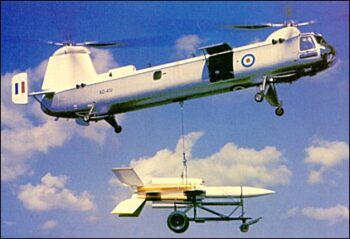
Before the Westland Wessex became the World’s first mass produced gas turbine helicopter, the alternative way of producing a more powerful rotorcraft was to add more piston engines and rotors. However, although the rotors of such twin helicopters could contra rotate and so avoid the need for separate small tail rotors, the twin rotors would need vertical separation or mechanical synchronisation to avoid hitting each other.
In Britain, Bristol Aircraft effectively put two Bristol Sycamores back to back to create the Bristol Type 173 although this evolved into the Type 192 Belvedere (pictured above) – powered by Napier Gazelle turboshaft engines – which served with the Royal Air Force from 1961 until 1969.
In the USA, tubular bodied banana shaped twin rotor helicopters had been pioneered from 1945 by the Piasecki company, which was renamed Vertol in 1956 and became Boeing Vertol in 1960.
Boeing Vertol’s first twin rotor gas turbine helicopter was the Model 107, later known by the US armed forces as the CH-64 Sea Knight. Popularly called the Phrog, the Sea Knight served from 1964 to 2012 before being replaced by the tilt rotor V-22 Osprey.
Export customers included Saudi Arabia, Sweden and Japan as well as a number of civilian airlines. Among these was New York Airways, who used one of their Vertol 107s to fly The Beatles to the roof of the World’s Fair building in Queens just before their epoch making concert at Shea Stadium on 15 August 1965.
The Sea Knight was also licence built in Canada as the Labrador and Voyageur.
The CH-64 later gave rise to the larger and better known Boeing Vertol Chinook, which also featured a rear loading ramp under a pair of engines, either of which could power both rotors in the event of the other one failing. In contrast, the Belvedere had fore and aft engines, side doors but no rear ramp.

The HH-3 Jolly Green Giant evolved both from the forward fuselage of Sikorsky’s earlier S-61 ( which in turn was the basis for the Westland Sea King ) and the rear fuselage and tailplane of the Sikorsky CH-54 Tarhe flying crane. The design was formulated in response to a United States Air Force requirement of the early 1960s for a long range transport helicopter to resupply the “Texas Towers” radar stations located off the shore of the southern USA. For this role, the new helicopter was given an hydraulically powered rear door and loading ramp, twin wheeled forward tricycle undercarriage and auxiliary power unit for self sufficiency in remote areas.
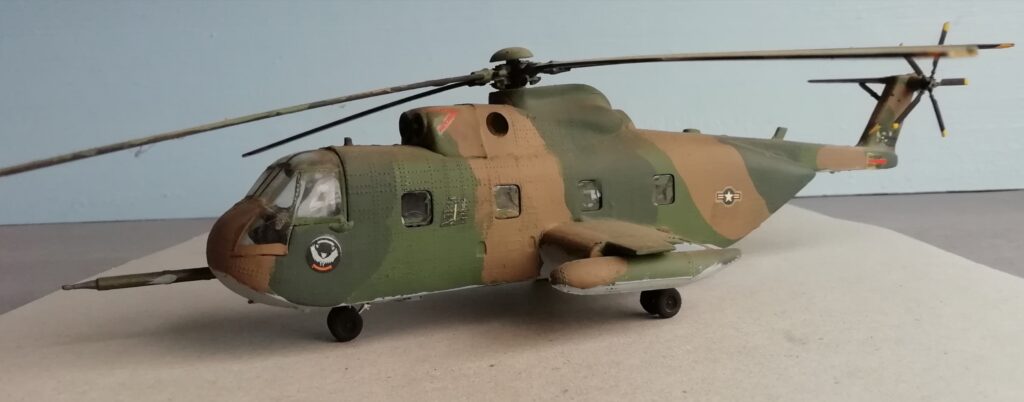
The HH-3 variant of what Sikorsky had originally termed the S61R was introduced from 1966 and became famous for rescuing aircrew shot down behind enemy lines in Vietnam. The very similar HH-3F Pelican was likewise used for search and rescue duties by the US Coastguard and HH-3 “Jollies” were also employed to insert US Special Forces for clandestine operations until finally being replaced by later Sikorsky helicopters in the 1990s.
Between 31 May and 1 June 1967, two HH-3Es of the United States Air Force made the first nonstop flight across the Atlantic Ocean by helicopter. Departing from New York in the early hours, the two helicopters arrived at the 1967 Paris Air Show at Le Bourget after a 30 hours 46 minutes and nine in-flight refuellings. Both helicopters were later lost in combat operations in Southeast Asia in 1969 and 1970.
The Jolly Green Giant flew 251 combat missions during Operation Desert Storm in 1991 and examples were also stationed in Florida, Africa and Spain from the 1980s to rescue astronauts from any forced Space Shuttle landings.

Until the consolidation of the British helicopter industry during 1959-61, with Westland absorbing the rotorcraft operations of Bristol, Fairey and Saunders Roe, the Yeovil based firm had spend most of the years after 1945 manufacturing modified Sikorsky-designed helicopters under license.
However, in 1964 project WG13 began as a replacement for the Army and Royal Navy’s Scout and Wasp helicopters and as a more easily maintainable alternative to the Bell UH-1 Iroquois.
The WG13 rotor – made from composite materials around a honeycomb core – was a completely new semi-rigid type with blades of constant chord and cambered section. With these characteristics, it was possible to achieve very high tip speeds, as well as enhancing lift and reducing drag.
First flown on 21 March 1971, the prototype twin Rolls Royce Gem powered helicopter that became known as the Lynx was followed by four more examples in AH Mark 1 configuration with skids for army use and in HAS Mark 2 format with four non-retracting wheels on oleo-pneumatic shock absorbers for the Navy.
The Lynx also marked the start of international collaboration between Westland and Aerospatiale of France which would also lead to the production of Gazelle and Puma helicopters.
For this reason, the Westland Lynx has been described before the Puma and Gazelle although the models in the display have been arranged in order of maiden flights.
In 2000, Westland merged with Agusta of Italy and since 2016 has been known as Leonardo Helicopters.

The Lynx demonstrated its capabilities by the records achieved in the summer of 1972. Piloted by Westland’s chief test pilot Roy Moxam, it broke the world record over 15 and 25km by flying at 321.74km/h, also setting a new 100km closed circuit record shortly afterwards by flying at 318.504km/h.
A specially modified Westland Lynx 800 – ZB-500 – first flown in May 1979 – with British Experimental Rotor Programme blades (now standard on all new Lynxes) and the civilian registration G-LYNX, also set the absolute speed record for helicopters over the Somerset Levels on 11 August 1986. The aircraft – pictured above – was piloted by Trevor Egginton alongside flight test engineer Derek Clews and reached a speed of 249.09 mph (400.87 km/h) to take the 228.9 mph record set by a heavily modified Mil Mi-24 Hind in September 1978.
For the attempt G-LYNX was fitted with an uprated Rolls Royce Gem 60 engine boosted by water methanol injection and the swept tips of the BERP blades allowed them to rotate at high speed with minimum vibration and stall. G-LYNX was then used as an engine test bed before donation to the Helicopter Museum in Weston Super Mare in 1995 where thanks to the hard work of museum volunteers and Westland apprentices the rotorcraft was returned to display in record breaking condition in 2011.

The British Army ordered over 100 Lynx AH.1 for a variety of roles, from tactical transport to armed escort, antitank warfare (with eight TOW missiles), reconnaissance and casualty evacuation. A Marconi Elliott AFCS system was fitted to the Army’s version of the Lynx, which gave automatic stabilization on three axes and could also be used as an autopilot during extended flights.

The initial Westland Lynx HAS Mk.2 version was ordered by both the Royal Navy and the French Aeronavale, although they differed in their avionics, ASW equipment, and their armament (the former has four Sea Skua anti-ship missiles and the latter AS.12 missiles). Uprating and other changes subsequently resulted in two distinct new variants, the HAS Mk.3 for the Royal Navy and the Mk.4 for the Aeronavale. Similar uprating for the British Army version resulted in the AH Mk.5.
The 50′ long British army Lynx AH 7 with 42′ diameter rotor blades has a maximum speed of 201 mph ( 324 Km/h ) and a range of 328 miles ( 528 Km ) with standard fuel tanks.
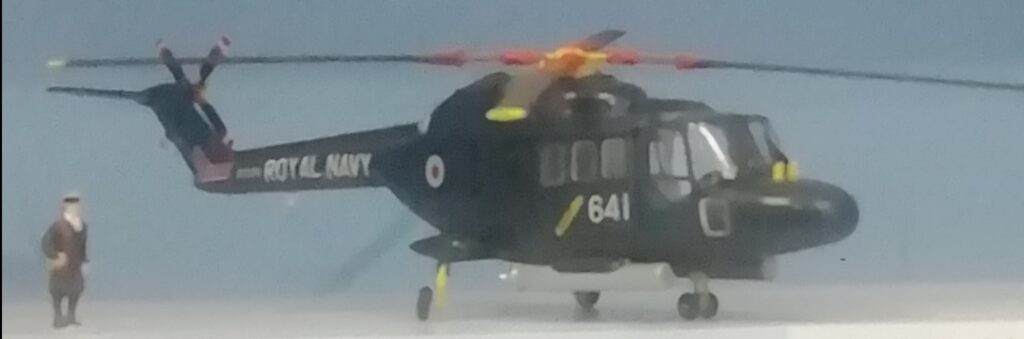
The Lynx has also met with considerable export success. After careful evaluation, it was chosen by the German Navy (12 ordered in 1981) for use on their new frigates, and six SAR and 18 ASW models have been ordered by the Royal Netherlands Navy. Other operators of the Lynx include Argentina, Brazil, Denmark, Norway, Nigeria and Qatar.
XZ221, as represented by the Corgi model, is a Westland Lynx AH7 introduced in 1992 to 671 Squadron Army Air Corps and by 2008 attached to 9 Regiment 16 Air Assault Brigade of the service based at the former RAF Dishforth, North Yorkshire, in 2008. Bearing the constructors number 147, XZ221 was still flying in 2011.
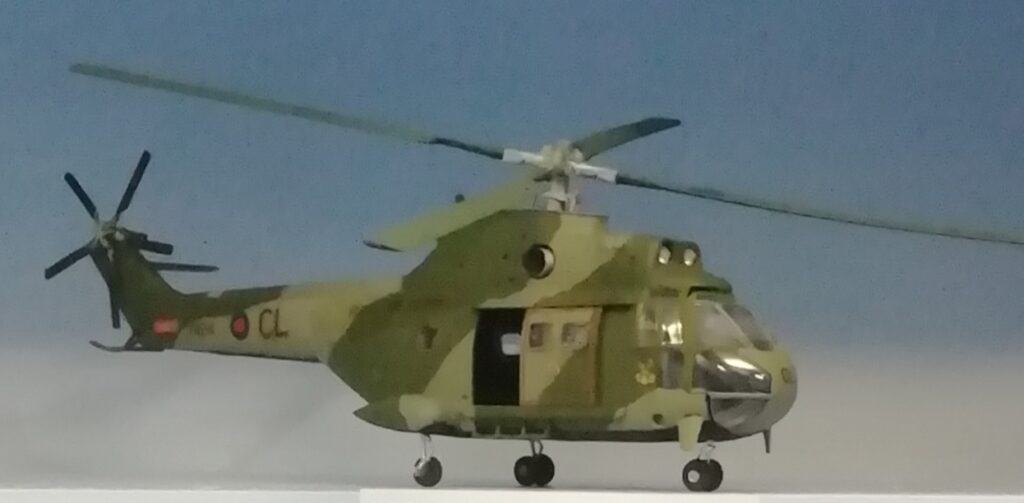
The SA 330 Puma was originally developed by Sud Aviation to meet a requirement of the French Army for a medium-sized all-weather helicopter capable of carrying up to 20 soldiers as well as various cargo-carrying duties.
This required a completely new design for the helicopter, ultimately powered by two Turbomeca Turmo gas turbines in the roof – like the contemporary Sikorsky S-61 – and retractable undercarriage.
Work began in 1963 with backing from the French government and the first of two Puma prototypes flew on 15 April 1965. Six further pre-production models were also built, the last of which flew on 30 July 1968. The first production SA 330 Puma flew in September 1968, with deliveries to the French Army starting in early 1969.
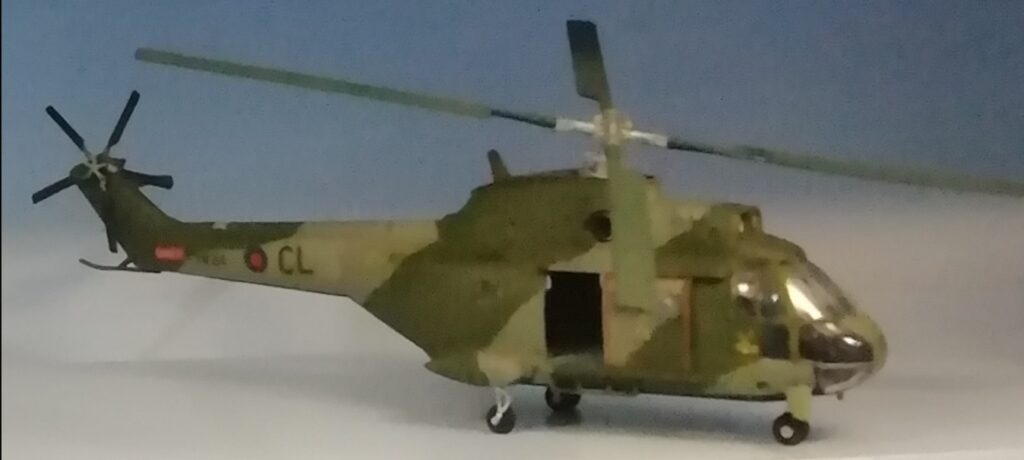
In 1967, the Puma was selected by the Royal Air Force and designated Puma HC Mark 1. A significant joint manufacturing agreement was made between Aerospatiale, successor to Sud Aviation, and Westland Helicopters which would also result in subsequent purchases of Aérospatiale Gazelle by the United Kingdom and the Westland Lynx by France. Under this agreement, Westland manufactured a range of components for the Puma and performed the assembly of Pumas ordered by the RAF.
The SA 330 was a success on both the military export and civil markets, most notably with companies servicing off shore oil rigs. In fact throughout most of the 1970s, the SA 330 Puma was the best selling transport helicopter produced in Europe. By July 1978, over 50 Pumas had been delivered to civilian customers, and the worldwide fleet had accumulated in excess of 500,000 operational hours.

Romania built the Puma under license as the IAR 330, as did Indonesia and South Africa – where Aerospatiale’s big cat evolved into the Atlas Oryx and Denel Rooivalk.
In 1974, Aerospatiale began development of improved Puma variants. The first prototype AS332 Super Puma took flight on 13 September 1978, featuring more powerful engines and a more aerodynamically-efficient extended fuselage. By 1980, production of the AS332 Super Puma had overtaken that of the original SA 330 Puma.
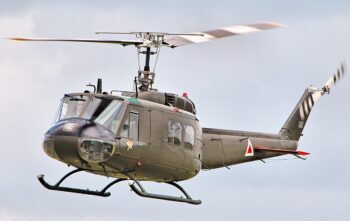
To describe the Bell AH-1 Cobra it is first necessary to relate the development of the Bell UH-1 Iroquois – pictured above. Also known as the Huey, this icon of the war in Vietnam was one of the most numerous gas turbine helicopters built.
Designed around the standard NATO stretcher, the Huey was the first helicopter designed for casualty evacuation and also pioneered the concept of air cavalry. Rather than fight long battles in one location, troops carried by fleets of UH-1 Hueys would range across the country, to fight the enemy at times and places of their own choice. However, it soon became clear that the unarmed troop helicopters were vulnerable against ground fire from the opposing Viet Cong and North Vietnamese Army, particularly on landing.
Without friendly support from artillery or ground forces, the only way to pacify a landing zone was from the air, preferably with an aircraft that could closely escort the transport helicopters, and loiter over the landing zone as the battle progressed.
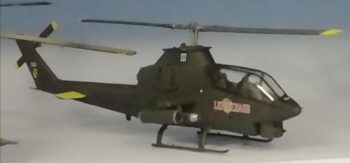
By 1962 a small number of armed UH-1As were used as escorts, armed with multiple machine guns and rocket mounts, although Bell had been investigating helicopter gunships since the late 1950s.
In June 1962, Bell displayed a mockup of its D-255 helicopter gunship concept, named “Iroquois Warrior” to Army officials, hoping to solicit funding for further development. The Iroquois Warrior was planned to be a purpose-built attack aircraft based on UH-1B components with a new, slender airframe and a two-seat, tandem cockpit. It featured a grenade launcher in a ball turret on the nose, a 20 mm belly-mounted gun pod, and stub wings for mounting rockets or SS.10 anti-tank missiles.
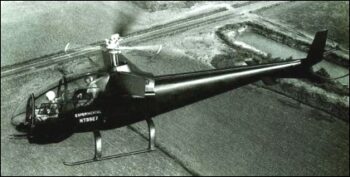
The Army was interested and awarded Bell a proof-of-concept contract in December 1962. This resulted in the Bell Model 207 Sioux Scout which first flew in July 1963 and was evaluated by the Army in early 1964. Although impressed by the ideas that the new rotorcraft represented, the Army still felt the Sioux Scout was undersized, underpowered, and generally not suited for practical use.
The Army’s solution to the shortcomings of the Sioux Scout was to launch the Advanced Aerial Fire Support System (AAFSS) competition which immediately led to the complex Lockheed AH-56 Cheyenne programme. This was eventually cancelled in 1972, but in the meantime the Army sought greater survivability in a conventional attack helicopter.
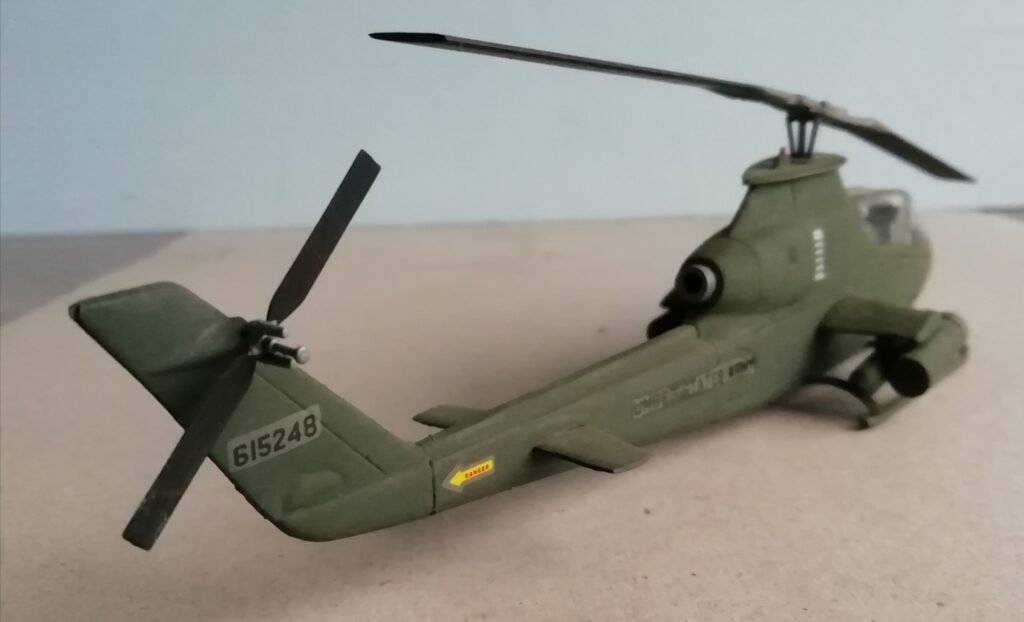
In January 1965 Bell invested $1 million to proceed with a new design. Mating the proven transmission, the “540” rotor system of the UH-1C augmented by a Stability Control Augmentation System (SCAS), and the T53 turboshaft engine of the UH-1 with the design philosophy of the Sioux Scout, Bell produced the Model 209. First flown on 7 September 1965, the Model 209 won an evaluation contest against rival American products in April 1966 and a contract was signed for 110 examples of what was to become known as the AH-1G Cobra.
In production, the Bell 209 prototype had its retractable undercarriage replaced by fixed skids while a new wide-chord rotor blade and plexiglass – rather than heavy armoured glass – canopy was featured. In service the AH-1 G also soon had the tail rotor moved from the left to the right side of the boom for enhanced effectiveness.
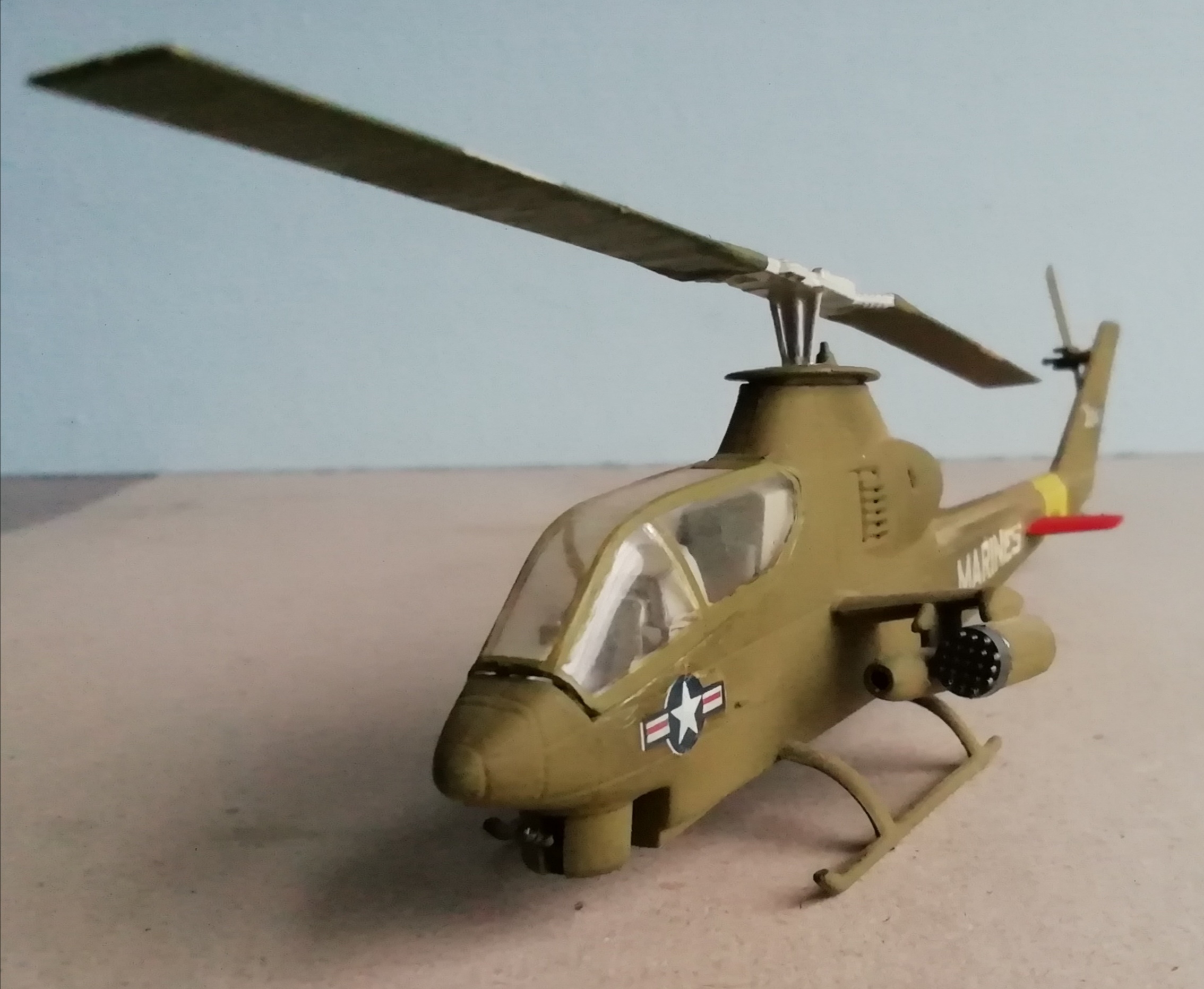
The first U.S. Army helicopter not named after a Native American people was also developed as a twin engined machine in 1968 for the Marine Corps while the AH-1G to Q standard upgrade allowed the “HueyCobra” to deliver TOW anti tank missiles from 1974.
By this time the AH-1G had proved its worth as a fire support helicopter in Vietnam and would be used again in Panama, Somalia and Iraq before being phased out of the US military inventory in the 1990s. Export customers included Pakistan, Jordan, Turkey and Japan.

As related above, the five seat SA 340 Gazelle – with its roof mounted Turbomeca Astazou gas turbine – was a Sud Aviation design taken on by Aérospatiale and eventually assembled by Westland. The light observation replacement for the Aérospatiale Alouette was also the first helicopter in the World with an enclosed fenestron tail rotor. It also pioneered the use of glass fibre composite materials for its main rotor blades, although design issues in this area prolonged the time between first flight and squadron service.

Design work began in 1966 and the first prototype SA 340 flew for the first time on 7 April 1967 initially with a conventional tail rotor taken from the Alouette II. The fenestron, which appeared on the second prototype in 1968, required a small increase in power at slow speeds but had the advantage of being considerably less vulnerable and with low power requirements during cruise speeds.
On 13 May 1967, a Gazelle demonstrated its speed capabilities when two separate world speed records were broken on a closed course, achieving speeds of 307 km/h over 3 kilometres and 292 km/h over 100 kilometres.
Meanwhile, a major joint development and production work share agreement between Sud Aviation and Westland was signed in February 1967. This allowed the production of 282 Gazelles and 48 Puma medium transport helicopters ordered by the British armed forces in Britain. In return Sud Aviation was given a work share in the manufacturing programme for the 40 Westland Lynx naval helicopters for the French Navy.
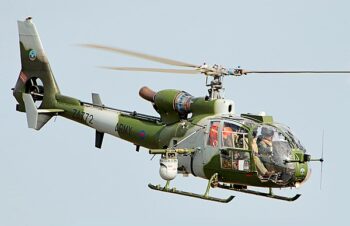
Additionally, Westland would have a 65% work share in the manufacturing, and be a joint partner to Sud Aviation on further refinements and upgrades to the Gazelle. Westland would produce a total of 262 Gazelles of various models, mainly for various branches of the British armed forces but also for civilian customers
After introduction to service in 1973, Gazelles were also licence built by SOKO in Yugoslavia and in Egypt by the Arab British Helicopter Company. The design has been widely exported around the world and has served in numerous conflicts.
Gazelles continue as light observation platforms French Army Light Aviation service although their previous anti tank role has been supplemented by the Eurocopter Tiger. As well as Euromissile HOT anti armour rounds, French Gazelles have been fitted with 20mm canon, Mistral air to air missiles and thermal imaging cameras.
From 1974, Royal Air Force Gazelles served as pilot trainers and VIP transports. In the Royal Navy, Gazelles were also pilot trainers and in the British Army as communication rotorcraft.
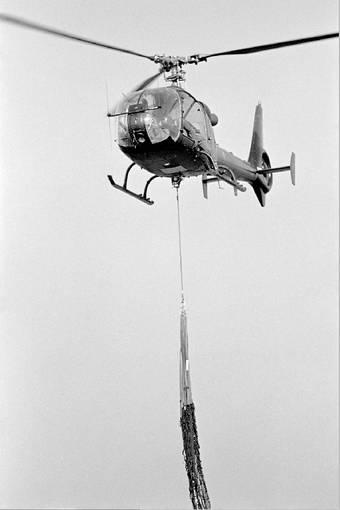
The Gazelle is capable of transporting up to five passengers and up to 1,320 pounds of cargo on the underside cargo hook, or alternatively up to 1,100 pounds of freight in 80 cubic feet of internal space in the rear of the cabin. Various optional equipment can be installed upon the Gazelle, such as fittings for engine noise suppression, 53 gallon ferry tanks, a rescue winch capable of lifting up to 390 pounds, emergency flotation gear, particle filter, high landing skids, cabin heater, adjustable landing lights, and engine anti-icing systems. Civil Gazelles meanwhile often included an external baggage access door mounted beneath the main cabin.
The easy-to-fly Gazelle was also the first helicopter to be adapted for single-pilot operations under instrument flight rules, with a duplex autopilot system developed by Honeywell.
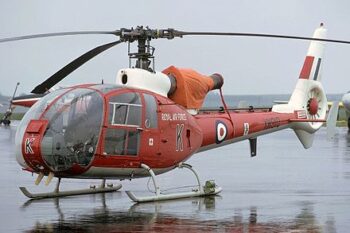
Similarly, the Gazelle was designed to be easy to maintain, all bearings being life-rated without need for continuous application of lubrication and most fluid reservoirs could be rapidly inspected. The emphasis in the design stage of achieving minimal maintenance requirements contributed towards the helicopter’s low running costs; many of the components were designed to have a service life in excess of 700 flying hours, and in some cases 1,200 flight hours, before requiring replacement. Due to the performance of many of the Gazelle’s subsystems, features pioneered upon the Gazelle such as the fenestron would appear upon later Aerospatiale designs.
In the 21st century, avionic upgrades to the Gazelle have included direct input voice control and the possibility of conversion to autonomous UAVs.
To film the 1983 action feature and subsequent TV series Blue Thunder, the producers employed two examples of the French-made Aérospatiale SA-341G Gazelle light utility helicopter, serial numbers 1066 and 1075, both built in 1973. After the film and TV series was made, both helicopters were sold to Michael E. Grube, an aviation salvage collector in Clovis, New Mexico. Sometime after, around 1985, one of the helicopters had a small role in the pilot episode of MacGyver, which featured the helicopter in a different paint job, the microphones were removed, the video surveillance package removed leaving empty mounting pylons in place, and the number on the side being changed from “02” to “51”.
Grube then leased s/n 1066 (ex-N51BT) to a film company that was shooting Amerika, an ABC television mini-series about Soviet occupation of the United States; the helicopters were painted black with red tail stripe and numbering, missile launchers were installed on the pylons, and the surveillance microphones were removed on both. After Grube got 1066 back, it was dismantled and sold for parts.
The second, s/n 1075 (ex-N52BT), was scrapped during 1988. There was a third static display model built for close-up shots with the actors; it was stored outside and after deterioration was scrapped by 2009. The bolt-on cockpit of the original helicopter used to be visible on the backlot tour of MGM Studios in Florida. It has not been present in the ‘bone yard’ since at least 2005
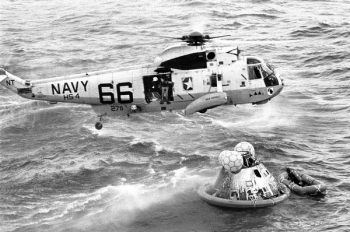
As much a part of Project Apollo as the Saturn V rocket or the Lunar Module was US Navy Sikorsky SH-3D number 66 that plucked the astronauts from their splash-downed Command Module and carried them back to a heroes welcome ( and quarantine in some cases! ) on a nearby aircraft carrier. Usually the ride aboard Sea King 66 was long enough for the astronauts to shave in readiness to meet the Navy brass, if not President Richard Nixon himself! Indeed, a Sikorsky S-61 served for many decades in the fleet of helicopters available to the President of the United States and was operated by the US Marine Corps. This rotorcraft was known as “Marine One” when the President was aboard.
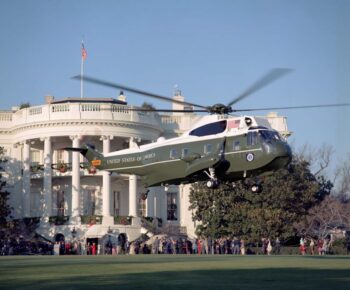
From the point of view of operation and design though, the Sikorsky SH-3D had been ordered for the US Navy as a submarine hunter – equipped with sonar, depth charges and torpedoes – and as a troop transport as well as a search and rescue machine.
The S-61 marked a break from the previous Sikorsky S-55 and S-58 designs ( which in turn inspired the Westland Whirlwind and Wessex helicopters respectively ) by the movement of its engine from the nose to the roof, directly under the rotor. This allowed pilot to be on the same level as the passengers and/or payload and also nearer the ground for access purposes.
Aerospatiale’s Puma, Cougar and Frelon series of helicopters in particular took up this format, although the S-61 was also Sikorsky’s first amphibious helicopter. Just as earlier, smaller helicopters had sometimes been fitted with floats to let them land on water like seaplanes, the S-61 featured a boat-shaped hull and wheeled, braced, stabilizing floats on each side – making it more analogous to a flying boat. However, as the hull of the S-61 was only designed to remain watertight for a limited period of time, landing on water was only an emergency option.
The twin engined Sikorsky S-61 ( known by the US Navy as the SH-3D ) first flew on 11 March 1959 and was also licence built in Canada, Japan and Italy.

The Westland Sea King was based on the Sikorsky S-61D and was initially produced in the HAS 1 and 2 anti-submarine variants for the Royal Navy and the HAR3 version ( of which XZ589 – seen above – is an example ) for the Royal Air Force. The Westland Sea King, first flown on 7 May 1969, has also been exported to West Germany, India, Norway, Pakistan, Egypt, Australia and Belgium and has been further developed by Westland into the non-amphibious fixed-undercarriage Commando which can seat 30 troops or carry 8 000 lb of cargo.
Back in the USA meanwhile, Sikorsky developed the Sea King concept with the S-61R featuring a flatter underside, nosewheel undercarriage ( with rear wheels retracting into sponsons either side of the rear fuselage ) and rear loading ramp. This in turn was the basis for larger single rotor helicopters such as the S-65A (CH-53) Sea Stallion.

The Westland Sea King HAS ( helicopter, anti submarine ) Mark 1 became operational with the Fleet Air Arm of the Royal Navy in February 1970 with the formation of 824 Naval Air Squadron. As well as replacing General Electric T58 turboshafts – as fitted to the four pattern S-61Ds supplied crated in summer 1967 – with Rolls Royce Gnome powerplants, Westland also equipped their HAS1s with Newmark Automatic Flight Control Systems, Marconi Doppler and Ecko search radar and Plessey sonar. Offensive armament comprised four homing torpedoes or depth charges.
Later HAS2s had uprated engines and were further distinguished by six – rather than five – bladed tail rotors and a number of early HAS marks were later converted to the air sea rescue role.
HAS5 Sea Kings meanwhile had Sea Searcher radar and improved equipment – including dunked sonar – to accurately detect and attack enemy submarines at longer range. The HAS Sea Kings of the Royal Navy thus proved a hard act to follow for the three engined Westland EH 101 Merlins that replaced them.
A technical point of interest worth sharing is the pair of rectangular boxes above the Sea King cockpit in the picture above. These are the Engine Air Particle Separators (EAPS). Designed by Paul Stallard and manufactured by APME in Portsmouth, EAPS were sold it to the MoD and Sea King operators all over the world. The system saw extensive service in the Gulf Wars and, in modified form, was adapted for the Soviet designed Mil Mi8.
The Engine Air Particle Separator protects engines from ingesting abrasive sand and dust.. Conventional filters did the same job but rapidly became clogged, causing so much power loss that the machine couldn’t fly. Deflectors caused similar power loss and were very inefficient. In contrast, an
EAPS dynamic filter is around 98% efficient and ejects all the sand and dust overboard.
By the time of the first Gulf War every Allied helicopter was EAPS equipped, including Sea King, Lynx, Puma, Chinook and Gazelle plus the Warrior and Challenger AFVs on the ground.
Opposing them however, Saddam Hussein’s Russian built T55 and T72 tanks still used filters identical to those fitted to the German Tiger tanks from WW II. These could fail to operate on a large diesel engine after as little as 50 km. In the same severe conditions the EAPS fitted Challenger could go 500km with no discernible degradation in engine performance.
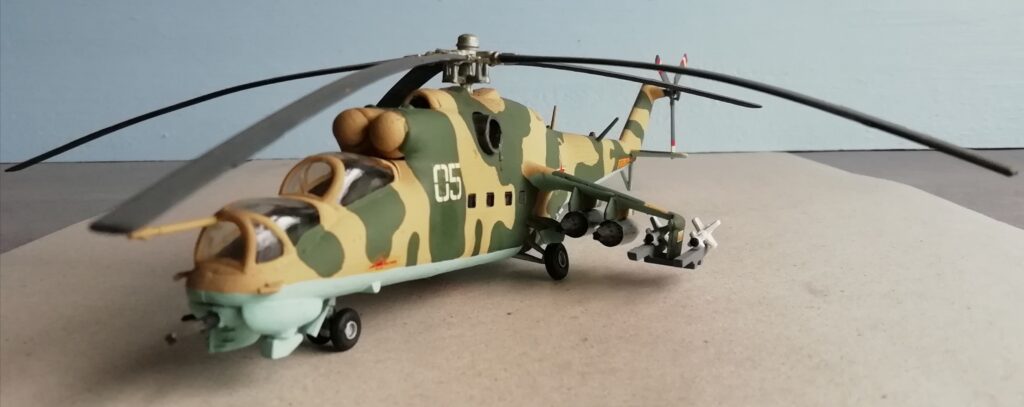
The concept of helicopter borne air cavalry developed around the American Bell UH-1 in Vietnam did not go unnoticed by the Union of Soviet Socialist Republics.
In particular, designer Mikhail Mil saw that the trend towards ever-increasing battlefield mobility would result in the creation of flying infantry fighting vehicles which could be used to perform both fire support and infantry transport missions.
This was a bold move, as the Bell UH-1 could either ferry troops, or be used as gunships, but not both at the same time. Converting a UH-1 into a gunship meant stripping the entire passenger area to accommodate extra fuel and ammunition, and removing its troop transport capability.
The first expression of Mikhail Mil’s concept was a mock-up unveiled in 1966 which combined a cabin for eight troops sitting back to back with small wings which could carry rockets and bombs. However, after much inter departmental research, it was decided that a heavy machine gun in a chin turret would be a requirement. However, much of the mechanical basis for the new attack transport was rooted in the earlier Mil Mi-8, also known by the NATO code name Hip.

On 6 May 1968, a directive was issued for what would become the Mil 24, weighing in at 10.5 tons and powered by twin 1,700 hp Izotov TV3-177A turboshafts.
Work proceeded under Mil until his death in 1970 with a prototype first making a tethered hover on 15 September 1969 with the first free flight on 19 September 1969. A second prototype was built, followed by a test batch of ten helicopters. These continued to shake down structural, fatigue and vibration issues and incorporated such modifications as a 12 degree wing anhedral to counteract rolling at speed. In its final form, these wings yield a quarter of the lift of the Mi-24 when flying at high speed.
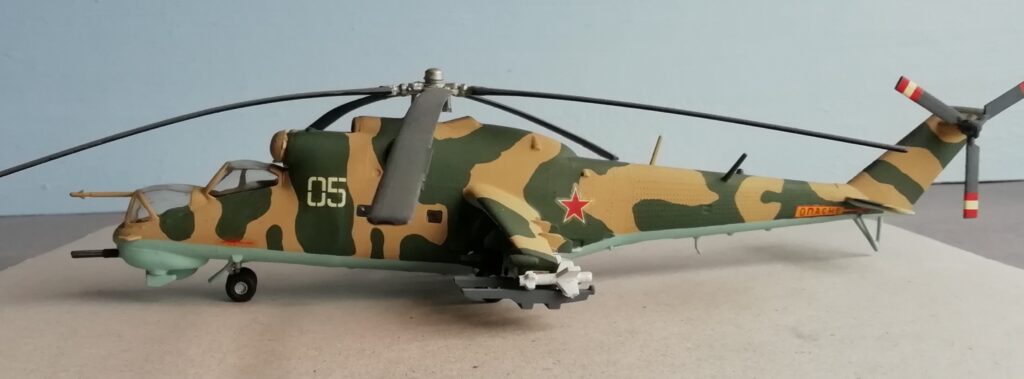
The tail rotor was also moved from the right to the left side of the tail (the opposite of what happened during the development of the HueyCobra) and the rotation direction reversed. The tail rotor now rotated up on the side towards the front of the aircraft, into the downwash of the rotor, which increased the efficiency of the tail rotor.
The Mil Mi-24 with its retractable undercarriage joined the Soviet arsenal in 1972, was named Hind by NATO and was eventually exported to 48 other nations. Although supplemented by later designs more closely resembling the HueyCobra and more recent Apache, the Hind has proved useful to Russian forces in Syria during the 21st century and is being retained and upgraded.
Mi-24s can be tasked with close air support, anti-tank operations, or aerial combat and variants from Hind D onwards can be identified by the double bubble tandem cockpit. The cockpit is protected by ballistic-resistant windscreens and a titanium-armored tub like the American A-10 tank busting aeroplane. Although the Mil Mi-24 is not optimised for high altitude flight, the cockpit is pressurised to keep out nuclear dust, biological and chemical hazards.
In fact the nearest Western equivalent of the Mi-24 is the MH-60 Direct Action Penetrator, a special purpose armed variant of the Sikorsky UH-60 Black Hawk.

Named after the Native American war leader, the Sikorsky UH-60A Black Hawk entered service with the U.S. Army in 1979 to replace the Bell UH-1 Iroquois as the Army’s tactical transport helicopter. Modified versions have also been developed for the US Navy, Air Force and Coast Guard. The UH-60 family has been exported to several nations and Black Hawks have seen combat as far apart as Grenada and Afghanistan. As well as general transport duties, Black Hawks have specialised in mine laying and medical evacuation. An EH-60 variant was developed to conduct electronic warfare and special operations aviation developed the MH-60 variant to support its missions.
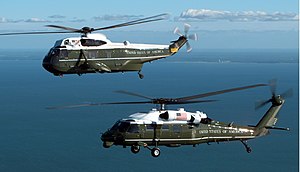
In the late 1960s, the United States Army began seeking a Huey replacement with the Utility Tactical Transport Aircraft System (UTTAS) program. The Army also initiated the development of a new, common turbine engine for its helicopters that would become the General Electric T700.
Based on experience in Vietnam, the Army required significant performance, survivability and reliability improvements from both UTTAS and the new powerplant. The Request For Proposals issued to manufacturers in January 1972 also stipulated that the new helicopter would, with rotor blades dismounted, be transportable inside a Lockheed C-130 Hercules transport aircraft. Once operational in the field however, the Black Hawk can move a squad of 11 combat troops or reposition a 105 mm M119 howitzer with 30 rounds ammunition, and a four-man crew in a single lift.
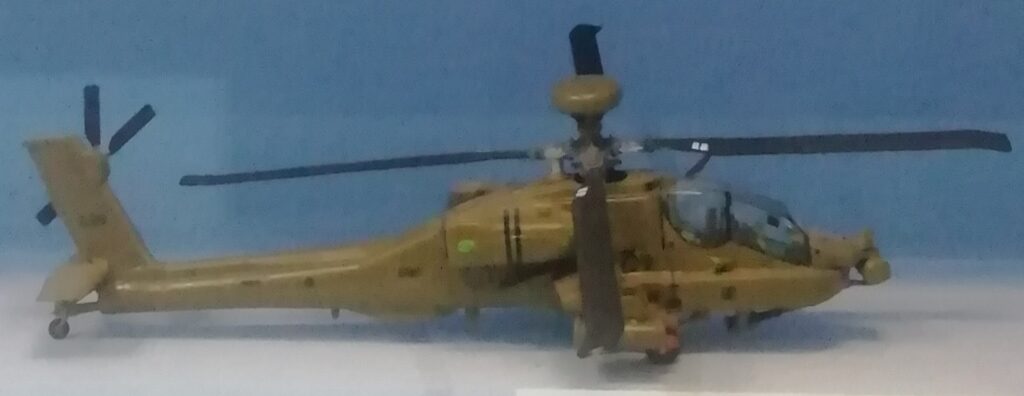
The AgustaWestland Apache is a licence-built version of the Boeing AH-64D Apache Longbow. The first eight of these attack helicopters were built for the British Army Air Corps by Boeing with the remaining 59 assembled in the Yeovil factory that is nowadays known as Leonardo from Boeing-supplied kits.
However, the British Army Air Corps Apaches differ from their American counterparts in being fitted with pairs of more powerful Rolls Royce Turbomeca RTM322 gas turbines with integral dust filters, a new electronic defensive aids suite and a folding blade mechanism – allowing them to operate from ships.
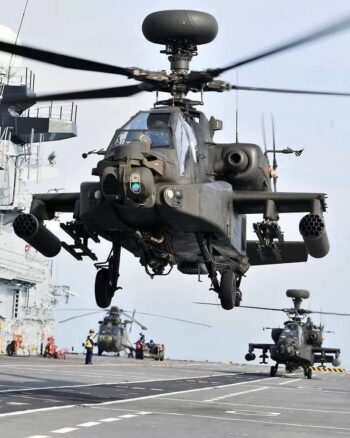
Britain is unique in operating Apaches from its aircraft carriers and assault vessels – a tactic which proved particularly effective in Libya in 2011. The rotor blades are also more resistant to icing in cold weather, and a laser target designator and Bowman secure communications system are fitted.
The British Government issued invitations from manufacturers for a new attack helicopter in 1993.
There were six responses to the invitation to tender. Agusta with the A129, Boeing-Sikorsky, with the Comanche; Atlas, with the Puma based South African Rooivalk; Westland helicopters, with the WAH-64 Apache; British Aerospace, with the Eurocopter Tiger; and GEC-Marconi Avionics with the Bell Cobra Venom.
While the Tiger and Cobra Venom were under development, the Apache was combat proven from the Gulf War of 1991. After the contract for 67 Apaches was signed in 1996, Chief of the General Staff, General Sir Charles Guthrie said:
“I have no doubt whatsoever that the Attack Helicopter will represent the biggest single enhancement to the Army’s capability for many years. It will change the way we go to battle. Now we have taken the decision to buy the Apache, the Army must ensure that doctrine is developed to allow us to make the fullest possible use of its tremendous capability.”
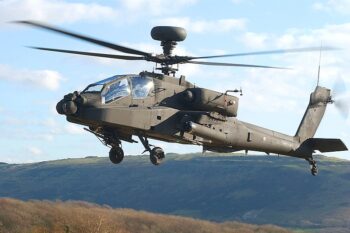
The first AgustaWestland Apache was completed in September 1998 with the first nine examples officially entering service on 16 January 2001.
The first Boeing AH-64 Apache had flown in 1975 as a replacement for the Bell AH-1 Cobra in an era when the US Army anticipated a massed Soviet armoured attack west of the Iron Curtain across Europe. But with the collapse of the USSR, the Apache and its systems have proved both flexible and effective in a new era of asymmetric warfare.
Like the US AH-64D Apache Longbow, the AgustaWestland Apache carries an AN/APG-78 Longbow fire control radar and radio frequency interferometer providing an integrated surveillance and attack system.
The Longbow radar is the bulbous unit over the rotor hub assembly. Radar placement above the rotors allows the Apache to hover behind buildings or terrain, scanning for targets, with only the radar unit exposed. Additionally, the Longbow radar can monitor traffic in the Apache’s airspace and be used for surveillance and terrain profiling.
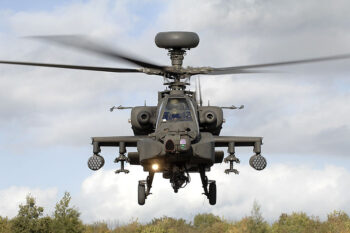
A modem is interfaced into the Longbow radar and other sensor systems to relay information to other aircraft. This allows other Apaches to fire on targets identified by only a single helicopter.
As well as its 30mm chain gun, the AgustaWestland Apache is armed with 76 unguided CRV7 rockets. These have modular warheads including a high explosive, semi-armour piercing warhead for attacks on unarmoured targets and a kinetic energy penetrator, which contains no explosive, for attacks on armoured vehicles.
More precise however are its AGM-114 Hellfire air to ground missiles. Originally designed to kill tanks, the Heliborne Laser Guided Fire and Forget munition has proved effective against a number of high value targets. Like the CRV7, the Hellfire can deliver high explosive anti tank or fragmentation warheads and although most variants are laser guided, either direct from the attacking aircraft or other designator, the AGM-114L or Longbow Hellfire uses its own millimetre wave radar to lock on to and approach a designated target. Unlike a laser, this radar is not affected by smoke, fog or other adverse weather conditions.
As far as Gloucestershire is concerned though, the AgustaWestland Apache will be best remembered as the helicopter which brought a then bachelor Prince Harry to Staverton Airport in 2013. He enjoyed a cup of tea and an egg and bacon sandwich at The Aviator restaurant!
.
.