A profile of CLIC Sargeant as a charity and reviews of past Cheltenham GWR Modellers shows can be found at
while once again model railway enthusiasts from all over Gloucestershire travelled to the Cheltenham GWR Modellers April 2022 Exhibition in aid of CLIC Sargent at St Margaret’s Hall, Coniston Road, Cheltenham, GL51 3NX on Saturday and Sunday 2 and 3 April 2022 for the following attractions:
LANTANA QUAY by Nick Salzman
21/14.2 Gauge 3mm Scale
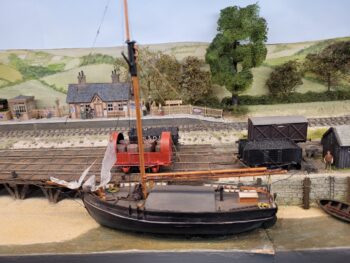
This cameo style layout was designed to fit in a carrying box 700mm long, 300mm wide and 240mm deep. It was based on the north coast of either Devon or Cornwall and took its inspiration from Lelant and the associated Quay sidings on the St Ives branch. Other influences were the old quay in the centre of Newquay Harbour and Fremington Quay on the extension of the Old North Devon Railway. Lantana Quay features a quay on wooden trestles with a West Country smack tied up to it. The sandy estuary has a small creek running under a timber bridge and passing nearby lime kilns. The track features both 7′ 1/4″ Broad Gauge and Standard Gauge, as was the case from the late 1870s until the abolition of Broad Gauge in1892.
ABERCYNON SHED by Allan Jones
EM Gauge 4mm Scale
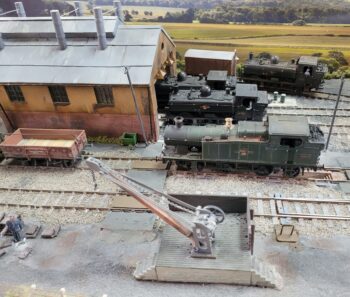
Abercynon Shed was a much shortened – 1.6 metre by 0.46 metre version of the original, serving nearby working collieries in the South Wales of the 1950s. It was operated by an NCE DCC system using converted ready to run stock.
AIMFORD END HALT
by Amelia Chamberlain
00 Gauge 4mm Scale
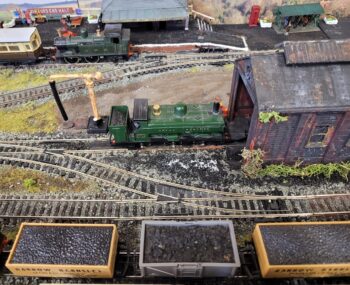
This 35 year old layout, originally built by Amelia’s dad, represented a fictional Western Region Cotswold branch line terminus in the 1950s and 60s.
BAGLEY by Nigel Broad
00 Gauge 4mm Scale
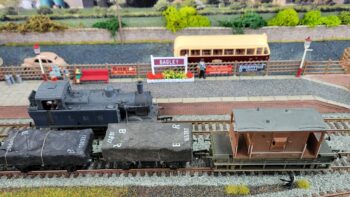
Bagley is a real location in Somerset, but Nigel’s layout was completely fictitious. The terminal station was set in the late 1950s and early 1960s and had a single platform with a run round loop. Rail traffic here was busy as the terminus was used to reverse mineral, goods and passenger trains. Motive power was a mix of ex LMS, ex GWR and British Standard steam with the odd green diesel making an appearance.
The former goods shed had been demolished owing to increased competition from road haulage and the area of land sold off to a private fabrication area and wagon repair company.
ORCHARD ROAD TMD by Richard Slate
OO Gauge 4mm Scale

Orchard Road TMD was a DCC operated BR depot layout, based in the BR Southern Region between 1975 and 1983 with locomotives seen in Devon during these years. A small depot had been modelled in a relatively small space, but included a small maintenance building, locomotive refuelling and fuel off-loading siding with storage tanks. A siding was provided through the bridge forming the scenic break, representing the end of a track from the station beyond the bridge.
All track was Peco 00 gauge, ballasted and then weathered to represent the track that would be seen at a diesel depot. The major structures were scratch built but some buildings were kits. Most were modified and detailed with plastic, white metal and etched brass components. DCC operation of motive power and points was by NCE Powercab controller while locomotves were a mixture of Bachmann, Hornby and Lima. More information on Orchard Road TMD can be found in a thread on www.rmweb.co.uk.
OXFORD ROAD
by Richard Papper
4mm Scale 00 Gauge
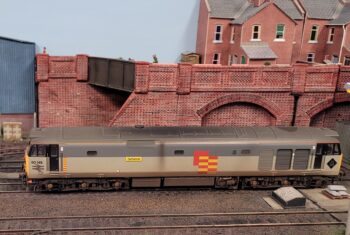
Oxford Road was a fictitious setting somewhere in West London in the mid 1980s to early 1990s. The layout – DCC equipped using an NCE Powercab system and built with Peco Code 100 track – contained a small depot, fuelling point, engineers siding and small platform which saw a sporadic service of garishly painted first generation Network South East dmus. The Bakerloo Line ran on a lower level beneath it and had its own separate station. Structures were a mixture of card and plastic kits and scratchbuilt and rolling stock detailed ready to run vehicles from Bachmann, Hornby, Lima and Heljan.
PARSONS VALE CARRIAGE SIDINGS
by Rob Owst
00 Gauge 4mm Scale
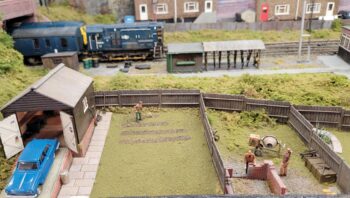
Parsons Vale represented British Rail Western Region carriage sidings in the late 1970s. It was firmly inspired by the Malago Vale sidings adjacent to Parsons Street station in Bristol. The sidings were used for the stabling, servicing and cleaning of coaches and Travelling Post Office stock, with rakes of carriages being taken to and from Bristol Temple Meads station. Although the Bristol to Exeter mainline was not modelled, the cramped nature of the sidings surrounded by housing was well illustrated with selective compression techniques. The scenic area of the layout was less than five feet long.
Due to the lack of road access at Malago Vale, all waste had to be removed on two specially converted Lowmac wagons while oil for the train heating boiler was also delivered by rail.
THOMAS
by Cheltenham GWR Modellers Group
00 Gauge 4mm Scale
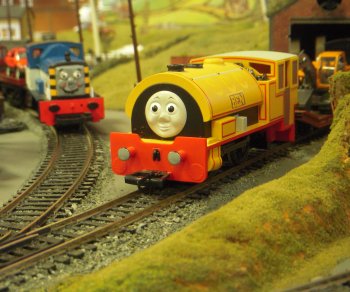
Although the Reverend Wilbert Vere Awdry (1911-1997) is well remembered in Gloucestershire as a resident of Rodborough, Stroud, and a patron of the Dean Forest Railway, his childhood association with the Great Western Railway is less well known. However, when Wilbert was six years old, his father, also an Anglican vicar, moved the family to his new parish of Box in Wiltshire. By 1920 their house- “Journey’s End” – was only 200 yards from the western end of Box Tunnel and the nine year old Wilbert could lie awake at night and hear eastbound freight trains being banked up the two mile long 1 in 100 incline, engine crews communicating by coded whistles. Awdry related: “There was no doubt in my mind that steam engines all had definite personalities. I would hear them snorting up the grade and little imagination was needed to hear in the puffings and pantings of the two engines the conversation they were having with one another: ‘I can’t do it! I can’t do it! I can’t do it!’ ‘Yes, you can! Yes, you can! Yes, you can!’”. Here was the inspiration for the story of Edward helping Gordon’s train up the hill, a story that Wilbert first told his son Christopher some 25 years later, and which appeared in the first of the Railway Series books.
COAL LOADER by Richard Flannigan
H0 Gauge 3.5 mm Scale
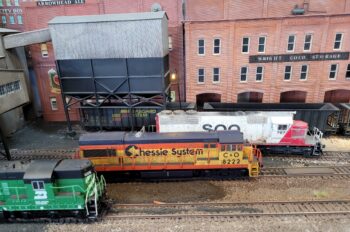
In 1971, coal wagons arrived empty from the east and returned loaded. Countless mergers, bankruptcies and take overs had resulted in many mixed liveries and locomotives far away from their home turf.
LAMMAS LANE by Oliver Honer
N Gauge 2mm Scale
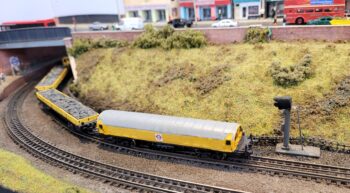
Lammas Lane depicted a small fictional section of the London Underground network in the late 1990s. The layout was acquired in 2017 and has since been fitted with conductor rail and lineside cabling. Rolling stock is a mixture of ready to run, modified and kit built representing tube and surface stock as well heritage trains. The layout is analogue with a single track and passing loop. Points are controlled by rods.
OTTERHAMPTON by Mark Savage
N Gauge 2mm Scale
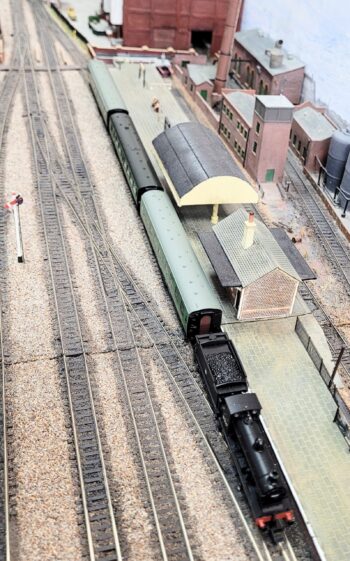
This modular DCC layout can form part of a large impressive model railway. Based somewhere fictional on Western Region, Otterhampton features a two track main line passing through a small station with passing loops. The buildings were kit or scratch built and the working signalling scratch built in brass. Here, 31227, an ex South Eastern Railway Wainwright 0-6-0 design from 1900 arrives with a three carriage train.
VIRGINSTOW 2 by Stephen Ash
N Gauge 2mm Scale
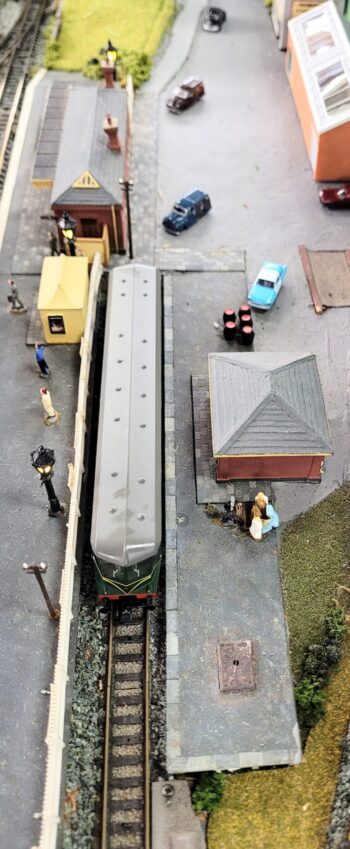
In 1865 a branch line was opened from Plymouth to Launceston. By 1886 a new line had been constructed by the North Cornwall Railway from Halwill to Launceston as the first part of their line to Padstow. The two lines remained separate until they were linked at Launceston in 1943. This layout assumed that a short branch was built off the North Cornwall Railway into Virginstow, a small village just north of Launceston.
It was set from the mid 1950s to the early 1960s when most main line passenger services were operated through to Plymouth via Lifton by Western Region and some to Exeter via Okehampton by the Southern Region. Freight traffic comprised milk and perishables leaving the village while coal, animal feed and fertiliser arrived.
The layout was originally built by Malcolm Diodge in the mid 1990s but later sold to Don Dickson, a fellow member of the Three Towns model group before passing to Stephen Ash. A major renovation commenced in 2012, which increased the length of track beyond the station and replaced magnetic uncoupling with the Fleischmann electromechanical version. As Virginstow 2, the layout is exhibited as a memorial to the late Don Dickson.
RED RIVER
by Tony Comber
N Gauge 2mm Scale

Set in the coal mining region of the Appalachians, Red River represented scenes from the last decade or so on what is now the Norfolk Southern (NS) railroad. The NS was the result of a merger between the Norfolk and Western and Southern Railroads. The Southern Railroad was noted for the efficiency of its operations and the Norfolk and Western for its coal hauling.
The mine on the upper level was typical of an older type of installation during the last days of its life loading bottom-discharge hopper cars bound for the few industries that still needed this type of unloading. The cars were taken from the mine and eventually reached an interchange with the main tracks on the lower level.
On the lower level could be seen the modern unit coal trains which need rotary tipplers to empty them as they do not have bottom doors. These cars run in long block trains from the mines to the power stations or other big users. Other trains to be seen included those carrying wood chips in very large gondolas, roadrailers, manifests ( mixed trains to us Brits! ), intermodal workings and MoW ( Maintenance of Way, or engineer’s ) trains.
FROM ROCKETS TO THE MOON
by Alan Drewett
4mm scale
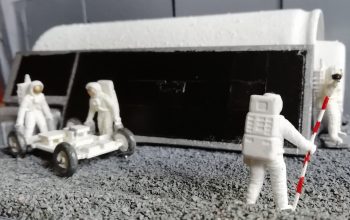
The ever popular Space and Rocketry presentation from the Jet Age Museum, Gloucestershire with dioramas from the Napoleonic era to the 21st Century.
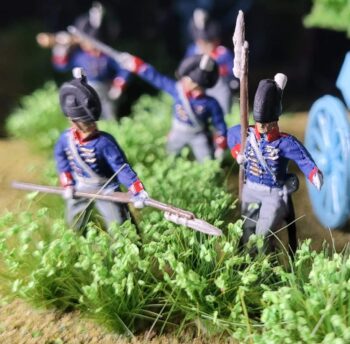
Trade support was from Collett’s Models of Exmouth, RCSW Pre Owned Models, Penduke Models and Stewart Blencowe Books, Timetables and Photographs.
GLOUCESTER REMEMBERED
by Mike Joyner
00 Gauge 4mm scale
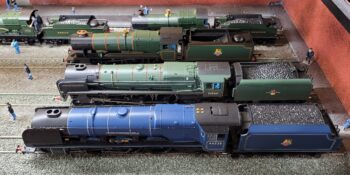
Gloucester Remembered combined a model of Horton Road steam locomotive depot and the nearby gated level crossing with all the locomotives to bear ‘Gloucester’ names.
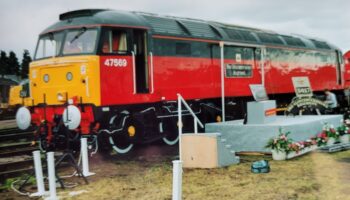
For me, the sole diesel was of special interest as on 1 July 1990 I was present to witness 47 569 being named “The Gloucestershire Regiment” by Brigadier S.D.A. Firth OBE at Gloucester Horton Road Open Day after a repaint in red and dark grey Parcels livery. 47 569 thus became the first, and so far only, diesel to bear a “Gloucester” title.
However, 47 569 became 47 727 in January 1994 and was named “Duke of Edinburgh’s Award” at Glasgow Central station on 11 October that year by HRH Prince Philip, Duke of Edinburgh. The name had previously been carried by 47 716, although 1999 saw 47 727 come under English, Welsh and Scottish ownership and the “Duke of Edinburgh’s Award” nameplates were removed in October 2002 (and later transferred to 47 778) during a repaint in EWS red and gold markings. 47 727 was also named “Castell Caerffili / Caerphilly Castle” without ceremony at Toton (TO) in December 2002 before returning to Crewe (CD).
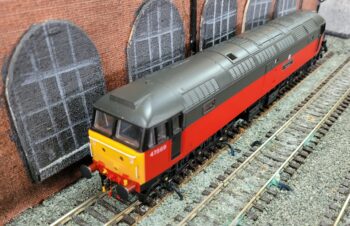
In fact 47 727 “Castell Caerffili / Caerphilly Castle” was to make a more formal move back to its first Nottinghamshire depot in January 2004 although a month later it was on the move again to Willesden (WN) north London as part of the EWS Tactical Reserve.
It remains stored there at the end of 2006 but was a Colas locomotive on 20 September 2007 when 47 727 was named ‘Rebecca’ at Eastleigh works. 47 727 is currently in Caledonian Sleeper markings and named ‘Edinburgh Castle/Caisteal Dhun Eideann.’
However, the locomotive that began life as D1629 could already claim a fascinating history even before its “Back Badge” association of 1990. The Brush designed Co-Co was built at British Railways workshops in Crewe as part of Order Lot 400 and entered traffic at Toton depot on 17 October 1964. At this point Toton locomotives were carrying the shedplate 16A, formerly of Nottingham until September 1963. Before that, Toton had been 18A.
Still carrying its ex works two tone green livery with yellow warning panels, D1629 was then given a range of uniquely London Midland area codes from January 1965. These began with D16 (Nottingham Division) until April 1966 until D1629 moved allocation to LMML ( Line Power Controller – Derby ) and then later the same month to LMWL ( London Midland Western Lines ). The Sulzer engined Brush Type 4 then shuffled between these three entities until March 1971 when it joined D05 ( LM Stoke Division ), moving again to Birmingham Division (D02) in October that year before a return to Nottingham Division ( D16 ) in April 1972.
June 1972 meanwhile saw a move right away from London Midland Region to Immingham and D1629 remained on Humberside for the replacement of 40B shedplates with IM stickers in May 1973.
THE END OF THE LINE by Martin Nash
00 Gauge 4mm Scale
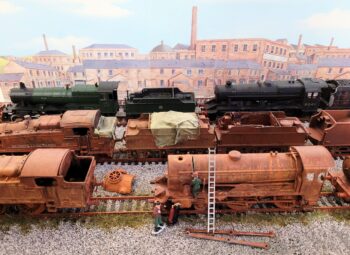
Martin Nash said that his new display was a work in progress with a Peco back scene more reminiscent of Huddersfield than Barry Island but despite this it evoked the days of Dai Woodham storing and eventually dismantling the giants of steam that became redundant in the 1960s. Fortunately, a number of the hulks were saved from rusting away to nothing in the salty air by dedicated railway preservationists for us now to enjoy.
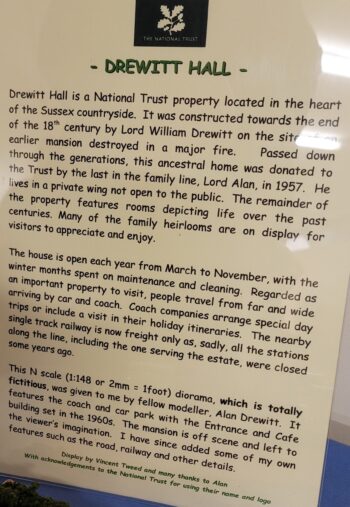
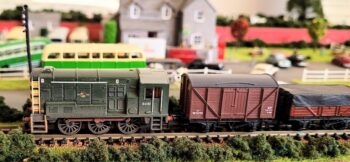
VINCENT TWEED DIORAMAS
2mm and 4mm Scales
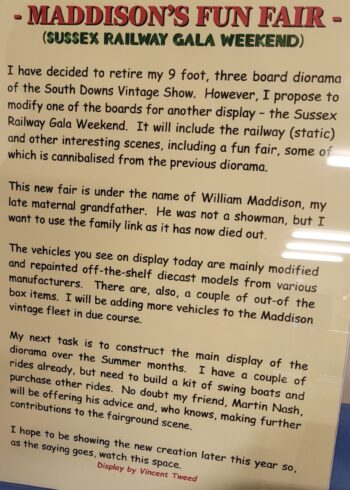
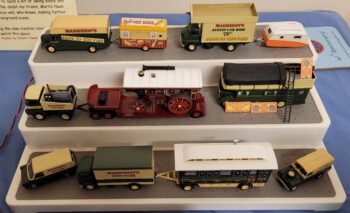
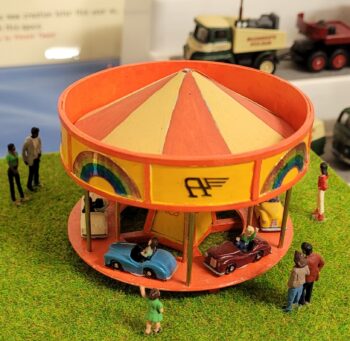
MODELLING DISPLAY
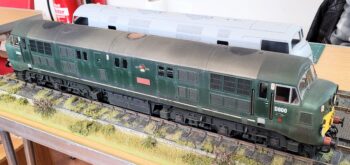
Modelling displays were by Steve Harrod, Mark Begley, Richard Self and Trevor Hale.
Trade support was by Clive Reid pre owned model railways, Penduke Models, Bobby’s 3D Models, Stewart Blencowe railway timetables, books, photos and slides and Collett’s Models of Exmouth.
The Cheltenham GWR Modellers Exhibition was sponsored by Marchant’s Coaches.