The two decades between the signing of the Treaty of Versailles in 1919 and the outbreak of the Second World War in 1939 have been described as the locust years of the Royal Air Force (RAF). With aini8rcraft becoming ever more complex and expensive, successive British governments were unwilling to spend scarce resources on re-armament if immediate benefits – such as the cost-effective policing of the more rugged and volatile parts of the British Empire – could not be accrued.
This outlook was to be more firmly entrenched after the Wall Street Crash of 1929 but – during the resultant Depression – the rise of fascism in Europe made the modernisation of Britain’s armed forces imperative.
This article uses photographs taken by Warrant Officer James Marshall – the father of Gloucestershire Message Board contributor Valerie Wiersema who kindly donated them – to give an impression of the Royal Air Force during these impoverished yet turbulent times.
The aircraft are arranged in alphabetical order by manufacturer and type and the pictures in chronological order wherever possible.
ARMSTRONG WHITWORTH ATLAS
Designed from the outset as an Army co-operation aircraft, the two seat Atlas entered RAF service in early 1927 and fully equipped 26 Squadron ( later to fly the Bristol Belvedere helicopter ) by November that year. In the years 1927 – 30, the metal framed but mainly fabric covered biplanes also equipped five other squadrons. A total of 478 Atlases – able to carry wireless, wireless and message pick-up equipment – were produced, remaining in RAF service until 1933 as a training aircraft. At least 16 Atlases were transferred to the Royal Canadian Air Force (RCAF), several of which continued in service until 1941.
Powerplant 14 cylinder 400 bhp Rolls Royce Jaguar IVC. Dimensions Wingspan 39′ 7″ length 28′ 7″ height 10’6″. Weights 2 550 lb empty 4 020 lb loaded. Performance 142 mph at sea level. Climb to 15 000′ in 28 minutes. Service ceiling 16 800′. Armament 1 x .303 Vickers machine gun forward, 1 x .303 Lewis machine gun in rear cockpit Four 120 lb bombs on racks under lower wings.

Armstrong Whitworth Atlas K 1172 of Number 3 Flying Training School at Grantham on 19 October 1930

Armstrong Whitworth Atlas biplanes of D Flight, Number 3 Flying Training School, Grantham, on 7 May 1931.

The remains of an Armstrong Whitworth Atlas and an Avro Avian after a collision at Grantham in June 1931

A more serious Atlas accident at Grantham in 1931. Luckily the pilot jumped clear!
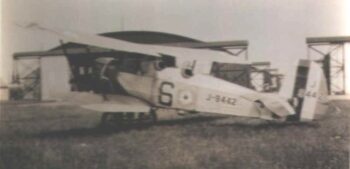
Armstrong Whitworth Atlas J9442 at Grantham in 1942. this aircraft was one of a batch of 43 ordered in 1928.
ARMSTRONG WHITWORTH SISKIN III AND IIIA
The Siskin III fighter was based on the Siddeley Siskin SR2 of 1918 and the first of 63 Siskin IIIA airframes – 47 two seat and 16 single seat variants – were introduced to RAF service in May 1924. Siskin III J7001 was converted to the prototype Siskin IIIA – powered by the stronger Jaguar IVC engine. The first Siskin IIIAs equipped 111 Squadron – later to find fame with Hawker Hunters and English Electric Lightnings – in 1926 and ten other squadrons eventually followed suit. Almost 350 Siskin IIIAs were eventually built – mostly for the RAF, which began to phase them out of front line service in 1933. However, a batch of RCAF Siskin IIIAs continued in use until 1939. Highly aerobatic and pleasant to fly, the angular Siskin was also the RAF’s first all-metal structure fighter to achieve production status.
Powerplant Siskin III 325 bhp Rolls Royce Jaguar III (Siskin IIIA 385 bhp Rolls Royce Jaguar IV) Dimensions Siskin III wingspan 33′ 1″ length 23′ 0″ height 9′ 9″ Siskin IIIA wingspan 33′ 2″ length 25′ 4″ height 9′ 9″ Weights Siskin III 1 830 lb empty 2 735 lb loaded Siskin IIIA 2 061 lb empty 3 012lb loaded. Performance Siskin IIIA 153 mph at 10 000′ Climb to10 000′ in 6 m 35 s Service ceiling 27 100′. Armament 2 x .303 Vickers machine guns forward 4 20 or 25 lb bombs under wings.

Armstrong Whitworth Siskin III of 56 Squadron at North Weald.
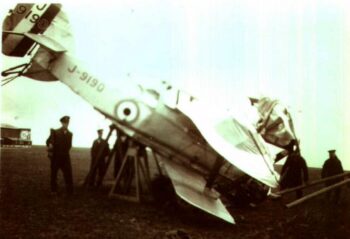

The two pictures above show Armstrong Whitworth Siskin III J 9190 after being hit by a Hawker Tomtit biplane fighter on the ground in 1931. Unfortunately Leading Aircraftsman (LAC) Palmer was killed in the collision.
Another Armstrong Whitworth Siskin crashed in June 1931
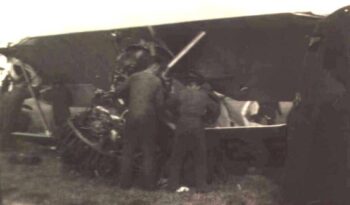
This Armstrong Whitworth Siskin piled up at Cranwell in September 1933
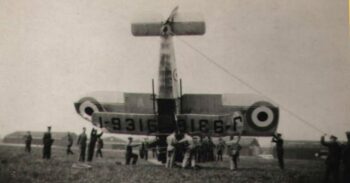
Armstrong Whitworth Siskin J9316
AVRO AVIAN
The prototype Avro Avian flew in the summer of 1926, and for much of its production life remained an all-wood aeroplane with no metal tubing in the fuselage. While it was designed to appeal to the growing civilian market for a light sports plane to rival the De Havilland Moth, the Avian found its way to the far reaches of the globe. They were used not only by private individuals, but also by many flying clubs and military flight training organizations. In addition to being made in England, Avians were manufactured under license in Canada and the United States.
In 1926 two pre-production Type 594 Avian Mk Is were followed by nine Mk. IIs and in mid-1927 the Mk. III appeared, of which 33 were built with the 84hp Cirrus II engine, and 58 as the model Mk. IIIA using the 94hp Cirrus III engine. The last all wood Avian was the Mk. IV, still with the Cirrus III engine. One of the principal improvements in the Mk. IV was a strengthening of the landing gear and wing root area and from 1929 on, the steel tube fuselage was introduced and the Type 616 Avian Mk. IVM powered by the Cirrus III and larger engines was born. It is the Avian MK. IVM that was also built in the U.S. and Canada in small numbers.
Bert Hinkler – Avro test pilot from 1920 to 1927 – made many record setting flights in his own Avian, but he is best known for one in particular. In 1928, he flew solo in his ADC Cirrus Mk. II engined Avian – the first ever built – from Lympne in Kent, England to Australia. He left London on 7 February spanning Europe, the Middle East, the Indian sub-continent, and Asia, finally arriving in Darwin, Australia 16 days later. The flight covered 11,450 miles in 129 flying hours with an average speed of 82.5 m.p.h. For the Australian flight modified wings were fitted giving increased cruising speed. A special 46 gallon tank was fitted in the front cockpit making a total of 66 gallons. A special undercarriage of Bert Hinklers own design was also fitted.
Another famous Avian pilot was Beryl Markham whose book, West with the Night, chronicles her experiences in Africa and her many hours of flight in her trusty Avro Avian. She became a celebrity in her own right when she piloted her blue and silver Avian from Nairobi to London and back, in 1932, with nothing but a map and a compass.
The most famous pilot and the most famous Avro Avian, at least for those in the United States, are Amelia Earhart and her Avian, 7083, although the most tragic remains Bill Lancaster and Southern Cross Minor.
Bill Lancaster had served as a pilot officer in the Australian Flying Corps in World War One and in 1927 made one of the first flights from England to Australia in his Avro Avian Red Rose, accompanied by Jessie “Chubby” Miller, a wealthy journalist who helped to finance the flight. Tried and acquitted of murdering Miller’s lover in Miami in 1932, Lancaster found himself short of funds in London and decided to recapture the headlines with a record breaking flight from London to South Africa. To do this he bought another Avian, Southern Cross Minor, which could only better the existing fastest timing if Lancaster flew 20 hours a day.
On the evening of 12 April 1933 Lancaster left Reggane in central Algeria with the aim of flying 750 miles south across the Sahara at night. Even with extra fuel tanks this was at the edge of the Avian’s range and Lancaster had not slept for 30 hours. Within an hour of departure the engine seized up and Lancaster was forced to land 60 miles north of both his intended route and any land or air based searnuch parties. The diary he kept while waiting to be rescued showed that he lived until the morning of the eighth day after the crash but his body and the crashed Avian were not found until 29 years later in 1962 by a French long-range desert patrol. Bill Lancaster’s body was then buried in Reggane and the remains of his aircraft are stored out of public view at the Museum of Queensland in Brisbane, Australia.
Powerplant ADC Cirrus. Avians pictured are recorded as having Mongoose engines. Dimensions Wingspan 28′ length 24′ 3″ height 8’6″. Weights Tare 1130 lbs maximum 2002 lbs. Performance 102mph Initial climb 650′ / minute Service ceiling 18 000′. Armaments None
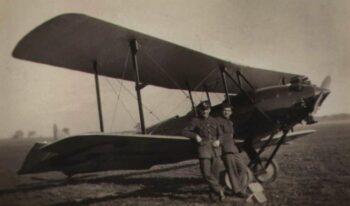
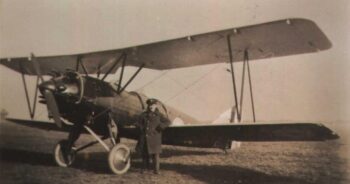
Avro Avian in RAF service with Mongoose engine.
AVRO 504N LYNX
The Lynx was the final variant of the rotary engined Avro 504 trainer which first flew in September 1913 and was in turn developed from the Avro 500 trainer biplane of 1912. The 504N Lynx served with the Royal Air Force from 1927 to 1933 before being replaced by the Avro Tutor. Six 504N Lynxes from the Central Flying School at Wittering pioneered blind instrument flying in 1931
Powerplant Gnome, Le Rhone and Gnome Monosoupape engines ranging from 80 hp to 130 hp. Dimensions Wingspan 36′ length 29′ 5″ height 10′ 5″. Weights Empty 924 lb loaded 1574 lb. Performance (Le Rhone fitted 504K ) 95 mph at ground level, Climb to 10 000′ in 16 minutes, Service ceiling 16 000′, Endurance 3 hours. Armaments None

Avro 504N Lynx
AVRO TUTOR
The Avro Tutor entered RAF service in 1930 as the Avro 621 Trainer with an uncowled Mongoose engine. It was adopted as the standard RAF trainer, replacing the Avro 504N Lynx from 1932. A total of 795 Tutors were built, 394 being deliverd to the RAF. Fully aerobatic and easy to fly, the Tutor continued the pattern of instrument flying technique pioneered by its predecessor. Its aerobatic qualities were demonstrated by Tutors of the Central Flying School at each annual Hendon Air Display. The Tutor remained in RAF service until 1939. A batch of 14 Tutors was modified to accept twin floats to become Sea Tutors and these served mainly at RAF Calshot as trainers for future maritime RAF crews. Today one Avro Tutor – K3215 / G-AHSA – still flies with the Shuttleworth Collection at Old Warden, Bedfordshire.
Powerplant 180 hp Armstrong Siddeley Lynx IV or 240 hp Lynx IVC. Dimensions Wingspan 34′ length 26′ 41/2″ height 9’7″. Weights Empty 1 844 lb, loaded 2 493 lb. Performance Maximum speed 120 mph at sea level, climb to 5 000′ in 5.9 minutes, service ceiling 16 000′, endurance 2 1/4 hours. Armament None.

Flight Lieutenant Garrett and Pilot Officer White were sadly killed when this Avro Tutor crashed on Wednesday 12 October 1932

This Egyptian Army Air Force Avro Tutor was photographed at El Amriya in December 1935.
BLACKBURN BAFFIN
The prototype Blackburn Baffin two seat torpedo bomber was originally known as the Blackburn Ripon V and began replacing the earlier Ripons in Fleet Air Arm service from January 1934. Only 29 Baffins were produced as new although at least 68 Ripons were upgraded to Baffin standard with a Bristol Pegasus air cooled radial engine. However, as Baffin performance was only marginally better than that of the Ripon, it was in turn replaced in front line service from 1936 and only equipped three Fleet Air Arm squadrons. In 1937 29 Baffins were sold to New Zealand where they formed three Territorial squadrons for coastal defence until 1941.
Powerplant 565 hp Bristol Pegasus IM3. Dimensions Wingspan 44′ 10″ (upper) 45′ 61/2″ (lower), length 38′ 3 3/4″, height 12′ 10″ Weights Empty 3 184 lb, loaded 7 610 lb Performance Maximum speed 136 mph at 6 500′, initial rate of climb 480′ per minute, service ceiling 15 000′, endurance 4 1/2 hours at 5 000′. Armament One fixed 0.303″ Vickers machine gun forward, one 0.303″ Lewis machine gun in rear cockpit. One Mark VIII or IX torpedo or alternative bomb loads up to 2 000 lbs.
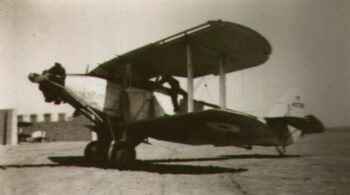
Blackburn Baffin photographed at El Amriya, Egypt, in 1936
BLACKBURN DART
The single seat Blackburn Dart was developed from the Blackburn Swift torpedo bomber of 1920. the prototype Dart was first flown in October 1921 and deliveries of the first of 117 production machines began in March 1922. Despite its size, the Dart handled well and remained in service for 10 years aboard Home and Mediterranean Fleet aircraft carriers before replacement by Blackburn Ripons and Baffins. In July 1926 Darts helped pioneer night deck landing techniques.
Powerplant 450 hp Napier Lion IIB, 465 hp Napier Lion V. Dimensions Wingspan 45′ 5 3/4″, length 35′ 41/2″, height 12′ 11″. Weight Empty 3 599 lb, 6 383 lb loaded. Performance Maximum speed 107 mph at 3 000′ ( with dummy torpedo ), initial climb rate 600′ per minute, service ceiling 12 700′, endurance 3 hours. Armament Ome Mark VIII or IX 18 inch torpedo or alternative load of 520 lb of bombs under each wing.
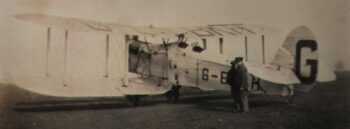
Blackburn Dart
BOULTON & PAUL OVERSTRAND
A fully aerobatic and improved replacement for the Boulton & Paul Sidestrand day bomber, the Overstrand was the first RAF medium bomber to feature a totally enclosed power operated ( pneumatic ) gun turret. First flown in 1933, Overstrands superceded Sidestrands in 101 Squadron from December 1934 – prompting the unit’s official badge of a castle with turrets. This was to be the only complete RAF Overstrand squadron although four of the new machines were briefly allocated to 144 Squadron. Overstrands – crewed by three to five airmen – continued in front line use until 1937 and in secondary roles until 1941.
Powerplant Two 580 hp Bristol Pegasus IM3. Dimensions Wingspan 72′, length 46′, height 15’6″. Weights Empty 7 936 lb, loaded 12 000 lb. Performance Maximum speed 153 mph at 6 500′ , intial rate of climb 1 100′ per minute, service ceiling 22 500′, range 545 miles. Armament One 0.303″ Lewis machine gun in power operated nose turret, two 0.303″ Lewis machine guns in dorsal and ventral positions, up to 1 600 lb of bombs.
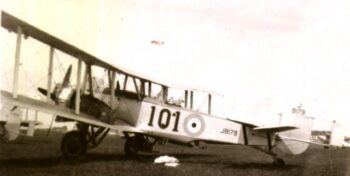
Boulton & Paul Overstrand of 101 Squadron at Mildenhall in July 1935
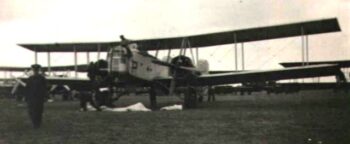
Boulton & Paul Overstrand
BOULTON & PAUL SIDESTRAND
The Sidestrand was the RAF’s first twin engined day bomber since the De Havilland 10 of 1918 and first flew in prototype form in 1926. Highly manoeverable and a rock-steady gun and bomb platform, the Sidestrand exclusively equipped 101 Squadron from April 1928 to December 1934 when the unit became the sole complete unit of its successor, the Overstrand. 18 Boulton & Paul Sidestrands were built, several of which were upgraded to Overstrand standard with more powerful engines and power operated front turret.
Powerplant Two 460 hp Bristol Jupiter VIIIF engines. Dimensions Wingspan 71’11”, length 46′, height 14′ 9 1/2″. Weights Empty 6 010 lb, loaded 10 200 lb. Performance Maximum speed 140 mph at 10 000′, climb to 15 000′ in 19 minutes, service ceiling 24 000′, range 500 miles. Armament Three 0.303″ Lewis machine guns in nose, dorsal and ventral positions, up to 1 050 lb bombs.

Norwich built Boulton & Paul Sidestrand with Bristol Jupiter engines at Grantham in June 1931
BRISTOL BULLDOG
Developed from a private venture prototype of 1927, the Bulldog entered squadron service intitally as the Mark II in May 1929. Its superb aerobatic qualities, strength of construction and, for its day, excellent performance envelope endeared it to most pilots, and the Bulldog eventually equipped a total of 10 RAF fighter squadrons. At least 87 two seat trainer versions were later produced and the last 17 Bulldogs built were sold to Finland in 1934. These aircraft later saw active service in the 1939-40 Winter War against the USSR. Bristol Bulldogs finally left RAF service in 1937.
Powerplant 440 hp Bristol Jupiter VIIIF. Dimensions Wingspan 33′ 10″, length 25’2″, height 8’9″. Weights Empty 2 222 lb, loaded 3 530 lb Performance Maximum speed 178 mph at 10 000′, climb to 20 000′ in 14 minutes, service ceiling 29 300′. Armament Two fixed 0.303″ Vickers machine guns forward, four 20 or 25 lb bombs if required.
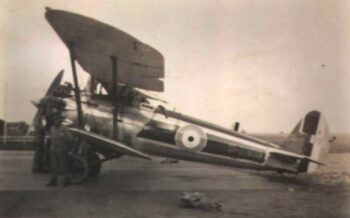
Bristol Bulldog
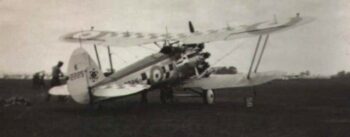
Bristol Bulldog of 56 Squadron at Mildenhall in July 1935
BRISTOL F2B FIGHTER
The two seat Bristol F2A Fighter first flew in late 1916 and joined 48 Squadron Royal Flying Corps in France in March 1917. Early combat experience led within months to the modified F2B variant, which equipped units in France, Italy, Palestine and the UK and the F2B stayed with the RAF until early 1932. 3101 F2Bs were produced during the First World War with further small batches being erected during the 1920s. The only flyable example left today is former 208 Squadron “Brisfit” D8096 of the Shuttleworth Collection at Old Warden in Bedfordshire.
Powerplant 190/ 200hp Rolls Royce Falcon I/II, 275 hp RR Falcon II, 200 hp Sunbeam Arab, 200 hp Hispano -Suiza, 230 hp Siddeley Puma, 200 hp Wolseley Viper, 290 hp Liberty 8, 400 hp Liberty 12. Dimensions Wingspan 39’3″, length 25’10”, height 9’4″ ( Falcon engine F2B). Weights ( Falcon engine F2B) empty 1 700 lb, loaded 2 650 lb. Performance ( Falcon III F2B) maximum speed 123 mph at 4 000′, climb to 10 000′ in 11 minutes 15 seconds, service ceiling 21 500′, endurance 3 hours. Armaments One fixed 0.303″ Vickers machine gun forward, one or two 0.303″ Lewis machine guns in rear cockpit and up to 12 25 lb Cooper bombs under lower wings.
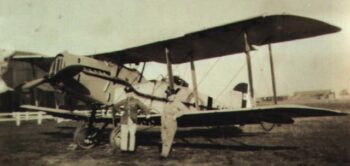
Bristol F2B Fighter fitted with Rolls Royce engine at Grantham in1930
DE HAVILLAND MOTH
The de Havilland Moth went on to become one of the most famous light aircraft types in history, evolving into the Queen Bee target drone seen below, Tiger Moth, multi seat cabin Fox Moth, the monoplane Puss Moth and post World War II Chipmunk trainer. One important recognition feature is the engine, conventionally mounted with cylinder heads at the top. Later family members would have their engines inverted to give the pilot a better view ahead.
Powerplant De Havilland Gipsy or 65 hp Cirrus 1 in-line water cooled engine. Dimensions Wingspan 29′. Weights 1234 lb loaded. Performance Maximum speed 93 mph, typical range 430 miles. Armament None
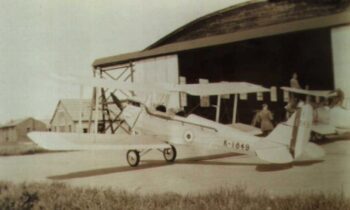
De Havilland Moth fitted with De Havilland Gipsy engine at 3 Flying Training School at Grantham.
DE HAVILLAND DH82 QUEEN BEE
420 DH82B Queen Bee remotely controlled drones were developed from the DH82 Tiger Moth, first flown on 26 October 1931. The Tiger Moth became the standard basic trainer of the Royal Air Force from 1932 until 1947 and was also produced in vast quantities in Canada and Australia during World War II.
Powerplant 130 hp de Havilland Gipsy Major. Dimensions Wingspan 29′ 4″, length 23′ 11″. Weights loaded 1770 lb. Armament none.

De Havilland Queen Bee used for inverted flying seen at Catterick in September 1934
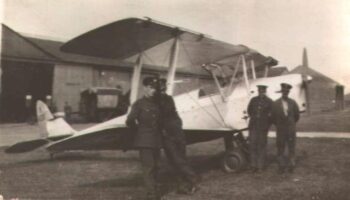
De Havilland Queen Bee
DE HAVILLAND PUSS MOTH
Having developed the DH80 as a two seat cabin monoplane made of wood and fabric, de Havilland’s DH80A Puss Moth – first flown in 1930 – featured a metal fuselage. A distinctive feature of the Puss Moth is the outermost undercarriage strut which reaches to the top of the cabin underneath the parasol wing
Powerplant 130 hp de Havilland Gipsy Major. Dimensions Wingspan 36′ 9″, length 25′, height 6′ 10″. Weights Empty 1 265 lb, loaded 2 050 lb. Performance Maximum speed 128 mph, ceiling 17 500′, range 430 miles. Armament none.
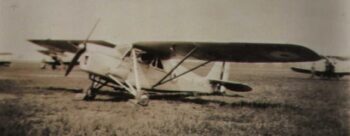
De Havilland Puss Moth seen during an inspection by Air Vice Marshall Bourton of 3 Flying Training School in 1931.
FAIREY IIIF
Developed from the 1924 vintage Fairey IIID, the IIIF entered RAF service in 1927 and Fleet Air Arm service in 1928. Indeed, the three seat naval reconnaissance IIIF became the most widely used FAA aircraft of the inter war years. Although superceded by 1933, at least three became Fairey Queen radio controlled gunnery targets and others survived in secondary roles until 1941.
Powerplant 570 hp Napier Lion XI Dimensions Wingspan 45′ 9″, length 36′ 9″ ( 35′ 6″ seaplane ) height 14′ 2″ (12′ 7″ seaplane) Weights Empty 3 945 lb loaded 5 300 lb. Performance Maximum speed 135 mph, climb to 5 000′ in 6 minutes 42 seconds, service ceiling 20 000′, endurance 3 1/2 hours. Armament One fixed 0.303″ Vickers machine gun forward, one 0.303″ Lewis machine gun in rear cockpit and up to 500 lb of bombs under lower wings.
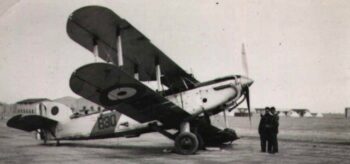
Fairey IIIF 830
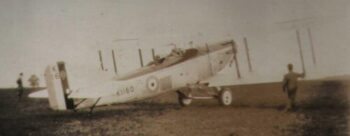
Fairey IIIF K1160
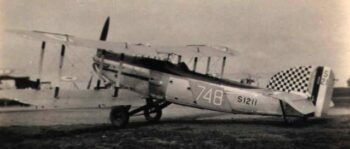
Fairey IIIF S1211
FAIREY GORDON
The Fairey Gordon entered RAF service in 1931 as a replacement for the Fairey IIIF while its FAA equivalent the Seal went on strength in 1933. Both types survived until 1939.
Powerplant 525 hp Armstrong Siddeley Panther IIA Dimensions Wingspan 45′ 9″, length 36′ 9″, height 14′ 2″. Weights Empty 3 500 lb, loaded 5 906 lb. Performance Maximum speed 145 mph at 3 000′, initial rate of climb 1 000′ per minute, service ceiling 22 000′, range 600 miles. Armament One fixed 0.303″ Vickers machine gun forward, one or two 0.303″ Lewis machine guns in rear cockpit and up to 460 lb of bombs under lower wings.
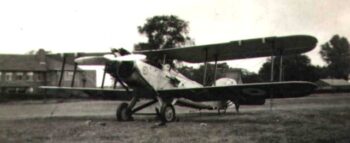
Fairey Gordon
FAIREY HENDON
Originally known as the Fairey Night Bomber, the Hendon only received its final name in October 1934, almost three years after the prototype had first flown in November 1931. However, the first cantilever monoplane heavy bomber to be built in Britain only entered RAF service in November 1936 and then to equip only 38 Squadron with just 14 aircraft. These were replaced by Vickers Wellingtons from November 1938.
Powerplant Two 600 hp Rolls Royce Kestrel VI. Dimensions Wingspan 101’9″, length 60′ 9″, height 18′ 9″. Weights Empty 12 773 lb, loaded 20 000 lb. Performance Maximum speed 155 mph at 15 000′, initial rate of climb 940′ per minute, service ceiling 21 400′, range 1360 miles. Armament Three 0.303 Lewis machine guns in nose, dorsal and tail positions, up to 1 660 lb bombs.
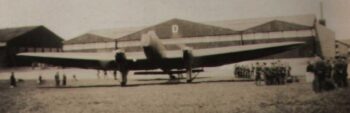
Fairey Hendon at Cranwell in June 1933
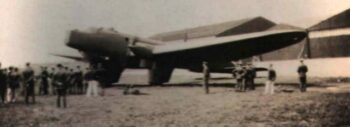
Fairey Hendon
GLOSTER AS 31 SURVEY
The Gloster Aircraft Company designed this replacement for the single engined DH9 in the imperial survey and mapping role from another de Havilland Aircraft Limited concept, the DH67A. de Havilland gave this project to Gloster as their own works were already busy with the DH66 airliner and Moth series of biplanes. Indeed, the DH67A had started out as a scaled down DH66 but the three engine and fin configuration was later amended to a single tailfin and two engines. Other specialised features were the mainwheel mudguards and fuselage built in three parts. This was to allow an AS31 downed in hostile territory to be quickly dismantled for ground evacuation. it was also possible for a Williamson Eagle camera to be lowered through a purpose built aperture in the lower fuselage to allow unrestricted photography.
The first example – registered G-AADO – first flew from Hucclecote in June 1929 and was used by the Aircraft Operating Company to survey 63 000 square miles of Northern Rhodesia ( now Zambia ) from 1931 – 1935. G-AADO later became aircraft 250 of the Royal South African Air Force and was based at Zwartkop aerodrome, Valhalla, on photographic duties until 1942
The second machine – K-2602 – was exhibited at the International Aero Show at Olympia in July 1929 and was flown by the Royal Aircraft Establishment at Farnborough for wireless telegraphy trials until struck off charge in 1937.
Powerplant Two 525 hp Bristol Jupiter XI geared radial engines.
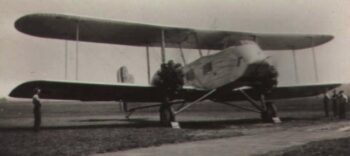
Gloster AS31 Survey K-2602 seen visiting 26 Squadron at Catterick in July 1934.
GLOSTER GAUNTLET
Developed from the Gloster SS18 of 1927, the prototype Gauntlet first flew in 1933 and displayed a 40 mph advantage over the Bristol Bulldog. It was to be the last RAF fighter with an open cockpit but the first all-metal Folland designed Gloster fighter to enter service. Gauntlets entered squadron service in 1935 and soon found fame for their aerobatic qualities. Following the takeover of Glosters by Hawker Aircraft in 1934, the Mark II Gauntlet displayed more of the latter’s design philosophy but was considered obsolete by 1939. However, 25 examples were sent to Finland in 1940 to help repel the Russian invaders. In November 1936 three 32 Squadron Gauntlets also became the first fighter aircraft to be directed to intercept a target by radar.
Powerplant 640 hp Bristol Mercury VIS2 Dimensions Wingspan 32′ 91/2″, length 26′ 2″ ( 26′ 5″ Mk II ), height 10′ 3″ Weights Empty 2 756 lb ( 2 770 lb Mk II ) loaded 3 950 lb ( 3 970 lb Mk II ). Performance Maximum speed 230 mph at 15 800′, climb to 20 000′ in 9 minutes, service ceiling 33 500′. Armament Two fixed 0.303″ Vickers machine guns forward.
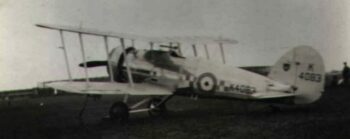
Gloster Gauntlet K4083
Further research has now revealed that Gloster Gauntlet K4083 was delivered new to 19 Squadron at Duxford on 25 January 1935 but only flew in the unit’s blue and white chequer markings until 20 April 1937 when it was damaged beyond economic repair in a forced landing. The biplane’s serial number also appears in the log book of Jeffrey Quill, best known for his test pilot work on the Supermarine Spitfire but who also flew with the Duxford Meterological Flight, formed with a number of aircraft including Gauntlets during 1934/35. When this Meterological Flight moved to Mildenhall in the Autumn of 1936 it became an all-Gauntlet unit while a similar Meterological Flight formed at Aldergrove in Ulster in January 1937 also converted wholly to Gloster Gauntlets later in that year. Gauntlets were replaced by Gloster Gladiators in the meterological role late in 1939 and continued flying these sorties until early 1945.
HANDLEY PAGE HYDERABAD
Originally titled the Handley Page W8d in response to an Air Ministry Specification for a replacement for the DH 10 and Vickers Vimy, the four crew Hyderabad prototype first flew in October 1923 and production variants went to 99 Squadron RAF in December 1925. Two years later 10 Squadron also equipped with the type. Superior in performance to the Vickers Virginia III and Avro Aldershot, the Hyderabad was the RAF’s last wooden heavy bomber and none of its crashes ever proved fatal. it was superceded in front line service by 1931.
Powerplant Two 450 hp Napier Lion IIB/V. Dimensions Wingspan 75 ‘, length 52′ 9″, height 16’ 9″. Weights Empty 8 900 lb, loaded 13 600 lb. Performance Maximum speed 109 mph at ground level, initial rate of climb 800′ per minute, service ceiling 14 000′, range 500 miles. Armament Three 0.303″ Lewis machine guns in nose, dorsal and ventral locations, 1 100 lb bombs.
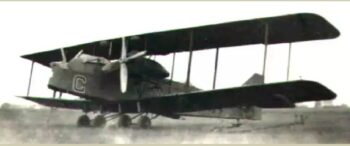
Handley Page Hyderabad
HAWKER HART
The Hawker Hart deserves mention as the origin of the Audax, Demon and Osprey two seat and Fury and Nimrod single seat aircraft described and pictured below.
Of all the Hawker types designed by Sir Sydney Camm in the 1930s, the two seat light day bomber Hart proved one of the most adaptable after its performance was found to be superior to RAF fighters of the day.
It first equipped 33 Squadron RAF at Eastchurch in January 1930 ( resulting in a Hart’s Head becoming the official squadron badge ) while 12 Squadron became the second Hart unit at Kenley in 1931. By the end of that year too, India versions of the Hart had re-equipped 11 and 39 Squadrons for use patrolling India’s North West Frontier with Afghanistan. Hart Trainers were introduced in 1933 and most RAF stations had at least one Hart as a fast communications aircraft. Harts were replaced by more powerful Hind bombers from 1935 onwards.
Powerplant 525 hp Rolls Royce Kestrel IB. Dimensions Wingspan 37′ 3″, length 29′ 4″, height 10′ 4″. Weights Empty 2 530 lb, loaded 4554 lb. Performance Maximum speed 184 mph at 5 000′, climdb to 10 000′ in 8 minutes 20 seconds, service ceiling 21 350′, endurance 3 hours. Armament One fixed 0.303″ Vickers machine gun forward, one 0.303″ machine gun in the rear cockpit, up to 520 lb bombs under wings.
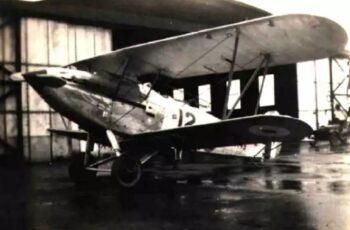
Hawker Hart
HAWKER AUDAX
The obvious potential for adaptation to other roles of Sydney Camm’s Hawker Hart led to the Audax army co-operation design, intended to replace the ageing Armstrong Whitworth Atlas. The first production Audax – K 1995 – flew in December 1931 and apart from extended exhaust manifolds and a message pick-up hook was essentially a standard Hart. Number 4 ( Army Co-operation ) Squadron became the first Audax unit in February 1932 and a further eight RAF squadrons were similarly equipped. Production ceased in 1937 after 618 units had been produced, 34 and 56 radial engined variants being exported to Iraq and Persia ( today Iran ) respectively. The final RAF Audaxes were retired from the Middle East in 1941.
Powerplant 530 hp Rolls Royce Kestrel IB. Dimensions Wingspan 37′ 3″, length 29′ 7″, height 10′ 5″. Weights Empty 2 938 lb, loaded 4 386 lb. Performance Maximum speed 170 mph at 2 400′, climb to 10 00′ in 8.65 minutes, service ceiling 21 500′, endurance 3 1/2 hours. Armament One fixed 0.303″ Vickers machine gun forward, one 0.303″ machine gun in the rear cockpit, four 20 or 25 lb or two 112 lb bombs under wings.
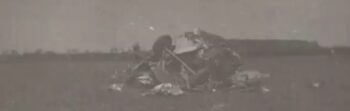
This Hawker Audax crashed during night flying at Catfoss in 1934. Unfortunately the crew -Flight Lieutanant Hillard and Flying Officer Vincent – were injured.
HAWKER DEMON
The superior speed of the Hawker Hart over contemporary RAF fighters upon its service debut quickly led to the conception of a Hart Fighter ( as it was originally known ) or as designer Sydney Camm put it “A Hart to catch a Hart”. Air Ministry Specification 15/30 was issued for this purpose and Hart J9933 was suitably modified and then tested in this context. A small batch of production Hart Fighters was issued to 23 Squadron RAF in early 1931 for evaluation and in early 1932 further production was undertaken: the name Demon being used from July 1932. Thus the RAF’s first two seat fighter since 1918 entered full squadron service.. By late 1934 the prototype Hart Fighter J9933 – which had also been the first production Hart – had been further modified to accept the first Frazer Nash hydraulic operated gun turret in the rear cockpit, incorporating a “turtle back” shield for the air gunner. from mid 1936 all Boulton & Paul built Demons featured this type of turret. Boulton & Paul were later to build the ill fated Defiant turret fighter monoplane of World War II. Demons eventually equipped 12 RAF and Auxilliary Air Force squadrons in Britain and the Middle East, with some serving in minor roles up to 1944. A total production run of 298 Demons included 64 sent to Australia in March 1935, the first 18 of which replaced Westland Wapitis in 1 Squadron Royal Australian Air Force.
Powerplant 485 hp Rolls Royce Kestrel IIS or 584 hp Kestrel VDR in turret fighter. Dimensions Wingspan 37′ 2″, length 29′ 7″, height 10′ 5″. Weights Empty 3 067 lb ( 3 336 lb turret fighter ), loaded 4 464 lb ( 4 668 lb turret fighter). Performance (Kestrel IIS) Maximum speed 182 mph at 13 000′, climb to 10 000′ in 7 minutes 25 seconds, service ceiling 24 500. Armament Two fixed 0.303″ Vickers Mark III machine guns forward. One 0.303 Lewis machine gun in rear cockpit, mounted on either No. 15 gun ring or in Frazer Nash turret.
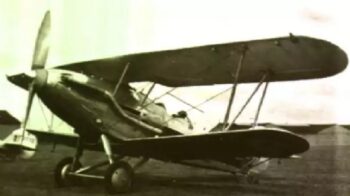
Hawker Demon of 41 Squadron at Catterick in September 1934
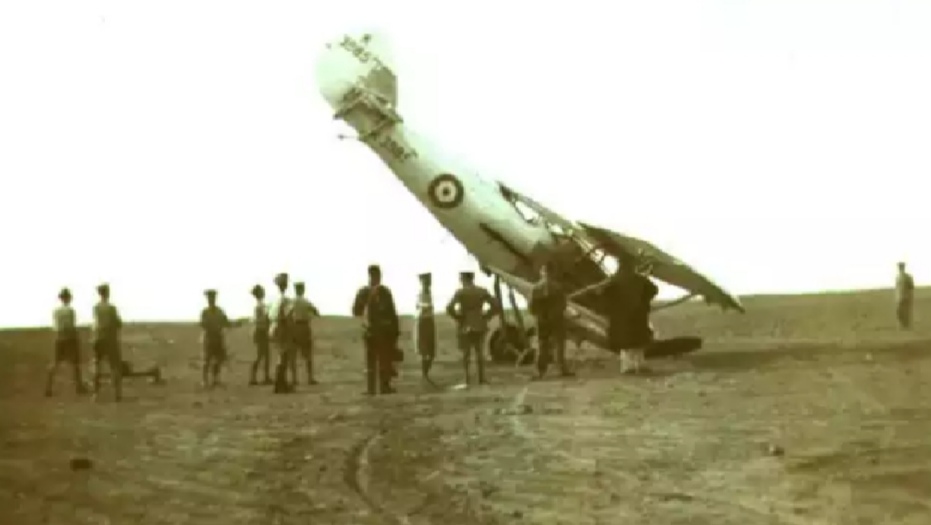
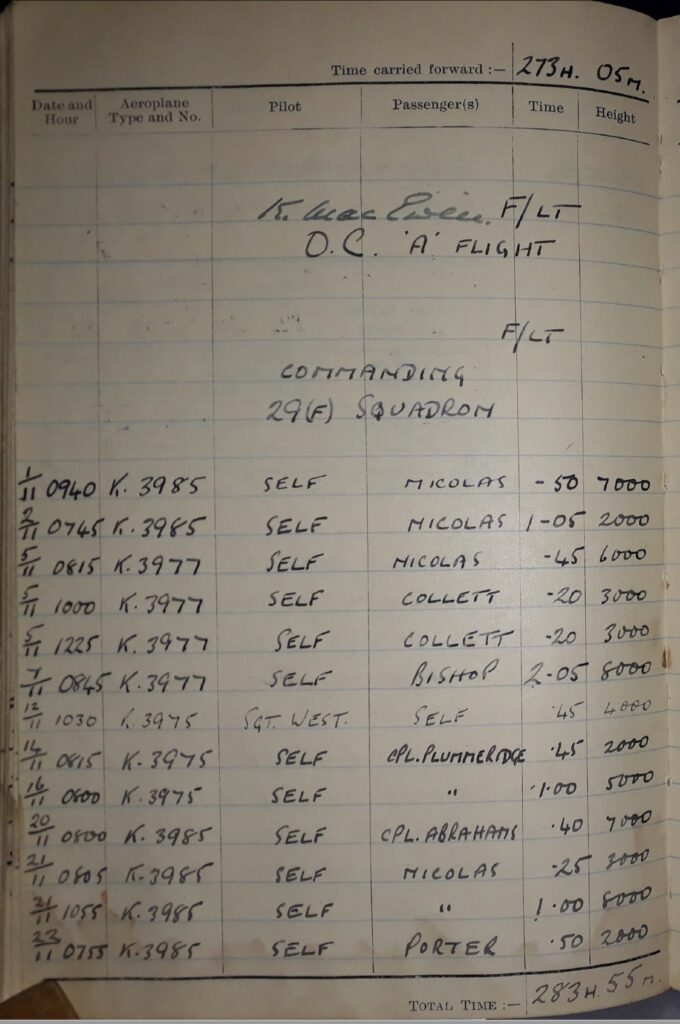
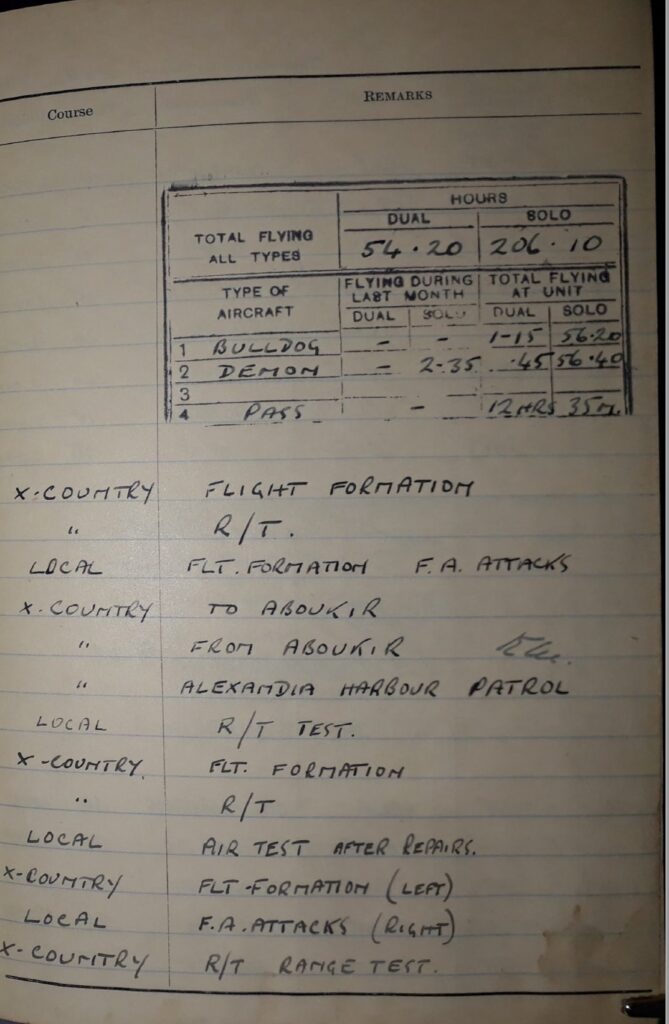
Hawker Demon K 3985 of 29 Squadron after its starboard wheel hit a pothole. Sergeant Suter was the pilot at El Amriya, Egypt, in November 1935.
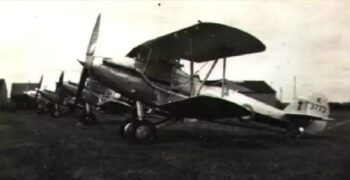
Hawker Demon K3773
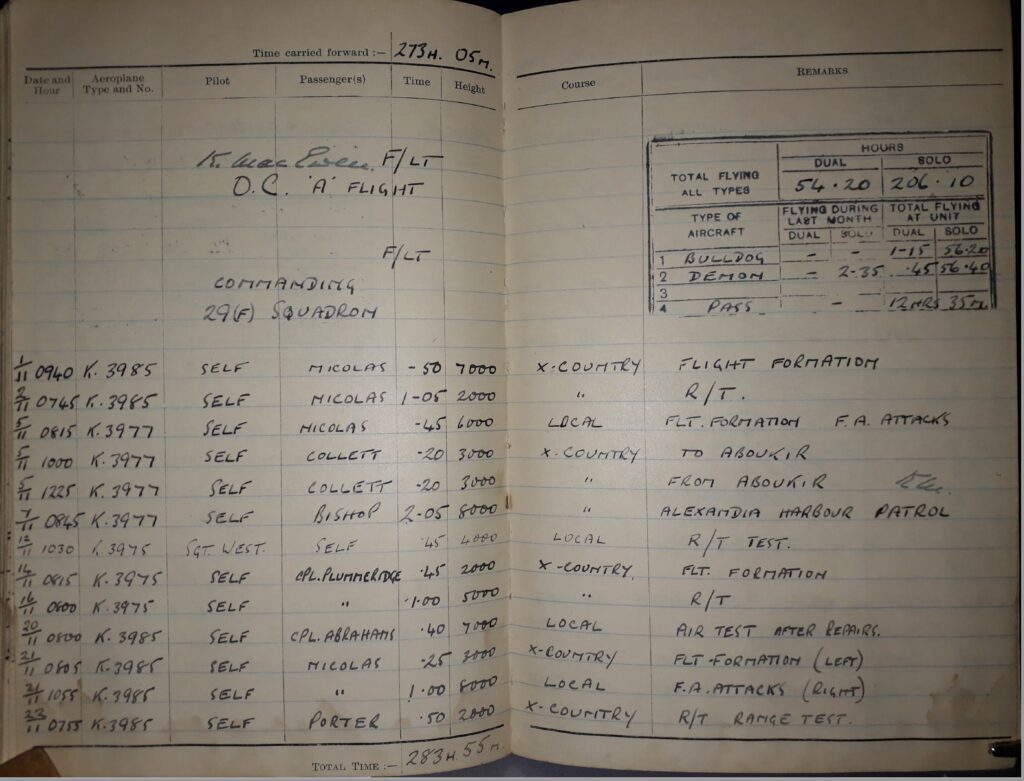
Since this article was first published, I have been contacted with further information by Andrew, the son of Sergeant Suter who was the pilot of Hawker Demon K3985. Andrew says:
“My father joined the RAF as an apprentice in 1926 at the Wireless School at Flowerdown in Hampshire. He learnt to fly in 1933 in Egypt (… and eventually flew…) Avro 504N, Armstrong Whitworth Atlas, Fairey IIIF, and Vickers Victoria.
His first posting was to Aden and there are a number of photos of the aircraft flown by No. 8 Squadron. After getting his wings he flew until 1941 – latterly Blenheims. In 1941, he was promoted to Pilot Officer – not flying – and was transferred to HQ 83 Group. He was an Electrical Officer.
Hawker Demon K3985 was repaired by the 20 November and once again flown by Sergeant Suter. He had previously crashed in December 1934 in a Bristol Bulldog but that wasn’t recorded in his log despite the aircraft being a complete write-off. The crash did get into the national news though.
HAWKER FURY
The Hawker Fury was the RAF’s first-ever operational fighter to exceed 200 mph in level flight. It was also the RAF’s most aesthetically pleasing biplane fighter of all time, its elegance being equalled by superb aerobatic qualities and and highly sensitive controls. The first production Fury I made its maiden flight on 25 March 1931 and in May that year 43 Squadron became the first to receive the type. Part of the Fury’s rationale was fast interception of bombers and the design’s initial climb rate of almost 2 400′ per minute fulfilled this requirement. By May 1932 1 and 25 Squadrons had also been equipped with Fury Is while the improved Fury II yielded a 20% increase in power, a greater rate of climb and a higher top speed. Five RAF squadrons received Fury IIs in 1936-37 and several foreign air forces ordered the type – three of the fighters even seeing service in the Spanish Civil War. These Spanish Furies were fitted with cantilever undercarriages and reached a type record speed of 242 mph. However, by 1939 all RAF Fury squadrons had re-equipped with Gloster Gladiators, Hawker Hurricanes and other designs.
Powerplant 525 hp Rolls Royce Kestrel IIS ( Fury I ) 640 hp Kestrel VI ( Fury II ). Dimensions Wingspan 30′, length 26′ 8″ ( 26′ 9″ Fury II ), height 10′ 2″. Weights Empty 2 623 lb ( 2 734 lb Fury II ) loaded 3 490 lb ( 3 609′ Fury II ). Performance Maximum speed 207 mph at 14 000′ (223 mph at 16 500′ Fury II ) climb to 10 000′ in 4 minutes 25 seconds ( 3 minutes 50 seconds Fury II ), service ceiling 28 000′ ( 29 500′ Fury II ). Armament Two fixed 0.303″ Vickers Mark III ( Mark V Fury II ) machine guns forward. provision for light bomb racks under wings
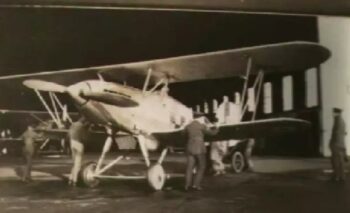
A Hawker Fury at Grantham in 1932
Hawker Furies of 25 Squadron line up for a Royal review at Mildenhall in July 1935
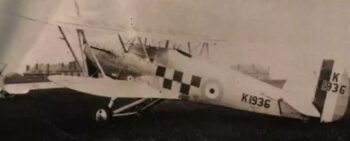
Hawker Fury K1936
HAWKER NIMROD
Although bearing an obvious resemblance to its stablemate the Fury, the Hawker Nimrod – originally known as the Norn – was a private venture design of 1929-30 around which Air Ministry Specification 16/30 was written. The first production Nimrod ( S 1577 ) was first flown in October 1931 and commenced re-equipment of 408 Flight of the Fleet Air Arm in the autumn of 1932. Production Mark IIs incorporating arrester gear and interchangeable wheels and floats were first delivered in March 1934 while from early 1935 Kestrel II engines were gradually upgraded to Mark V standard. 87 Hawker Nimrods were built and were replaced by Gloster Sea Gladiators and Blackburn Skuas from May 1939.
Powerplant 477 hp Rolls Royce Kestrel IIS, 608 hp Kestrel VFP. Dimensions Wingspan 33′ 6 3/4″, length 26′ 6 1/2″, height 9′ 10″ Weights Empty 3115 lb, loaded 4 059 lb. Performance Maximum speed 196 mph 18 000′ ( Kestrel IIS ) 193 mph at 14 000′ ( Kestrel VFP ) climb to 10 000′ in 6 minutes 8 seconds ( IIS ) 5 minutes ( VFP ) service ceiling 26 900′ ( IIS ) 28 800′ ( VFP ). Armament Two fixed 0.303 Vickers Mark III machine guns forward and provision for four 20 or 25 lb bombs if required.

Hawker Nimrod at El Amriya, Egypt in 1936
HAWKER OSPREY
With folding wings, flotation and arrester gear and interchangeable wheel or float undercarriage, the Hawker Osprey was in effect a navalised Hart. Indeed Hart J9052 was the basis for the prototype Osprey, modified to fit Air Ministry Specification 0.22/26. Production Ospreys first appeared in 1932 and had spread throughout the Fleet Air Arm by the following year – some Naval squadrons flying a mixture of Ospreys and single seat Hawker Nimrods. The final production Mark IV was outshopped in 1935 with a Kestrel V engine but by 1938 Ospreys were being replaced in the Home Fleet.
Powerplant 630 hp Rolls Royce Kestrel II MS. Dimensions Wingspan 37′, length 29′ 4″ (31 ‘ 10 1/4″ with floats), height 10’5″ (12’ 5″ with floats ). Weights Empty 3 045 lb, loaded 4 950 lb (5 570 with floats ). Performance Maximum speed ( landplane ) 168 mph at 5 000′, climb to 10 000′ in 7 minutes 40 seconds, service ceiling 23 500′. Armament One fixed 0.303″ Vickers Mark III machine gun forward, one 0.303″ Lewis machine gun in rear cockpit. Eight 20 or 25 lb or two 112 lb bombs under wings.

Hawker Osprey S1684 of the Fleet Air Arm at Catterick in September 1934
HAWKER TOMTIT
Due to the success of the Avro 504 series the RAF had no requirement for a new two seat trainer for twelve years after the end of World War I. The Tomtit was designed as a replacement and became the first Hawker biplane to enter service with the RAF. The Tomtit – first flown in November 1928 – was one of the pace-setters in the change-over from wooden to metal construction, with a steel tube fuselage of a pattern that became the Hawker norm.In 1929 Tomtits were issued to No.3 Flying Training School at Grantham and to the Central Flying School at Wittering. A Tomtit on the strength of No.24 (Communications) Squadron at Northolt was flown regularly by the then Prince of Wales, later King Edward VIII. The type was withdrawn from service in 1935 and several were sold to civilian owners. Six Tomtits were flying at the outbreak of the WW2 and all became camouflaged but kept on the civil register for use on communications duties.K1786 was the last Hawker Tomtit to be built and is the only survivor. It was retired from the RAF service before WW2 and was registered as G-AFTA. During World War 2 it was flown by test pilot Alex Henshaw to commute to the Spitfire production facilities at Castle Bromwich and had a headrest and Spitfire windscreen fitted. After World War 2, the Tomtit was used to tow gliders before being purchased by Hawkers chief test pilot, Neville Duke – later to claim the World Air Speed Record in a Hawker Hunter. During this period the Tomtit was a familiar participant in many races and air displays.It was then purchased by Hawker Aircraft in 1950 to form the Hawker House trio, with a Hurricane and Hart, and was painted in a smart dark blue and gold paint scheme. Hawkers donated the Tomtit to the Shuttleworth Collection at Old Warden Aerodrone in Bedfordshire in 1956 and in 1967 Hawker-Siddeley repainted the aircraft into its original service markings. Following a landing accident due to rough ground at Mildenhall in May 1985, there was considerable difficulty in obtaining the correct engine/propeller harmonisation. Several propellers were made and tested but were not suitable. However, Hoffman propellers from Germany designed a special high-rigidity propeller using composite woods and carbon fibre. The Tomtit flew again on 25th June 1992.
Powerplant 150 hp Armstrong Siddeley Mongoose IIIC five cylinder radial engine Dimensions Wingspan 28 ‘ 7″, length 23′ 8″, height 8’ 4″ Weights Empty 1,100 lb loaded 1,750 lb Performance Max speed 124 mph, climb to 10 000′ in 14 minutes 30 seconds, service ceiling 19,500′. Armaments None
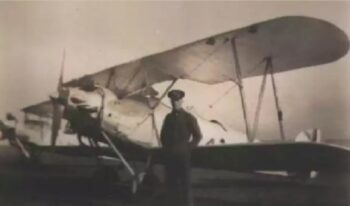
Hawker Tomtits with Rolls Royce Mongoose engines
SARO CLOUD
Only the third monoplane – and first flying boat – that we have encountered on our alphabetical journey through the RAF types of the 1930s, the Saro Cloud entrered service in August 1933 at Calshot. A scaled up version of the civilian Saro Cutty Sark, the Cloud was an advanced trainer for flying boat crews and provided full navigational and wireless instruction. Seventeen of the rare enclosed-cockpit amphibians were built by Saunders Roe and remained in service until early 1939.
Powerplant Two 340 hp Armstrong Siddeley Serval III or V engines. Dimensions Wingspan 64′, length 50′ 1 1/2″ height 16′ 5″. Weights Empty 6 800 lb, loaded 9 500 lb. Weights Empty 6 800 lb, loaded 9 500 lb. Performance Maximum speed 118 mph at sea level, initial rate of climb 750′ per minute, service ceiling 14 000, endurance 4 hours. Armament Two 0.303″ Lewis machine guns in dorsal locations, up to 200 lb of bombs under the wings if required.

Saro Cloud biplane amphibian at Catterick in July 1934. Note the open port engine cover.
VICKERS VICTORIA
The Victoria was a high commonality variant of Vickers’ Virginia bomber. The first Victoria – J6860 – was first flown in August 1922 and the first 15 production Victorias – designated Mark III – were ordered in May 1925. The winter of 1928-29 saw several Victoria IIIs evacuate civilians from Kabul, Afghanistan. Later Mark IV and V variants were built of metal rather than wood with more powerful Bristol Pegasus engines replacing the original Napier Lions on the Mark VI. The Mark VI Victoria was then renamed the Vickers Valentia to avoid confusion with earlier variants and remained in service into the early days of World War II
Powerplant Two 570 hp Napier Lion XIB ( Mark V ) Two 660 hp Bristol Pegasus ( Mark VI). Dimensions Wingspan 87′ 4″, length 59′ 6″, height 17’9″. Weights Empty 10 030 lb Mark V ( 9 806 Mark VI ) loaded 17 760 lb Mark V ( 17 600 lb Mark VI ). Performance Maximum speed 110 mph at sea level ( Mark V ) 130 mph at 5 000′ ( Mark VI ) climb to 5 000′ in 11 minutes ( Mark V ) 8 minutes 30 seconds ( Mark VI ) Service ceiling 16 200, range 770 miles ( Mark V ) 800 miles ( Mark VI ). Armament nil.
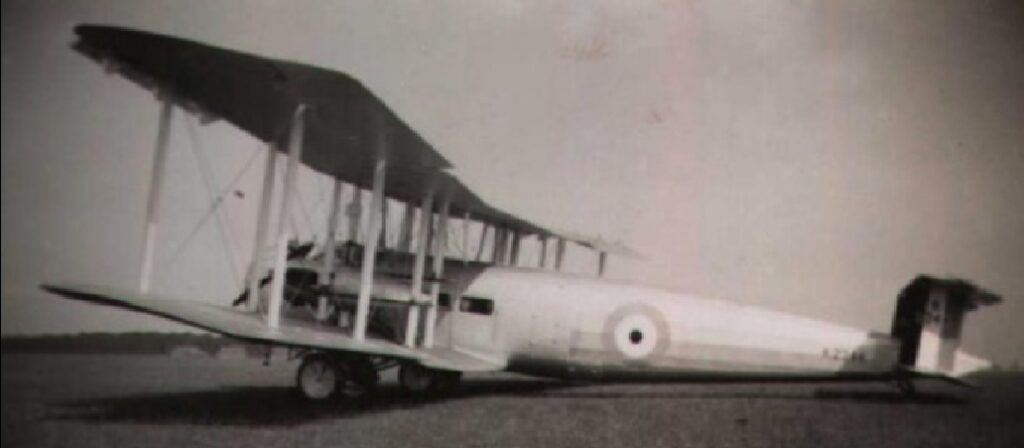
Vickers Victoria troop transport at Cranwell September 1933
VICKERS VIRGINIA
Envisaged in 1920 as a stretched version of the Vickers Vimy – as used by Alcock and Brown to fly the Atlantic – the “Ginnie” first flew in November 1922 and eventually evolved by way of many other versions and modifications to the metal winged Mark X ( see table below for specifications ). The Vickers Virginia remained in front line RAF use until 1937 – with 7 Squadron Virginias winning the Minot bombing trophy 8 times – and examples were used for parachute training at RAF Henlow until 1941.
Powerplant Two 580 hp Napier Lion VB. Dimensions Wingspan 87′ 6″, length 62′ 3″, height 18′ 2″ Weights Empty 9 650 lb, loaded 17 600 lb. Performance Maximum speed 108 mph at 5 000′, climb to 5 000′ in 10 minutes, service ceiling 15 530′, range 985 miles. Armament One 0.303″ Lewis machine gun in nose cockpit, one or two 0.303″ Lewis machine guns in tail cockpit. Up to 3 000 lb of bombs.
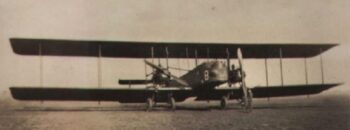
Vickers Virginia with Napier engines

Vickers Virginia
VICKERS VILDEBEEST
The Vildebeest I first entered service with 100 Squadron RAF at Donibristle in 1932 and was intended to replace the Hawker Horsley as the principal coastal defence aircraft of the Royal Air Force. A re -engined version, the Vildebeest Mark II, was ordered in 1933. The Air Ministry then requested a redesigned rear cockpit to accomodate a third crew member, resulting in the Mark II version, entering service with 36 Squadron in 1934 and 22 Squadron in 1935. The final Mark IV version was fitted with the sleeve valve radial Perseus engine ( ancestor of the later Bristol Hercules and Centaurus engines ) and this variant first equipped 42 Squadron in 1937. In 1939 30 Vildebeests represented RAF Coastal Command’s sole torpedo bombing force in the UK while at the same time 36 and 100 Squadrons were based in Malaya.
Powerplant 600 hp Bristol Pegasus IM3 ( Mk I ) 635 hp Pegasus IIM3 ( Mk III ) 825 hp Perseus VIII ( Mk IV ). Dimensions Wingspan 49′, length 36′ 8″ ( 37′ 8″ Mk IV ) height 14′ 8″. Weights Empty 4 229 lb ( 4 773 lb Mk III, 4 724 lb Mk IV ) loaded 8 100 lb ( 8 500 lb later Mks ). Performance Maximum speed at 5 000′ 143 mph ( Mk III ) ( 156 mph Mk IV ) climb to 5 000′ 7 minutes 30 seconds ( 6 minutes Mk IV ) service ceiling 17 000′, range 1250 miles (Mk III ) (1625 miles Mk IV ). Armament One fixed 0.303″ Vickers machine gun forward, one 0.303″ machine gun in the rear cockpit, one 18 inch torpedo or up to 1 200 lb of bombs.
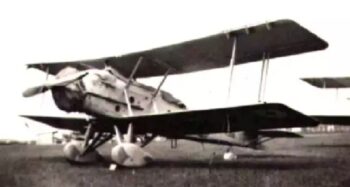
Vickers Vildebeest
WESTLAND WALLACE
The Wallace, first flown on 31 october 1931 was the last of the inter-war general purpose biplanes and was also used by a number of Auxiliary Air Force Squadrons. The pace of aeronautical development caused its rapid replacement in front line service, but its useful life was extended, with many being converted into target tugs and wireless trainers. In 1931 Westland produced a private development of its successful Wapiti. This machine embodied a number of improvements including a lengthened fuselage, brakes and wheel spats on the under carriage, and a new engine. By this time both the appearance and performance differed considerably from the standard Wapiti, so the company designated it the PV6. In 1932, following successful service trials, the type was put into production for the Royal Air Force and named Wallace. Three years later, Westland designed an improved version fitted with a more powerful engine and the then novel idea of an enclosed canopy over both crew positions. This offered greater comfort for the crew and improved the rear gunner’s aim by protecting him from the slipstream.
Powerplant 665 hp Bristol Pegasus IV. Dimensions Wingspan 46 ft 5 in, length 34 ft 2 in, height: 11 ft 6 in. Weights Empty 3,680 lb loaded 5,750 lb. Performance Maximum speed 158 mph, initial climb 1 350′ per minute, service ceiling 24 100′, range 470 miles. Armament One fixed 0.303″ Vickers machine gun forward, one 0.303″ machine gun in the rear cockpit, 580 lb of bombs.
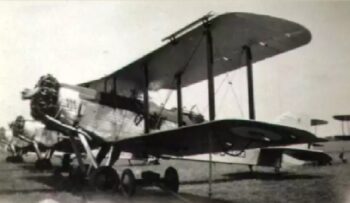
Westland Wallace
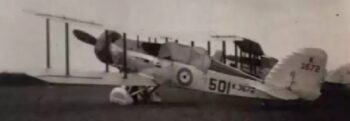
Westland Wallace K3672
WESTLAND WAPITI
From 1928 to 1942 the rugged Westland Wapiti bomber saw highly active service with the RAF all over the British Empire. Intended as a replacement for the de Havilland DH 9 and Bristol F2B, the Mark II Wapiti was built entirely of metal. In 1933 the Indian Air Force was created with just four Westland Wapitis.
Powerplant 480 hp Bristol Jupiter VIII or 500 hp Jupiter XFA. Dimensions Wingspan 46′ 5″, length 34′ 2″, height 11′ 10″. Weights Empty 3 810 lb ( Jupiter VIII ) 3 320 lb ( XFA ) loaded 5 400 lb ( VIII ) 5 400 lb (XFA). Performance Maximum speed 140 mph at 5 000′ ( 160 mph at 12 000′ XFA ) climb to 10 000′ in 9 minutes 30 seconds ( 8 minutes 12 seconds XFA ) service ceiling 20 600′ ( 27 000′ XFA ) range 530 miles ( 310 miles XFA ). Armament One fixed 0.303″ Vickers machine gun forward, one 0.303″ Lewis machine gun in rear cockpit, up to 500 lb of bombs.
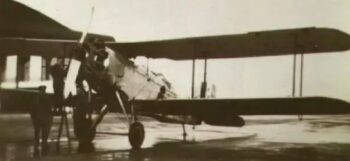
Westland Wapiti with Bristol Jupiter engines at Grantham in October 1932