SUNDAY 20 TO MONDAY 21 JANUARY 2019

An overnight stay in London gave me the chance to travel through the Stroud valley, along the recently electrified Great Western Main Line and arrive in the London Borough of Hackney, the late glamour model Suzanne Mizzi’s home. Changing stations in CAPITALS. Haulage in bold.
SUNDAY 20 JANUARY 2019
GLOUCESTER
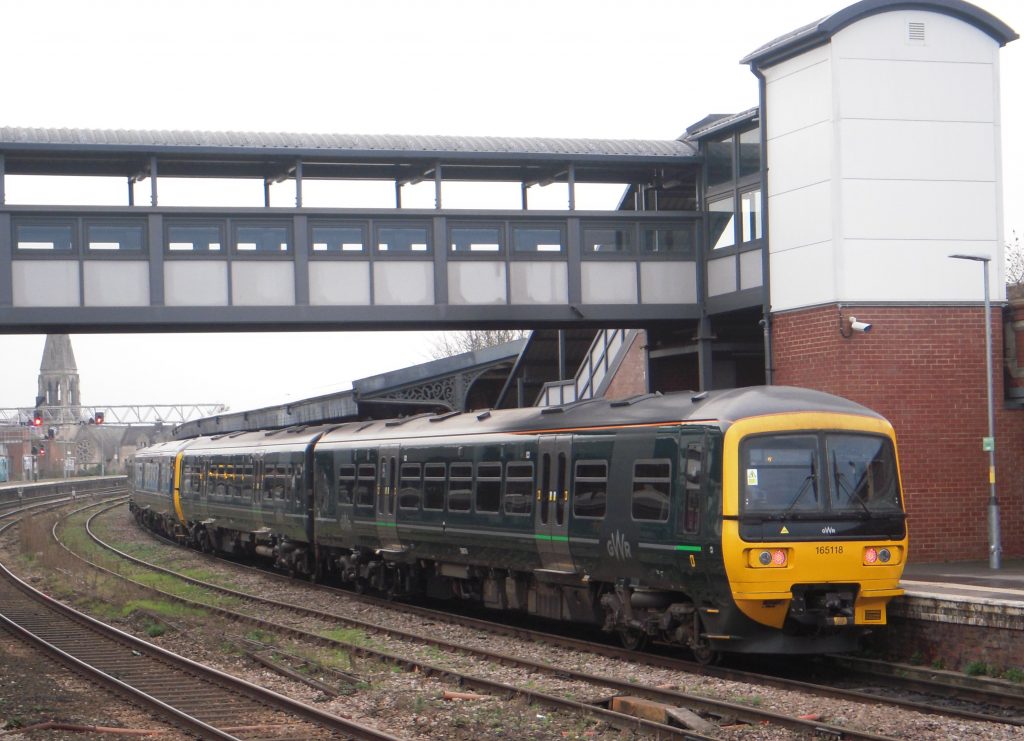
Departure for SWINDON was aboard Great Western Railway’s three car DHMU 166 212, forming service 2B90. 166 212 had previously left the sidings behind Platform 4 of Gloucester station to travel as empty coaching stock (ecs) to Rowanfield Road siding at Cheltenham as 5B90. It then returned to Platform 2 at GLOUCESTER. In between the departure and return of 166 212, fellow GWR DHMUs 166 210 and 165 118 were noted at Platform 4 and 150 262 and 150 242 in Arriva Trains Wales similarly coupled together at Platform 2.
SWINDON

166 212 arrived on time at 1024 at SWINDON’S west facing bay platform, having travelled over the restored double track from Kemble. 43017 “Hannahs” then arrived with an FGW dynamic lines liveried HST at Platform 3 for its 1035 departure, before which, five car bimodal electric set 800 305 was noted heading west towards Bristol Temple Meads. En route, Didcot yielded the sight of DB Cargo liveried 66 044 and GWR liveried four carriage Electrostar EMU 387 146. Further Bombardier Derby built Electrostars 387 142 and 387 157 as well as GWR liveried 08 836 were seen at Reading. EWS marked 66 207 was noted at Acton Main Line and 800 316 on arrival at PADDINGTON Platform 2 at 1145. I then took the Circle Line with its new open plan carriages to LIVERPOOL STREET. From here Cheshunt bound four car EMU 315 812 took me north via Bethnal Green as far as HACKNEY DOWNS. The North London Line between Dalston Kingsland and Stratford was in the hands of Bombardier built Class 378 Capitalstar EMUs.
MONDAY 21 JANUARY 2019
PADDINGTON
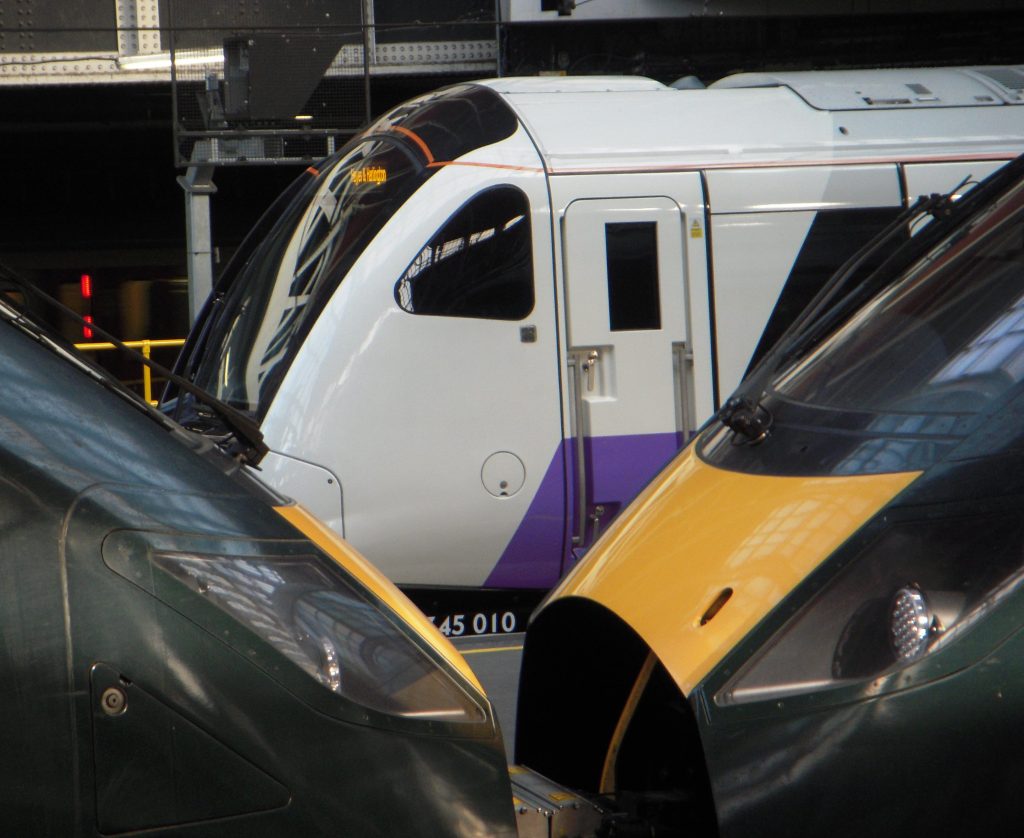
Despite the march of Great Western Electrics – now not proceeding beyond Cardiff to Swansea or south to Bristol Temple Meads as originally envisaged – the classic InterCity 125s were still in evidence under Brunel’s overall roof, including power cars 43020 “MTU Power, Passion, Partnership”, 43024 “Great Western Society 1961-2011 Didcot Railway Centre”, 43044, 43070 “The Corps of the Royal Electrical and Mechanical Engineers” 43180 and 43197. More recent rolling stock included GWR liveried diesel hydraulic multiple units 165 108 and 165 117. Pure electrics meanwhile included Bombardier Derby built Aventra 9 car units 345 010 and 345 042 working between Paddington and Heathrow Airport before eventual service on the cross London Elizabeth Line. Longer established were the Spanish built four car Class 332 sets 332 004 and 332 013 on the Heathrow Express services.
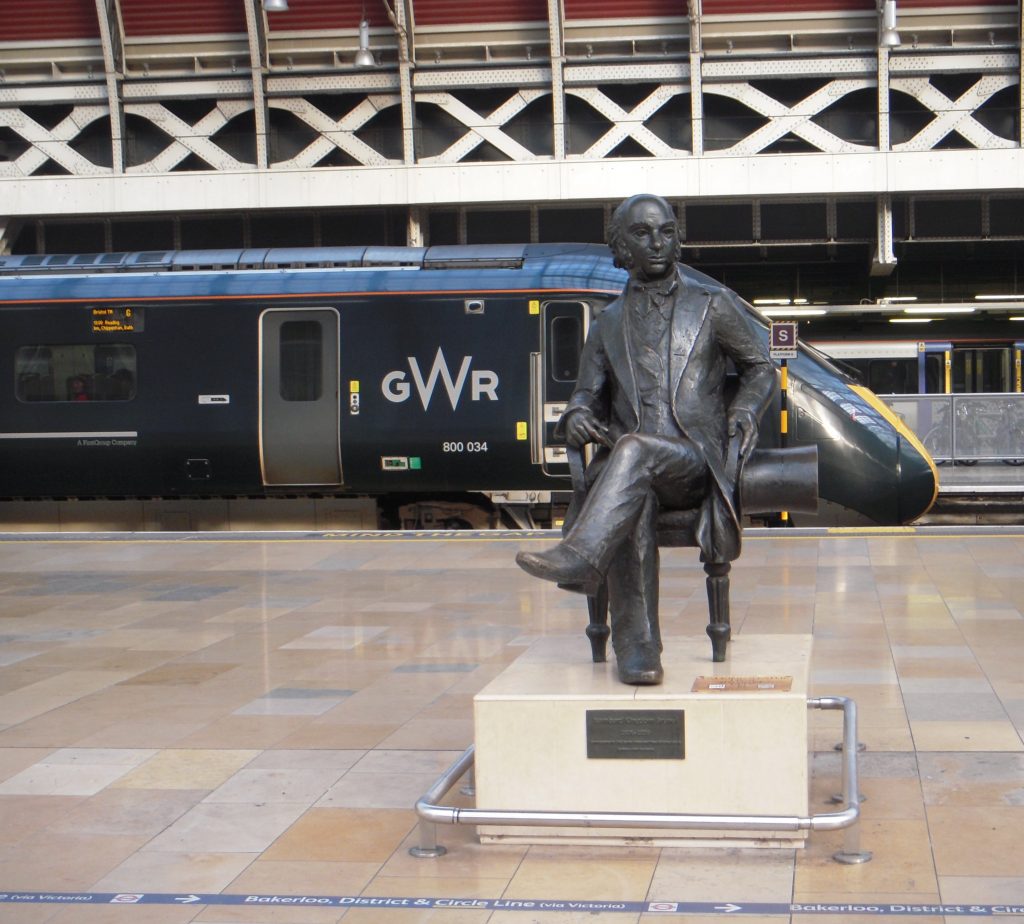
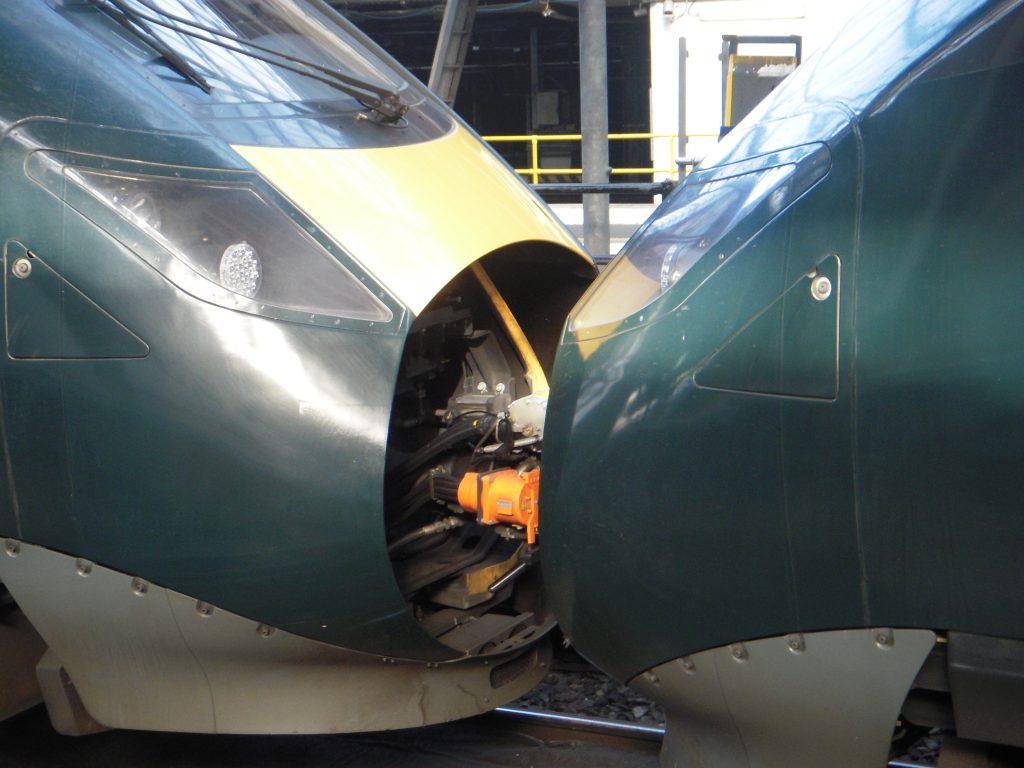
Five car bimodal electric set 800 317 eventually took me back to SWINDON from Platform 8 at 1430 but before then I noted nine car units 800 006, 800 018, 800 034/013 coupled together as well as five car 800 304. 802 011 was named “Sir Joshua Reynolds” at one end and “Capt Robert Falcon Scott” at the other. It was of a class similar to the 800s but with modifications to the roof mounted brake resistors for operation along the Dawlish sea wall and larger fuel tanks.
EWS liveried 66 015 was noted at Acton Main Line and GWR marked 57 603 “Tintagel Castle” at Reading. During the westward journey, 800 317 arrived early at a number of stations but offered a smooth and comfortable ride despite the seats being less well upholstered than those on the Mark III carriages of the classic IC125. SWINDON Platform 4 was reached at 1531 with GWR liveried 150 216 departing for GLOUCESTER from Platform 2 at 1536.