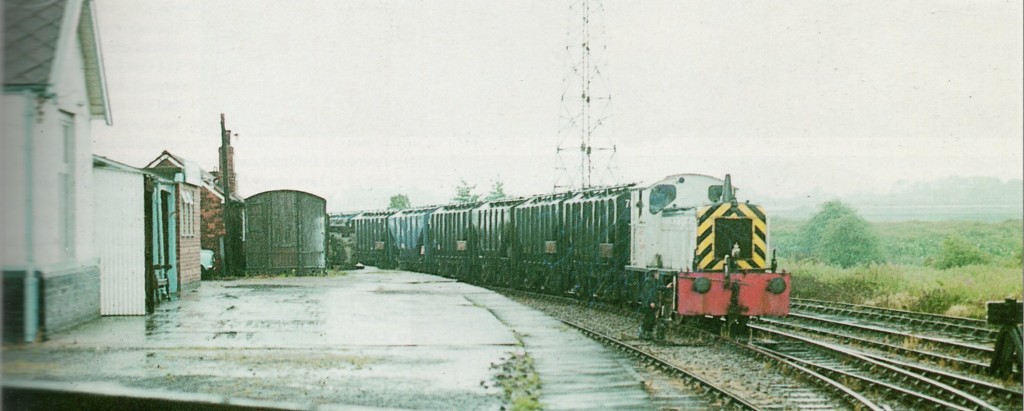
As featured on my Ming Ing bus, lorry and car diorama, the Derwent Valley Light Railway can be seen as quintessentially English.
Conceived from the good intentions of the 1896 Light Railways Act, tortuously gestated through planning disputes and only born just before the World War I, it first fell victim to motor traffic on the roads and later to retrenchment on the nationalised railway.

By the time that the DVLR ceased moving and storing wagons in the 1980s, Britain was being defended by nuclear submarines and variable geometry aircraft and mobile phones and the Internet were just around the corner.
Today, despite having fought two ruinously expensive World Wars, Britain remains one of the top five World economies, but how was such wealth achieved in the first place?
By the time of the Roman invasion of 43 AD, the British Isles were well known for their mineral riches. Copper, tin, iron and coal attracted many sea going nations and in turn helped Britain build and power an empire of its own. And crucially, the very fact that Great Britain was surrounded by water made it a destination for only the most technologically advanced cultures. As a result, it has the road network of Rome and the castles of the Normans as well as their cats, dogs, fallow deer, rabbits, snails and nettles.

Unlike Rome itself though, Britain was never sacked by Vandals and Visigoths and never besieged by empires from further east. As late as 1940, the English Channel remained the best anti tank ditch in the world. And the same insularity shaped the landscape, farming and wildlife of Britain.
Following the last Ice Age, Britain shared many of its wild animals with the more densely wooded parts of Western Europe, but as agriculture and human population grew these beasts came under threat.
During the Mesolithic era (Middle Stone Age) of 6 500 BC, wild wood covered 75% of Great Britain and hosted wolves, wild boar, brown bear, lynx, aurochs (wild oxen) and wolverine. Although the last named predator became extinct in Britain around 6 000 BC, little had changed by 4 000 BC when the land bridge between Britain and Europe had disappeared under the North Sea.

During the Bronze Age of 2 500 to 750 BC – when Stonehenge was completed – a population of about one million Ancient Britons lived in small villages and used metal tools to clear ever larger areas of woodland for crops. The mighty aurochs became extinct around 1 200 BC and by the end of this era wild wood covered only 25 % of Great Britain. The Bronze Age people also managed woodland by coppicing small trees such as hazels: harvesting the stems and then letting them grow back.
The Iron Age from 700 BC to 43 AD saw wild wood further reduced to 15 % of the land area of Great Britain with lynx disappearing around 400 AD and brown bears a century later. By the time that wild boar became extinct in 1200, wild wood was down to 10% but being used more intensively for building and craft material and charcoal.
In 1281, King Edward I ordered a Shropshire knight by the name of Peter Corbet to “take and destroy wolves with his men, dogs and devices, in all ways in which he shall deem expedient.”
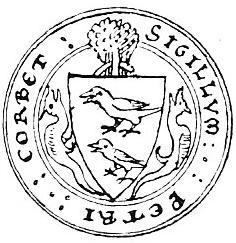
During the next nine years, Sir Peter, his men and a pack of hounds roamed the forests of the English Midlands killing any wolves that they encountered. By 1290, “The Mighty Hunter” had eliminated almost all of them, the last reported wolf attack on deer being reported in the Forest of Dean in 1289. The last wolf in England was shot around 1509.
From 1290 then, England lacked the main top predator of domesticated animals. It had lost the wildness of Europe and could become a land of sheep farms and their resultant wealth.
The oolitic limestone hills in the east of Gloucestershire became the wolds of the cots, the high ground of the sheep folds. And from the Cotswolds came the mellow stone settlements of Cirencester, Chipping Campden and Broadway.
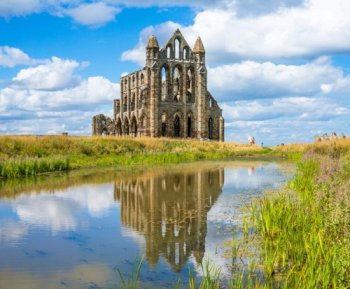
In Yorkshire and Northumbria too, close to the debatable lands between England and Scotland, sheep farming brought wealth to the monastic houses.
Sheep enabled large parts of otherwise wild North Yorkshire to be adapted to farming in the Middle Ages. The wealth of such Cistercian Abbeys as Fountains and Rievaulx relied on the ability of sheep to survive on rough pasture and yield wool, milk and sheepskins. Undyed white wool was used to make the Cistercian monk’s distinctive white habits as well as blankets to keep out the cold. Milk could be processed into butter and cheese while sheepskins formed the basis of the monk’s illuminated scrolls and sheep manure helped fertilise both the high grazing used in summer and the lower pastures occupied by wintering flocks.
Collectively, Cistercian flocks numbered thousands of sheep and made an important contribution to the economy of Mediaeval England. But by 1536, these rich abbeys attracted the interest of King Henry VIII.
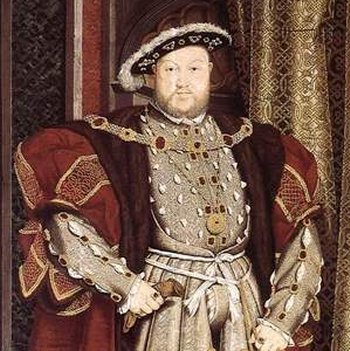
King Henry VIII is best known for his six wives, his strenuous efforts to divorce himself from the Catholic church and the tyrannical treatment of his enemies but the 2015 study “Monks, Gents and the Industrialists: The Long-Run Impact of the Dissolution of the English Monasteries” by the US National Bureau of Economic Research revealed how monastic lands were acquired by a rising class of rural gentry. These gentlemen then poured the commercial profits of their newly acquired agricultural territories into such technological investments as textile mills and new farming methods.

The American researchers compared how much money the monasteries were making at the time that the Dissolution began in 1536 with the industrial landscape in the early 19th Century. They found that the larger the monastic footprint in an area, the more industrialisation there was by 1838. or put another way:
“Parishes which the dissolution impacted had more textile mills and employed a greater share of population outside agriculture [and] had more gentry and agricultural patent holders.”
By selling off the monk’s land to gain wealth to sever ties with Rome, Henry unwittingly exposed the former monastic estates to market forces. By 1760 entrepreneurs had maximised the potential of the often rich land and the industrial revolution was under way.

King Henry VIII’s struggle with Rome began after Pope Clement VII refused to annul his marriage to Catherine of Aragon. By the 1534 Act of Supremacy, Henry declared himself to be the Supreme Head of the new Church of England. He also oversaw the union of England and Wales with the Laws in Wales Acts of 1535 and 1542 and gradually granted Parliament in Westminster many powers of decision making previously vested in the Church. In 1541, the Irish parliament declared Henry VIII to be King of Ireland and unified as one nation under him. By his death on 28 January 1547 as well, the Royal Navy comprised a permanent fleet of about 50 ships.

Had it not been for Henry VIII’s ambition, Britain might not have led the world into the Industrial Revolution. And by extension cars, trains and aircraft would not have been built in Britain either!
Interestingly, just as King Henry VIII was dissolving the wealthy Yorkshire monasteries from 1536, a large deposit of graphite was discovered at Borrowdale in Cumberland, popularising the use of the carbon allotrope as a way of marking the fleeces of different sheep.

From the reign of Henry’s daughter Elizabeth I, graphite was also used to line moulds for cannonballs, making the resultant projectiles rounder, smoother and more aerodynamic: thus contributing to the strength of the Royal Navy.
1795 saw Nicolas Jacques Conte invent graphite pencil lead while during the 19th Century graphite and linseed oil were mixed to form a protective coating for steam locomotive fire and smokeboxes. From the 1940s too, graphite was also being used as a moderator for nuclear fission reactors.
Meanwhile, Britain’s fledgling industrial revolution was being held back by Medieval precious metal regulations.
Hallmarking began in 1300 when a statute of Edward I instituted the assaying (testing) and marking of gold and silver to protect the public against fraud and traders against unfair competition.
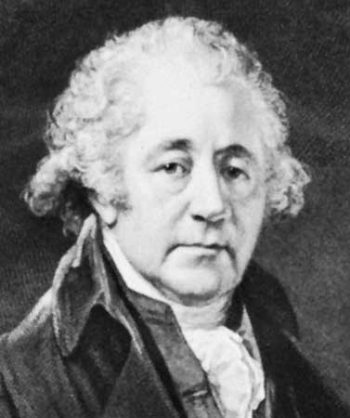
In the 1700s, innovations in the manufacturing processes and the use of machines in silver production in Birmingham and Sheffield resulted in a call for new assay offices in these cities. Leading this movement was manufacturer Matthew Bolton, who had established the Soho Foundry in Handsworth, Birmingham, in 1762. This produced buckles, buttons, silver plate and silverware.
By the 1770s he employed more than 700 workers and his customers included royalty. His foundry was at the cutting edge of technology and working practice, including factory line systems, interchangeable parts and stock control. The need to provide a power source for his factory led Matthew Boulton to finance James Watt’s steam engine.
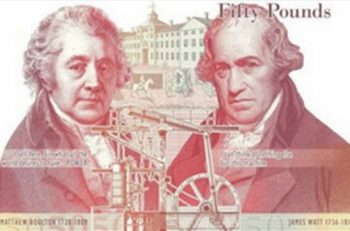
However, Boulton became increasingly frustrated that he was forced to send his goods 70 miles to the Chester Assay Office for hallmarking. He complained that the travel expense, the threat of highwaymen and the careless handling of his goods at Chester were affecting his business. However, his real concern was that the Chester silversmiths were stealing his best-selling designs.
William Legge, the Second Earl of Dartmouth, who was a neighbour and confidante of Matthew Boulton, advised him to petition for an Act of Parliament authorising an Assay Office in Birmingham.
Boulton was approached by Sheffield’S Company of Cutlers and agreed to press for their petition too. Despite opposition from the Goldsmiths’ Company of London, Boulton’S lobbying was successful and the Assay Bill gained Royal Assent on 28 May 1773.

During Boulton’s long stay in London he lodged at the Crown and Anchor Inn and the Assay Mark of landlocked Birmingham became an anchor while that of Sheffield became a crown (although this was changed to a rose in 1973). Because of its association with radical politics, the Crown and Anchor became known as the Gates of Pandemonium before it burned down in 1857.
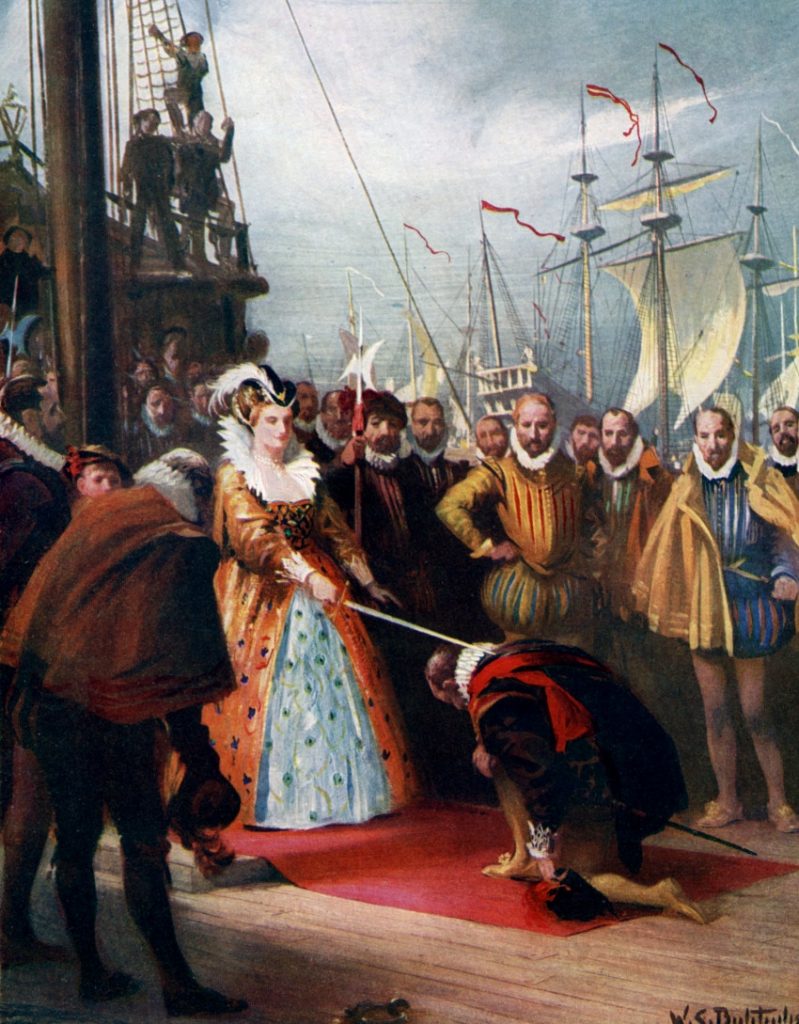
Also making a contribution during the reign of Queen Elizabeth, daughter of King Henry VIII, was the Poor Law of 1601. This was funded by a progressive tax on the value of land in each parish. As a pioneering, simple but universal form of social security, this allowed young people to leave the land and seek urban jobs safe in the knowledge that their aged parents would not starve. In fact the Hundred Rolls of Cambridge show that the landlords of the University City were operating a similar system in 1279: funding such institutions as a Leper Chapel to make Cambridge a more attractive place in which to do business.
In contrast, the 1834 Poor Law Act introduced both the Workhouse and a dip in British productivity as an insecure, poorly educated workforce lost ground to Bismark’s Germany and the USA. Strong British peacetime productivity only returned with the welfare state of the late 1940s.
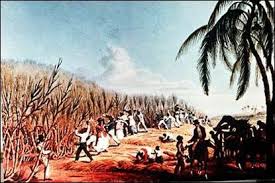
Earlier in the reign of Queen Elizabeth, the likes of Raleigh, Drake and Frobisher had opened up sea trade routes around the world. Unfortunately – in retrospect – these voyages eventually facilitated the triangular trade of British manufacturered goods being shipped to Africa to be exchanged for slaves. These slaves were then taken to the West Indies to produce sugar which was sent to Britain.
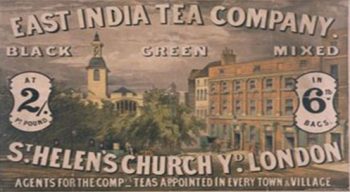
At the same time, the British East India Company was exchanging Indian grown opium for a the dried leaves of a Chinese plant that would come to help define Britain – tea.
A German traveller in Elizabethan England was disgusted by the rotten teeth of aristocratic women (including the Queen) who constantly sucked sweets and put sugar in everything including glazes for roast meat.
Once sugar production was underway in the English colony of Barbados the price fell and it became a kitchen staple. By the 1770s, West Indian sugar was England’s most valuable import.
However, the death rate of the slaves in the Caribbean due to appalling working conditions, malnutrition and disease was so high that at one point 20 000 new slaves were needed each year to maintain the labour force.
When his frigate toured the West Indies at the end of the 18th Century, ships purser Aaron Thomas was shocked by the condition of the slaves and wrote in his diary ” I never more will drink Sugar in my Tea, for it is nothing but Negroe’s blood.”
Meanwhile, Garaway’s Coffee House in London began selling tea in 1658, and in September 1660 Samuel Pepys mentioned sending “for a cup of tee (a China drink) which I never drank before”.
By the late 18th Century, tea had become widespread. Among the labouring poor, it eventually displaced sweet, malty beer as the primary drink.
By 1800 the population of Great Britain was 11 million and many rural labourers were without access to even a small patch of common land on which too graze a cow or sheep.
The enclosure of land into fields and other private properties by 300 000 miles of hedgerow also inhibited the rural labourer’s opportunities to glean firewood and catch rabbits. Wild wood covered only 7% of Great Britain.
In short, the rural labouring population were losing the means to produce their own food. Many labourers who could no longer afford firewood to brew their own beer turned to sweetened tea as a less expensive alternative.
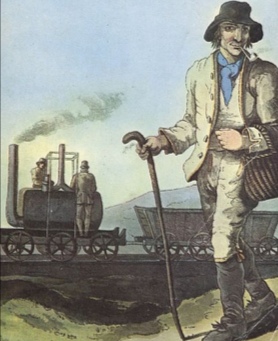
Sadly it was detrimental to their nutrition and health. Beer was, in effect, liquid bread – containing protein and vitamins, as well as providing about 350 calories per pint. Tea contained neither vitamins nor protein, and even with four spoons of sugar it would only contain about 64 calories.
But labourers would have been under the illusion that tea gave them more energy because the sugar was immediately accessible to the body, while the sugars in beer were released more slowly.
Hot tea was welcome to labourers working outside and to families who could no longer afford to cook on a daily basis.
Surveys conducted in the 1790s found porridge, potatoes and barley broths still constituted an important part of labourer’s diets in northern England : where cheaper peat and coal meant they could still afford to cook.
But in the south, where wood was dear, labouring families lived on shop bought bread and the odd scrap of cheese or bacon.
Some social surveyors were irritated that poor families spent at least 10% of their income on tea and sugar. But one, David Davies, understood that they relied on it for a small measure of comfort. He said “Tea drinking is not the cause, but the consequence of the distresses of the poor.”
The rural labourers who moved into the towns to look for work took these habits with them. The urban industrial poor of the 19th century survived on the same diet of shop-bought bread, washed down with heavily sugared tea.
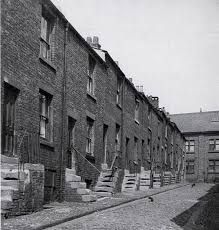
In the filthy cities their malnourished young got pneumonia, rheumatic fever, TB and diarrhoea. Those that survived were stunted, as their bodies diverted their little nutrition into recovery rather than growth.
Working class boys of the 1860s were on average 10″ shorter than those from priveliged backgrounds. Life expectancy in Manchester was just 26 – 10 years less than the national average.
Sugar and tea gave 19th century workers the energy to spin and weave the cotton and forge the steel to make the goods that fuelled Britain’s industrial might. But it came at a high price.
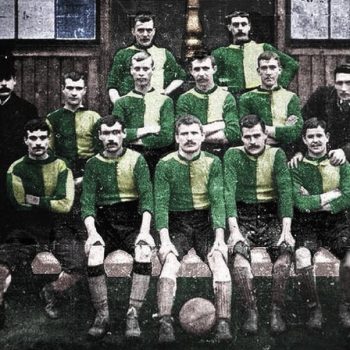
Indeed, the physical and spiritual poverty of the English working classes was also revealed by the rise of Association Football in the 1870s. As Downton Abbey writer Julian Fellowes commented “When you need something to believe in, if you can’t manage to believe in a life beyond this one, you can at least believe in Manchester United or whoever you support. The mill owners saw football as a way of unifying their workforce and giving them something to live for. Human beings need to feel they’re part of something worthwhile. Whatever their job, they normally will reconstruct a culture around it so that it becomes a noble thing to do. Suddenly, between 1865 and 1870, football became a noble part of people’s lives. “
In fact the English Football Association had been founded in 1863 and its initial membership was teams of public schoolboys. However, by 1882, when the last ever public school team won the FA Cup, working class clubs outnumbered them ten to one.
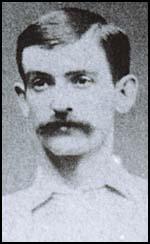
However, most factory workers only had one afternoon free each week and were shorter, less fit and less well nourished than their public school opponents – who played soccer in a physical style more like Rugby Union. Football only moved beyond this to the game we know today with the emergence of working class professional players such as Glasgow born Fergus Suter, who helped develop player positions, tactics and passing the ball from one team member to another. Suter, originally a stonemason, played for Partick Thistle and later Blackburn Rovers.
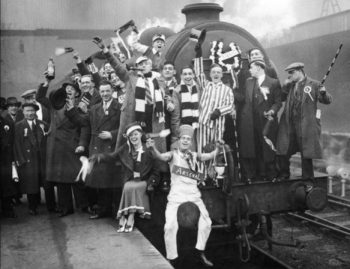
Once football clubs became recognisable in their modern form, their movement around Britain for away matches was also facilitated by a well established railway network. In this case, Arsenal supporters are seen at Kings Cross. And seen above in colour are the yellow and green clad players of the Newton Heath Lancashire and Yorkshire Railway Football Club, which later evolved into Manchester United.
By 1900 however, the population of Great Britain had grown to 41.5 million, woodland reduced to 5% but farm yields had increased dramatically due to mechanisation and improved soil fertility. In conjunction with the spread of railways and better roads, less workers were needed on the land and even more city dwellers could be better fed. Unfortunately grey squirrels were introduced to Great Britain in 1879.

During the 20th Century, two World Wars – and particularly the need to build de Havilland Mosquito aircraft – emphasised the need for Great Britain to maintain its own supply of timber and from 2000 AD woodland has increased from an all time low of 2% to 12% of land area despite the population climbing to 70 million. Coppicing has been revived, well managed woodlands can apply Forestry Stewardship Council certification to their products and wild boar were re introduced in 1990.