
In late 2020, Jet Age Museum, Gloucestershire, was lucky enough to acquire from the estate of the late Nigel Cuff a 1/72 scale model of a 1942 vintage V-2 rocket.
Such a model had been on the “wanted” list for the “Vulcan” cabinet for some time to put the 1950s vintage RAF marked 1/72 scale Douglas Thor IRBM into context.

The Museum’s other V2, part of a German rocket weapons diorama, had been painted a more prosaic black with a silver base but Nigel’s example has black and white panels so that its roll and other movement could be easily recorded on film.
Also noticeable is the Frau Im Mond logo, perhaps more Sally Bowles than Art Nouveau, but derived from Fritz Lang’s 1929 silent film released in England as “Woman in the Moon”. This was not the first film about a moon shot, but introduced, among others, the idea of multi stage rockets and a countdown before launch.
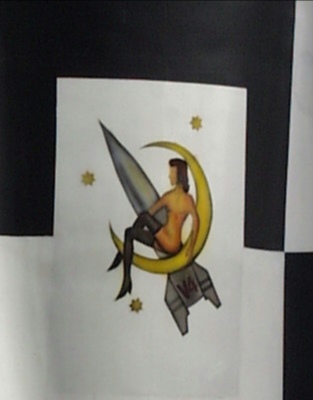
Although the film was banned by the Nazis (possibly for being too close to their own rocket achievements) the Peenemunde scientists painted on their own tribute to the monochrome movie.
What was eventually known as Vergeltungswaffen (revenge weapon) 2 was derived from a series of smaller liquid fuelled Aggregat (mechanical system) rockets, of which the 1934 vintage A-2 was the most promising until the first successful A-4 launch on 3 October 1942 at Peenemunde on Griefswalder Island in the Baltic Sea.
Mass production was about to begin at Peenemunde when the site was bombed the RAF in August 1943, assembly then being switched to an underground site near Nordhousen in Thuringia, built and run by the SS and at its peak capable of producing a V2 every 90 minutes.

Over 5 000 V-2s were built, resulting in the deaths of 20 000 slave labourers, and between the first examples being fired on Paris and London on 8 September 1944 and the last falling on Orpington on 27 March 1945, 2 754 people in England were killed and 6 532 injured by V2s.
In addition, V2s fired at the Belgian port of Antwerp left 1 700 dead and 4 500 injured.
The V-2 is thus perhaps the only weapon system to have caused more deaths by its production than its deployment.
In military terms too, the one ton warhead of Werner von Braun’s missile was only a sixth of the load that a reusable Avro Lancaster bomber could carry although the V2’s combination of explosive charge and supersonic shock wave could be felt over a quarter of a mile radius. As a result, V2s destroyed 20 000 British houses but damaged 580 000, contributing greatly to the post War housing shortage that became a dominant social issue. From the German point of view, the V2 programme cost as much as America spent on the Manhattan Project to develop the atomic bomb, money which could perhaps have been better spent on fighter aircraft to defend the skies over the Reich from British and American heavy bombers.

With fixed launch sites such as La Coupole near Calais proving vulnerable to bombing and advancing Allied troops, V-2s were transported on Meillerwagen which also hydraulically lifted them through 90 degrees to their start tables. These transporter/erectors were hauled by Hanomag SS-100 heavy tractors also used for towing Luftwaffe aircraft and fuel trailers. Towing the start table to the site and controlling the V2 launch was an armoured vehicle based on a Krauss Maffei 8 ton half track.
Typically, a train of 20 V2s would arrive in the forward launching area from Germany under cover of darkness and be hidden under forest trees while the on board electronics were checked.
Individual V2s would then be towed to a clearing in a forest, still giving the ground crew and associated vehicles shelter among the trees from Allied aircraft. The 46′ tall missile itself weighed four tons empty, twelve and a half tons fuelled with alcohol and liquid oxygen. Erection and fuelling would take less than two hours.
On ignition, these propellants would fall by gravity to the combustion chamber, yielding just eight tons of thrust. Seconds before liftoff, steam driven turbo pumps would start operating. These would force a ton of propellant every seven seconds into the combustion chamber, boosting the thrust to 25 tons and producing a 15 metre flame of orange.

Four seconds after lift off the V2, at an altitude of 200 metres, automatically tilted at 47 degrees towards its target. Accelerating to 3 500 mph, it rose to 60 miles – the edge of space – before plunging down upon its target. As soon as the ballistic missile had cleared the start table, the launch crew would dismantle the site and be moving off within 40 minutes.
The mobile launch sites for the V2s that fell on London were in a wooded coastal area of the Netherlands near The Hague. In addition, it was known that the V2 engine cut out after 65 seconds of flight. After this, the missile continued on a parabolic curve which, in still air, was mathematically calculable.
In an attempt to locate the launch sites, the Royal Air Force sent mobile radar vans to the Belgian city of Mechelen. This was 70 miles south of the wooded launching area and offered a sideways view of the V2’s parabolic arcs. The information gained from these radar observations combined with the co ordinates of the missile impact in England were then relayed to a bank vault in Mechelen which was occupied by a team of eight officers from the Women’s Auxiliary Air Force. Previously employed to plot incoming enemy aircraft, the WAAFs had been given extra mathematical training and used paper, pencils and slide rules to extrapolate the launch site. For the information to be of practical use, these calculations had to be made within six minutes.
The theoretical location of the launch site was then flashed to Coltishall based 602 Squadron, who would scramble a flight of four Supermarine Spitfires Mark XVIs, each laden with a pair of 250 lb bombs, towards the Dutch coast.
One of the Spitfire pilots was Ilford born Raymond Baxter, later famous as a motor racing commentator and presenter of BBC TV’s “Tomorrow’s World” programme. He recalled:
“It was a close formation exercise. If you were leading, you flew over the target, and you would round your wing and roll on your back and come down like that. And every aeroplane would do the same thing… a stream of four aeroplanes very close together. The dive itself was always 70 to 75 degrees. You would start at 8 000 feet, drop the bombs at 3 000 feet and pull out. “
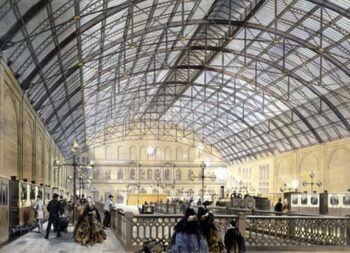
Unfortunately, although all London bound V2s were aimed at Charing Cross station, the notional centre of the City, buffeting winds on the 60 mile descent from the edge of space spread their impact points far and wide. This frustrated the work of both the WAAF plotters in Mechelen and 602 Squadron, who managed to attack some V2s found in clearings and disrupted the railway lines approaching The Hague. Although V2s continued to be fired at London from the Dutch coastal woods until March 1945, increasing Allied air superiority slowed the rate of daytime launches and forced the Germans to work at night.
On 3 March 1945, the Allies carpet bombed the Dutch coastal woods. This failed to destroy any rockets but unfortunately killed more than 500 Dutch civilians.
The first London V2 attack – at 1841 on Tuesday 8 September 1944 – resulted in the demolition of seven houses in Staveley Road, Chiswick, left a 30 feet deep crater and three people dead. For the first two months of the V2 campaign, such attacks were officially dismissed as gas main explosions. However, when Berlin revealed the existence of the V2s on 8 November 1944, Prime Minister Winston Churchill was forced to make a statement to Parliament.
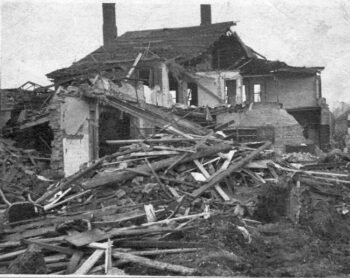
After a lull in firings during October 1944, due to the impact of Operation Market Garden, on Saturday 18 November, 34 civilians were killed in Wandsworth and on Sunday 19 November 1944 the Crooked Billet pub in Bromley, Kent was hit with the loss of 26 lives.
The most deadly V2 attack however came at 1215 on Saturday 25 November 1944 at Woolworths in New Cross Road, Deptford. The missile, travelling at 2 000 miles an hour, struck the roof of the department store and ploughed through all four floors and exploded. The 160 casualties included housewives, trailing young children and keen to invest in a new supply of rare saucepans, other shoppers in the Co Op next door and the passengers of the Number 53 bus drawn up outside. The latter remained upright in their seats, covered in dust, their internal organs traumatised by the blast.
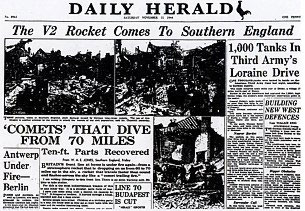
Perhaps the most devastating impact of the V2 however was psychological. Londoners had already spent more than four years being bombed by conventional aircraft and, later, the V1 cruise missile. In both cases there was an amount of warning time to take shelter. The V2 however struck without warning. One man remembered :
“If they had gone on much longer, I would have been taken to the madhouse, because they were really getting me down and I was nearly reaching the state of surrendering, Churchill or no Churchill”.
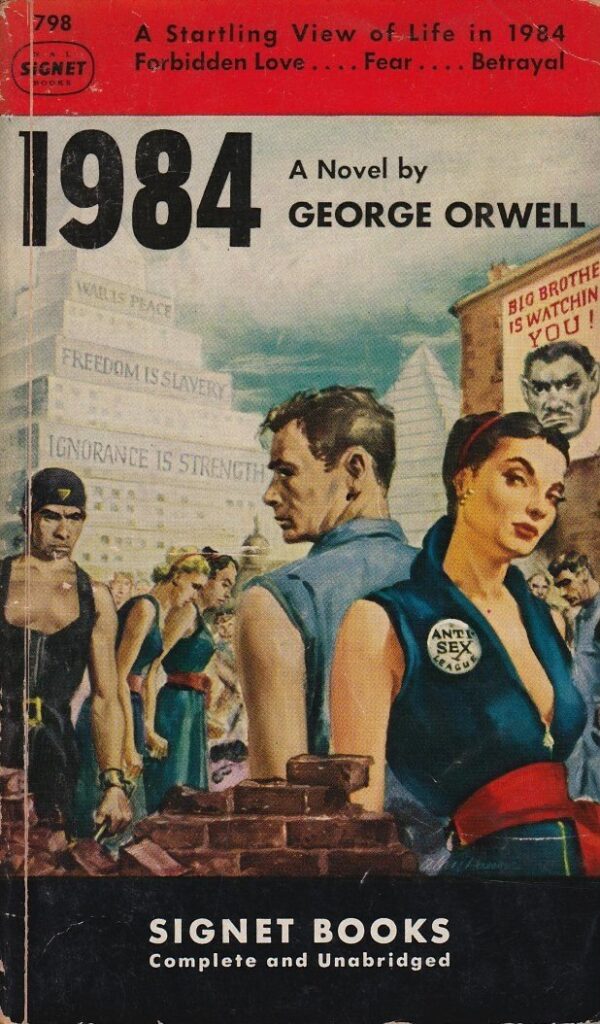
In 1949, George Orwell featured supersonic rocket bombs falling on London in his dystopian novel 1984.
“Suddenly the whole street was in commotion. There were yells of warning from all sides. People were shooting into the doorways like rabbits. A young woman leapt out of a doorway a little ahead of Winston, grabbed up a tiny child playing in a puddle, whipped her apron round it, and leapt back again, all in one movement. At the same instant a man in a concertina-like black suit, who had emerged from a side alley, ran towards Winston, pointing excitedly to the sky.
‘Steamer!’ he yelled. ‘Look out, guv’nor! Bang over’ead! Lay down quick!’
‘Steamer’ was a nickname which, for some reason, the proles applied to rocket bombs. Winston promptly flung himself on his face. The proles were nearly always right when they gave you a warning of this kind. They seemed to possess some kind of instinct which told them several seconds in advance when a rocket was coming, although the rockets supposedly travelled faster than sound. Winston clasped his forearms above his head. There was a roar that seemed to make the pavement heave; a shower of light objects pattered on to his back. When he stood up he found that he was covered with fragments of glass from the nearest window.
He walked on. The bomb had demolished a group of houses 200 metres up the street. A black plume of smoke hung in the sky, and below it a cloud of plaster dust in which a crowd was already forming around the ruins. There was a little pile of plaster lying on the pavement ahead of him, and in the middle of it he could see a bright red streak. When he got up to it he saw that it was a human hand severed at the wrist. Apart from the bloody stump, the hand was so completely whitened as to resemble a plaster cast”
Indeed, Winston Smith’s lover Julia later gives her opinion that:
The rocket bombs which fell daily on London were probably fired by the Government of Oceania, “just to keep the people frightened.”

Back in Staveley Road near the electricity sub station, the Brentford and Chiswick Local History Society have erected a memorial stone with the legends “The first V2 rocket on London fell here” and “In memory of all V2 attack victims.”
In 1946, White Sands Proving Ground, New Mexico, saw many of the German rocket scientists responsible for the V2 gather under Operation Paperclip to launch the first of 67 sounding rockets based on their ballistic missiles. Chief among them was Werner von Braun’s, later to design the Redstone and Saturn rockets which would take American astronauts into space.
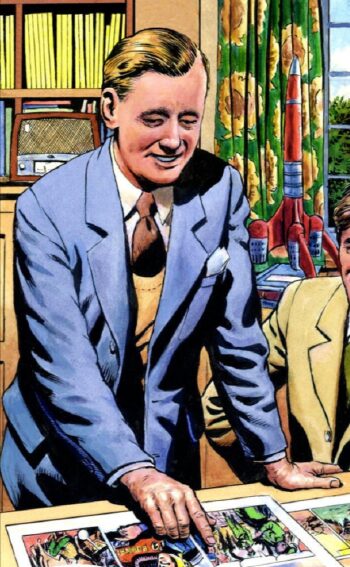
But in the 1953 Dan Dare Space Book, the comic hero’s father-creator Frank Hampson wrote:
“Most of Dan Dare’s adventures take place in 2000 AD. But they all began, really, in Belgium in 1944. I can remember the clop and creak of horse lorries on the cobbled quays of Antwerp, the rumble of huge American trucks, red priority lights blinking, as they raced up into the town and the roads to Germany, the tanks, guns. weasels, carriers and crates by the shipload pouring in as the Allied Armies prepared for the last attack on Hitler’s Reich.
All the familiar, five year old pattern of War was there, from the swinging brewcans under the lorry tailboards to the weaving crisscrossing vapour trails of the aircraft in the sky.

But in the northwest there was something new. Vapour trails again dainty and clean but different. Straight, until shifting wind currents twisted them, and coming up from the ground. Upwards from the horizon across the bleak flat lands of the Schelt Estuary where the Germans still fought for the port approaches. Moments later the rumbling crash and spout of dirty rolling smoke as the “Rocket bombs” pounded the city that was pumping the lifeblood of supplies into the arteries of the Western Allied Armies.
On tthe quays of Antwerp you could watch the birth of Space Travel. You could watch a rocket being fired, wait as it soared invisibly up, tilted and came hurtling down. And then see the flying, dusty wreckage of its murderous end.
Space Travel was born in those neat cottonwool lines reaching up into the clear blue winter sky. The lines were, alas, the first realisation of the dreams of scientists and inventors who had been working for years with little two and three foot models. Hitler warped their dreams into ends that were foul and repulsive.
But dreamers have a habit of not giving up “
