
My Airfield Embankment diorama has been a popular feature of Jet Age Museum, Gloucestershire, since 2013 – helping to put 1/72 scale model aircraft in their historical context by posing them next to trains of the relevant era.
Some rolling stock, like the prototype Deltic diesel electric (pictured above), were only operational for a few years while other trains, such as an early Great Western Railway tank engine hauling a rake of private owner coal wagons, would have remained unchanged from the days of the Wright Brothers and Louis Bleriot right up until the days of Gloster Meteors and de Havilland Vampires.
Sharing this latter long-lasting if not timeless quality are Pullman Cars. Always correctly known as Cars rather than carriages or coaches due to their American heritage.
George Mortimer Pullman (1831 – 1897) introduced his first Pullman car to American railroads in 1867, basing his long distance sleeping and dining cars on the Eyrie Canal trip boats of his youth.

In 1874 “Midland” became the first Pullman Railway Car to enter service in the UK, running from Bradford Forster Square to London St Pancras. It had been assembled from a kit of parts supplied by the Pullman Palace Car Company Company (PPcCo) to its new Derby workshop (1873 to 1888). Between 1873 and 1893 the PPCCo supplied 68 Pullman Cars from its Detroit works and from 1895 to 1906 supplied a further 9 Pullman Cars from its model town and works at Pullman, Chicago.
All the cars featured a clerestory roof and the early cars also featured open vestibules with balconies at both ends.
The concept of luxury coaches spread to the other UK railway companies and the British Pullman Palace Company was formed in 1882 to operate Pullman services over their lines. Britain being a smaller nation than the USA, the emphasis was on luxurious day and dining rather than sleeping cars. Kitchen Cars provided food for both their own passengers and those in nearby Parlour Cars.
In late 1907 Mr Davison Dalziel successfully purchased outright from the Trustees of the late George Mortimer Pullman the British Pullman Palace Car Company.
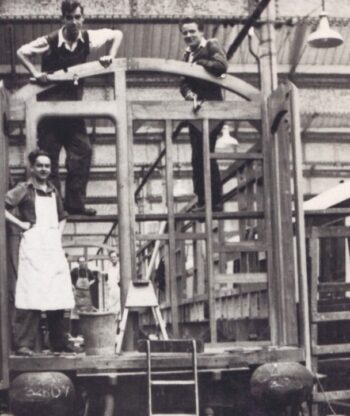
From 1928 the PCC had its own workshops at Preston Park, Brighton, and Pullman Car manufacture was also carried out by the Birmingham Railway Carriage and Wagon Company and Metropolitan Cammell Carriage and Wagon Company.
In 1915 the name British Pullman Palace Car Company was changed to the Pullman Car Company Limited (PCCo)
From 1928 the PCCo relocated its workshop from Longhedge (London) to Preston Park, Brighton. Pullman Car manufacture was also carried out by a number of companies including the Birmingham Railway Carriage and Wagon Company and Metropolitan Cammell Carriage and Wagon Company.
The London, Brighton and South Coast Railway (LBSCR) was the first British railway company to operate a complete Pullman train, the Pullman Limited, which started on the London Victoria to Brighton route on 5 December 1881.

In 1906 the LBSCR introduced the three final Chicago cars. These twelve-wheeled thirty-five ton cars were named Princess Ena, Princess Patricia, and Duchess of Norfolk. They were the first Pullmans to be painted in the now familiar umber and cream livery.
Hitherto the Brighton Pullmans had been painted dark mahogany brown with gold lining and scrollwork. Some of the older cars had the name in an oval panel on the side.
In 1903 Mr. L. B. Billinton, Locomotive Superintendent from 1912 to 1923, had changed the colour of the ordinary L.B. & S.C.R. coaches to umber brown with white or cream upper panels, and in 1906 this colour scheme was also adopted by the Pullman Car Co., with the name of the car in large gilt letters.

Pullman trains were mostly locomotive hauled, although from 1932 to 1972 the electrified Southern Railway and its successors operated the World’s only Pullman electric multiple unit. First called the Southern Belle, it later became much better known as the Brighton Belle
The Great Western Railway meanwhile was reluctant to use Pullmans, considering its own carriages luxurious enough. However, in 1928 the company placed an order for seven Pullman cars – four Kitchen Cars and three Parlour Cars, Numbered 252-258 – with construction subcontracted to Birmingham based Metropolitan Cammell. These were initially deployed from May 1929 on the Paddington to Plymouth Millbay service, amongst standard GWR stock within the Ocean Liner boat train.
From 8 July 1929, the vehicles were deployed to a new train, the Torquay Pullman Limited, an all-Pullman service which ran two days a week between Paddington and Paignton stopping at Newton Abbot and Torquay only.
Not a commercial success, the train returned for the 1930 timetable as a three-car only service, but was withdrawn at the end of the summer timetable, with the carriages stored at Old Oak Common. A proposal was made to return the full seven-car train in summer 1931, but the decision was taken not to operate the service.

At the end of the year, the decision was made to terminate the experiment, and the cars were reallocated to Pullman services on the Southern Railway, joining their Western Section carriage fleet pool at Clapham Junction. The GWR replaced them in 1932 with the more opulent Super Saloon carriages, such as 9112 Queen Mary seen here.
During World War II all Pullman services were suspended. However they resumed operation shortly afterwards and Pullman agreements were continued by British Railways upon nationalisation in 1948, while the Pullman company remained privately owned.
By the late 1950s the image of Pullman trains remained luxurious, but the rolling stock was increasingly outdated.
The British Pullman Car Company was bought by the British Transport Commission (BTC) in 1954. At this point most of the Pullman fleet was somewhat elderly – apart from ten new cars which had entered service in 1951-52 (the building of seven of which had commenced in 1939, and another of which had a reconditioned chassis dating from 1927.
The BTC decided to modernise Pullman services as part of the British Railways 1955 Modernisation Plan with new rolling stock and diesel or electric haulage. The most radical manifestation of this policy was the building of five new diesel multiple-unit Blue Pullman trains (36 cars) in 1960, in a special livery of Nanking blue and cream.
Among the services which these initially operated were two new trains: the Midland Pullman from Manchester Central to London St Pancras and the Birmingham Pullman from Wolverhampton Low Level to Paddington. The Birmingham Pullman offered business travellers alternatives to West Coast Main Line services at a time when that route was subject to frequent disruption due to electrification work.

These were joined in 1960-61 by 44 new locomotive-hauled Pullman carriages based on the Mark 1 design, which were built by Metro-Cammell to modernise the East Coast Main Line Pullman services.
Despite new rolling stock, and the Pullman Car Company being wholly owned by the BTC, its separate staffing and operations had become anachronistic and was fully merged into British Railways in January 1963. The Pullman Works at Preston Park closed with maintenance being undertaken by British Railways works at Eastleigh, Swindon, Doncaster and York.
The Pullman company then ceased to exist as a separate legal entity, but Pullman trains continued to be operated. British Rail went on to build a final 29 cars in 1966, based on the Mark 2 design. These were used on new Manchester and Liverpool Pullman services over the newly electrified West Coast Main Line, replacing the Blue Pullman services to the Midlands.
The Blue Pullman sets were then allocated solely to Western Region and the traditional umber and cream Pullman livery was replaced by a new grey and blue livery, which the Blue Pullman units also received in 1969.
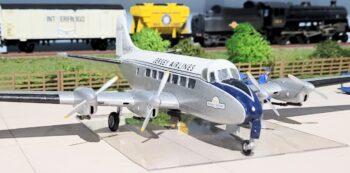
Despite this investment in new carriages, use of Pullman services declined. In part this was due to the development of the British motorway network and increasing competition from domestic air travel for the passengers who could afford the Pullman surcharge, but improvements to British Rail’s normal first-class service also had an impact. For example, the Mark 1 Pullmans lacked air-conditioning, while later batches of ordinary Mark 2 stock had this feature as standard in both first and second class.
The unmodernised Southern Region Pullman cars were then discontinued with the Bournemouth Belle ceasing in July 1967 and the Brighton Belle and Golden Arrow following in April and September 1972.
The Blue Pullman diesels used on the Western Region were a non-standard design which suffered from poor reliability, and were withdrawn when the Bristol and South Wales Pullman services ceased in 1973.

The advent of much faster InterCity 125 trains with new Mark 3 coaches resulted in the demise of the Mark 1 Pullman services on the East Coast Main Line in 1978. By this time the Liverpool Pullman on the West Coast Main Line had also been discontinued, leaving just the Manchester Pullman to run until 1985.
A new batch of Mark 3b carriages built to replace the mid-Sixties Mark 2s initially carried Intercity Pullman branding and individual carriage names, but they were ordinary Open Firsts in otherwise standard InterCity livery.
Subsequently, a number of named trains have used the word Pullman in their titles, but these have been normal trains with increased first-class accommodation.

At the end of October 2021 I took the opportunity to acquire for the Airfield Embankment diorama at Jet Age Museum, Gloucestershire, an 00 gauge model of Birmingham RCW built Pullman Kitchen Car Rosamund.
I am indebted to Mr T. Bye of Pullman Car Services Archive for the following history.
One of the wooden K type Pullman cars, identifiable by a white canvas roof rather than a metal finish, 63′ 10″ long 8′ 7″ wide Rosamund initially weighed 40 tonnes. It featured 22 First Class Navy Blue velour covered seats on a blue trellis carpet and was introduced in January 1925.
Its first allocation was to the Central Section of the Southern Railway for the Southern Belle express, during which time the first Gloster Gamecock biplane fighters joined the Royal Air Force.
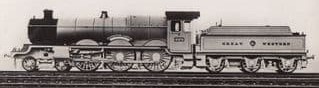
In April 1925, Rosamund was on show at the British Empire Exhibition at Wembley along with narrow gauge carriages from the Gloucester Railway Carriage and Wagon Company and standard gauge locomotives 4472 Flying Scotsman and 4079 Pendennis Castle.
Early 1929 saw Rosamund allocated to Continental Boat Trains on the Eastern Section of the Southern Railway while in the middle of the year it was switched to the Torquay Pullman and Ocean Liner Specials of the Great Western Railway.
In October 1937, just eight months after the first Gloster Gladiator biplanes had joined the Royal Air Force, Rosamund was valued at £3 200 and was estimated to have a future working life of 20 years – a figure which the Pullman Kitchen Car comfortably exceeded.
In 1946, after the Second World War, Rosamund’s tare weight was reduced to 38 tonnes and 20 June 1947 it formed coach J of the Ilfracombe portion of the inaugural down Devon Belle Pullman – the observation car of which is a popular attraction on heritage railways.
20 November 1947 meanwhile saw Pullman Kitchen Car Rosamund included in a special Royal Train from London Waterloo to Winchester carrying Their Royal Highnesses Princess Elizabeth and the Duke of Edinburgh on the first part of their honeymoon.
The train also included Pullman Car Rosemary and three other corridor coaches and was hauled by Lord Nelson Class 4-6-0 857 Lord Howe.
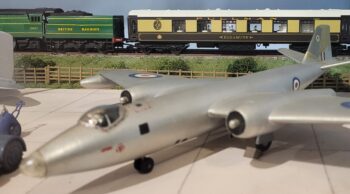
The early Nationalisation years of 1948 to 1954 found Rosamund allocated to British Railways Southern Region. As such, it could well have been hauled by 34057 Biggin Hill, as seen here and might even have passed an early English Electric Canberra, first flown in 1949.
However, on 5 March 1950 Rosamund was once more part of a Royal Train – this time from Dover Marine station to London Victoria for the conveyance of President Vincent Auriol and Madame Auriol of France. Bulleid Merchant Navy Pacific 35019 French Line CGT provided motive power while other vehicles were a Southern Region van and Pullman Cars Minerva, Zealand, Cecilia and Montana.
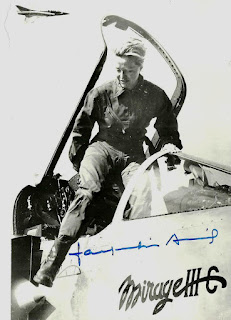
Vincent Auriol was distantly related to Isambard Kingdom Brunel through his great grandmother and his daughter in law Jacqueline Auriol was an accomplished pilot and one of the first women to break the sound barrier.
In April 1950, Rosamund was noted within the Queen of Scots Pullman, and indeed the Hornby model displayed at Jet Age Museum, Gloucestershire, is from the Queen of Scots Pullman train pack. There were in fact two real Queen of Scots train formations, working north and south from Glasgow to London King’s Cross via Edinburgh, Newcastle, Ripon, Harrogate and Leeds.
May 1956 meanwhile found Rosamund as part of Western Region’s South Wales Pullman and on 15 September 1958 the Pullman Kitchen Car was part of the inaugural Master Cutler from London King’s Cross to Sheffield.

Rosamund was once again part of the South Wales Pullman in July 1959 and was noted in the last steam hauled South Wales Pullman in September 1961, after which it joined a locomotive hauled Pullman set on standby at Old Oak Common in case of a failure of a Western Region Blue Pullman diesel multiple unit. Among the other so called Wells Fargo vehicles was Pullman Car Cecilia and others displaced from the recently withdrawn Queen of Scots Pullman.
Rosamund was finally withdrawn in December 1963, not long after the closure of the Gloster Aircraft Company, and was initially purchased by Mr S. Ingram with the aim of turning it into a static restaurant at Antony Jackson food fair store, Kingsland Road, London. Unfortunately this scheme fell through and Rosamund was sent for scrap in late 1964.