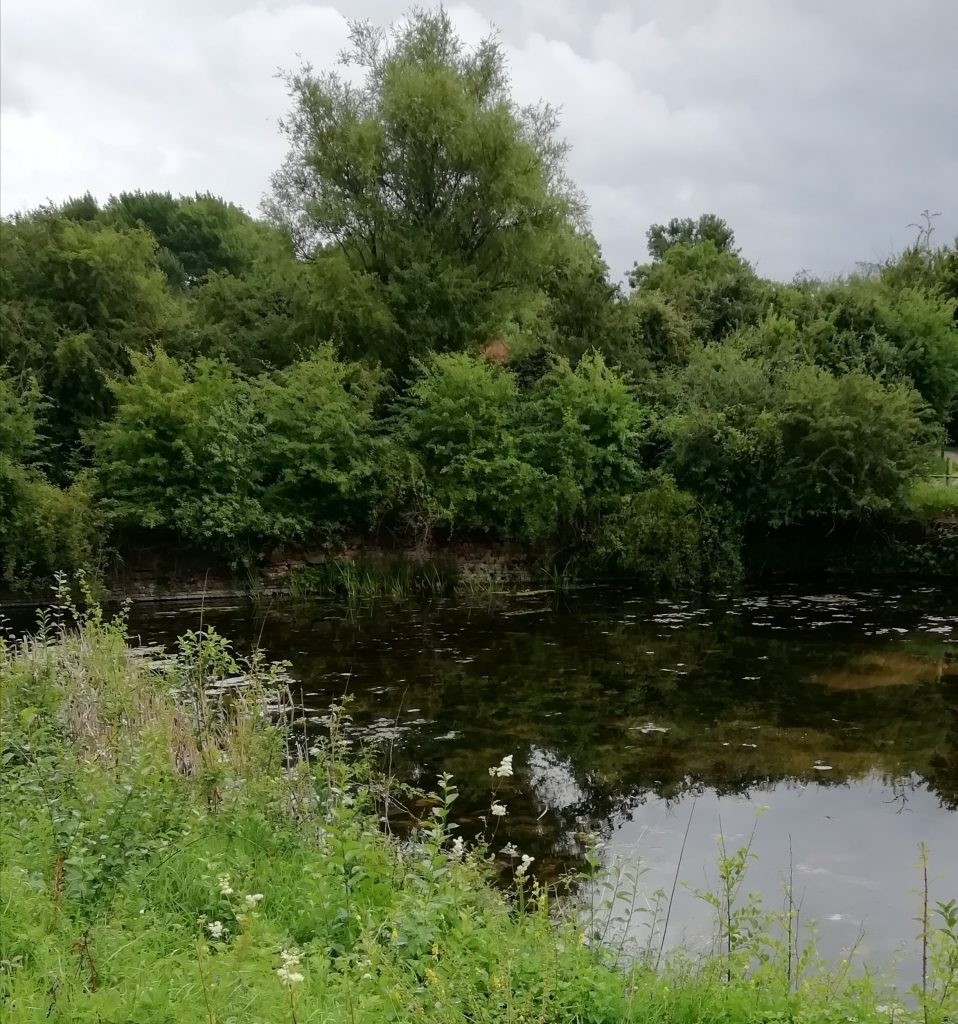
A hidden gem of Gloucestershire’industrial heritage can be found along a narrow lane, just west of the Swan Inn where the A38 between Gloucester and Tewkesbury meets the A4019 from Cheltenham, five miles distant.
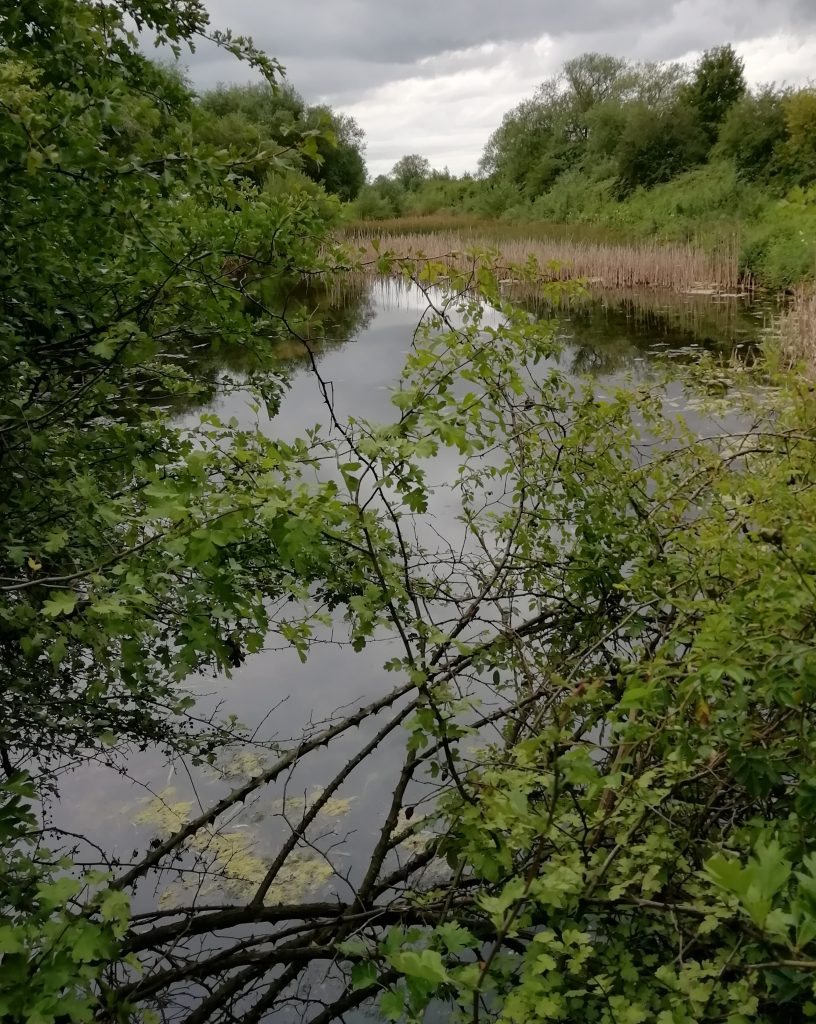
The Coombe Hill Canal runs two and three quarter miles from Coombe Hill Basin to the River Severn near Wainlode Hill.
Authorised in 1792, the Coombe Hill Canal opened in 1796 to allow Staffordshire and Forest of Dean coal to be moved as near to Cheltenham as possible, thus minimising cartage on the rough roads of the time. However, to this day, the steep slope of the narrow lane makes moving heavy objects problematic.

Plans to extend the canal beyond the Gloucester to Tewkesbury Road – or build a horse drawn tramroad to Cheltenham – also came to nothing although the high price of coal in Cheltenham did result in the Gloucester and Cheltenham Tramroad being opened in 1811.
Capable of handling 70 ton barges, the Coombe Hill Canal cost £ 5 000 to construct but despite charging tolls as high as 12 1/2 pence a ton made little or any profit in its lifetime.
In 1810 the canal was leased to a group of three men for £400 per annum while in 1822 it was leased to a number of committeemen from the Worcester and Birmingham Canal, who reduced tolls to maintain traffic.
In 1829 they renewed their lease for another 21 years at £500 per annum and in 1844 offered to buy the canal for £8,750, but later withdrew the offer. In 1849 the lease was taken up by the Staffordshire and Worcestershire Canal, which was unable to make the canal pay, and when it surrendered the lease in 1867 cargo fell to 1,800 tons per annum.
The Coombe Hill Canal company then asked the engineer of the 1827 vintage Gloucester and Sharpness Canal to provide a report. This took the view that the canal could not be made profitable and it would be best turned into an oyster bed. Despite this the canal company tried to run the canal itself for a few years before selling it for £520 in 1871.
The canal was resold for £1000 in 1873 to Algernon Strickland but in 1876 it was abandoned by Act of Parliament due to the new owner being unable to afford to repair flood damage to the lock that connected it to the River Severn.

By this time, Britain’s canal network had lost most of its trade to the railways. And despite opposition to closure from the Severn Commissioners and other interested parties, the Coombe Hill Canal took only £8 in tolls during its last six months of operation.
In 1954 the canal and nearby fenland and flood meadow areas were notified as a biological Site of Special Scientific Interest. The Gloucestershire Wildlife Trust purchased the Coombe Hill Canal nature reserve in 1985 and continues to manage the area today.
However, during the early 1980s the canal, but apparently not the water in it, was purchased by a Mr Pickens who planned to restore the canal for boat use. This enterprise was however thwarted by district planners: possibly once again due to the steep, narrow lane leading to Coombe Hill Basin and the lack of nearby hard standing.
During winter floods, the Coombe Hill reserve attracts hundreds of wildfowl while the canal itself is home to a number of rare beetles and two species of fly found nowhere else in Britain.