It never ceases to amaze me how connected the World is and how research into one subject opens whole new vistas of history.
Writing a tribute to Sir Stirling Moss for example brought to my attention two remarkable men – unrelated but sharing a surname and a love of automotive technology.

The elder of the two was Lionel Thomas Caswall Rolt, known to literate enthusiasts of Britain’s industrial heritage as L. T. C. Rolt and to his friends as Tom Rolt.
Born in Chester on 11 February 1910, Tom Rolt was educated at Cheltenham College: after which his family moved to a pair of stone cottages at Stanley Pont large, not far from today’s Gloucestershire Warwickshire Steam Railway.
After leaving school aged 16, Tom became a Premium Apprentice at the Kerr Stuart locomotive works in Stoke on Trent where his uncle Kyrle Willans was both chief development engineer and a canal boat enthusiast.
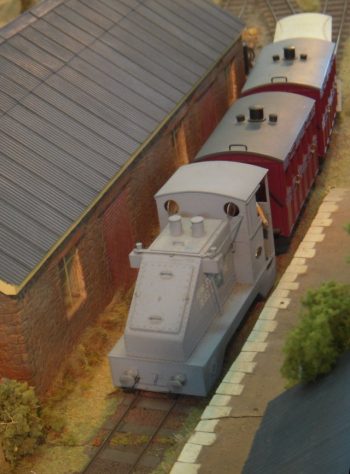
Tom was in fact on hand when a pioneering Kerr Stuart diesel mechanical locomotive (modelled above) was trialled on the Welsh Highland Railway.
Willans bought a wooden horse drawn narrow flyboat named “Cressy” and fitted it with a steam engine. He soon found out that the steam made navigating “Cressy” through canal tunnels and replaced it with a petrol engine from a Model T Ford.
In the Depression of the 1930s, Tom Rolt lost his job but turned to vintage sports cars, taking part in the veteran run to Brighton, and acquiring a succession of cars. These included a 1924 Alvis 12/50 two seater which he was to keep for the rest of his life.
Rolt also bought into a garage in Hartley Wintney, Hampshire, and together with the landlord of the public house next door founded the Vintage Sports Car Club in 1934. He also helped to establish Gloucestershire’ Prescott Hill Climb, where Stirling Moss found early success, although Rolt’s 1950 book “Horseless Carriage” criticised mass car production in relation to craftsman based building and predicted cars built by robots.
More immediately, on 11 July 1939, Tom married Angela Orrod: the blonde in a white polo-necked sweater who had swept into his garage in an Alfa Romeo in 1937 joined the vintage car scene.
On 27 July, having acquired and improved his uncle’s boat “Cressy”, the newlyweds set out from Banbury along the Oxford Canal.
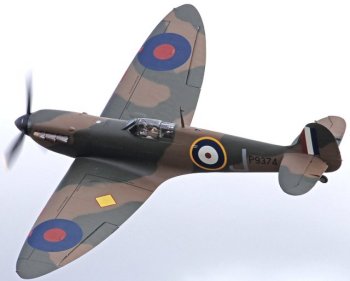
On the outbreak of war in September 1939 however, Rolt began work for Rolls Royce in Crewe – building Merlin engines for Spitfires, designed by another former Kerr Stuart Premium Apprentice Reginald J. Mitchell.
After a few months though, Tom was offered a job at a foundry in Aldbourne, Wiltshire. Relocating meant moving “Cressy” as far south as Banbury before the canals froze and completing the journey in spring 1940 by way of the Rivers Thames and Kennet to Hungerford.
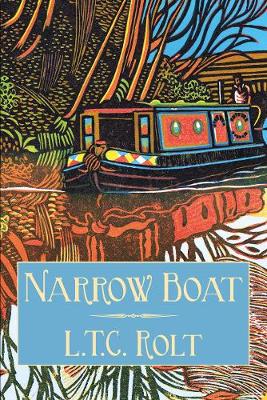
This epic four month voyage led to the publication of Rolt’s first book “Narrow Boat” in December 1944, which in turn led to the establishment of the Inland Waterways Association along with Robert Aickman in May 1946.
Britain’s canals were nationalised in 1947 and although the Inland Waterways Association managed to stop the newly formed British Waterways Board closing the Stratford on Avon Canal and the IWA did much to raise awareness of canal life, Rolt and Aickman eventually disagreed over the future of the Association. Aickman, with his private income, wanted to save every last mile of canal while Rolt, relying on writing for a living and still domiciled aboard “Cressy”, favoured more practical objectives.
Tom Rolt was eventually expelled from the organisation that he had helped create in 1951, the same year that his wife left him to join Billy Smart’s circus and that he gave up living on a canal boat and moved back to Stanley Pontlarge.

By this time however, Tom Rolt was busy selling tickets at Towyn Station on the Talyllyn Railway, which he had helped to save from closure by writing a letter to the Birmingham Post in 1950.
Formerly owned and operated by the late Sir Henry Haydn Jones, the 2′ 3″ gauge Talyllyn had been the first narrow gauge railway authorised by Act of Parliament to carry passengers with steam haulage. With Tom as Chairman of the Talyllyn Railway Preservation, it had become the World’s first heritage railway run by volunteers.

Tom’s experiences on the Talyllyn led to his 1953 book “Railway Adventure” which in turn inspired the Ealing comedy film “The Titfield Thunderbolt”.
By this time Tom had married Sonia Smith, a former member of the IWA, during his most prolific period as a writer.
Among his best known works were biographies of Isambard Kingdom Brunel, George and Robert Stephenson and Thomas Telford. Also from his pen came “Red For Danger”, the study of railway accidents that became required reading for numerous engineering courses. Canals, railways and civil engineering were other book topics but perhaps less predictable was “Sleep No More”, Tom’s 1948 collection of supernatural horror stories.
Tom Rolt continued to live in Stanley Pontlarge until his death in 1974.

In the same year that Tom Rolt saw “Railway Adventure” hit the bookshops, the 24 Hours of Le Mans endurance race was won by a Jaguar C-Type driven by Duncan Hamilton and Tony Rolt – not a relation but another remarkable bearer of the same name.
Born eight years later then Tom in 1918, Tony also loved cars to the extent that he was stopped by the police for driving under age but competed in schoolboy events for Eton aged 16 in a Morgan three wheeler bought by his mother.
Mrs Rolt later bought her son the famous English Racing Automobile car known as Remus from fellow Estonian Prince Bira of Thailand, and which Tony raced at the equally famous banked track at Brooklands.
When a loose bolt allowed exhaust gas and flames into the cockpit, Rolt calmly plugged the hole with a glove and drove on to victory.
Aged only 20, he went on to win the 1939 British Empire Trophy at Donington but a promising career in many motor sport disciplines was cut short by the outbreak of war.

As a Lieutenant in the Rifle Brigade, Rolt was awarded the Military Cross for bravery at the Battle of Calais before the retreat from Dunkirk, during which his entire battalion was captured.
Massively frustrated that his active service had only lasted five days, Tony made seven escape attempts, on one occasion being apprehended only 100 metres from the Swiss border.
This led to his transfer to the so-called escape-proof Colditz Castle in February 1944. Tony’s response was to build a glider in the roof of the fortress which would be launched by a gravity powered catapult. However, the war ended before the two man “Colditz Cock” could fly. He left the army with the rank of Major and with a bar on his MC for his escape attempts.
Making up for his captive years, Tony raced his own Alfa Romeo and, in May 1950, he was on the starting grid at Silverstone for the very first FIA Formula One Grand Prix – as it turned out along with Thailand’s Prince Bira.

Peter Walker had done well to qualify his Era car in tenth place but Rolt was forced to retire after only four laps with gearbox failure. Unfortunately, despite forcing Stirling Moss and Peter Walker’s Jaguar C-Type into second place at Le Mans in 1953, the same year saw Tony Rolt retire from the British Grand Prix at Silverstone with mechanical failure. After the same thing happened in 1955, he left Formula 1 – and left racing altogether after he and Duncan Hamilton retired from the Le Mans 24 Hour event . The catastrophe of that year – when a Mercedes flew into the crowd and killed more than 80 spectators – persuaded Rolt that his young family and fledgling engineering business were not worth risking.
However, although not behind the wheel himself, Tony Rolt made vital engineering contributions to both track and road cars through his work on anti lock brakes and modern four wheel drive. He was also the last member of the British Racing Driver’s Club to have been elected before World War 2, the last surviving participant of the inaugural 1950 F1 race and attended Grand Prix until his death aged 89 in 2008.