Model railway enthusiasts from all over Gloucestershire would have been travelling to the Cheltenham GWR Modellers April 2020 Exhibition in aid of CLIC Sargeant at St Margaret’s Hall, Coniston Road, Cheltenham, GL51 3NX on Saturday 4 and Sunday 5 April 2020 to raise money by enjoying the following attractions.
Unfortunately the exhibition was cancelled due to Covid but returned with a new line up in October 2021.
However, here is what might have been.
ARIGNA
by Andy Cundick
12mm Gauge 4mm Scale
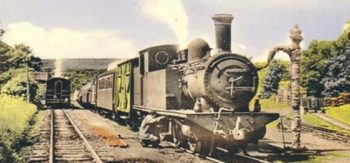
A celebration of Ireland’s Cavan and Leitrim Railway.
FRAMPTON ON SEVERN
by Dave Fryer
00 Gauge 4mm Scale
GAS LANE
by Bob Vaughan
00 Gauge 4mm Scale
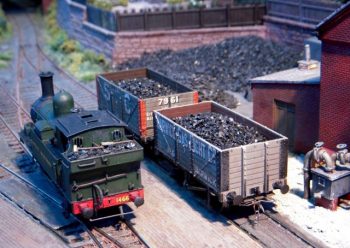
Following Condicote, which featured in Issue 7 of Hornby Magazine, Bob Vaughan went on to build Gas Lane to portray goods operation in an industrial setting. This was inspired by a visit to England’s last complete – but non operational – gas works at Fakenham in Norfolk and the 1 435 x 406 mm compact layout can represent a wide variety of eras with different rolling stock.
The green and white palette of the gas works manager’s elevated house and garden make a pleasing contrast to the red and grey tones of the gas works itself and rail traffic includes both open wagons to deliver the coal to the retorts and tank wagons to take away the by products of the gas production process.
OXFORD ROAD
by Richard Papper
4mm Scale 00 Gauge
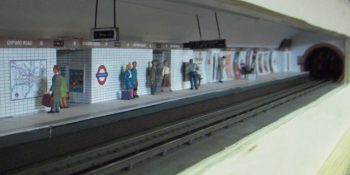
Great news that Richard Papper’s 4mm 00 Gauge layout will be joining the 4 and 5 April 2020 line up of the Cheltenham GWR Modeller’s Exhibition at St Margaret’s Hall, Coniston Road Cheltenham.
Oxford Road was a fictitious setting somewhere in West London in the mid 1980s to early 1990s. The layout – DCC equipped using an NCE Powercab system and built with Peco Code 100 track – contained a small depot, fuelling point, engineers siding and small platform which saw a sporadic service of garishly painted first generation Network South East dmus. The Bakerloo Line ran on a lower level beneath it and had its own separate station. Structures were a mixture of card and plastic kits and scratchbuilt and rolling stock detailed ready to run vehicles from Bachmann, Hornby, Lima and Heljan.
READHAM
by Steve Cox
00 Gauge 4mm Scale

Readham is inspired by both Reading and Cheltenham but was a slavish copy of neither. Evidence for this is the presence of Cross Country Trains liveried Bombardier Voyager trains – a common sight in both Cheltenham and Reading – in this case in formation with a rare and beautiful model of the latest Stagecoach Gold 94 liveried double deck bus – waiting for the traffic lights to turn green and indicate a clear road over a section of tarmac embedded with tram rails. Among the scratch built structures are a traditional Regency inspired residential and shopping area and a modern retail park. The station has four platforms and is also served by an electric tramway featuring the same Bombardier Flexity 2 units that are nowadays a familiar sight in Blackpool. Another scenic highlight of the DCC sound layout is a Showman’s winter quarters with working drop tower ride and other stored attractions.
STREATWELL GREEN
by John Long
00 Gauge 4mm Scale
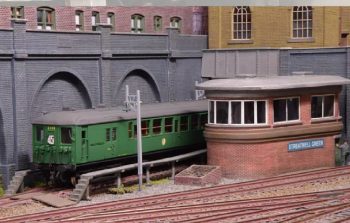
Set somewhere in South London this small layout represents a British Railways Southern Region suburban station which has been electrified on the third-rail system. Due to wartime damage the line has been cut back to Streatwell and modernised with colour light signals. Parcels traffic has a presence on the layout and uses the centre platform bay and there is a small coal siding for limited freight traffic. The trackwork is all Peco code 100 with electrofrog points, and makes use of the third rail chairs and Z gauge conductor rail from the same manufacturer. Point motors are all Peco, with the 3-way point polarity controlled by Peco auxiliary switches. The baseboards are made of 9mm MDF on a conventional 3″x1″ timber frame and these have been well varnished to combat distortion through damp. The backscene is of 4mm ply and 1″x1″ strip wood. Two kitchen unit 2ft. striplights are incorporated into a plywood lighting unit in the top of the layout. Situated to one side of the layout is the fiddle yard, five tracks of which use a sector plate and the rear 2 sidings are accessed through a point, thus 6 or 7 storage tracks are available for use. The layout is controlled from the front by conventional analogue using Compspeed or Gaugemaster controllers. There is a small diagrammatic control panel on the main board, and push buttons control the feeds to the fiddle yard. The buildings are mainly modified kits, some of American origin which have been built low relief to fit the site. The station building is scratchbuilt and based on Medstead and Four Marks, and the factory above the tunnel to the fiddle yard is built from Wills sheets and the signal box is a Skaledale model. Most of the stock is from the Hornby and Bachmann ranges, although there is an Ian Kirk kit-built 2-BIL unit and an MTK demu.
THOMAS
by Cheltenham GWR Modellers
00 Gauge 4mm Scale
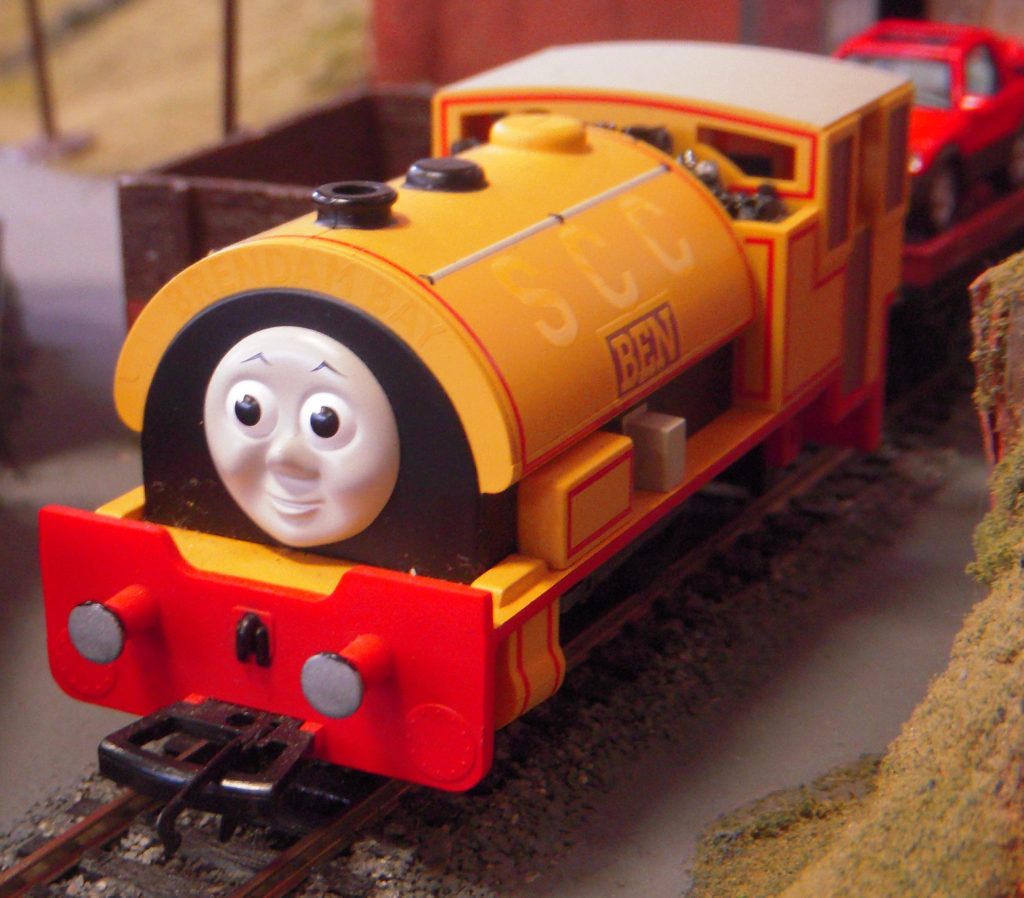
Bill and Ben are based on the Bagnall 0-4-0STs “Alfred” and “Judy” of Par, Cornwall, who are both preserved and in working order at the Bodmin and Wenford Railway. According to the lore of the Reverend Awdry’s Railway Series, Bill and Ben are Sodor’s mischievous saddle tank engine twins, who have great fun in teasing other engines of the railway. The two have four wheels, a tiny chimney and dome, and a small squat cab. They often work in the China Clay pits and quarries. Their loads of clay can be used for many things such as paper, paint, and pottery. They take trucks for engines on the main line and ships in the harbour and are regularly seen around Brendam Docks. They enjoy attention and love taking visitors and being photographed. They tend to work together, like most twins, but even this youthful pair can have their arguments among themselves and can squabble with one another – particularly about whose fault one of their follies was. They are highly prone to playing tricks and being cheeky. They have even teased Gordon on more than one occasion. Duck has called them “the bees” before, for being terrors when they start buzzing around. Edward and BoCo are the only engines who can really keep them in order enough to put a stop to their games and make them scamper along and behave. There is no real harm to them, but even Edward admits that they are maddening at times. Despite their cheeky and mischievous antics, if a dangerous event occurs, such as a rockslide, they are shown to be quick-witted and capable to act to rescue anyone in trouble. This was shown when they saved a group of workman and Thomas from many different rockslides.
WATLEY’S END
by Andy Babb
00 Gauge 4mm Scale
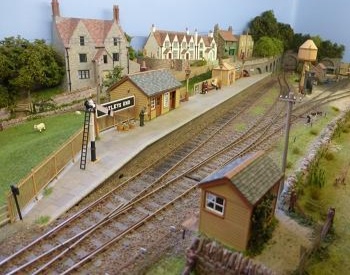
This shunting puzzle layout is built from Peco Code 100 track and features Spratt and Winkle couplings for ease of hands – free operation.
ABBOTSWOOD – THE BACKROOM STORY
by Phil Bullock
00 Gauge 4mm Scale

Abbotswood – The Backroom Story” allows visitors to talk to Phil Bullock and learn more about one of the most impressive and best loved 00 gauge layouts on the Gloucestershire model exhibition circuit. People enjoy the opportunity to discuss Digital Command Control systems and some of the younger visitors can have fun on the test track. Here, two classic Western Region diesels line up in front of some BR Mark 1 and Pullman carriages. D1669 (rear track) was delivered new to Swansea Landore depot on 20 March 1966 and was named “PYTHON” without ceremony on 31 March 1966 at Old Oak Common depot in west London although from the start of April 1966 it became a Bristol Bath Road locomotive. At least one plate was noted as missing on 5 April 1972 and both were removed in September 1973 prior to renumbering under TOPS. D7007 – characterised by the large round roof fan – meanwhile was one of the numerically much smaller and less powerful “Hymek” class of Western Region diesel hydraulics
FROM ROCKETS TO THE MOON
by Alan Drewett, Jet Age Museum
4mm Scale
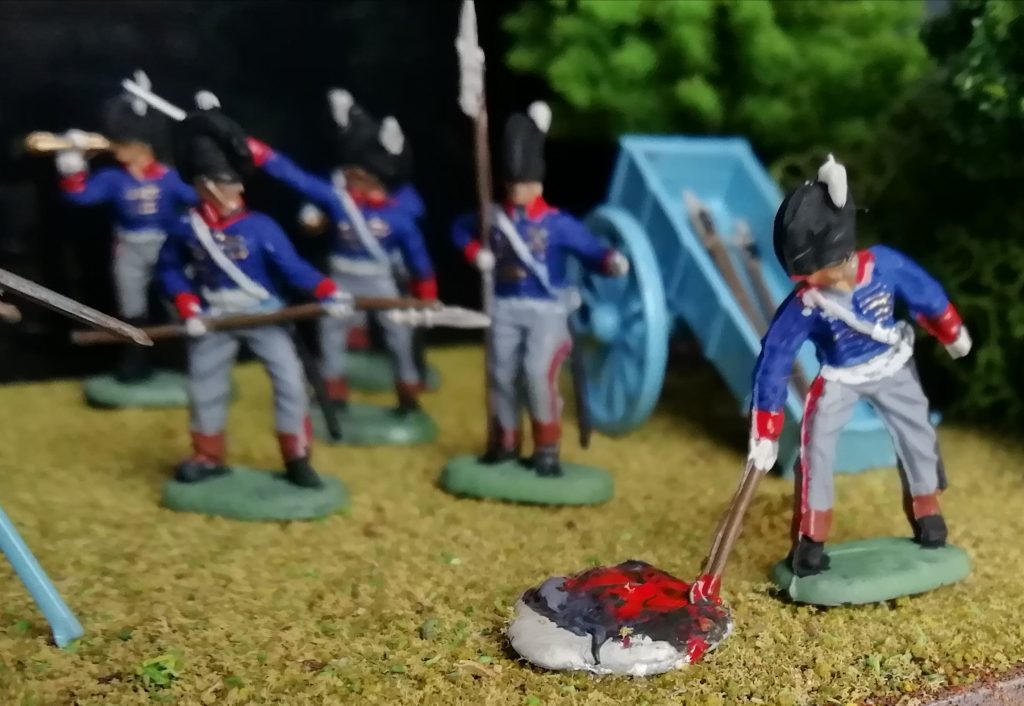
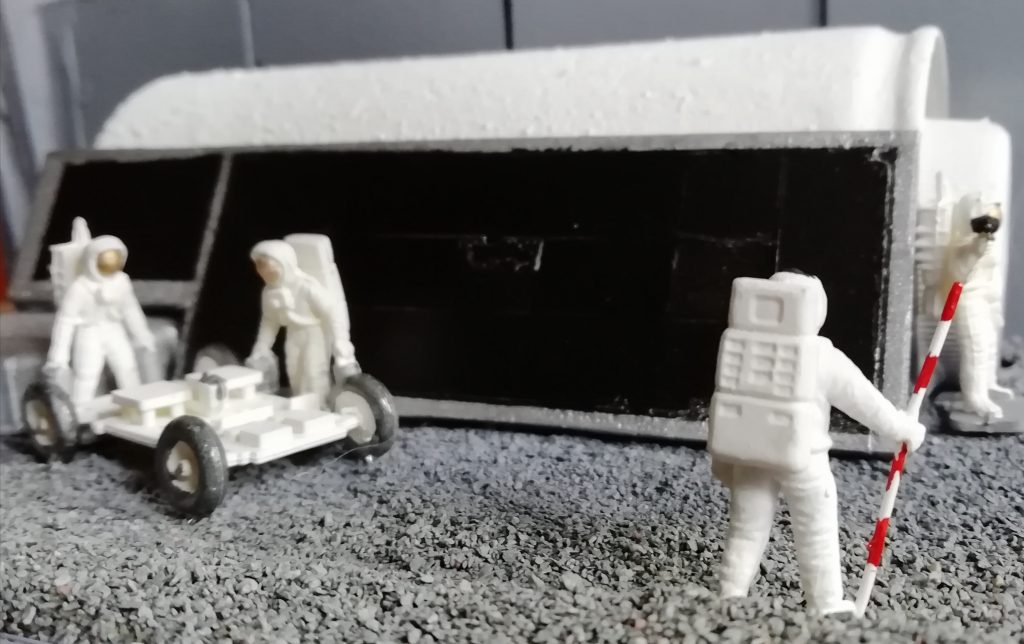
While a Roundhead or Cavalier from the Battle of Marston Moor might have recognised the cavalry, infantry and cannon at Waterloo 171 years later in 1815, only 154 years separated the Rocket Troops of the Royal Horse Artillery from the first men on the Moon. Based on the successful Apollo Weekend display at the Jet Age Museum, From Rockets to the Moon looks both back at how rocketry and space travel have developed and where they might take humankind in the future.
MODEL BUS FEDERATION AND NATIONAL ASSOCIATION OF ROAD TRANSPORT MODELLERS Represented by Paul and David Mellor
4mm Scale
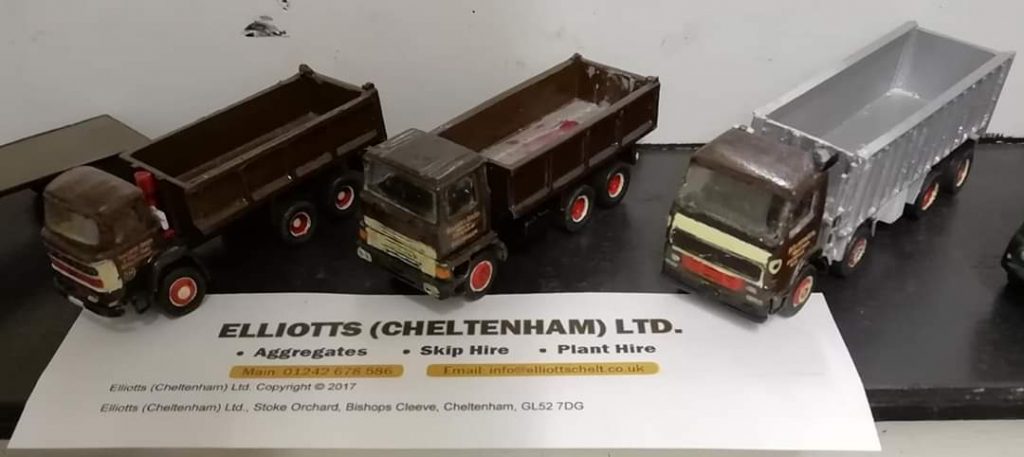
The Mellor Brothers are constantly working on new projects and this line up celebrates the fleet of Elliotts of Cheltenham.
TRAVEL 2000 by Andy Peckham
4mm Scale
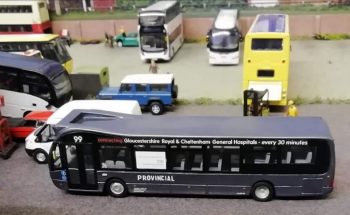
Similarly, Andy Peckham is always looking to expand Transport 2000 ‘s sphere of operations, including the acquisition of service 99, linking Gloucestershire hospitals.
HOBBS ROW HALT
by Bob Vaughan
009 Gauge 4mm Scale
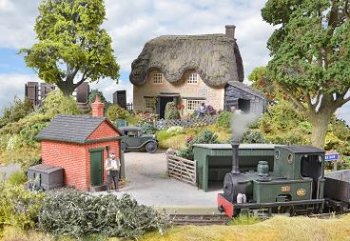
Hobbs Row Halt is a classic English country micro-layout, complete with thatched cottage and “chocolate box” garden. It started out as a simple circular piece of track on an MDF wobble board, obtained from a local charity shop, used for running in new locomotives before some surplus buildings from Bob’s Tansey Bank layout were added to check on coach clearances. The cottage is from the Bachmann Pendon Little Chapel Cottage resin model while the trees are from the Realistic Modelling Materials range of ready to plant foliage. Hobbs Row Halt featured in the August 2013 edition of Hornby Magazine.
HEYBRIDGE WHARF
by Michael Corp
14.2mm Gauge 3mm Finescale

The layout was built for the 50 something challenge to commemorate the 50th anniversary of the 3mm Society 1965 -2015. The scenic part is 50 inches long by 50cm wide and was built to fine scale standards with a track gauge of 14.2mm. Heybridge Wharf is purely fictitious and is situated somewhere in Suffolk at one of the last inland wharves still operating. The railway was built under the Light Railways act as the Hey Light Railway to connect the town of Heybridge to the Great Eastern Main Line via Heybridge Wharf. The trains from the main line enter Heybridge Wharf via the line between the church and the gas works. This is the end of the line for the stock not allowed to proceed along the tramway to Heybridge Town. Those that are allowed run round their train and proceed along the tramway squeezed between the gasworks and Colly Tobbold’s brewery. The wharf still receives one of the last barges still trading but now converted with a diesel engine.
.
THREE ACRES
by Phil Bird
TT 3mm Scale
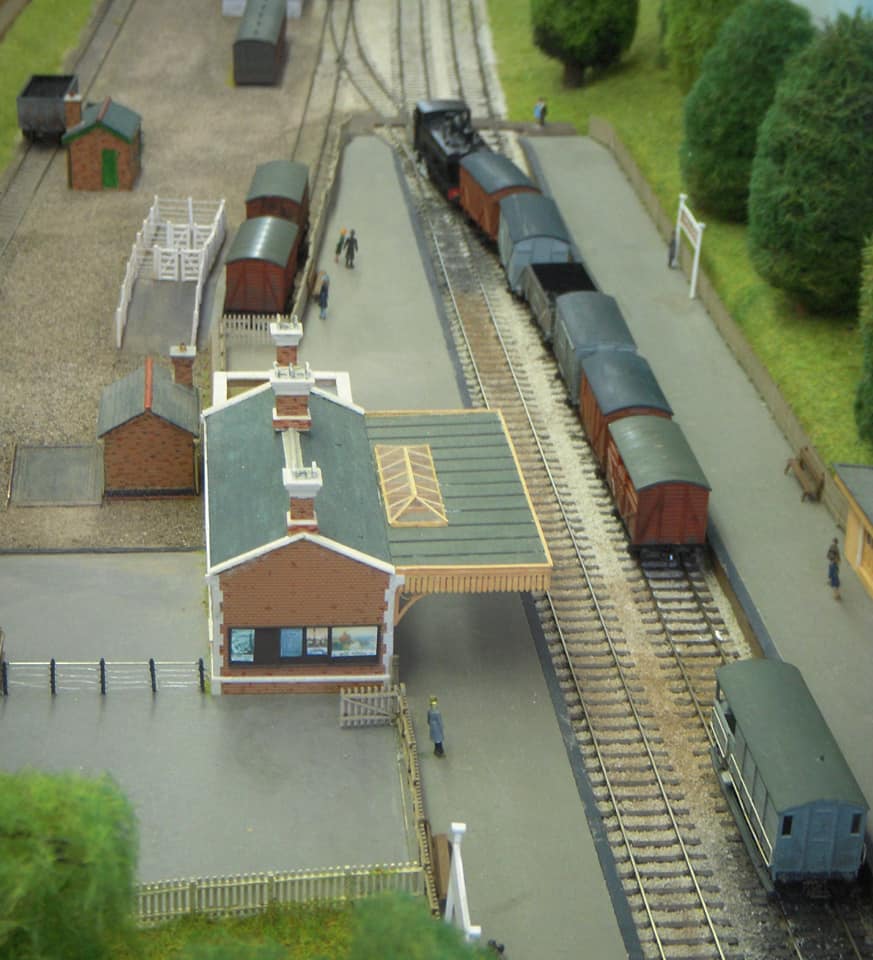
Three Acres is based on the station that was at Dymock in the Forest of Dean on the Gloucester to Ledbury line after the line from Dymock to Ledbury had been lifted. Although the station area and yard is a good representation of the site it is not totally accurate so hence the name change. Three Acres was chosen as there is a similar named place, Five Acres, close to Coleford and the area modelled is approximately three acres. The area to the left of the layout is purely fictional but is modelled to give that area some interest. Everything apart from the stock, which is from kits, was scratch built- a very time consuming pleasure. Dymock itself at this stage, from July 1959, had no passenger service being goods only, but Three Acres retaines a service to the community as a rural terminus.
MIDHOLME
by Richard Holmes
N Gauge 2mm Finescale.
BETTWS ROAD
by Tony Hubbard and Michelle Brindle
N Gauge 2mm Scale

Bettws Road is a fictitious location based in Wales around the 1930/40 era. The village had a terminus station with its own goods yard and coal staithes. GWR railcars – including both Swindon and Gloucester RCW bodied examples – serve the station while express passenger trains used the main line along with the odd freight train.
From previous encounters, as well as the beautifully detailed signalbox interior, I liked this line up of Swindon built parcels railcar 34 next to Dean Goods 0-6-0 2537, whose train included an Aero wagon for three-bladed propellers.
Two-bladed propellers for early aeroplanes could easily be transported in normal open wagons, however, by the late 1930s, three-bladed propellers with adjustable-pitch attachments in the bosses had been developed. Therefore, the GWR issued diagram E4 and built five wagons in 1938 for the special purpose of carrying these awkward loads, described as ‘wagons for three-bladed air screws with trestles and aperture in the floor’. Perhaps unsurprisingly, a further 170 were built during the early years of the Second World War. They received the telegraphic codename ‘AERO’ after 1942. The wagons were basically standard O32 open wagon underframes with a complete overall deck apart from an aperture to take the two crates that could be carried. The end of the war and the subsequent development of commercial jet engines reduced the manufacture of airplane propellers and hence the need for these wagons; most had been converted to their original design as simple open wagons by the early 1950s.
CITY BASIN GOODS
by Stephen Dance
N Gauge 2mm Scale
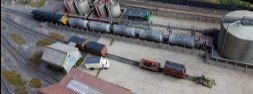
Western Region layout in the blue diesel era of the 1960s and 1970s
MALMESBURY
by Swindon MRC
N Gauge 2mm Scale
TODMORDEN
By Ed Purcell
N Gauge 2mm Scale
London Midland steam terminus

Also contributing to the show will be Mini Scenes by Tracey Lippett, the Gloucestershire Warwickshire Railway and modelling demonstrations by Richard Self, Mark Begley, Trevor Hale, John Emerson and Steve Harrod.
Trade support will be from Cheltenham Model Centre (Saturday only), RCSW Pre enjoyed model railways, Penduke Models scenic products and Stewart Blencowe books, pictures and railway ephemera.