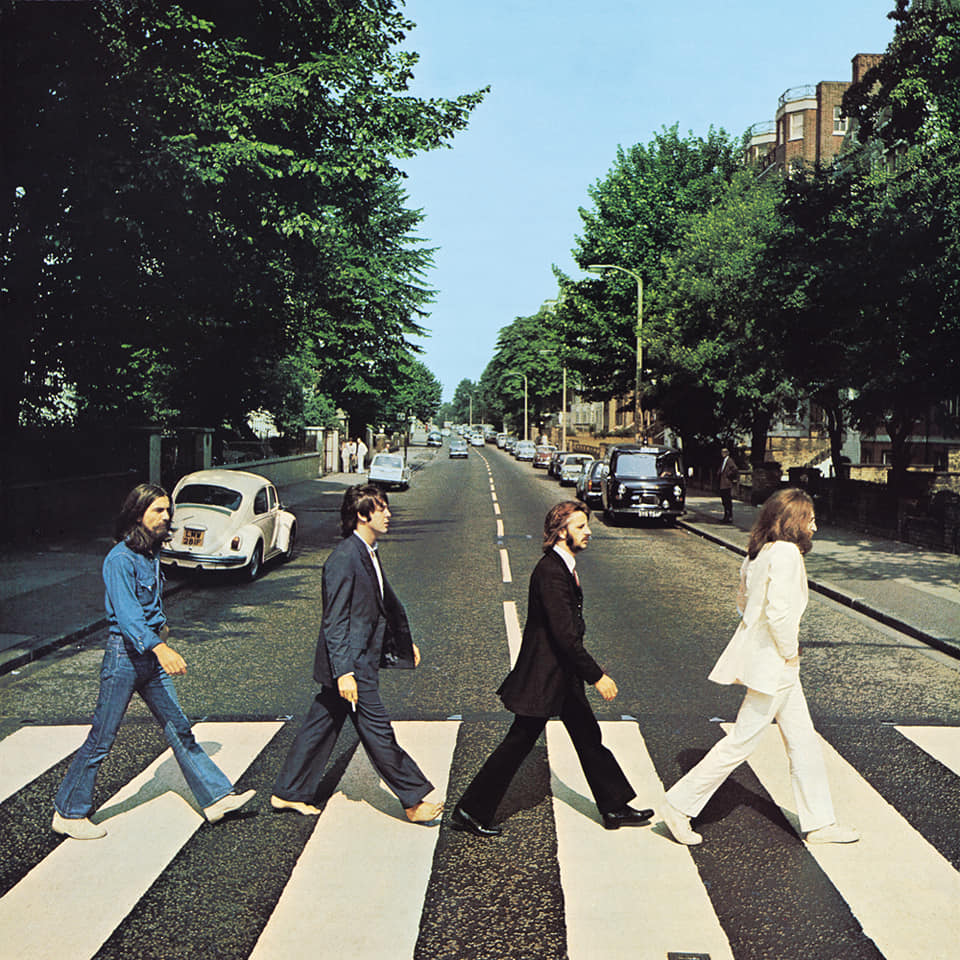
On 26 September 1969 The Beatles released Abbey Road, the last album that they ever made despite Let It Be – recorded in 1968 and early 1969 – being released in May 1970.
This was two years after the Magical Mystery Tour album and film featuring Panorama Elite bodied Bedford VAL coach URO 913E of the fleet of Fox’s of Hayes. However, as both the VAL and white Volkswagen Beetle LMW 281F from the Abbey Road album cover are now available from Corgi and Oxford Diecast respectively they can be used to let Ming Ing Get Back to the 1960s.
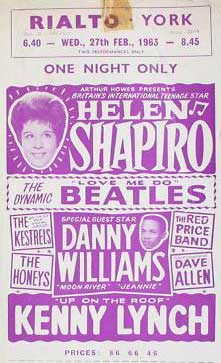
In fact The Beatles have a surprisingly strong connection to York. Their first appearance in the city was on 27 February 1963 at the Rialto, Fishergate – later a bingo hall – as second on the bill to Helen Shapiro. However, due to Helen contracting flu, her place was taken by singer Danny Williams.
On the coach from York to their next gig in Shrewsbury though, the Beatles wrote their song “From Me to You” in spite of input from fellow package artist Kenny Lynch. This was released as the Beatles third British single on 11 April 1963 and the first one to top the official British charts. Although not a hit in America, a cover of it by Del Shannon gave John Lennon and Paul McCartney their first success in the USA as songwriters.
In the meantime, The Beatles returned to the Fishergate Rialto on 13 March 1963. Chris Montez headlined, but this time John Lennon was ill so the group performed for the only time in their career as a trio.
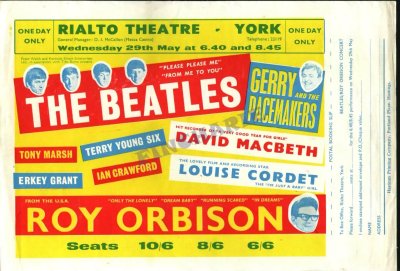
Their third visit on May 29 1963 saw Roy Orbison topping the bill and tickets were sold out two weeks before the concert. This time the Beatles were headline news. In only two months they had shot to fame and From Me To You, their first number one hit, remained in the charts for 21 weeks.
By their fourth and final appearance in York, on 27 November 1963, the Fab Four were topping the bill. Arriving early in York in their Austin Princess limousine, they dropped in at the York Motel on Tadcaster Road for a meal before being rushed into the back of the Rialto to avoid the crowds.
In fact before the concert the police had to work out a special “Beatle plan” and arrange traffic diversions. As well as 100 policemen, another 40 special constables were drafted in on “Beatle duty” for the occasion. Some young people had started queuing at lunchtime in the hopes of seeing their heroes. The Rialto management had been sent hundreds of requests for autographs, and even a dress which the owner wanted the Beatles to sign so that she could raffle it for charity.
There were 1,800 fans inside the auditorium and another 400 outside jammed behind crush barriers chanting, “We want Paul, George, John, Ringo” throughout the concert. In fact they stood for five hours in the cold. Stacey Brewer’s review in the Yorkshire Evening Press said that “their final, frenzied frantic version of Twist And Shout threatened to lift the roof off the Mecca Casino”.
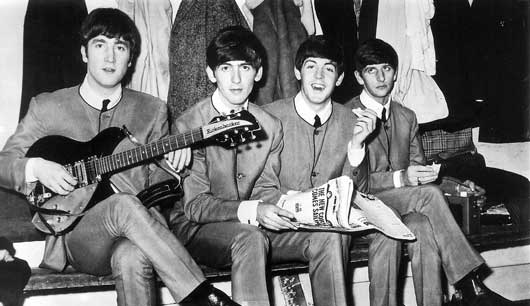
Apparently the Beatles then left York in a bottle green Ford Zephyr Six with the registration 2074 KD along with John Lennon’s then wife Cynthia and Ringo’s future wife Maureen Cox. They were never to return.
On 9 February 1964 The Beatles appeared on the Ed Sullivan TV show in New York and after that rapidly conquered America and the World. But their last concert before a paying audience in Britain was on 1 May 1966 with the last ever such gig on 26 August 1966 at Candlestick Park in San Francisco.
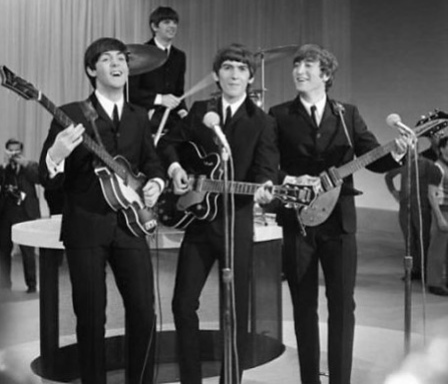
Having given up touring, the Beatles recorded such classic albums as Sergeant Pepper’s Lonely Hearts Club Band and Magical Mystery Tour in 1967 while The Beatles (also known as The White Album) and Yellow Submarine reached British record shops in 1968. Let It Be and Abbey Road followed as The Beatles tried to return to their rock and roll roots after all the studio wizardry of Sergeant Pepper.
Their last public performance as a group – along with keyboard player Billy Preston – came on 30 January 1969 on the roof of their Apple Corps HQ in Saville Row, London. This was staged as part of Michael Lindsay-Hogg’s documentary “Let It Be”, released with the Phil Spector produced album of the same name in May 1970.
In fact The Beatles were not the first band to hold an unauthorised concert on a metropolitan rooftop. Jefferson Airplane had climbed to the top of New York’s Schuyler Hotel on 7 December 1968 but only managed one song — a blistering version of “The House at Pooneil Corners” — before the NYPD threatened arrest for noise disturbance. The happening was recorded by director Jean-Luc Godard as part of his One A.M. project.
Among the songs performed on the roof of Apple Corps before public complaints forced the police to intervene was “One After 909” – probably the very earliest complete Lennon-McCartney songwriting effort released on an original Beatles album. Lennon claimed that he wrote it when he was 17 years old with a little help from his new friend, Paul McCartney.
“It’s not a great song,” McCartney remembered in later years. “But it’s a great favorite of mine because it has great memories for me of John and I trying to write a bluesy freight-train song.”.
The band had first recorded “One after 909” at EMI Studios during sessions for “From Me to You” in March 1963. This version was shelved, but the song was resurrected six years later for the Get Back/Let It Be project — as a joke more than anything else. The live version from the rooftop concert ended up on Let It Be, giving “One After 909” its long-awaited public debut on the last album The Beatles issued.
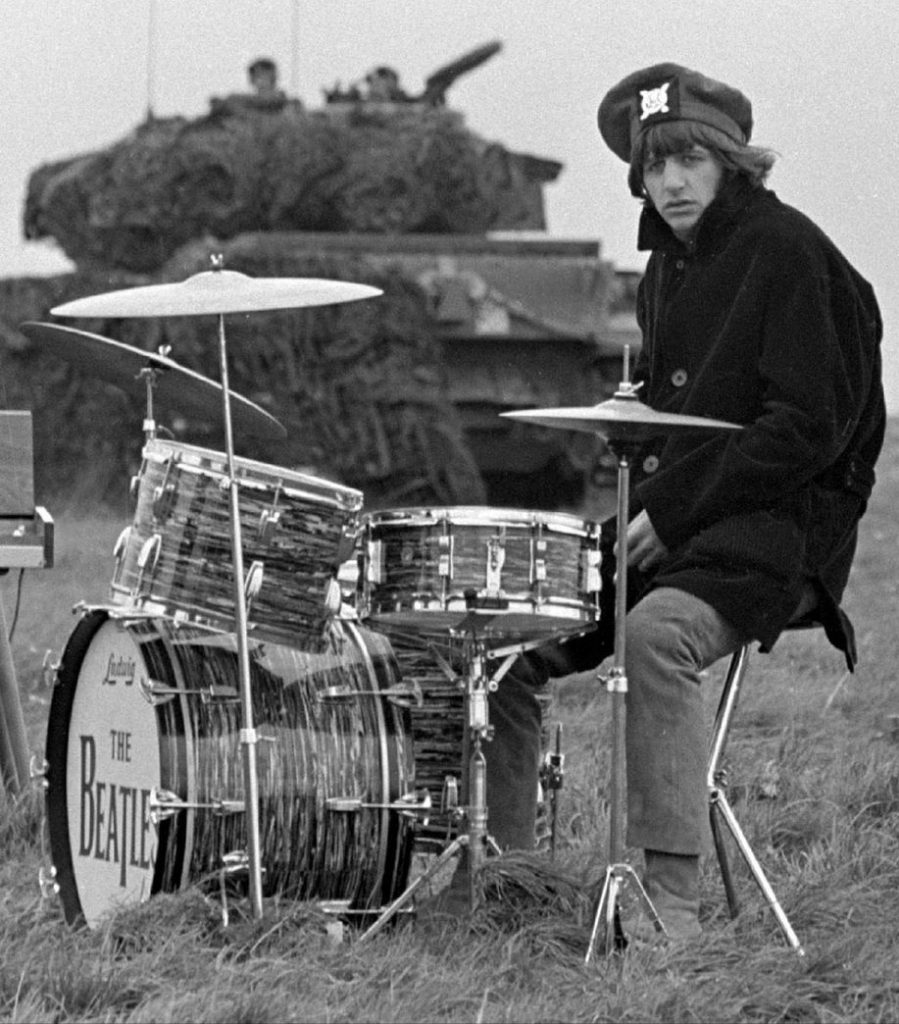
However, this was not to be the last time that The Beatles were to sing about transport or involve it in their films. Following much of 1964 ‘s “A Hard Day’ s Night” being set in stations or on trains, 1965’s “Help” included a memorable sequence of the boys on Salisbury Plain surrounded by Centurion tanks. The soundtrack to “Help” also featured the song “Ticket to Ride”.
According to Paul McCartney “Ticket to Ride” was inspired by a railway ticket to Ryde on the Isle of Wight although John Lennon claimed the title referred to the clean bill of health for a Hamburg prostitute. Similarly, Day Tripper could refer to either someone on an excursion or timidly experimenting with drugs while Drive My Car is either a slang expression for sex or a nod to the Beatles friend Cilla Black and her Road Manager boyfriend Bobby Willis.
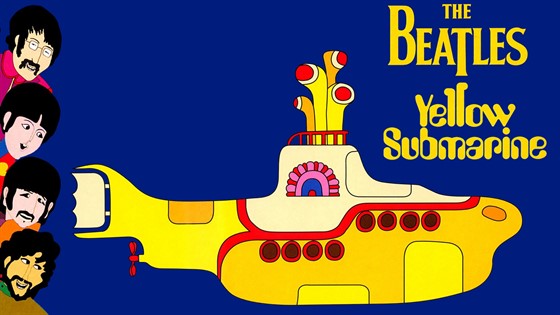
Yellow Submarine meanwhile was a song written by John, Paul and Donovan Leitch for Ringo to sing on The Beatles 1966 Revolver album which later spawned its own animated feature film and soundtrack album. Paul described it as a children’s song although some commentators have linked it to the scene in A Hard Day’s Night where John plays with toy warships in a hotel bath.
At the end of 1966 The Beatles recorded Paul’s composition “Penny Lane” with its references to a banker with a motor car and a fireman keeping his engine clean. Interestingly, Paul’s father Jim had been a volunteer fireman in Liverpool during the Second World War and there was a fire station at Mather Avenue, about half a mile from Penny Lane’s major bus terminus. This was also close to St Peter’s Church in Woolton where John and Paul first met in 1957.
“Penny Lane” was originally intended for the forthcoming Sergeant Pepper album but due to record company pressure it was released as a double A side with John’s “Strawberry Fields Forever”- and became the first Beatles release since “Please Please Me” not to reach number one in the British charts.
It was held off the top spot by Engelbert Humperdinck’s “Please Release Me (Let Me Go)”, which was not only a shame for The Beatles themselves but distracted attention from the song’s promotional film. Paul McCartney predicted at the time: “In the future all records will have vision as well as sound. In twenty years time, people will be amazed to think we just listened to records.”
It was certainly a milestone in the evolution of what we know today as pop music videos and it is worth pointing out that the boys themselves were reluctant to return to Liverpool to make their promo. As such, separate footage of Penny Lane and its buses is intercut with scenes of John, Paul, George and Ringo on horseback. These were recorded at Knole Park, Sevenoaks, on 30 January 1967: exactly two years before The Beatles’ rooftop concert in Saville Row.
The Beatles’ Sergeant Pepper album is widely regarded as the high point of the Fab Four ‘s career and is rich in transport references. As well as “She’ s Leaving Home” with its references to the motor trade “A Day in the Life” contains both an evocation of a Beatles’ friend and a prophetic look at the state of Britain’s roads.
The lyric
I read the news today, oh boy
About a lucky man who made the grade
And though the news was rather sad
Well, I just had to laugh
I saw the photograph
He blew his mind out in a car
He didn’t notice that the lights had changed
A crowd of people stood and stared
They’d seen his face before
Nobody was really sure if he was from the House of Lords
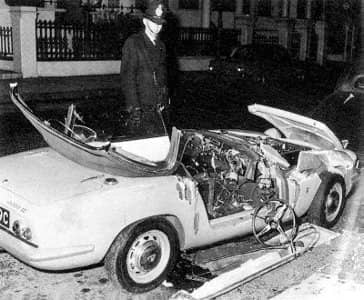
was inspired by the Coroner’s report into the death of Guinness heir Tara Browne. On 17 December 1966, Browne drove his Lotus Elan ( pictured above) through a red light in South Kensington at high speed and collided with a parked lorry. Although he died of his injuries the next day, he was not found to be under the influence of drink or drugs.
The reference to 4 000 holes in Blackburn Lancashire meanwhile began with a council road surface survey reported in the Daily Mail.
Sadly Britain’s roads are carrying even more vehicles now than in 1967 and are often in an even worse state. And for The Beatles, tragedy and disappointment lay in the latter half of 1967.
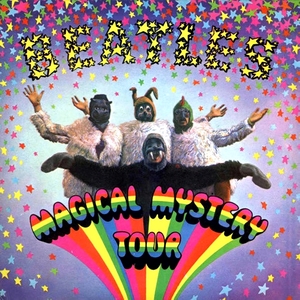
On 27 August 1967 their manager Brian Epstein died and without his guidance they embarked on their TV presentation “Magical Mystery Tour”.
This combined Paul McCartney’s love of surreal and experimental film with the desire to connect with Beatles fans after they had decided to stop touring. The premise was that the spells of Magicians could turn the Most Ordinary Coach Trip into a Magical Mystery Tour. In a more historic context, Magical Mystery Tour was an attempt to combine the free-wheeling fun of Ken Kesey’s bus bourne Merry Pranksters of 1964 with traditional British coach excursions.
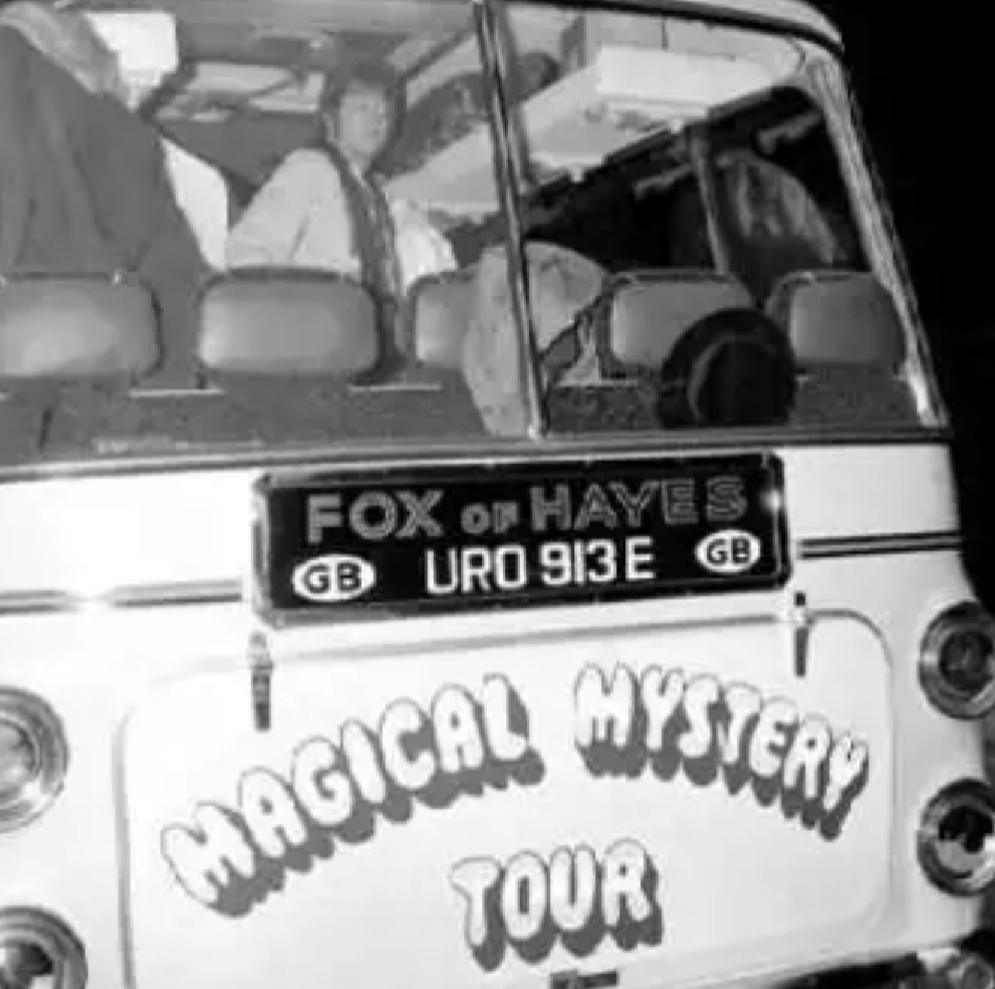
Unfortunately, as a film which relied on colour, it was premiered on monochrome BBC1 TV on 26 December 1967. As Beatles producer George Martin admitted, “It looked awful and was a disaster”. The film was repeated in colour on BBC 2 a few days later but at the time there were only about 200 000 colour TV sets in Britain.
Paul McCartney later spoke to the press, saying: “We don’t say it was a good film. It was our first attempt. If we goofed, then we goofed. It was a challenge and it didn’t come off. We’ll know better next time.”
Essentially The Beatles were no longer in control of their time. Whereas they had once been able to seize on any idea and ‘Beatlefy’ it, make it common currency, they were now running vainly after a trend that was determined to leave the common audience behind.
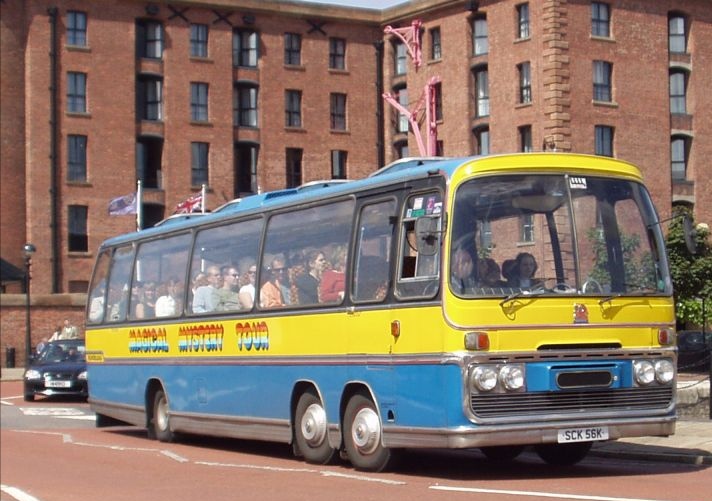
But as far back as 1983, a bus tour of such Beatle related sites as Strawberry Fields, Penny Lane and the childhood homes of the boys has operated in Liverpool under the banner of Magical Mystery Tour. Although now employing modern vehicles, this was originally operated by a Bedford VAL coach similar to the three axled PSV depicted in the film
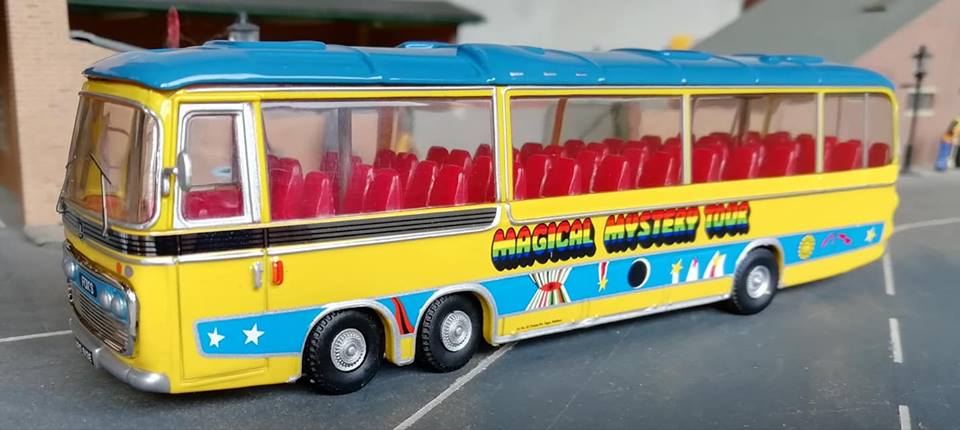
The Bedford VAL Chassis was designed in 1961 at the time of the new motorway networks. These vehicles were unique in their front twin-steer axles, and smaller wheels for lower floor height. The twin steer design was promoted as a safety feature in the event of a high speed blowout and also provided a very comfortable ride for passengers.
There were two different types of Bedford VAL. The Bedford VAL 14 – produced between 1963 and 1967 was powered by a Leyland 0.400cu engine while the Bedford VAL 70 – produced between 1967 and 1973. was powered by a Bedford 466cu engine. In 10 years just over 2,000 Bedford VALS were produced.
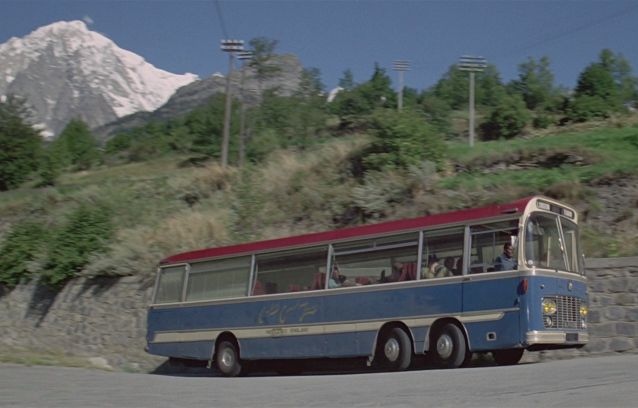
While the Plaxton Elite-bodied URO 913E was raced around RAF West Malling by Ringo Starr, 1964 vintage Harrington Legionnaire bodied Bedford VAL coach ALR 453B (pictured) was to find fame two years later in the Michael Caine film The Italian Job. After being modified to carry two Mini Coopers and some gold ingots in 1969, ALR 453B was returned to Batten’s coaches but was scrapped in the 1990s.
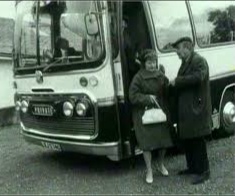
1969 also saw Plaxton Elite bodied Bedford VAL LXJ 574G of Holt’s coaches of Rusholme appear in a crash sequence in the ITV drama Coronation Street. LXJ 574G was not damaged in the sequence and went on to Isaac, Morriston in December 1977. They appear to have sold it about a year later and there is no record of it after then.
The Hard Rock Cafe acquired the actual Magical Mystery Tour bus URO 913E in 1988 and it is the single biggest piece of rock n’ roll memorabilia they own. It took four months, 2,000 man-hours and a cost of $100,000 for HRC to completely refurbish the bus using vintage parts to replicate the original designs and details. The bus is stored in the Hard Rock Cafe warehouse in Orlando, Florida and is put on display for special occasions.
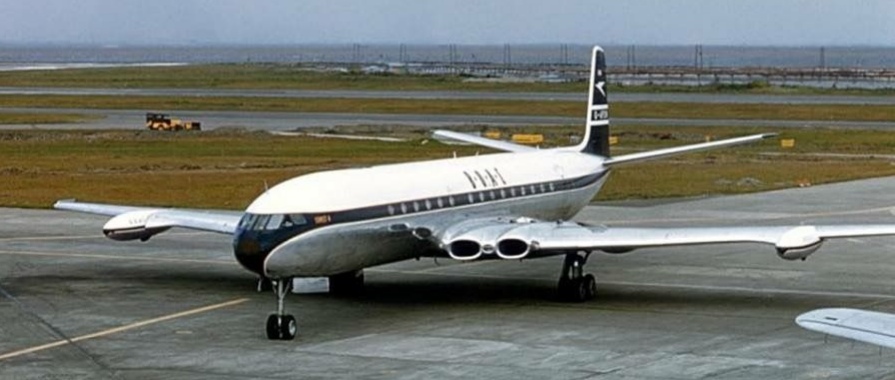
Despite the set back of the popular disdain for Magical Mystery Tour, transport featured on the 1968 album The Beatles – also known as The White Album for its minimalist cover. More specific than Magical Mystery Tour’s “Flying”, “Back in the USSR” references British airline BOAC and includes the sound of jet liners landing as well as those of Chuck Berry and The Beach Boys.
Moving on to September 1969, the Abbey Road album cover carried the timeless picture of the band members walking across a zebra crossing outside Abbey Road Studios. One of the most imitated pictures in recorded history, the cover was once again inspired by Paul McCartney’s sketch ideas.
However, the album was originally going to be named Four In The Bar or All Good Children Go To Heaven when, inspired by sound engineer Geoff Emerick’s favourite brand of cigarettes, the name Everest came forth. Although Paul was interested in being pictured climbing the World’s highest mountain, John and George were less keen and Ringo, disliking foreign food, suggested that they just go out into Abbey Road itself.
The picture was taken at 1034 on Friday 8 August 1969, outside the now Grade 2 listed EMI Studios, by photographer Iain Macmillan, who was given only 10 minutes to capture the perfect shot, and while a policeman held up the traffic behind the cameras.
Apart from Harrison, the band members were dressed up in suits designed by Tommy Nutter, the famous designer known for reinventing the “Savile Row” suit during the 1960s.

Besides the band’s legendary walk, the cover features a Volkswagen Beetle, parked next to the zebra crossing with the number plate LMW 281F which was repeatedly stolen from the car after the album’s release. The car’s owner was Malcolm Tanner, a resident of the block of flats opposite Abbey Road Studios, and it was by pure coincidence that the Beetle was parked there.
LMW 281F was sold at auction in 1986 for $23,000 and is currently on display at the Volkswagen museum in Wolfsburg, Germany. The selling price reflected not only the white Beetle’s appearance on the Abbey Road album cover but its role in a conspiracy theory that became as ridiculous as it was lurid.
On 14 April 1969 John Lennon and Paul McCartney recorded “The Ballad of John and Yoko”. This was inspired by John’s sudden desire to marry Yoko Ono en route to visit his Aunti Mimi in Sandbanks, Dorset. This was in turn influenced by the marriage of Paul McCartney and Linda Eastman on 12 March 1969.

Unfortunately their desire was thwarted by John and Yoko not having their passports with them
As John sang :
Standing in the dock at Southampton / Trying to get to Holland or France / The man in the mac said, “you’ve got to go back“ / You know they didn’t even give us a chance.”
but as the song later relates they did “get married in Gibraltar near Spain”. The reference caused Spanish dictator General Franco to ban what was to be the final Beatles number one single in Britain, and also the first of the Fab Four’s to be released in stereo.

On 18 June 1969 Paul McCartney celebrated his 27th birthday but many Beatles fans feared that he would not see his 28th. According to the conspiracy theory, LMW 281F stood for Linda McCartney Weeps, 28 If. And Paul was dead. If only he had lived to be 28.
Further “evidence” of this was that on the zebra crossing John was dressed in white (like a priest), Ringo was in black (like an undertaker), George in his double denim looked like a gravedigger and left handed Paul – out of step with the others – had bare feet and a cigarette in his right hand.
Paul was famous for playing his bass guitar left handed. And apparently playing “Revolution 9” from the 1968 White Album backwards reveals the phrase “turn me on dead man”. Just as, apparently, John Lennon sang”I buried Paul ” rather than” Cranberry sauce” on “Strawberry Fields Forever”
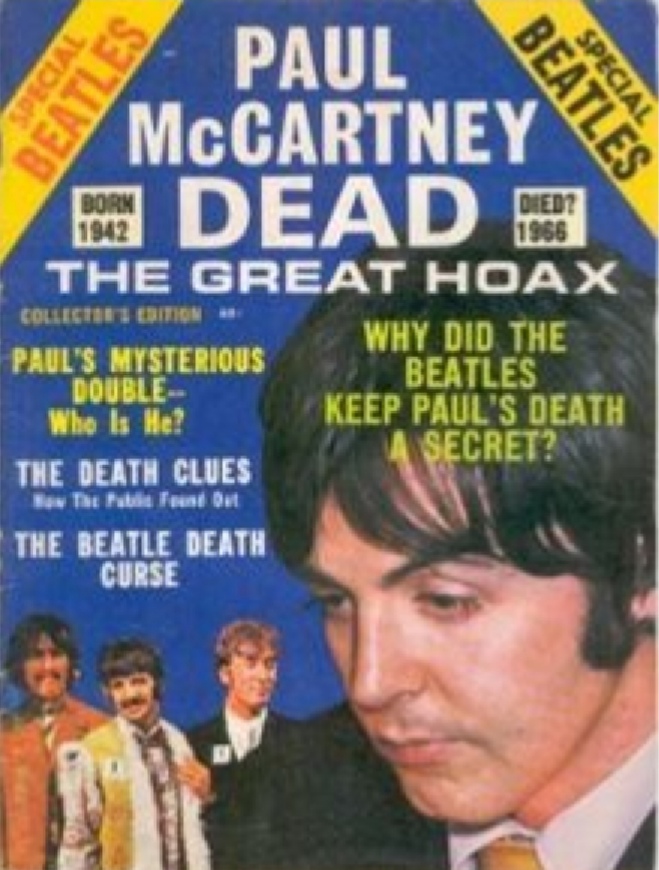
According to the expanding “Paul is Dead” theory, Paul McCartney died (possibly in an M1 car crash) in either November 1966 or January 1967 after an argument with his bandmates and was replaced by a look-alike.
Further embellishments included the stand in being an orphan from Edinburgh named William Campbell whom the Beatles then trained to impersonate McCartney. Others contended that the man’s name was William Shears Campbell, later abbreviated to Billy Shears and the replacement was instigated by Britain’s MI5 out of concern for the severe distress McCartney’s death would cause the Beatles’ audience. In this latter telling, the surviving Beatles were said to be wracked by guilt at their duplicity, and therefore left messages in their music and album artwork to communicate the truth to their fans.
These included the police van parked just to the right of Ringo’s head, said to symbolise the authorities who kept silent about Paul’s death, and the girl in the blue dress on the rear of the album cover. According to the conspiracy theories, this was a fan named Rita who had survived the car crash that killed Paul. Also on the back of the album, the Beatles name in tiles is cracked and the dots can connect to form the number 3.
However, rumours declined after a contemporary interview with McCartney, who had been secluded with his family in Scotland, was published in Life magazine in November 1969.
Despite this, “Paul is Dead” remains one of the most famous conspiracy theories, along with Orson Wells ‘ 1938 Martian Invasion scare, which was also disseminated by radio. ‘”Paul is Dead” was also symptomatic of an era when youth began distrusting their elders over such issues as the assassination of John. F. Kennedy and the prosecution of the Vietnam War. It was also a time of experimentation with cannabis and LSD.
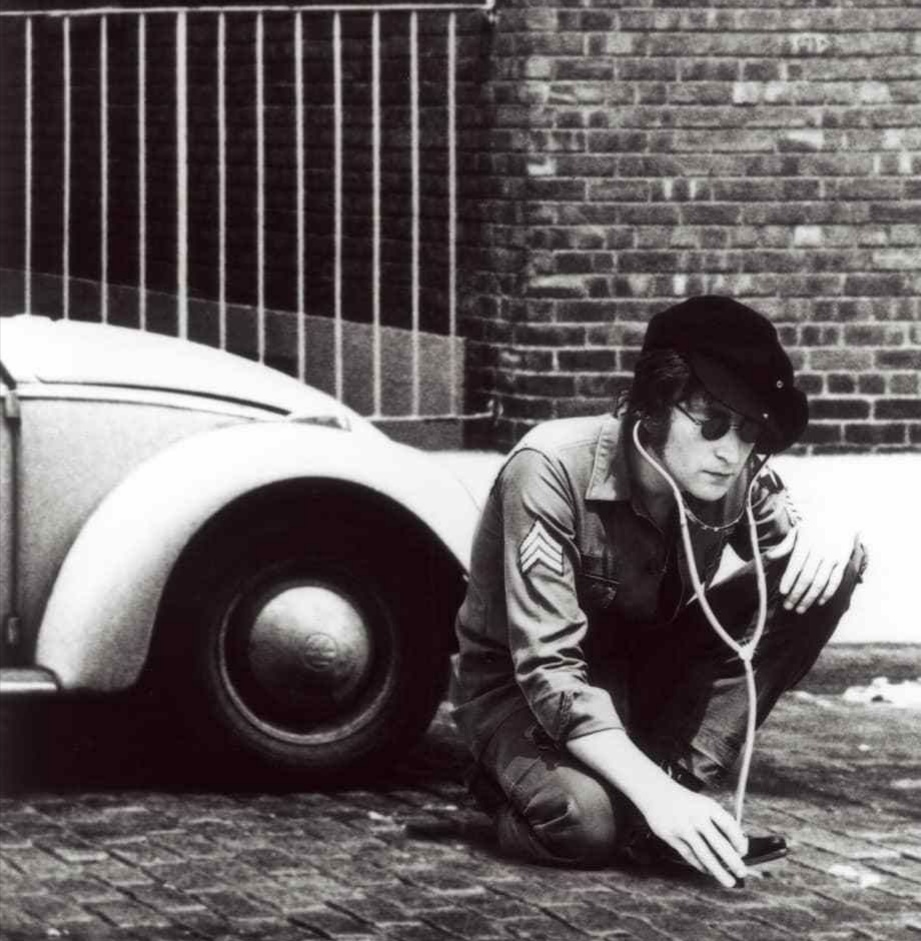
As it happens, John Lennon later purchased a white VW Beetle of his own although his best known car was psychedelic Rolls Royce Phantom V FJB 111C. On 1 July 1969 however he was driving a white Austin Maxi along with new wife Yoko, her daughter Kyoko and his son Julian when he crashed into a ditch at Durness in the Highlands of Scotland.
Lennon was a notoriously bad driver who had rarely been behind the wheel since passing his test in February 1965. He was poor at navigating roads and often failed to notice other traffic.
The roads were narrow, the weather was poor, and Lennon panicked after spotting a foreign tourist driving towards him. He, Yoko and Kyoko sustained cuts to the face and Ono’s back was injured although Julian escaped with shock.
They were taken to Golspie’s Lawson Memorial Hospital where John Lennon remained in hospital for five days. He later told reporters, “If you’re going to have a car crash, try to arrange for it to happen in the Highlands. The hospital there was just great.”
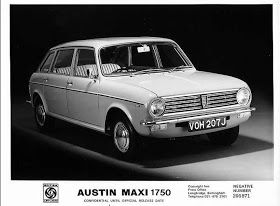
The crashed Austin Maxi was later transported to John and Yoko’s Tittenhurst Park estate where it was sited in the gardens and after being discharged from hospital John spent three days at home before finally Getting Back to The Beatles on 9 July 1969 to start recording Abbey Road.
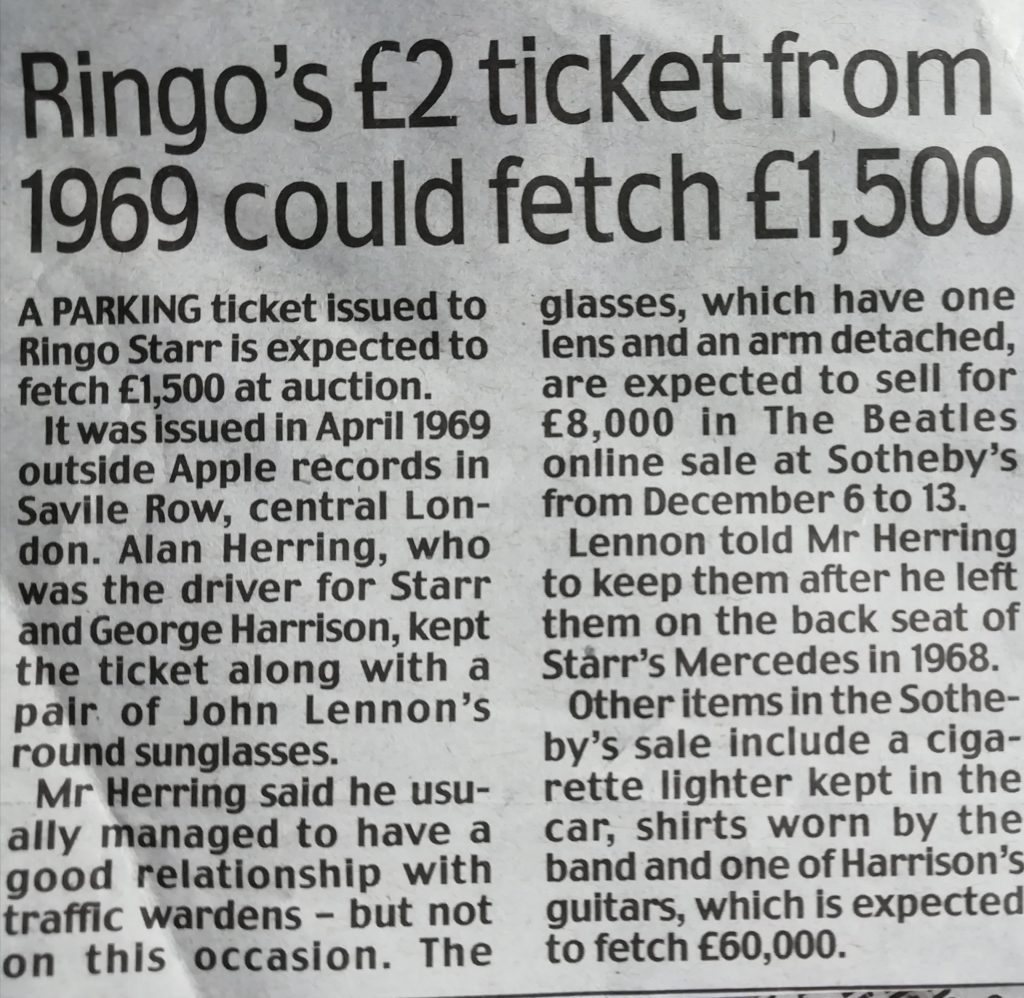
And as a postscript, this article appeared in the Daily Mail of 28 November 2019