
20 July 2019 marked the 50th anniversary of the first manned landings on the Moon. This was celebrated with an exhibition of space and rocket models and memorabilia at Jet Age Museum, Staverton, Gloucestershire which proved so popular that it was decided to take the best elements of it on tour during 2020. Unfortunately, due to the Worldwide pandemic, this did not happen but I have faith in the possibility of exhibitions in the future.
The line up included my well known (and apparently well loved) Moon diorama of an Apollo and possible future landing vehicle. However, From the Moon Science – Ron Brook’s Apollo diorama – would need a suitable case to go on tour. Rather than one that was too constricting though, I decided to make Ron’s handiwork part of a more wide ranging cased display on the past and future of space and rocketry.

Indeed, I recalled that, had room on my two-lunar-lander diorama permitted, I would have liked to have built a model Moon base.
Such a project could of course easily have become fantastical. Cities or fortresses on the Moon have long been a staple of science fiction, as witnessed by the model of the SHADO installation from the Gerry Anderson TV series UFO pictured above.
Impressive as the geodesic spheres linked by square section corridors look however, they would be vulnerable to both meteorite strikes and solar radiation.

Less easy to build but safer would be the buried two cylinder format depicted in the 1970 Brooke Bond tea card series “The Race Into Space. Unless built as a sectioned model though, this type of base would only appear rather underwhelmingly as a turret with a door.
Practically too, my display case would have neither the depth or the length to bury two cylinders, so I decided to build what might be the very first habitation on the Moon.
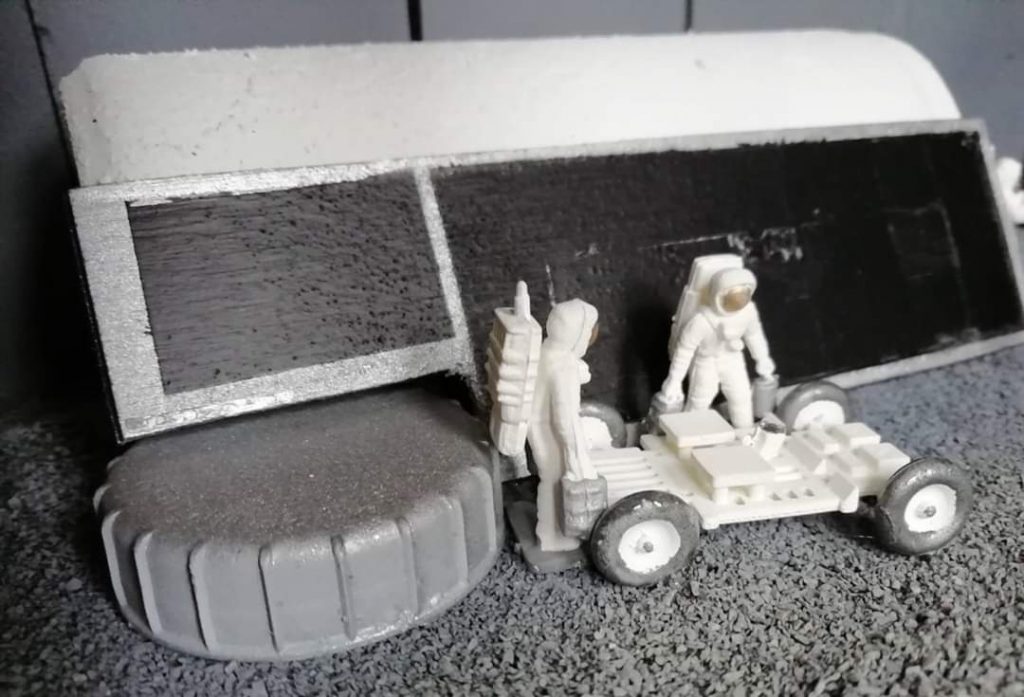
Looking back to the earliest proposals for such a structure, the US Air Force Lunex project of 1958, envisaged sending a three man spacecraft directly from Earth to the Moon in 1967 prior to the construction of a 21 man permanent base there.

Meanwhile, on 8 June 1959, the Army Ballistic Missile Agency presented the US Department of the Army with a report entitled “Project Horizon, A U.S. Army Study for the Establishment of a Lunar Military Outpost” stating:
“The lunar outpost is required to develop and protect potential United States interests on the moon; to develop techniques in moon-based surveillance of the earth and space, in communications relay, and in operations on the surface of the moon; to serve as a base for exploration of the moon, for further exploration into space and for military operations on the moon if required; and to support scientific investigations on the moon.”
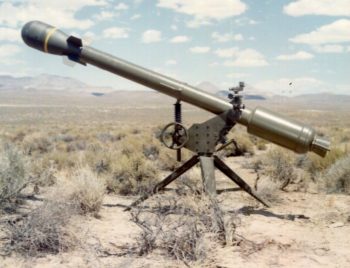
Project Horizon envisioned a first lunar landing by two soldier astronauts in April 1965 with a twelve soldier base – complete with Davy Crockett missiles and Claymore mines to deter an overland Soviet attack – operational in December 1966.
Before the actual landing however, 147 Saturn 1 rockets would have contributed to the construction of a space station in Earth orbit, near which a lunar shuttle craft would also be built from components flown up from Earth. The 16 seat shuttle craft would then move back and forth to the Lunar surface as required with separate vehicles connecting the low Earth orbit space station with Earth itself.

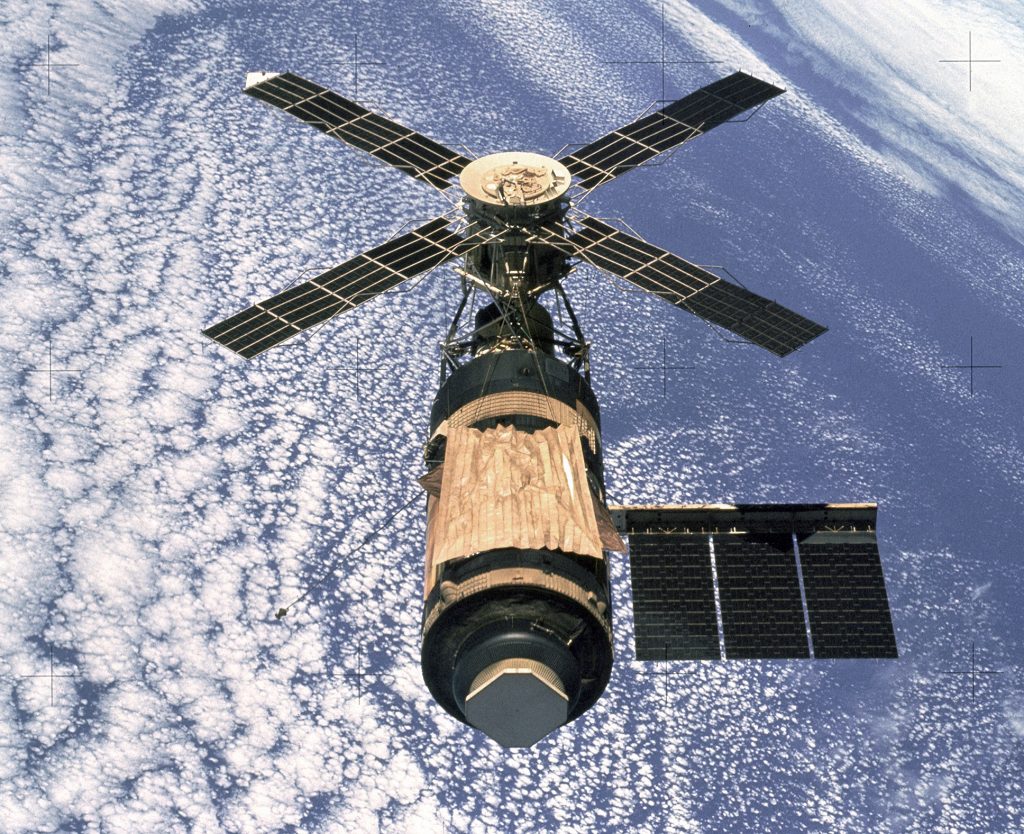
Incidentally, the Project Horizon space station and Moon base would have been constructed from used cylindrical fuel tanks much as the NASA Skylab of the 1970s was converted from the third stage of a Saturn V rocket.
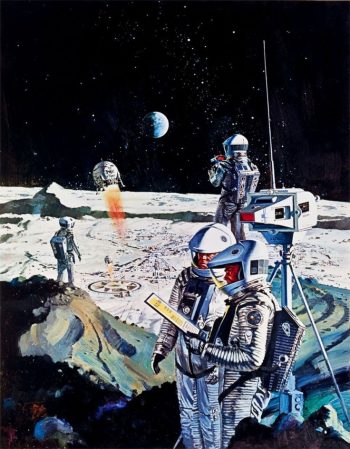
Unlike the habitats proposed under either Projects Horizon or Lunex however, the lack of ideological superpower rivals in the 21st Century would mean that such a base would most likely be civilian and scientific in nature and perhaps the result of international co-operation.
The next wave of lunar explorers could well be surveying much more of the Moon and in more depth than the Apollo astronauts while astronomers could use the airless natural satellite to search for extra-solar planets. Environmental scientists could also look back at climate change on Earth. Similarly, a radio telescope on the side of the Moon away from Earth would be shielded from the planet’s radar and broadcasting, thus enhancing the search for extra-terrestrial intelligence and other electromagnetic phenomenon.
As an orbiting laboratory too, the Moon has the advantage over current space stations of its own gravity – albeit 1/6 that of Earth – in keeping astronauts in better health during extended periods away from their home planet. Likewise, due to being further away from Earth and minutely drifting away, the Moon would be unaffected by upper atmosphere drag compared to a low Earth orbit space station. It also has resources of its own to offer in terms of land area on which to spread photo-voltaic panels, craters and pits for nuclear power plants and a crust rich in both metal ores and Helium 3 isotopes for fusion reactions.
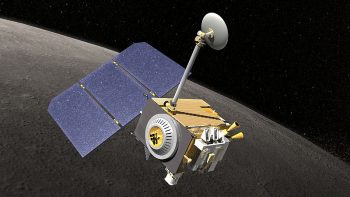
More crucially, unmanned spacecraft such as Lunar Reconnaissance Orbiter (pictured) and LCROSS sent to the Moon in the 21st Century have discovered signs of of water ice, nitrogen and sulphur in regions shaded from sunlight. In turn, this makes more likely a Moon base that would not need to have all its oxygen and water expensively brought up from Earth but could grow its own food on hydroponic farms: assisting such activities as refuelling spacecraft (which could also be lofted to orbit on electromagnetic catapults) and even building parts for new ones, perhaps for expeditions to Mars and beyond. With a Moon base providing accommodation too, lunar spacecraft can be made simpler, lighter and more efficient.
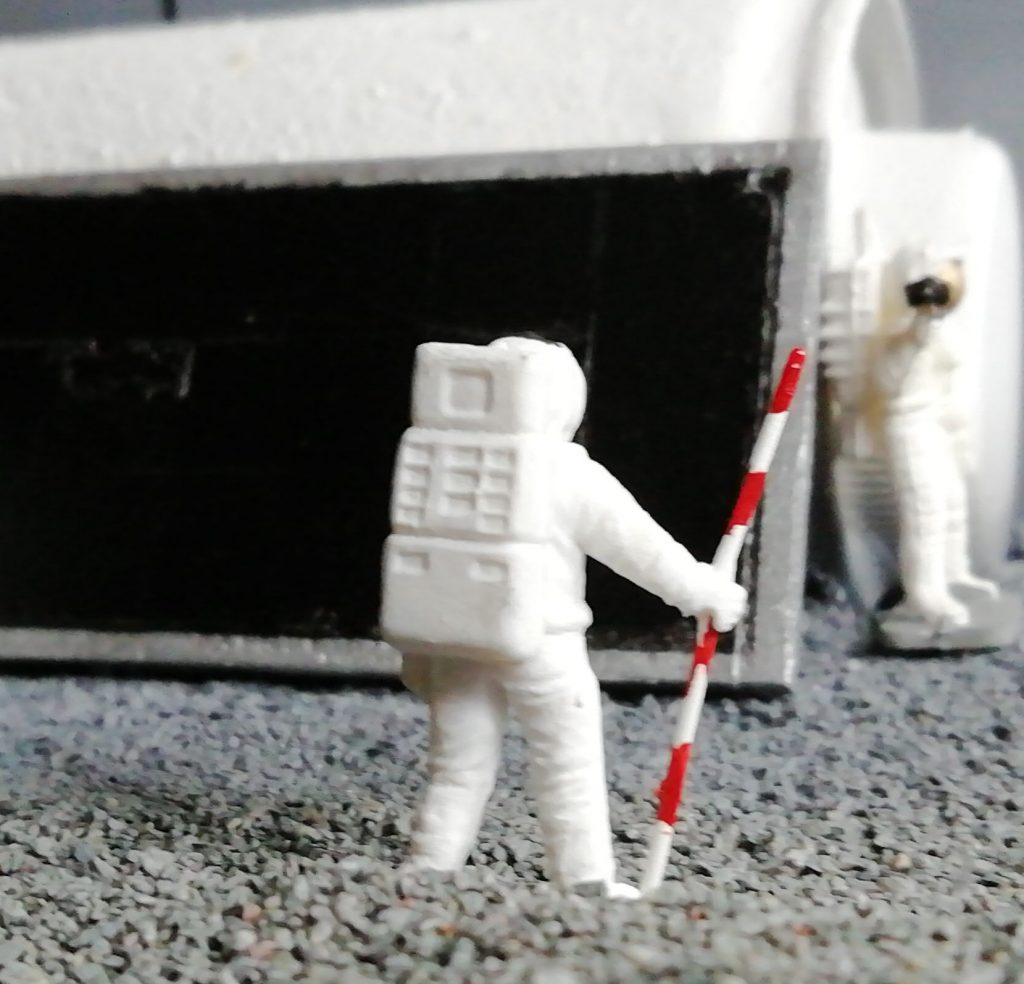
But how could even the simplest Moon base be built? One suggested approach is to send robots ahead of a crewed mission to mine the lunar topsoil. This dust could then be refined to 3D print a habitat from an impact resistant foam like material.
The approach that I modelled however used more established technology. Like the Project Horizon modules and Skylab, this Moon base would be simple factory built cylinder which could be launched direct from Earth aboard a conventional rocket.
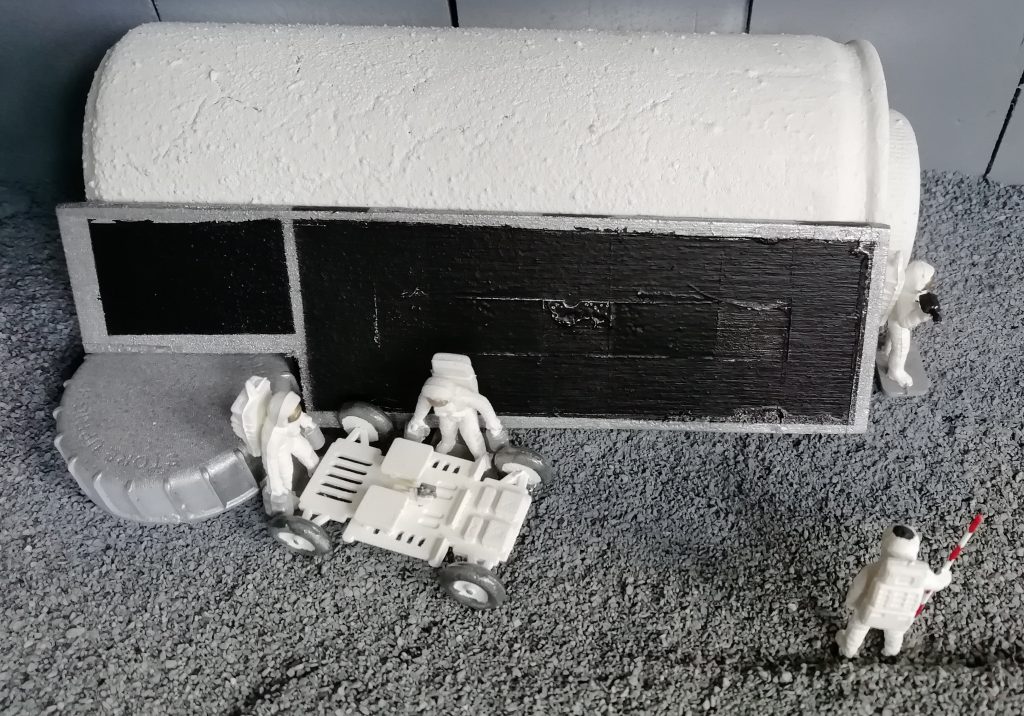
My Moon base would be 10.8 metres long and 3.6 metres in diameter, compared with Skylab which was 25.1 metres long and 6.6 metres in diameter. As such, it would not be the bulkiest single item ever sent into space and hopefully not the heaviest but would need enough booster power to reach the Moon rather than just remain in low Earth orbit. Skylab had a mass of 77 000 kg and was launched by the last ever Saturn V launch vehicle to fly. My Moon base would however have the advantage of its relatively small size and ideally the use of modern lightweight materials such as carbon fibre.
Among the most suitable launch vehicles available today would be NASA’s Space Launch System, the Block 2 cargo version of which is projected to have a 45 000 kg payload capacity as far as the Moon.
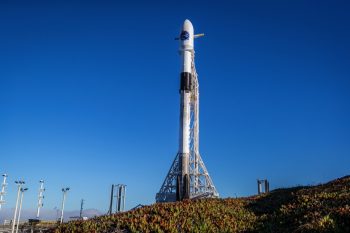
Alternatively, the SpaceX Falcon Heavy can take a 26 700 kg payload to Geostationary Transfer Orbit (around a tenth of the way to the Moon), equivalent figures being 14 220 kg for a Delta IV Heavy and 10 865 for the European Space Agency’s Ariane V.
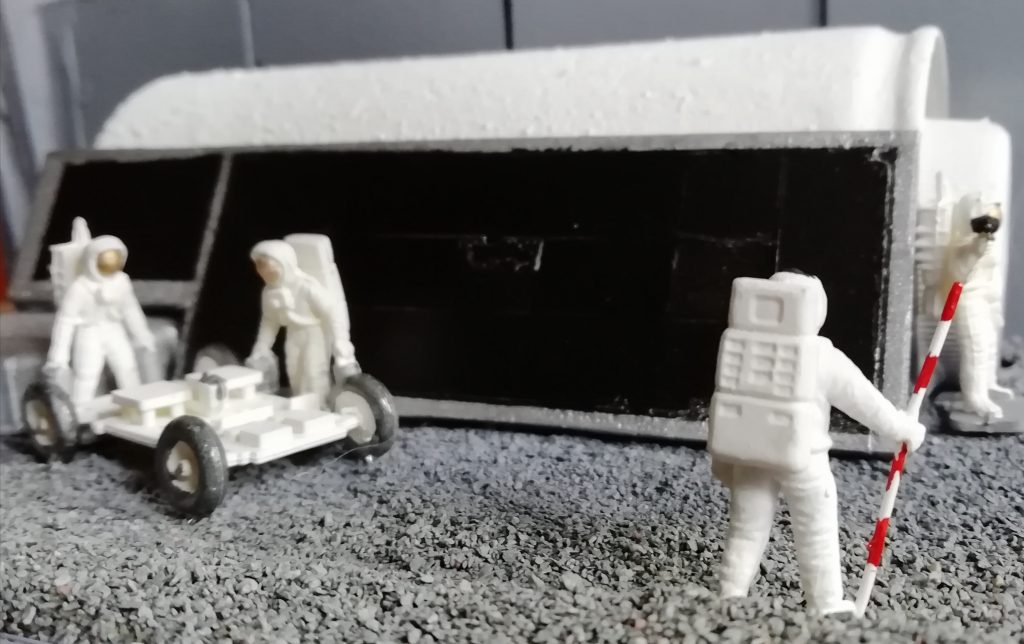
Small but heavy equipment could also be added by future missions, carried by astronauts through the airlock at one end of the cylinder.
Having said that, launching the Moon base would be simple compared with landing it intact, undamaged and horizontal in the right spot on the Lunar surface. It would be a tall, unstable load to sit on top of a Grumman Apollo style descent stage which would in any case need a system of hydraulic rams to lower it through 90 degrees to its resting place.
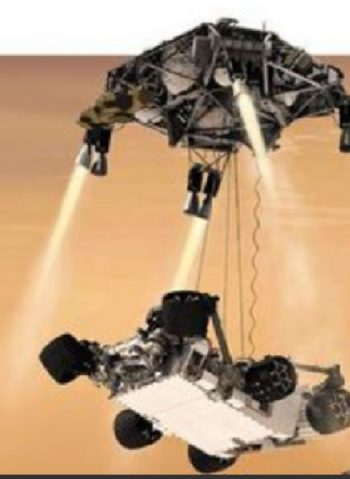
Arguably a more elegant solution would be to use a hovering rocket powered Sky Crane, similar to the one which delivered NASA’s Mars Curiosity Rover to Mars on 5 August 2012 (pictured above).
Unlike the Mars mission, a Sky Crane delivering my concept of a Moon base would not have to negotiate an atmosphere and would have much less gravity to resist before dropping its load and flying safely away. It could even be programmed to land gently for reclamation by a future crewed mission, just as the Apollo 12 astronauts caught up with Surveyor 3.

An ideal site for a prefabricated Moon base would be in the lee of a crater wall for protection against meteorites and solar radiation. This would also allow future missions to pile up Lunar soil against it for even better protection and if appropriate add solar panels – augmenting any available fuel cells and nuclear electricity.
From the point of view of the astronauts using the prefabricated Moon base, there would be a cosy respite from cramped ships, a chance to wear shirtsleeves rather than spacesuits, cooking with positive gravity, baths, showers and the first flushing toilets with gravity away from Earth. However, there would still be a need for gym equipment so that the astronauts could stay in trim for their return to Earth.
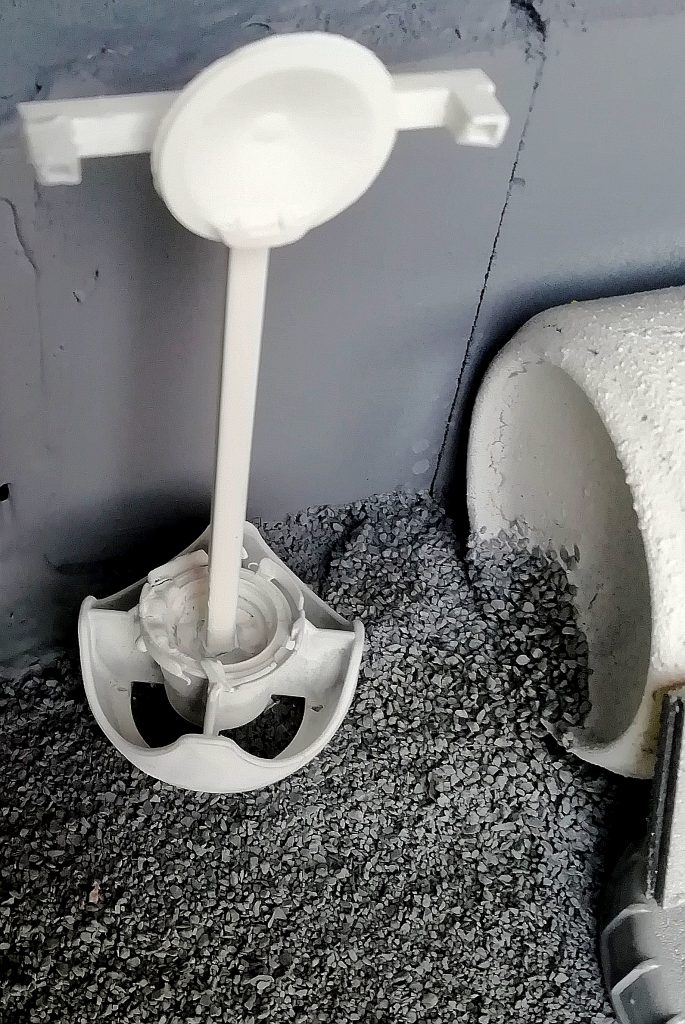
In the same way that the latest generation of nuclear submarines have relinquished optical periscopes for television masts on their fins, so the astronauts using this Moon base could enjoy a view better than that afforded by a window.
In designing the interior of Skylab, legendary French American stylist Raymond Loewy – responsible for the Shell Oil logo and supermarket trolley – insisted that the astronauts had a window despite the engineering challenges involved. Today, the observation cupola on the International Space Station is very popular with the crew, allowing them to watch the ever changing moods of the Earth below them.
A Moon base however would have a much more distant and static view of the blue marble that we call home and as discussed above, it would need to be strong yet light to be placed on the Lunar surface by a flying crane.
One way to give the Moon base astronauts an outside view though would be to link a large 3D television screen to a pair of cameras mounted on a mast outside. When not watching the grey Moon, black sky and blue Earth, this could screen transmissions from home via an S band dish also mounted on the high vantage point.

My design of communication mast would feature a heavy but curved base. This would not have to withstand any kind of weather but could easily be tipped over and righted again Weeble style by the astronauts so that the cameras and dish can be maintained.
In addition, the mast could be used to co ordinate local radio and TV transmissions from astronauts and vehicles on the Lunar surface – like the rubber inflatable tube mast envisioned by Arthur C. Clarke in the 1950s.

The MDF crater wall that my Moon base leans against also formed a backdrop to Ron’s Apollo diorama, but putting the two back to back did leave a rectangular space unfilled. Until I discovered the HaT set 8003 of British Rocket Troops of the Royal Horse Artillery.
Though rockets were an old weapon in parts of Asia, it was the British who introduced them into the Napoleonic Wars. They had come across them in India, and Sir William Congreve had developed them into a weapon which saw action on several battlefields, notable Copenhagen, Leipzig and Waterloo. Though very inaccurate they were on occasions quite successful and were certainly impressive in an age unfamiliar to such things. However though Austria began similar development work it was only the British that used this ‘ammunition without ordnance’ during the war.

As with all HaT artillery sets, this one includes a good six poses for the crew, and with the very different nature of rockets this is an unusual collection that nonetheless portrays its subject well. As the rocket troops were attached to the Royal Horse Artillery they wear the uniform of that unit, and are corrected attired in all respects, with good detail of lace and other refinements. The helmet is in the style of the Tarleton, and lends itself well to being moulded from the side, but detail inevitably suffers when moulded from the front as on one figure here. Proportions are good and the poses well chosen.
As well as the men carrying rockets there are two extra rockets on each of the four sprues. From their size they would appear to be 6-pounders, the most common size and the one most used at Waterloo. Detail is fine, and if a roundshot version is required then the point can simply be trimmed off.
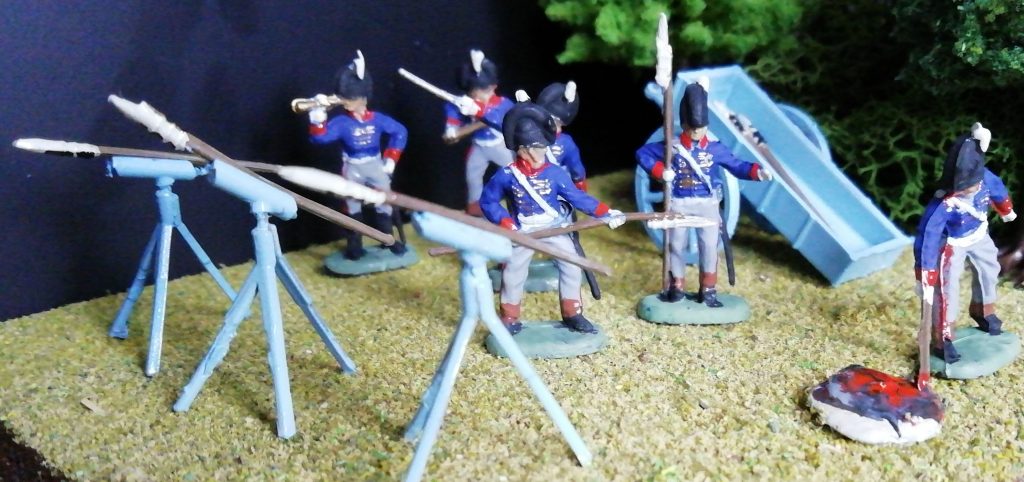
The launcher is a tripod that comes in three pieces that fit together well. The trough stands about level with a man’s head, and cradles the rocket correctly. This was just one of several methods of launching rockets, but was a common one and is illustrated in the book Congreve himself produced on the merits of this weapon.
Finally there is the wagon, which is actually a rocket carriage. This held rockets and sticks, and the crew could ride in it as well. It was hitched to the back of a normal 4-horse artillery limber (for which the pole is provided), and could even be used as part of the launch platform. The inclusion of this piece in the set might well be considered a bonus but it allows the troop to be seen on the march as well as in action, and is a very welcome addition.
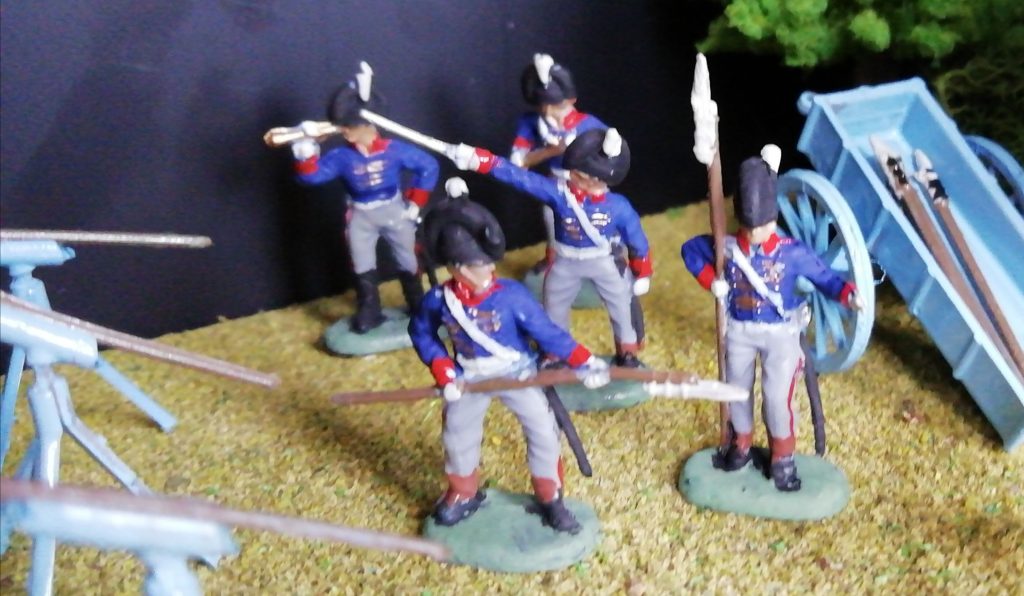
This set appears very early in the HaT product list, but in fact it was released much later than the numbering would suggest, and therefore benefits from the lessons learned from the earlier production. There is not too much flash, and the figures are nicely done. The launcher and carriage assemble with the usual excellent HaT precision.
To integrate the rocket troops into the display case, I separated them from the Apollo LEM with a piece of black plastic card. In one direction this represented the infinite vacuum of space and in the other the darkness before dawn on the day of a great battle of the Napoleonic Wars.

Lit only by the embers of their fire and the burning torch that the NCO will use to ignite the rockets, the soldiers have emerged from the cover of a small forest to set up their launching troughs. Meanwhile, the officers look through telescopes for any signs of enemy activity. Perhaps one might steal a glance at a waxing Moon and dream of going there. Perhaps the same was true of the soldiers of the Roman Empire, of the Crusades and the English Civil War. But thanks to the scientists of the Enlightenment, the engineers of the Industrial Revolution and the ideologists of the 20th century, there would be a gap of less than 160 years from Rockets to the Moon.