
In late 1939 and early 1940, the Red Army of the Union of Soviet Socialist Republics invaded Finland. Despite superior strength in tanks and aircraft, the USSR suffered severe losses on their way to victory and expulsion from the League of Nations. The poor performance of the Red Army also encouraged Adolf Hitler to believe that Germany could successfully invade the Soviet Union, which it did on 22 June 1941. After spectacular initial successes, the German invasion succumbed to confused objectives, Russian winters and huge material support for the USSR from Britain and America, whose troops would all meet in Germany in 1945.
This theme was represented in model diorama form at the Jet Age Museum, Staverton, Gloucestershire in October 2020, featuring the following aircraft and vehicles.
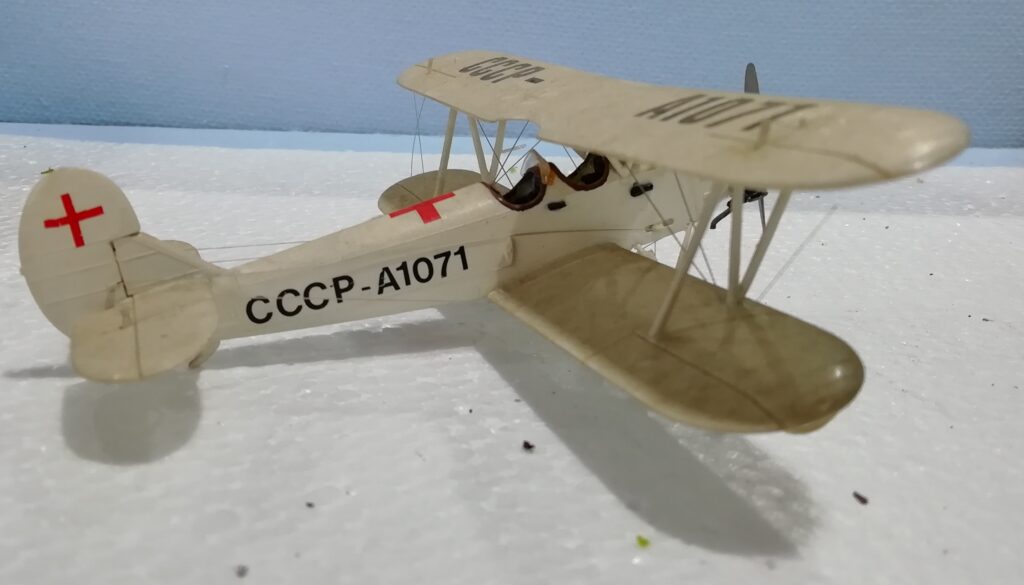
The air ambulance version the 1929 vintage Polikarpov Po-2 could carry a doctor behind the pilot and a casualty in the rear fuselage. Also used as a trainer and bomber, the biplane was in production until 1952.

First flown on 2 October 1939, the Ilyushin Il-2 monoplane was the most produced military aircraft design in history and, once Soviet factories had been evacuated from the path of the advancing Germans and relocated further east, proved devastating against the thin top armour of Nazi tanks.
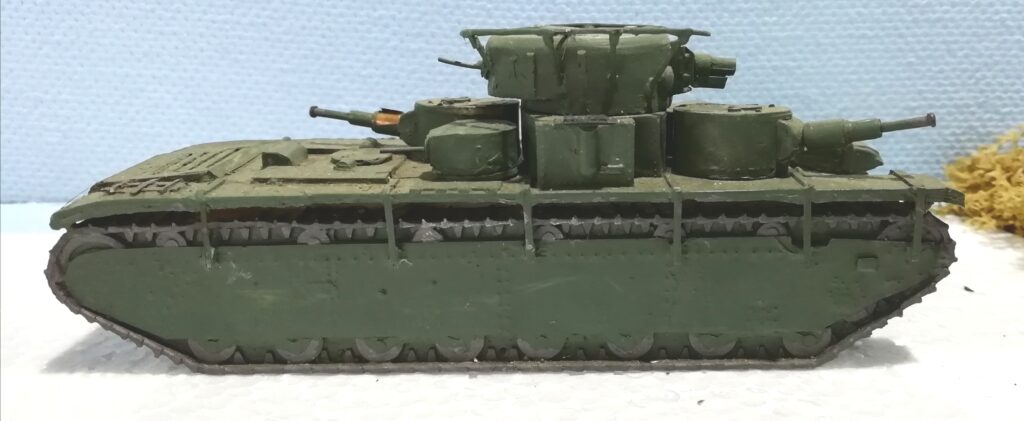
The T-35 was the only five turreted production tank in the world but for all its firepower was slow and mechanically unreliable. Designed to break through enemy defences, it fell prey to German 88mm anti tank guns.
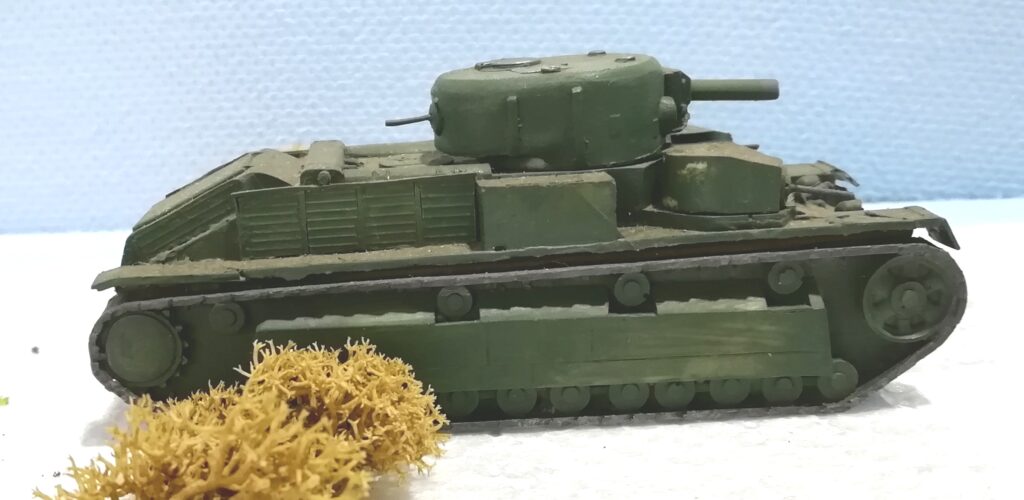
The smaller T-28 with its three turrets also dated from the 1930s and was designed to work with the heavier T-35. Once up-armoured, these tanks helped to defeat Finland.

Based on an earlier tank named after Soviet Defence Commissar Kliment Voroshilov (pictured to the right of Josef Stalin on the poster at the top of this article) the KV-2 housed a 152mm howitzer in its huge turret to destroy Finnish concrete bunkers. However, this design made it top heavy on uneven ground and an easy target for enemy gunners.
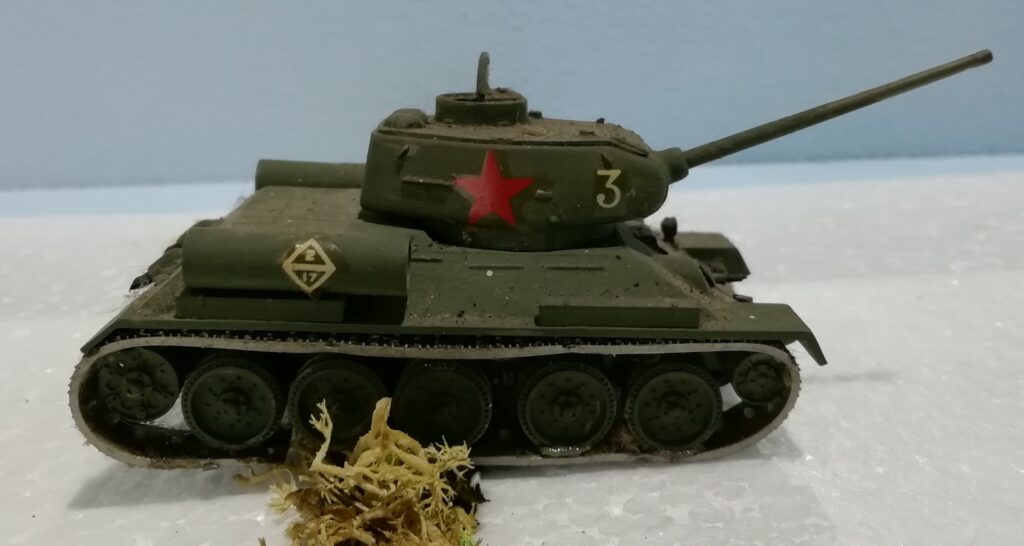
The single gun tank and turretless recovery vehicle are both examples of T-34, one of the most famous medium tanks ever built. Fast and with an effective gun, the simple and reliable T-34 had a low silhouette and sloping armour, setting the template for the tanks of today. The 76mm gun of the mass produced T-34 was later replaced with an even more powerful 85mm weapon.

While the T-34 went on to serve with Communist forces during the 1950-1954 war in Korea, the USSR also developed its own heavy battle tanks. These included the T-54 of 1945. In turn, this tank chassis and drive system was adopted to create the AT-T heavy artillery tractor, with its cab and bonnet based on Soviet ZIS and ZIL lorries. Such a tracked vehicle could keep up with mechanised infantry and armour while carrying useful loads of ammunition and supplies.